3 Mistakes in Applying Entomopathogens to Control Hypothenemus hampei Coffee Berry Borer
The coffee berry borer (CBB) or Hypothenemus hampei is the most damaging pest for coffee plantations in Indonesia. Its attack can downgrade coffee bean grade from specialty to defect, even causing losses of up to 50% of production. Specialty coffee farmers are increasingly aware of the importance of biological control using entomopathogens such as Beauveria bassiana and Metarhizium anisopliae, which are effective and residue-safe. However, many field applications fail due to technical errors. This article discusses the three most common mistakes when applying entomopathogens to control Hypothenemus hampei coffee berry borer, and how to fix them so that the investment in biological control yields maximum results.
Mistake 1: Incorrect Application Timing
One of the key factors for entomopathogen success is application timing. Many farmers spray in the morning or afternoon when temperatures are high and UV rays are strong. In fact, ultraviolet (UV) light can damage Beauveria bassiana and Metarhizium anisopliae spores within a short time. Spores exposed to direct UV lose up to 50% viability within 30 minutes. As a result, spores that reach the coffee berry surface are unable to germinate and infect CBB.
Ideal Application Time
Entomopathogen application should be done in the late afternoon, around 3:00-5:00 PM or near sunset. At that time, UV intensity is low, temperatures are cooler, and humidity begins to rise. These conditions help spores survive longer on the coffee berry surface and germinate well. Additionally, afternoon application gives spores time to attach and germinate before night dew arrives, which actually helps spread spores across the berry surface.
Correct Application Frequency
Farmers often apply only once and expect permanent results. However, entomopathogens work gradually. Spores that attach to the CBB body germinate and penetrate the cuticle, then grow inside the insect's body, causing death within 3-7 days. But spores on the berry surface also degrade due to weather and time. Therefore, application should be repeated every 14 days during the green to red berry phase leading up to harvest. This frequency ensures a high spore population in the field so that newly attacking CBB are exposed and infected.
Mistake 2: Incorrect Spray Volume and Dosage
The second mistake is using too low or too high a dosage. The recommended dosage for Coffee Berry Borer Control Formula is 3 ml per liter of water. Many farmers reduce the dosage to save costs, or increase it thinking more is better. Both are risky. Too low a dosage results in insufficient spore concentration on the berry surface to infect CBB. Conversely, too high a dosage does not proportionally increase effectiveness, only wastes product and raises costs.
Adequate Spray Volume
Spray volume should be adjusted to tree size and canopy density. For mature coffee trees, spray volume is about 200-400 ml per tree (depending on size). Ensure the spray covers the entire coffee berry surface, especially the bottom part of the berry where CBB often enters. Use a nozzle that produces fine mist for even spore distribution. Do not spray so wet that it drips, as spores will drip to the ground and be wasted.
How to Prepare Spray Solution
The spray solution must be prepared according to instructions: mix 3 ml of Coffee Berry Borer Control Formula into 1 liter of clean water, stir until homogeneous. Use water that does not contain chlorine or other chemicals that can kill spores. Well water or rainwater is preferable. After mixing, the solution should be used within 2-3 hours, as spores will begin to germinate if left too long in water.
Mistake 3: Improper Application Technique
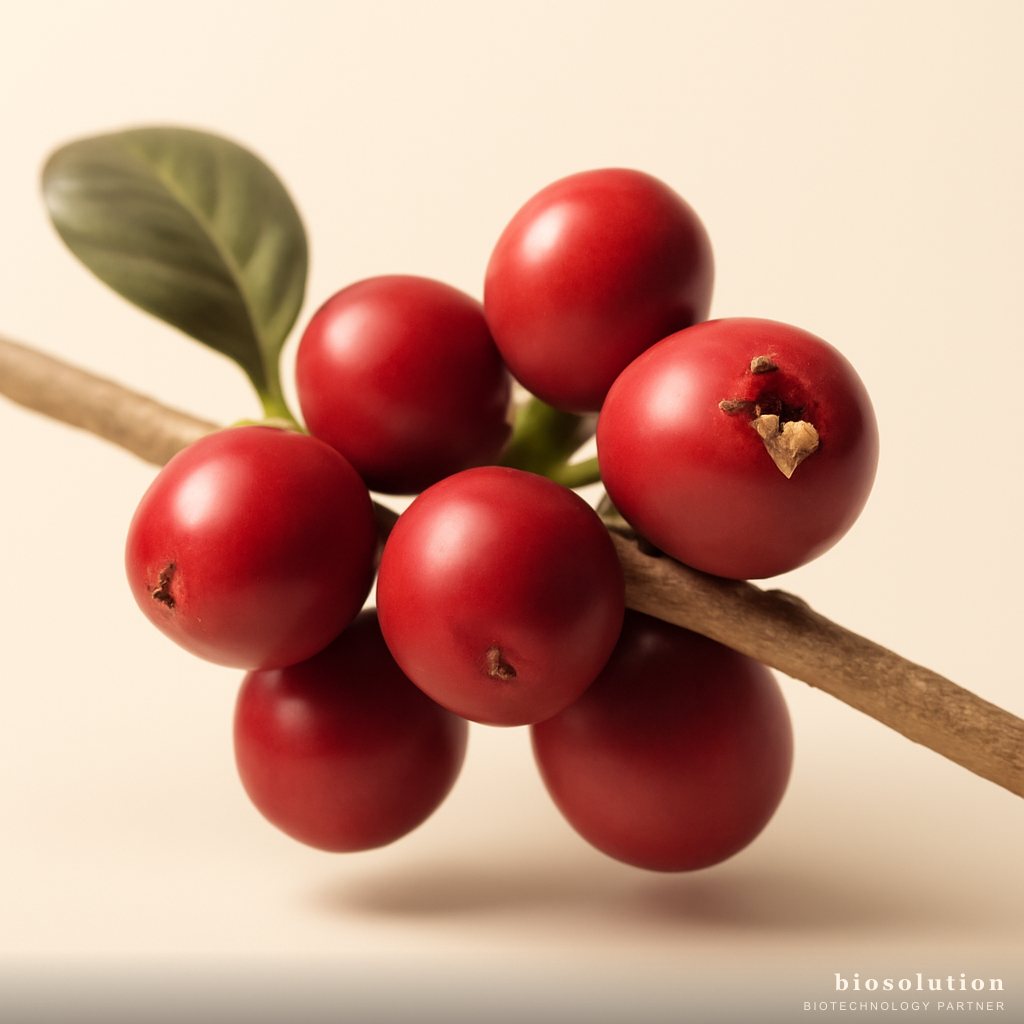
The third mistake is spraying technique that does not hit the target. Female CBB enter the coffee berry through a small hole at the berry tip (crown). Once inside, they lay eggs inside the berry, and larvae feed on the coffee beans. Entomopathogens are only effective if spores contact the female CBB while she is still on the berry surface, or enter the entry hole so spores are carried inside. Therefore, spraying must be directed at the entire berry surface, especially around the crown.
Spray Direction
Aim the nozzle at the berries, not at leaves or stems. Spray from bottom to top so that the protected underside of the berries is also covered. If using a knapsack sprayer, adjust pressure so that spray reaches berries in the middle and top of the tree. Do not only spray the outer canopy, as CBB often hide in protected berries inside the canopy.
Environmental Conditions
Avoid application during rain or strong wind. Rain will wash spores off the berry surface, while strong wind causes uneven spray. If rain falls within 6 hours after application, reapply the next day. Ideal humidity for spore development is >70%. During the dry season, afternoon application is still feasible because night dew provides sufficient humidity.
Why Entomopathogens Are the Right Choice for Specialty Coffee?
Specialty coffee requires high-quality standards, including being free from chemical pesticide residues. The use of entomopathogens such as Beauveria bassiana and Metarhizium anisopliae is a residue-safe solution, ensuring coffee beans meet strict export requirements for European, American, and Japanese markets. Additionally, entomopathogens do not kill natural enemies like parasitoids and predators, thus supporting ecosystem balance in the plantation. With proper application, CBB attack rates can be suppressed to below 3%, maintaining specialty grade.
Mechanism of Action of Beauveria bassiana
Beauveria bassiana is an entomopathogenic fungus that infects CBB through contact. Spores that attach to the insect's cuticle germinate and penetrate the body layers, then grow inside the hemolymph. The fungus produces toxins like beauvericin that paralyze the insect's immune system. Within 3-7 days, CBB dies and its body becomes hard (mummified) due to fungal mycelium. New spores are then produced on the surface of the dead insect, ready to spread to other CBB.
Conclusion
Controlling Hypothenemus hampei coffee berry borer with entomopathogens requires precision in application. Three main mistakes—incorrect application timing, wrong dosage and spray volume, and improper spraying technique—often cause failure. By applying in the afternoon, using a dosage of 3 ml/liter of water, adequate spray volume, and correct spray direction targeting the berries, the effectiveness of Coffee Berry Borer Control Formula can be maximized. As a result, coffee berries are free from CBB, specialty grade is maintained, and harvest remains safe for export.
For more information about Coffee Berry Borer Control Formula products or technical application consultation, contact the Biosolution team via WhatsApp. Get application guidance tailored to your plantation conditions.
References:
- Ministry of Agriculture: Coffee Pest Control Guidelines
- IRRI: Biological Control of Coffee Berry Borer
Read also: Environmentally Friendly Coffee Pest Control