Biocontrol of Cocoa Pod Borer: A Smart Strategy Against Conopomorpha cramerella
The cocoa pod borer (Conopomorpha cramerella, CPB) is the most damaging pest for cocoa plantations in Indonesia. Its attack can reduce production by up to 80% if uncontrolled. Biocontrol of cocoa pod borer is a key solution that is not only effective but also environmentally friendly. By understanding the life cycle, symptoms, and economic threshold, farmers can implement appropriate control strategies. Biosolution presents the Anti-Cocoa Pod Borer Formula, a biocontrol product based on entomopathogenic fungi that is safe for workers and the ecosystem.
Life Cycle of Conopomorpha cramerella
Understanding the CPB life cycle is key to successful biocontrol. This pest undergoes complete metamorphosis: egg, larva, pupa, and imago (adult moth). Here are the details of each stage:
Eggs
Female moths lay eggs singly or in groups on the surface of young cocoa pods (pentil). Eggs are pale yellow, oval, and very small (about 0.5 mm). Incubation period is 3-5 days, depending on temperature and humidity.
Larvae
Newly hatched larvae immediately bore into the pod through the skin. Larvae actively move within the pod tissue, feeding on the pulp and seeds. There are 5 instars with a total duration of 11-17 days. In the final instar, the larva makes an exit hole and drops to the ground to pupate. The larva causes the main damage.
Pupae
Pupae form in a cocoon made of soil and organic fibers on the soil surface or litter. The pupal stage lasts 6-10 days. High soil moisture accelerates development.
Imago (Adult Moth)
Moths are nocturnal, grayish-brown with a wingspan of about 12 mm. Female moths can lay up to 100 eggs during their lifetime (7-14 days). Peak activity occurs from 6:00 PM to 10:00 PM.
The complete life cycle from egg to imago takes about 25-35 days, so several generations can occur in one growing season. This makes chemical control often ineffective because eggs and larvae are protected inside the pod.
Symptoms of Cocoa Pod Borer Attack
Symptoms of CPB attack vary depending on the pod development stage. Early detection is crucial for determining the right timing for biocontrol application.
Symptoms on Young Pods (Pentil)
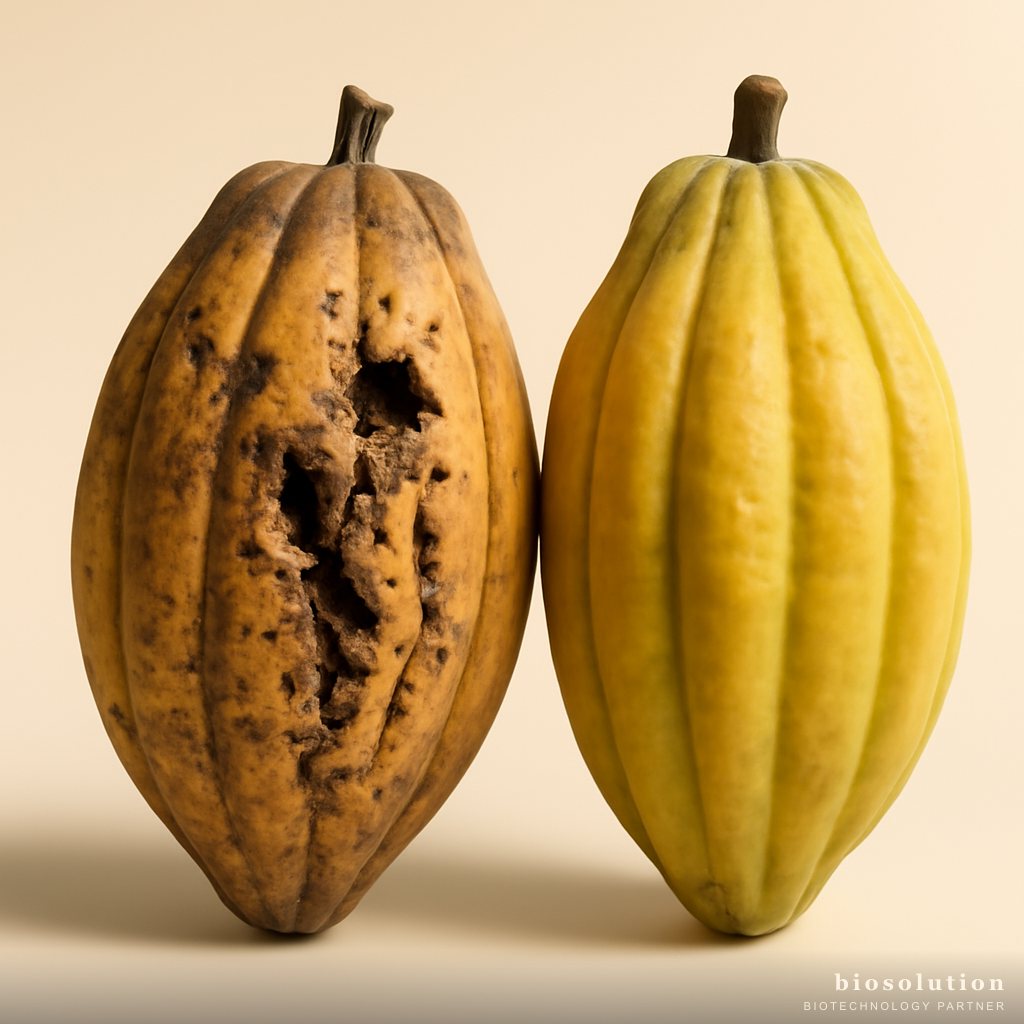
Attacked pods show uneven yellow spots, then turn brown and dry. Pods become wrinkled and drop before ripening. When cut, black boring tunnels and larvae are visible inside.
Symptoms on Mature Pods
On older pods, initial symptoms are yellow or orange spots on the pod surface. When the pod is cut, seeds appear damaged: there are boring holes, seeds fuse together (forming a solid mass), and seeds turn black. This damage reduces seed quality and yield.
Other Symptoms
- Larval frass (excrement) coming out of boring holes.
- Adult moths often seen flying around pods at night.
- Attacked pods are usually lighter because seeds are damaged.
Attack intensity can be measured by the percentage of attacked pods. The economic threshold for CPB is 5-10% attacked pods at the pentil stage. If this threshold is exceeded, control measures must be taken immediately.
Economic Threshold and Monitoring
The economic threshold (ET) is the pest population level at which control must be applied to prevent economic loss. For CPB, the ET is based on the percentage of attacked pods. According to research in Sulawesi, the ET ranges from 5-10% attacked pentil pods. Monitoring is done by observing 100 pods randomly each week.
Monitoring Method
- Select 10 trees randomly per hectare.
- On each tree, observe 10 pentil pods (size 5-10 cm).
- Count the number of pods showing early symptoms (yellow spots).
- If ≥5% of pods are attacked, apply biocontrol.
Monitoring can also use pheromone traps to catch male moths. If catches exceed 10 moths per trap per night, be alert and immediately apply control.
Biocontrol with Anti-Cocoa Pod Borer Formula
Biocontrol of cocoa pod borer uses biological agents such as entomopathogenic fungi Beauveria bassiana and Metarhizium anisopliae contained in the Anti-Cocoa Pod Borer Formula. Both fungi infect CPB larvae when they are active on the pod surface before boring in.
Mode of Action
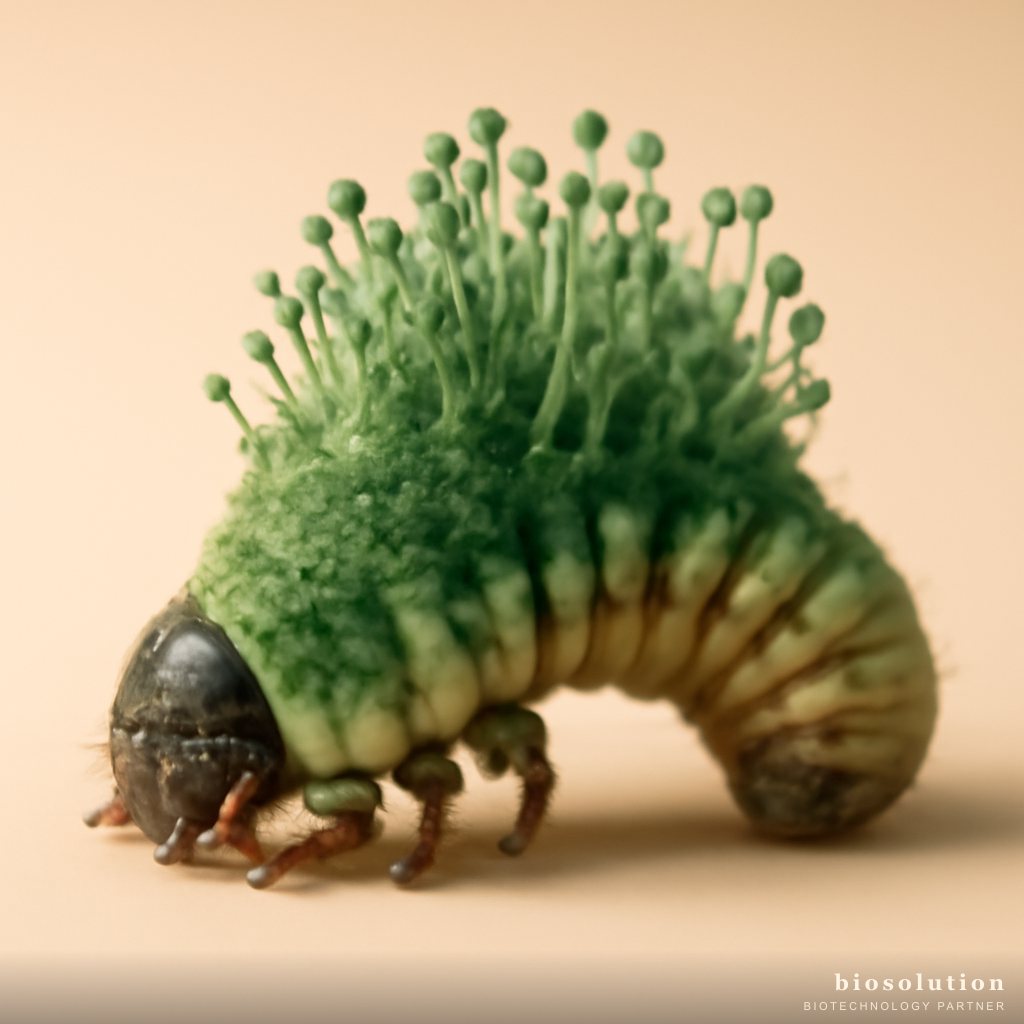
- Beauveria bassiana: Fungal spores attach to the larval cuticle, germinate, and penetrate the larval body. The fungus grows in the hemolymph, producing toxins (beauvericin) that kill the larva within 3-5 days. Infected larvae become stiff and covered with white mycelium.
- Metarhizium anisopliae: Works similarly, but is more effective under high humidity conditions. Produces destruxin toxins that paralyze the larval nervous system. The combination of both fungi increases efficacy and broadens the range of environmental conditions.
Application Method
- Dosage: 3 ml per liter of water.
- Method: Spray evenly over the entire pod surface, especially the underside where eggs are laid.
- Timing: Apply in the late afternoon (4:00-6:00 PM) to avoid UV light that damages spores.
- Frequency: Every 7 days during the pentil pod stage (1-2 months old). If it rains, reapply after the rain stops.
Product Advantages
- Saves cocoa bean yield up to 90%.
- Reduces synthetic insecticide use by up to 70%.
- Safe for harvest workers (no heavy protective gear needed).
- Supports sustainable cocoa programs and Rainforest Alliance certification.
Integrated Pest Management (IPM) Strategy
Biocontrol does not stand alone. For optimal results, integrate with the following IPM practices:
Field Sanitation
- Collect and destroy attacked pods (bury in soil at least 30 cm deep).
- Prune unproductive branches to reduce humidity.
- Clear weeds around trees to reduce moth hiding places.
Shade Management
Excessive shade increases humidity and promotes fungal pathogen development. Adjust shade so that light intensity is 30-50%.
Balanced Fertilization
Healthy trees are more resistant to pest attack. Use organic and inorganic fertilizers as recommended.
Utilization of Natural Enemies
Ants (e.g., Oecophylla smaragdina) and egg parasitoids (e.g., Trichogramma spp.) can help suppress CPB populations. Avoid using broad-spectrum insecticides that kill natural enemies.
Economic Impact and Sustainability
CPB attack can cause yield losses of up to 80% if uncontrolled. Biocontrol with the Anti-Cocoa Pod Borer Formula provides a high return on investment. Application cost per hectare per season is around IDR 500,000, while potential prevented losses can reach tens of millions of rupiah. Additionally, reduced synthetic pesticide use maintains soil health and biodiversity.
According to data from the Ministry of Agriculture (2023), the application of biocontrol on cocoa in Central Sulawesi increased average production from 1.5 tons/ha to 2.2 tons/ha. This shows that biocontrol is not only an environmentally friendly solution but also economically beneficial.
Conclusion
Biocontrol of cocoa pod borer (Conopomorpha cramerella) is an effective strategy that relies on understanding the pest's life cycle, symptoms, and economic threshold. By using the Anti-Cocoa Pod Borer Formula containing Beauveria bassiana and Metarhizium anisopliae, farmers can control CPB naturally without harming the environment. This product is safe, easy to apply, and supports the sustainability of cocoa plantations. For more information, consult directly with the Biosolution team via WhatsApp.
FAQ
Q: When is the best time to apply biocontrol? A: Application is done when pods enter the pentil stage (1-2 months old), in the late afternoon (4:00-6:00 PM) every 7 days. Avoid application during heavy rain.
Q: Is biocontrol safe for pods that will be harvested? A: Very safe. Entomopathogenic fungi only infect insect larvae, do not affect pod or seed quality. In fact, pods saved from attack will have higher yield.
Q: How long does the biocontrol effect last in the field? A: Fungal spores can survive 3-5 days on the pod surface, depending on weather. Weekly reapplication is needed to maintain protection.
Q: Can this product be combined with chemical pesticides? A: It is best not to mix with chemical fungicides or insecticides, as they can kill the fungi. If necessary, allow at least a 3-day interval.
Q: How should the mixed product be stored? A: The mixture should be used immediately (maximum 6 hours after mixing). Do not store as spores will lose viability.