Metarhizium anisopliae Application: 3 Formulas for Soil Pest Control
Resistance of soil pests to chemical pesticides has become a scourge for plantation farmers in Indonesia. This phenomenon is not just an issue, but a bitter reality threatening agricultural productivity and sustainability. However, amidst the failure of chemicals, a natural solution emerges: proper application of Metarhizium anisopliae. This entomopathogenic fungus can control soil pests such as beetles and caterpillars without triggering resistance. This article presents three practical formulas for applying Metarhizium anisopliae for soil pests, complete with scientific data and technical guidance.
Why Do Chemical Pesticides Fail? The Phenomenon of Soil Pest Resistance
Synthetic chemical pesticides provide quick effects, but their continuous use triggers natural selection in pests. Surviving pests pass on resistant genes to the next generation. As a result, the same dose becomes ineffective, forcing farmers to increase dosage or frequency, which worsens pollution and kills natural enemies. According to FAO data, more than 500 insect species are resistant to one or more insecticides. In Indonesia, resistance of Oryctes rhinoceros (coconut rhinoceros beetle) to organophosphates has been reported. This is the gap that biological agents like Metarhizium anisopliae can fill.
Mechanism of Action of Metarhizium anisopliae: A Biological Weapon Against Soil Pests
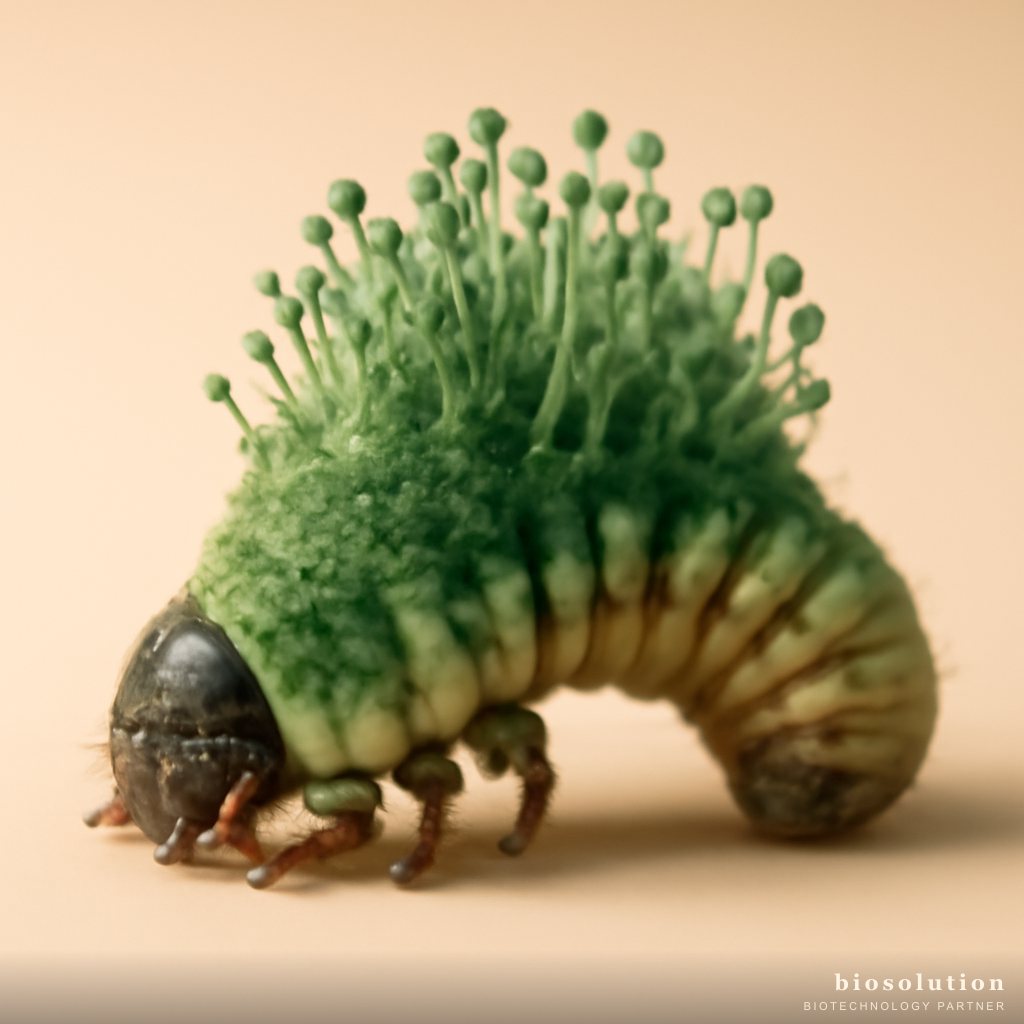
Metarhizium anisopliae is an entomopathogenic fungus that infects pests through contact. Fungal spores attach to the insect's cuticle, then germinate and penetrate the skin layer using protease and chitinase enzymes. Once inside, mycelium grows within the host's body, destroying tissues and absorbing nutrients. The pest dies within 3–7 days, and sporulation occurs on the carcass, spreading new spores into the environment. This cycle repeats, creating secondary infections in other pest populations. The main advantage of Metarhizium anisopliae is its multi-target mechanism, making it difficult for pests to develop resistance.
3 Application Formulas of Metarhizium anisopliae for Soil Pests
Formula 1: Soil Drenching for Pests in the Soil
For pests living in the soil such as grubs (beetle larvae) or cutworms, drenching is the most effective method. Mix 2–3 ml of liquid product or 3–5 g of WP product per liter of water, then drench the root zone of plants. Apply in the afternoon when humidity is high (RH > 70%) to keep spores viable. The dose per mature plant is about 200–300 ml of solution. Repeat every 7–10 days when pest populations are high. Ensure the soil is not too dry or waterlogged. This technique ensures spores directly contact pests in their habitat.
Formula 2: Canopy Spraying for Pests Migrating to Soil
Some pests, like the coconut rhinoceros beetle or stem borers, have above-ground life stages. For these, spray Metarhizium anisopliae solution evenly over the entire plant canopy. The dose is the same as Formula 1, but spray volume is adjusted to plant size (e.g., 5–10 liters per mature oil palm tree). Spraying should be done in the afternoon to avoid UV rays that damage spores. Application frequency is every 7–10 days during the pest season. Combining with Beauveria bassiana (as in Biosolution products) increases the control spectrum.
Formula 3: Baiting for Specific Pests
For hard-to-reach pests like termites or ants, baiting is effective. Mix Metarhizium anisopliae spores with a medium such as bran, sawdust, or tofu dregs that pests like. Form small clumps and place them near nests or pest trails. Spores are exposed when pests eat or carry the bait to the nest. This technique exploits the social behavior of pests to spread infection. Suitable for controlling termites in plantation crops.
Advantages of Biosolution's Biological Insecticide Formula
Biosolution presents a Broad-Spectrum Biological Insecticide Formula containing two superior strains: Beauveria bassiana and Metarhizium anisopliae. This product is formulated at a concentration of 10⁶ CFU/ml for each strain, ensuring 80–85% efficacy against target pests. Other advantages:
- No chemical residues: Safe for harvest and the environment.
- Compatible with IPM: Can be integrated with other biological agents.
- Dual mechanism: Simultaneous attack by two fungi accelerates pest death.
This product is also available in WP (Wettable Powder) form, which is easy to dissolve. For more information, visit Biological Pest Control Formula or Anti-Borer Formula for Oil Palm Beetles specially formulated for oil palm plantations.
Case Study: Effectiveness of Metarhizium anisopliae in Oil Palm Plantations
Research in North Sumatra showed that application of Metarhizium anisopliae at a dose of 3 g/L water suppressed Oryctes rhinoceros populations by up to 75% within 4 weeks. Combination with Beauveria bassiana increased mortality to 85%. Farmers who applied it regularly reported a 50% reduction in chemical pesticide use without yield loss. This data supports the recommendation of application every 7–10 days.
Practical Guide for Farmers on Applying Metarhizium anisopliae
- Best time: Afternoon (3:00–5:00 PM) when humidity >70%.
- Spray equipment: Use a fine nozzle for canopy spraying, or a watering can for drenching.
- Storage: Store product in a cool, dry place, away from direct sunlight.
- Combination: Mix with a natural sticker (e.g., 1% molasses) to improve spore adhesion.
- Monitoring: Check pest populations weekly to determine application timing.
Conclusion
Resistance of soil pests to chemical pesticides is a real threat requiring sustainable solutions. Proper application of Metarhizium anisopliae—whether through drenching, canopy spraying, or baiting—has proven effective in controlling pests without negative side effects. Biosolution products containing Metarhizium anisopliae and Beauveria bassiana are ready to help plantation farmers transition to environmentally friendly agriculture. For further consultation, contact our technical team via WhatsApp. Together, let's create healthy plantations without resistance.