Bt Caterpillar Controller: Biological Solution for Caterpillars & Stem Borers
Caterpillar and stem borer attacks are a nightmare for corn and vegetable farmers in Indonesia. These pests not only damage leaves and stems but also significantly reduce yields. Amid growing awareness of sustainable agriculture, Bacillus thuringiensis (Bt) emerges as an effective and environmentally friendly Bt caterpillar controller. This article thoroughly examines pest life cycles, attack symptoms, economic thresholds, and how Biosolution's Bt product can be an integrated solution.
Understanding Bacillus thuringiensis (Bt) and How It Works
Bacillus thuringiensis is a gram-positive soil bacterium that produces insecticidal crystal proteins (δ-endotoxin) during sporulation. Each Bt subspecies has a toxin specific to certain insect groups. For example, subspecies kurstaki is effective against Lepidoptera larvae (caterpillars).
Mechanism of Action of Bt
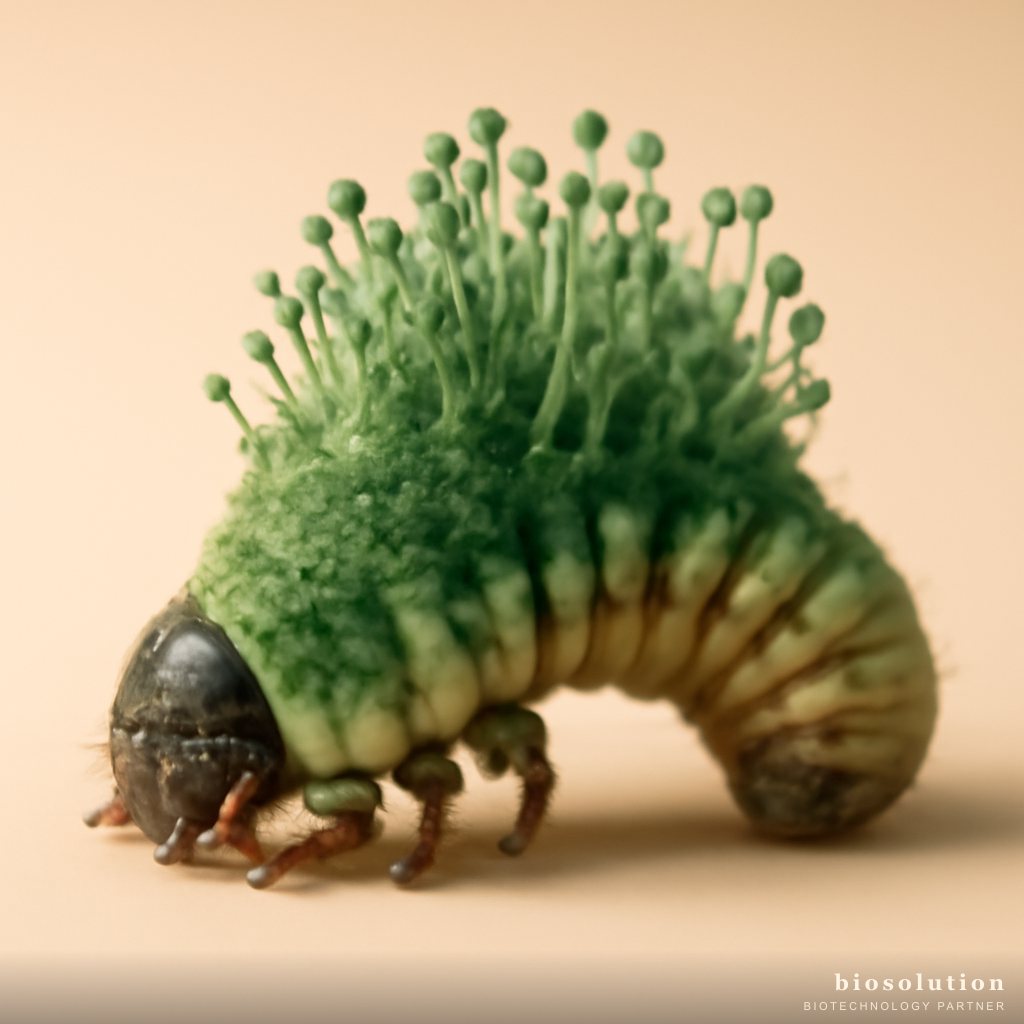
When pest larvae feed on leaves sprayed with Bt, the protein crystals dissolve in the alkaline gut (high pH). The activated toxin then penetrates the gut membrane, causing gut paralysis and stopping larval feeding within 24 hours. Larvae die within 2–3 days due to secondary bacterial infection or starvation. The main advantage of Bt is its selectivity: it does not affect non-target insects, natural enemies, and is safe for humans and animals.
Life Cycle of Caterpillars and Stem Borers on Corn & Vegetables
To control pests effectively, farmers need to understand their life cycle. Here is the general life cycle of caterpillars and stem borers that commonly attack corn and vegetable crops.
Egg → Larva → Pupa → Adult
Female moths lay eggs on the underside of leaves or near growing points. Eggs hatch in 3–5 days into very small first-instar larvae. These larvae then bore into stems or feed on leaves. The larval stage is the damaging stage, lasting 2–3 weeks. After that, larvae pupate in the soil or inside stems. Adults (moths) emerge after 7–10 days, and the cycle repeats.
Examples of Major Pests
- Asian corn borer (Ostrinia furnacalis): Larvae bore into stems and ears, causing plants to break easily and ears to be damaged.
- Common cutworm (Spodoptera litura): Attacks leaves of various vegetables such as cabbage, mustard greens, and legumes.
- Diamondback moth (Plutella xylostella): Larvae feed on cabbage leaves and cause severe damage.
Attack Symptoms and Economic Thresholds
Attack Symptoms
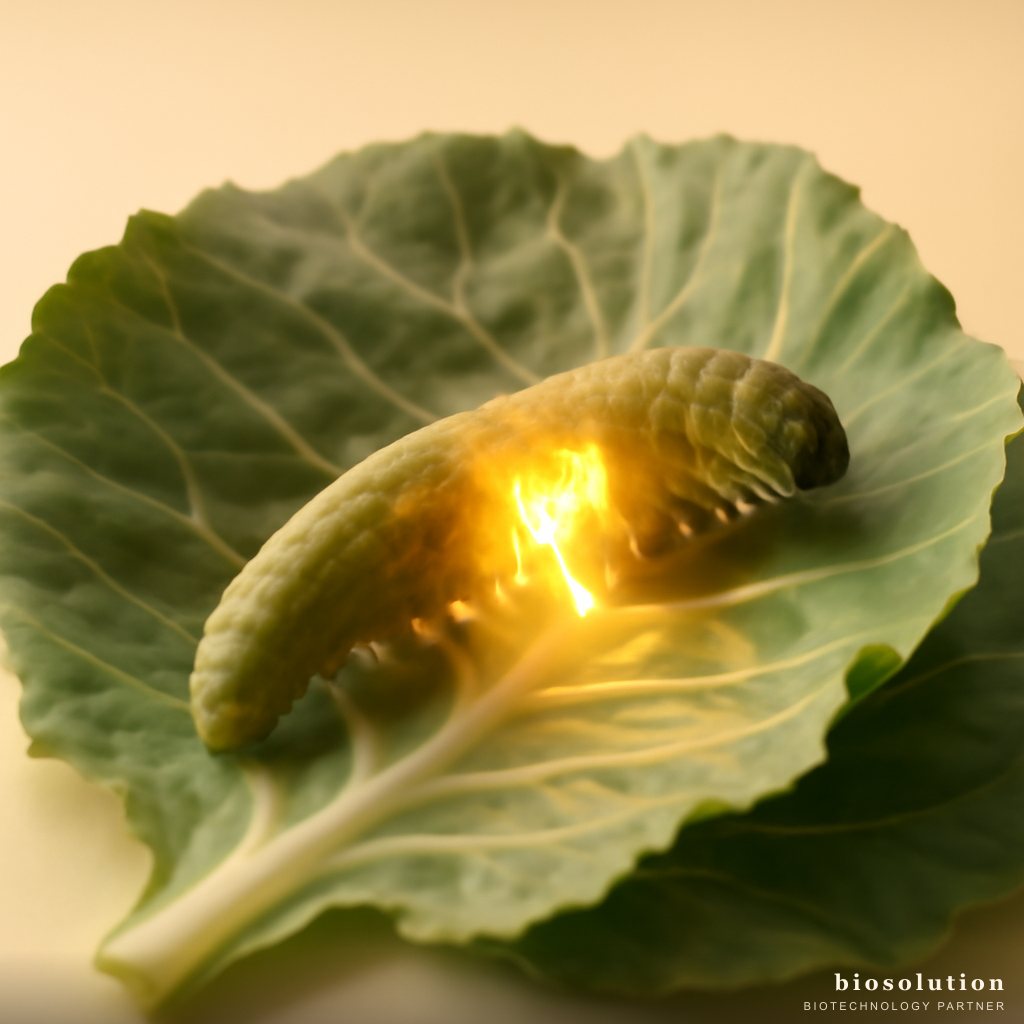
Early symptoms of caterpillar attack usually include holes in leaves or black frass. For stem borers, typical symptoms are boreholes in stems accompanied by frass. Heavily infested plants wilt, become stunted, or break. In corn, stem borer attack also causes ears to develop poorly.
Economic Thresholds
The economic threshold is the pest population level at which control measures must be taken to prevent losses exceeding control costs. For Asian corn borer, the economic threshold is usually 1–2 egg masses per 10 plants or 10–15% infested plants. For common cutworm on vegetables, the economic threshold is about 2–3 larvae per plant. Regular monitoring is crucial to determine the right application timing.
Caterpillar & Stem Borer Control Formula (Bt) from Biosolution
Biosolution presents Caterpillar & Stem Borer Control Formula (Bt) containing Bacillus thuringiensis subsp. kurstaki at a high concentration. This product is specifically designed to control caterpillars and stem borers on corn and vegetable crops effectively and safely.
Composition and Mechanism
This product contains Bacillus thuringiensis subsp. kurstaki strains that produce Lepidoptera-specific δ-endotoxin. When applied, the toxin works in the larval gut and stops feeding within less than 24 hours. Full mortality is achieved in 2–3 days.
Application Method
- Dosage: 2 ml per liter of water.
- Method: Spray evenly on egg masses and young larvae, especially on the underside of leaves and growing points.
- Timing: Apply in the late afternoon to avoid UV degradation.
- Frequency: Every 5–7 days when pest populations increase.
Advantages
- Fast: Larvae stop feeding within 24 hours.
- No cross-resistance: Bt has a different mechanism from chemical insecticides.
- Safe: Leaves no harmful residues on harvested produce.
- Organic: Complies with organic farming standards.
Integrating Bt into Integrated Pest Management (IPM)
Bt is not a standalone solution. Bt use should be integrated with other IPM practices, such as:
- Crop rotation: Breaks pest life cycles.
- Use of natural enemies: Bt does not harm predators like Coccinellidae beetles and parasitoids.
- Regular monitoring: Use pheromone traps or visual observation to determine application timing.
- Field sanitation: Remove infected plant residues.
Case Study: Bt Application on Corn
Corn farmers in East Java applied Caterpillar & Stem Borer Control Formula (Bt) during the vegetative stage when an average of 1 egg mass per 10 plants was found. Application was repeated one week later. Results showed stem borer attack decreased by up to 80% and yield increased by 15% compared to the chemical control plot.
FAQ
1. Is Bt safe for plants and the environment?
Yes, Bt is safe because its toxin is only active at the gut pH of certain insects. Humans and animals have acidic stomach pH that degrades the toxin. Bt also leaves no long-lasting residues and degrades naturally.
2. When is the best time to apply Bt?
The best time is late afternoon, near dusk, when UV light is low. Avoid application during rain or strong wind. Ensure larvae are still active and not too large, as Bt is most effective on first- to second-instar larvae.
3. Can Bt be mixed with chemical pesticides?
It is best not to mix with fungicides or bactericides as they can reduce Bt spore viability. If combination is needed, apply alternately with a 2–3 day interval.
4. How long does Bt's effect last in the field?
The residual effect of Bt is about 2–3 days in the field due to degradation by UV light and soil microorganisms. Therefore, reapplication is needed every 5–7 days when pest populations are high.
5. Does Bt cause resistance in pests?
Resistance to Bt is rare because the toxin works through multiple gut receptors. However, to prevent resistance, avoid continuous use and combine with other IPM methods.
Conclusion
Bacillus thuringiensis (Bt) is an effective, selective, and environmentally friendly biological solution for controlling caterpillars and stem borers on corn and vegetables. By understanding pest life cycles, attack symptoms, and economic thresholds, farmers can apply Bt in a timely manner. The Caterpillar & Stem Borer Control Formula (Bt) product from Biosolution offers ease of application and safety for users and consumers. For further consultation on dosage and application schedules, contact the Biosolution technical team via WhatsApp or see product details on the product page.