Introduction
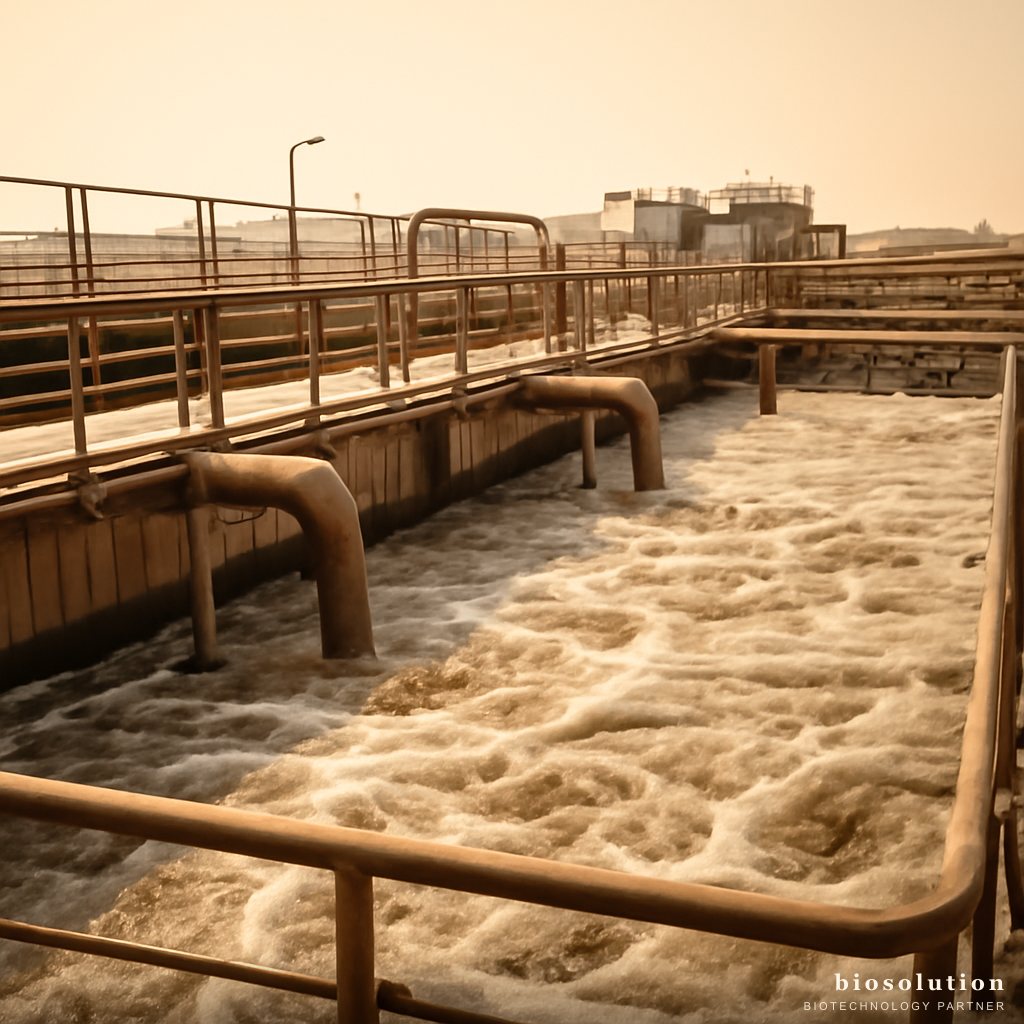
Reducing BOD/COD of wastewater to meet environmental quality standards is a major challenge for industrial environmental managers. BOD (Biochemical Oxygen Demand) and COD (Chemical Oxygen Demand) are key parameters that determine wastewater quality before discharge into water bodies. However, many companies still struggle to achieve the set standards, even after investing heavily in wastewater treatment plants (WWTP). Errors in operation, technology selection, or microorganism management are often the cause. This article identifies 6 common mistakes in managing BOD/COD of wastewater and offers bioremediation solutions based on a consortium of decomposer bacteria and Aspergillus niger from Biosolution.
1. Ignoring Wastewater Characteristics Before WWTP Design
Each industry has unique wastewater characteristics. The first mistake is designing a WWTP without in-depth analysis of parameters such as pH, temperature, initial BOD/COD concentration, and the presence of toxic compounds. For example, textile wastewater contains dyes that are difficult to degrade, while food wastewater is rich in fats and oils. Without this data, the treatment system may be ineffective. The solution is to periodically characterize the wastewater and adjust the microorganism dosage. Biosolution's Liquid Waste Bioremediation Formula contains a consortium of decomposer bacteria that can be tailored to the waste type, optimizing the BOD/COD degradation process.
2. Not Maintaining Microorganism Populations in Biological WWTPs
Biological WWTPs rely on microorganisms to degrade pollutants. A common mistake is not monitoring the number and activity of bacteria in the system. Factors such as organic load fluctuations, nutrient deficiencies, or the presence of inhibitory compounds can cause a drastic decline in bacterial populations. As a result, BOD/COD removal efficiency drops. Environmental managers should regularly check Mixed Liquor Suspended Solids (MLSS) concentrations and add extra bacteria if needed. Biosolution provides a ready-to-use consortium of decomposer bacteria that can be added periodically to maintain a healthy microbial population.
3. Excessive and Inappropriate Use of Chemicals
Many industries still rely on chemical coagulants and flocculants to reduce COD. However, excessive use can actually increase residual COD because the chemicals themselves require oxygen to oxidize. Additionally, chemical residues can inhibit microorganism activity in the biological stage. This mistake often occurs due to a lack of understanding of chemical-microbe interactions. A better approach is to optimize biological processes with bioremediation. Aspergillus niger in Biosolution's products produces extracellular enzymes that break down complex compounds, reducing chemical needs by up to 30%.
4. Neglecting Maintenance and Calibration of WWTP Equipment
Equipment such as pumps, aerators, and pH sensors are often neglected. Inadequate aeration leads to low oxygen levels, hindering aerobic bacteria from degrading BOD. Clogged pumps disrupt wastewater circulation. Incorrect sensor calibration provides false data, so operators do not know the actual conditions. This mistake can be prevented with a regular maintenance schedule and real-time monitoring. If aeration is optimal but BOD/COD remains high, add Liquid Waste Bioremediation Formula to boost degradation activity.
5. Not Performing Bioaugmentation Periodically
Bioaugmentation is the addition of specific microorganisms to enhance pollutant degradation. Many industries rely solely on indigenous bacteria, which may not be effective enough. The fifth mistake is not performing bioaugmentation periodically, especially when waste loads increase or after shock loading. Biosolution's products are designed for routine bioaugmentation: an initial dose of 100–500 ml per m³, then weekly maintenance. The consortium of decomposer bacteria and Aspergillus niger work synergistically to consistently lower BOD/COD, helping achieve quality standards faster.
6. Lack of Monitoring and Documentation of WWTP Performance
The final mistake is not regularly monitoring parameters and documenting them. Without trend data, it is difficult to detect performance decline early. Environmental managers should record influent and effluent BOD/COD daily, along with other operational parameters. With this data, root cause analysis can be performed if deviations occur. Biosolution supports customers with simple monitoring guides, so bioremediation effectiveness can be objectively evaluated.
Conclusion
Reducing BOD/COD of wastewater to meet environmental quality standards requires a holistic approach: understanding wastewater characteristics, WWTP maintenance, and microorganism optimization. The six mistakes above are common and can be avoided with the right strategy. Biosolution's Liquid Waste Bioremediation Formula, with a consortium of decomposer bacteria and Aspergillus niger, offers an effective solution to improve biological WWTP performance. For further consultation, contact the Biosolution technical team via WhatsApp or see product details on the product page.
FAQ
1. What are the main causes of BOD/COD being difficult to reduce?
Main causes include microbial population imbalance, excessive organic load, insufficient aeration, or presence of toxic compounds. A thorough evaluation of the WWTP system is needed.
2. How does the bacterial consortium work to reduce BOD/COD?
The bacterial consortium breaks down organic matter into simple compounds through aerobic metabolism. Aspergillus niger produces enzymes that break down complex pollutants, accelerating degradation.
3. What is the recommended initial dose of the bioremediation product?
Initial dose is 100–500 ml per m³ of WWTP volume, depending on initial BOD/COD concentration. For maintenance, weekly dose according to technical guidelines.
4. Is this product safe for the environment?
Yes, the microorganisms used are non-pathogenic and natural. The product has been tested and is safe for the environment, leaving no harmful residues.
5. Can this product be used for all types of wastewater?
The product is designed for general industrial wastewater, but optimal effectiveness needs to be adjusted to waste characteristics. Consultation with the technical team is recommended.