Bioremediation of Food and Textile Industrial Liquid Waste: Regulations, Impacts, and Biological Solutions
Industrial liquid waste, especially from the food and textile sectors, is one of the largest contributors to water pollution in Indonesia. Bioremediation of industrial liquid waste presents an environmentally friendly approach that utilizes microorganisms to decompose organic and chemical pollutants. This article discusses regulations, environmental impacts, and how biological solutions such as a consortium of decomposer bacteria and Aspergillus niger can help industries meet quality standards and reduce treatment costs.
Why Are Food and Textile Industrial Liquid Wastes a Serious Problem?
The food industry produces waste with high organic content—such as starch, protein, and fats—which increases Biological Oxygen Demand (BOD) and Chemical Oxygen Demand (COD). Meanwhile, the textile industry contributes synthetic dyes, heavy metals, and complex chemical compounds that are difficult to decompose naturally. Without proper treatment, this waste pollutes rivers, disrupts aquatic ecosystems, and endangers public health.
Environmental and Social Impacts
- Eutrophication: Excess nutrients like nitrogen and phosphorus trigger excessive algae growth, reduce dissolved oxygen, and cause fish kills.
- Toxicity: Azo dyes and heavy metals from textiles are carcinogenic and can accumulate in the food chain.
- Odor and aesthetics: Decomposing organic waste produces unpleasant odors and disturbs nearby settlements.
Applicable Regulations
In Indonesia, the Minister of Environment and Forestry Regulation No. P.68/Menlhk-Setjen/2016 concerning Wastewater Quality Standards for Industrial Businesses and/or Activities serves as the main reference. Quality standards for parameters such as BOD, COD, TSS, and pH must be met before waste is discharged into water bodies. Violations can result in administrative to criminal sanctions, including fines of billions of rupiah.
Principles of Liquid Waste Bioremediation: How Microorganisms Work
Bioremediation is the process of decomposing pollutants by microorganisms (bacteria, fungi, or algae) into simpler and harmless compounds. In industrial liquid waste, the main mechanisms are:
Aerobic Degradation
Aerobic microorganisms use oxygen to oxidize organic compounds into CO₂ and H₂O. This process efficiently reduces BOD and COD significantly.
Anaerobic Degradation
Without oxygen, anaerobic microorganisms convert organic compounds into methane (CH₄) and CO₂. This process is suitable for waste with very high organic loads.
Role of Extracellular Enzymes
Fungi such as Aspergillus niger produce cellulase, amylase, and protease enzymes that break down complex polymers (cellulose, starch, protein) into monomers that are more easily decomposed by bacteria.
Liquid Waste Bioremediation Formula: The Right Solution for Industrial WWTP
One product specifically designed for this need is the Industrial Liquid Waste Bioremediation Formula from Biosolution. This product contains a consortium of decomposer bacteria capable of rapidly reducing BOD/COD, as well as Aspergillus niger as an extracellular enzyme producer.
Composition and Mechanism
- Consortium of decomposer bacteria: Consists of Bacillus, Pseudomonas, and Lactobacillus species that work synergistically to degrade various types of organic pollutants.
- Aspergillus niger: A fungus that produces hydrolytic enzymes to break down complex compounds, accelerating the degradation process.
Application Method
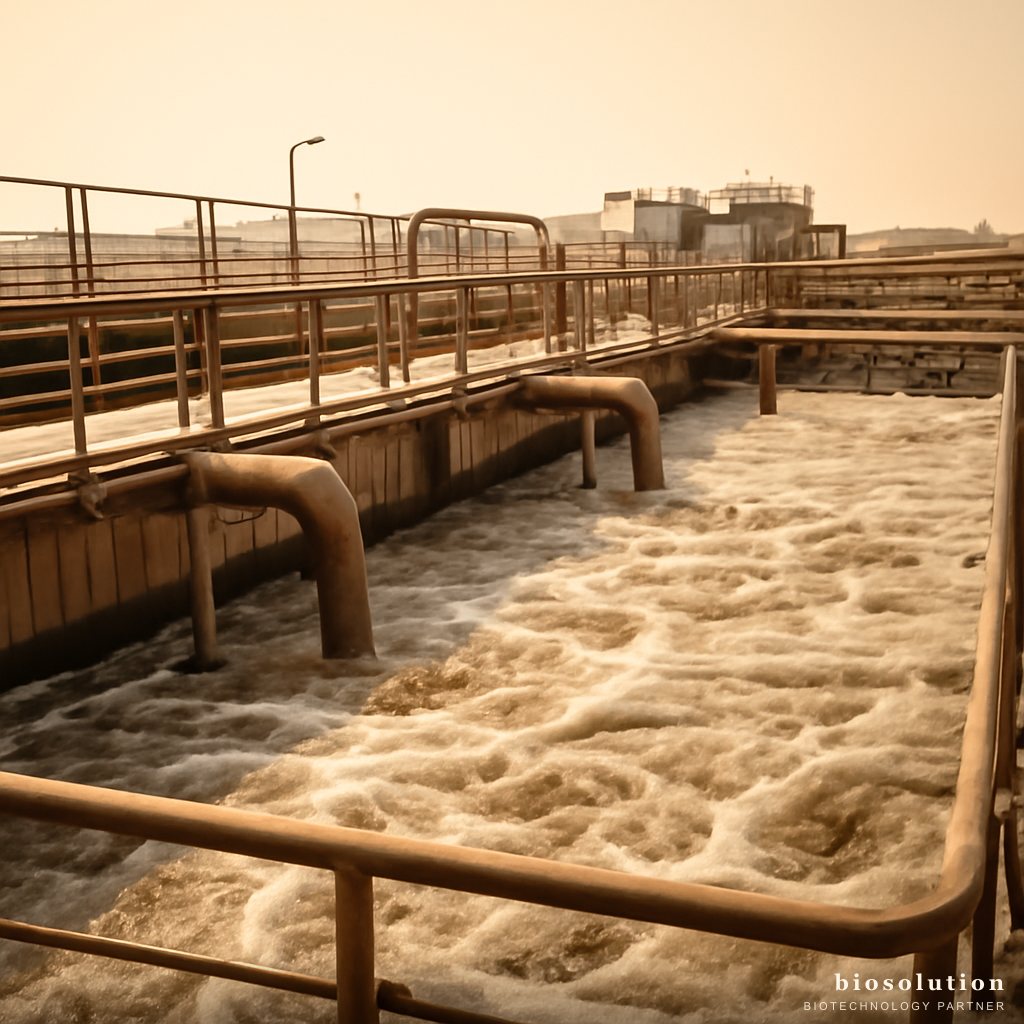
The product is applied by direct dosing into the WWTP pond. Initial dose of 100–500 ml per m³ of waste, then weekly maintenance. Regular use ensures optimal microbial population.
Benefits for Industry
- Meet quality standards: Treated liquid waste is safe for discharge into the environment.
- Reduce fines: Regulatory compliance avoids legal sanctions.
- Cost efficiency: Reduces use of coagulant and flocculant chemicals, and lowers WWTP operational costs.
- Fast ROI: Savings from reduced treatment costs and fines can be seen within months.
Case Study: Bioremediation Application in Food and Textile Industries
Food Industry
A fish processing plant in East Java had a WWTP with initial BOD of 2,500 mg/L and COD of 4,000 mg/L. After applying the bioremediation formula for 4 weeks, BOD dropped to 200 mg/L and COD to 400 mg/L—meeting quality standards (BOD 150 mg/L, COD 300 mg/L). The plant also reported a reduction in odor and a 40% decrease in chemical purchase costs.
Textile Industry
A textile factory in Bandung faced the problem of azo dye waste that was difficult to decompose. With a dose of 300 ml/m³ and additional aeration, the bacterial consortium successfully degraded color by 90% within 7 days. COD dropped from 1,200 mg/L to 250 mg/L. This success helped the company pass environmental audits and avoid sanctions.
Steps to Implement Bioremediation in Your WWTP
- Waste characterization: Measure BOD, COD, TSS, pH, and temperature parameters to determine the optimal dose.
- Pond preparation: Ensure aeration and pH are suitable (6.5–8.5) for microbial growth.
- Initial inoculation: Dose the product according to WWTP volume.
- Regular monitoring: Monitor parameters weekly, perform maintenance dosing.
- Evaluation and adjustment: If necessary, increase the dose or application frequency.
Conclusion
Bioremediation of food and textile industrial liquid waste offers an effective, environmentally friendly, and economical solution. By utilizing a consortium of decomposer bacteria and Aspergillus niger, industries can meet quality standards, reduce environmental impacts, and avoid fines. Bioremediation of industrial liquid waste is a long-term investment for business sustainability. If you want to learn more about applying this formula in your WWTP, contact the Biosolution team via WhatsApp for a free consultation.