Chicken Manure Deodorizer: Microbial Solution for Poultry Houses
Chicken manure is one of the main sources of pollution in poultry farms. Besides causing pungent odors, this waste also attracts disease vectors and pollutes the environment if not managed properly. This is where the role of decomposer microbes becomes crucial. By utilizing a consortium of microorganisms such as Streptomyces sp., Bacillus, and Aspergillus, farmers can decompose chicken manure while efficiently reducing odor. This article thoroughly discusses regulations, impacts, and the right biological solutions to address the problem of chicken manure deodorization.
Why Chicken Manure Causes Odor and Environmental Problems
Chicken manure contains complex organic compounds such as undigested proteins, fats, and carbohydrates. When decomposed anaerobically (without oxygen), putrefactive bacteria produce ammonia (NH₃), hydrogen sulfide (H₂S), and methane (CH₄) gases with sharp odors. Ammonia not only disrupts the respiration of livestock and farmers but also contributes to acid rain and water eutrophication. The large volume of manure—a laying hen produces about 0.1 kg per day—causes rapid waste accumulation. Without treatment, manure piles become breeding grounds for flies and pathogens such as Salmonella and E. coli. Therefore, effective waste management is crucial for the sustainability of livestock operations.
Livestock Waste Management Regulations in Indonesia
The Indonesian government, through the Minister of Environment and Forestry Regulation No. P.68/Menlhk-Setjen/2016 on Emission Standards for New Type Motor Vehicles, does not specifically regulate livestock waste, but Law No. 32 of 2009 on Environmental Protection and Management requires every business to manage its waste. The Ministry of Agriculture also issued Good Farming Practices for Laying Hens, which emphasizes waste management. Farmers are required to have waste treatment facilities, such as anaerobic ponds or composting. Unfortunately, many small-scale farmers have not complied due to limited costs and knowledge. Biological solutions such as the use of decomposer microbes offer a cheap and easy-to-implement alternative, while helping farmers meet environmental standards.
How Microbes Work to Decompose Chicken Manure and Odor
Decomposer microbes work by breaking down complex organic compounds into simple compounds through aerobic decomposition. Bacillus and Aspergillus produce cellulase, protease, and lipase enzymes that hydrolyze cellulose, proteins, and fats. Streptomyces sp. acts as an enzyme and natural antibiotic producer that suppresses pathogen growth. This consortium accelerates decomposition, reduces waste volume by 30–50%, and converts ammonia into odorless nitrates. This process produces stable, nutrient-rich compost that is safe to use as organic fertilizer. With regular application, barn odor is significantly reduced within 1–2 weeks.
Role of Streptomyces sp. in Reducing Odor
Streptomyces is a Gram-positive bacterium known as a producer of antibiotics and enzymes. In waste management, Streptomyces breaks down sulfur and nitrogen compounds that cause odor. The enzymes it produces, such as keratinase, can also decompose chicken feathers often mixed in manure. The presence of Streptomyces in the consortium ensures optimal decomposition without producing foul odors.
Bacillus and Aspergillus Consortium for Rapid Decomposition
Bacillus subtilis and Bacillus licheniformis are thermophilic bacteria active at high temperatures during composting. Aspergillus niger is a fungus that produces citric acid and enzymes that break down lignin. Their combination accelerates the thermophilic phase (temperature 50–70°C), kills pathogens, and stabilizes compost within 3–4 weeks, faster than natural decomposition which can take 2–3 months.
Organic Waste Decomposer Formula: The Right Solution for Poultry Houses
The Organic Waste Decomposer Formula is a Biosolution product specifically formulated to decompose livestock waste. Containing Streptomyces sp., Bacillus, and Aspergillus, this product works synergistically to decompose chicken manure, reduce odor, and produce quality compost. It is easy to use: dilute 1 liter of product in water, spray onto the waste pile (1 liter per m³), and apply once per pile. The best time is in the afternoon to avoid direct sunlight which can damage the microbes. Within a few days, odor will drastically decrease, and waste volume will shrink. The resulting compost is ready for use after 3–4 weeks.
Positive Impacts of Using Decomposer Microbes on Farms
Adopting decomposer microbes brings many benefits. First, the barn environment is healthier because ammonia is reduced, thus lowering livestock mortality. Second, processed waste into compost can be sold as organic fertilizer, increasing farmers' income. Third, compliance with environmental regulations is easier to achieve. Farmers who switch to biological methods report waste management cost savings of up to 40% compared to conventional methods. Additionally, the compost produced is safe for use on food crops, supporting sustainable agriculture.
Practical Steps to Start Waste Management with Microbes
- Collect chicken manure in regular piles (1–2 m wide, 1 m high).
- Turn the pile weekly to maintain aeration.
- Dissolve 1 liter of Organic Waste Decomposer Formula in 10 liters of water.
- Spray the solution evenly over the entire pile (1 liter per m³ of waste).
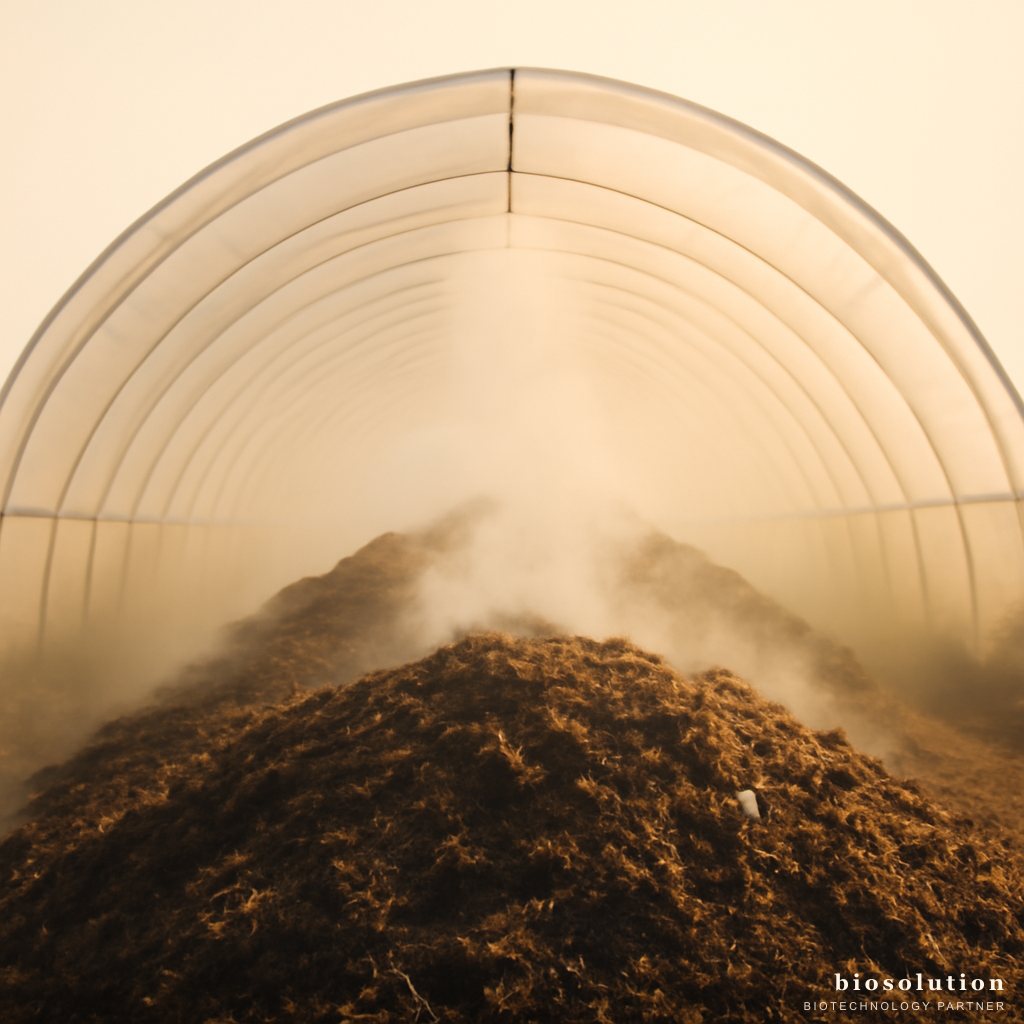
- Cover the pile with a tarp to maintain moisture.
- Monitor temperature; if too dry, add water.
- Compost is ready in 3–4 weeks when temperature stabilizes and smells like earth.
For optimal results, ensure moisture around 50–60% (like a wrung-out sponge). Avoid application during hot midday. This product can also be used for other livestock waste such as cattle and goats.
Conclusion
Chicken manure deodorization is no longer a difficult problem to solve. By utilizing decomposer microbes such as those contained in the Organic Waste Decomposer Formula, farmers can effectively manage waste, reduce odor, and produce economically valuable compost. This solution is environmentally friendly, compliant with regulations, and easy to apply. Interested in trying? Contact the Biosolution team via WhatsApp for a free consultation and get the best product for your farm.
FAQ
What is the main cause of chicken manure odor?
Chicken manure odor is mainly caused by anaerobic decomposition producing ammonia (NH₃), hydrogen sulfide (H₂S), and methane (CH₄) gases. These compounds are formed when putrefactive bacteria break down proteins and organic compounds without oxygen. Aerobic decomposer microbes such as Bacillus and Streptomyces can convert ammonia into odorless nitrates, thus eliminating odor.
How long does it take for odor to reduce after applying microbes?
Usually within 3–7 days after application, odor begins to decrease significantly. On larger waste piles, changes are visible within 1–2 weeks. Factors such as temperature, moisture, and aeration affect decomposition speed. Ensure the pile is turned periodically for optimal results.
Is this product safe for livestock and humans?
Yes, the microbes used are non-pathogenic and safe. Bacillus, Aspergillus, and Streptomyces are microorganisms commonly found in nature. The product contains no harmful chemicals. However, avoid direct contact with eyes and ingestion. Use gloves during application.
Can this product be used for waste other than chicken manure?
Certainly. The Organic Waste Decomposer Formula is effective for various organic wastes such as cow manure, goat manure, plant residues, and kitchen waste. Dosage and application method are the same. This product is also suitable for household-scale composting.
How to store the product after opening?
Store in a cool, dry place away from direct sunlight. Close tightly after use. The product can last up to 6 months if stored properly. Do not freeze or heat above 40°C.