Anti Phytophthora Rot in Chili: Integrating Biological Formula with Natural Enemies for Integrated Pest Management
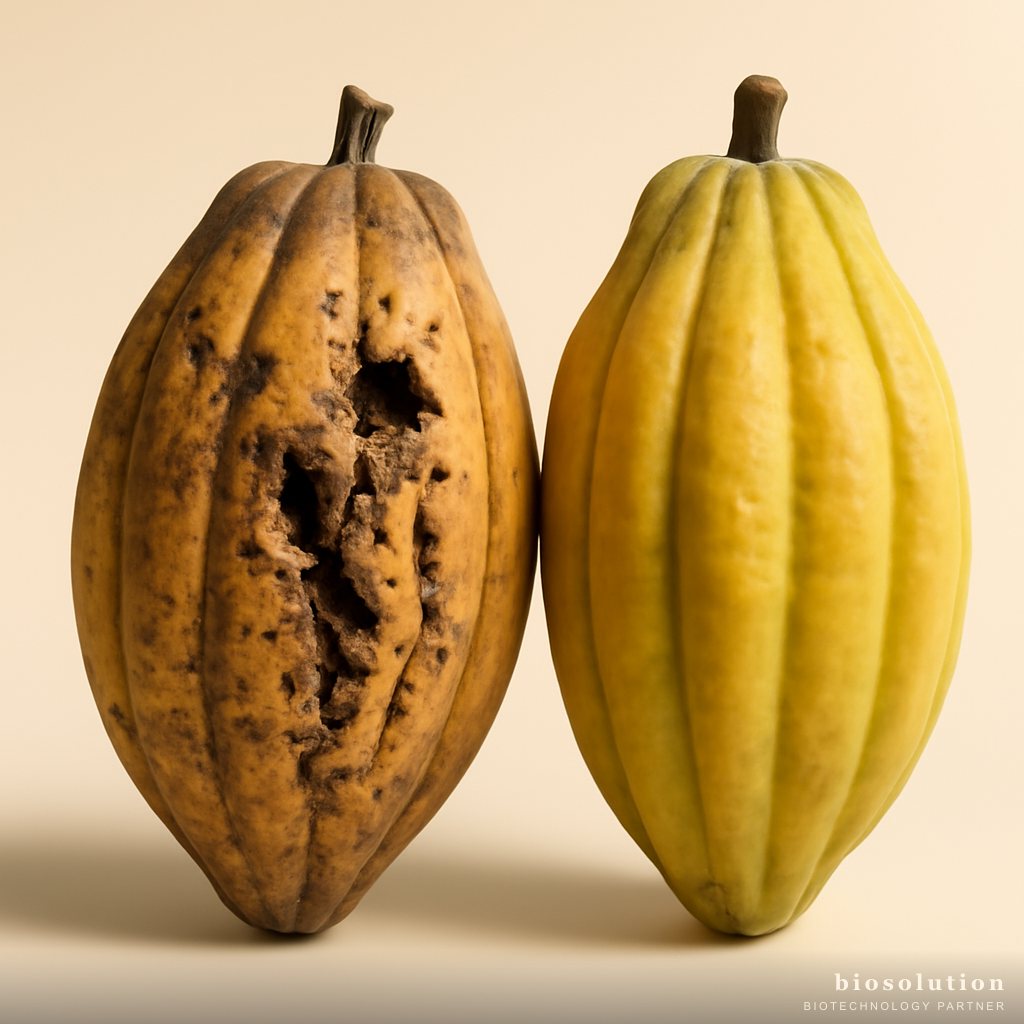
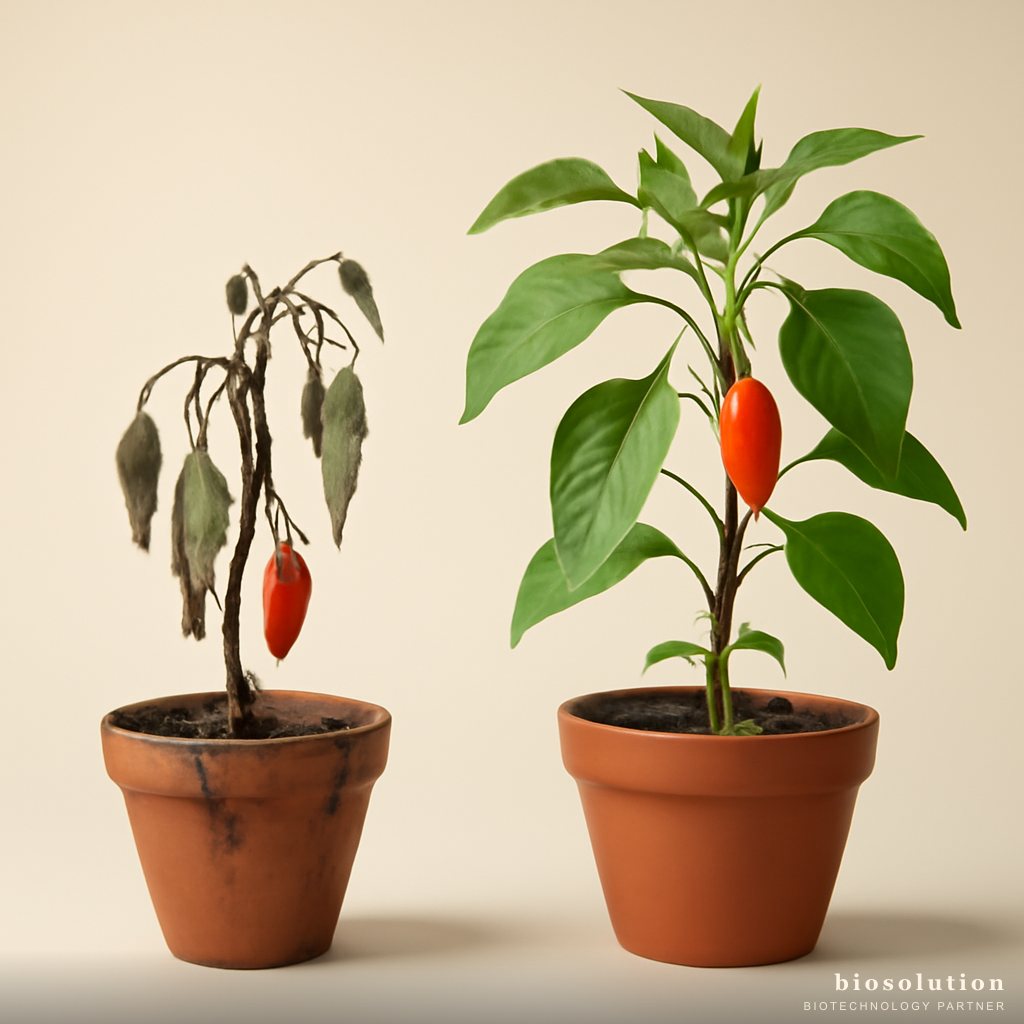
Phytophthora rot in chili and cocoa is a highly detrimental disease caused by Phytophthora capsici and Phytophthora palmivora. These pathogens attack roots, stem bases, and fruits, causing sudden wilt and root rot. Without proper control, losses can reach 50-100%. One of the most effective approaches is Integrated Pest Management (IPM) which integrates biological agents and natural enemies. Biosolution presents the Anti-Phytophthora Rot Formula, a biocontrol product specifically formulated to suppress this disease while being environmentally friendly. This article will technically discuss how this formula works and how to integrate it with natural enemies for integrated IPM.
Understanding Natural Enemies of Phytophthora: Superior Biological Agents
The natural enemies of Phytophthora are antagonistic microorganisms that naturally inhibit pathogen growth. The Anti-Phytophthora Rot Formula contains three superior biological agents:
Trichoderma harzianum: Mycoparasite and PGPR
Trichoderma harzianum is a fungus capable of parasitizing Phytophthora hyphae by coiling around and penetrating the pathogen's cell wall, then degrading its components. Additionally, T. harzianum acts as a Plant Growth-Promoting Rhizobacteria (PGPR) that enhances root growth and plant resistance. In this formula, T. harzianum is present at a minimum concentration of 10^6 CFU/mL, effectively suppressing pathogen populations in the rhizosphere.
Pseudomonas fluorescens: Antagonist and Resistance Inducer
Pseudomonas fluorescens is a bacterium that produces antibiotic compounds such as phenazine and 2,4-diacetylphloroglucinol (DAPG) which are fungistatic against Phytophthora. More importantly, this bacterium can induce Systemic Resistance (ISR) in plants, making them more prepared to fight infection. Drench application at a dose of 5 mL/L every 14 days has been shown to increase defense enzyme activity such as peroxidase and polyphenol oxidase.
Bacillus subtilis: Antibiosis and Protective Biofilm
Bacillus subtilis produces cyclic lipopeptides (iturin, fengycin, surfactin) that damage the pathogen's cell membrane. This bacterium also forms a biofilm on the root surface, creating a physical barrier that prevents Phytophthora penetration. The combination of these three agents in one formula provides multi-level protection: mycoparasitism, antibiosis, competition, and induced resistance.
Mechanism of the Anti-Phytophthora Rot Formula in Suppressing Pathogens
The Anti-Phytophthora Rot Formula works through several simultaneous mechanisms that reinforce each other:
Mycoparasitism: Trichoderma harzianum recognizes and attaches to Phytophthora hyphae, then secretes chitinase and glucanase enzymes that degrade the pathogen's cell wall. This process causes lysis and death of hyphae.
Antibiosis: Pseudomonas fluorescens and Bacillus subtilis produce antimicrobial compounds that inhibit spore germination and mycelial growth of Phytophthora. These compounds also inhibit the formation of zoospores, which are the main source of infection.
Nutrient Competition: All three biological agents compete for nutrients (especially carbon and iron) with the pathogen in the rhizosphere. Pseudomonas fluorescens produces siderophores that bind iron, thereby limiting iron availability for Phytophthora.
Induced Systemic Resistance (ISR): Pseudomonas fluorescens and Bacillus subtilis trigger plant defense responses through salicylic acid and jasmonate signaling pathways. Induced plants produce defense compounds such as phytoalexins and pathogenesis-related proteins (PR-proteins) ready to fight infection.
Protective Biofilm: Bacillus subtilis forms a biofilm that coats the root surface, creating a physical barrier that prevents direct contact between the pathogen and roots. This biofilm also serves as a reservoir for the biological agents to continue developing.
Integration of the Anti-Phytophthora Rot Formula with Other Natural Enemies in IPM
IPM (Integrated Pest Management) in chili and cocoa does not rely solely on one type of control. Integrating the Anti-Phytophthora Rot Formula with other natural enemies such as predators, parasitoids, and complementary biological agents is highly recommended. Here is the integration strategy:
1. Routine Drench Application
The Anti-Phytophthora Rot Formula is applied by drenching at 5 mL per liter of water every 14 days in the morning or evening. Application starts from early planting until the generative stage. This establishes a stable population of biological agents in the rhizosphere.
2. Conservation of Natural Enemies of Insects
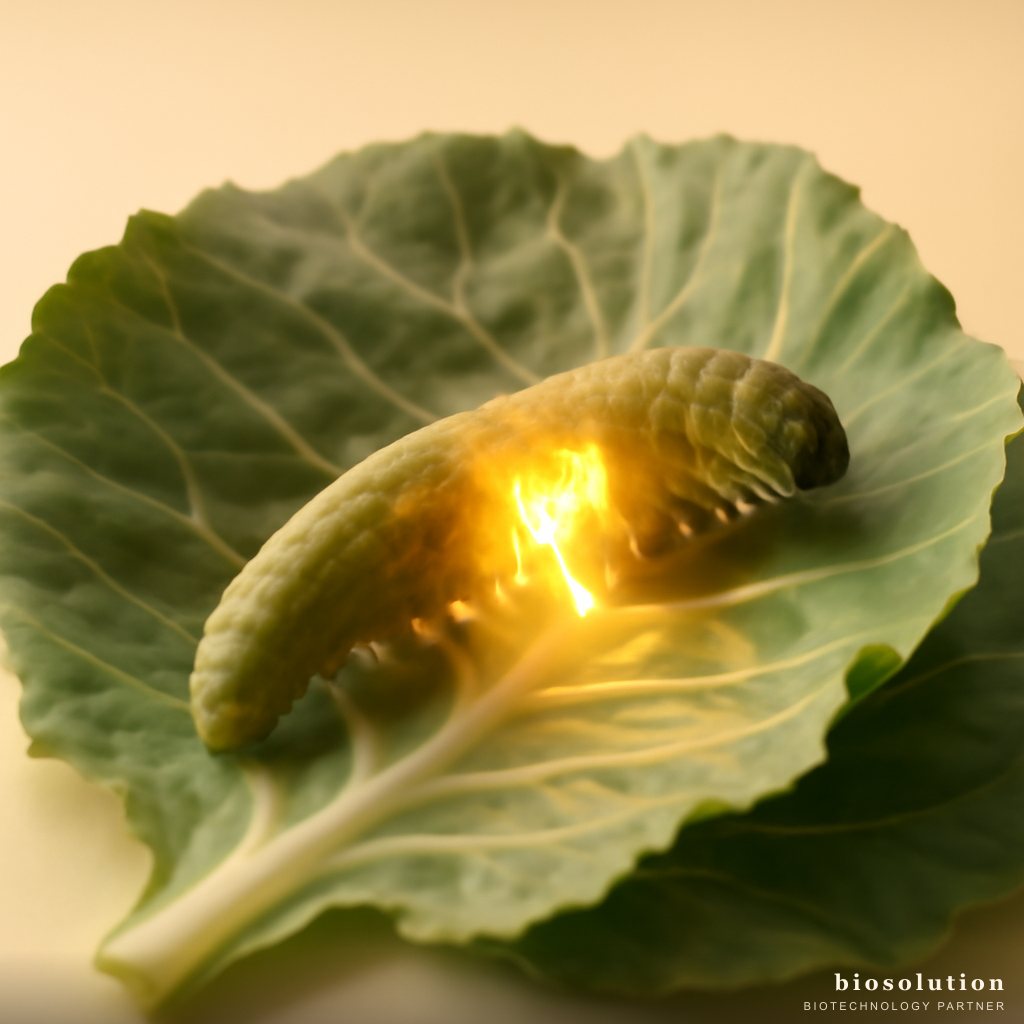
Besides pathogens, pests such as aphids, thrips, and mites also attack chili. The use of non-selective chemical pesticides can kill natural enemies like Coccinellidae beetles, lacewings, and Trichogramma parasitoids. By reducing synthetic fungicides thanks to the Anti-Phytophthora Rot Formula, farmers can maintain populations of insect natural enemies. For example, Menochilus sexmaculatus beetles effectively control aphids, while Trichogramma sp. controls fruit borer pests.
3. Addition of Complementary Biological Agents
In addition to this formula, farmers can add Beauveria bassiana or Metarhizium anisopliae to control soil pests such as grubs. Application can be done simultaneously with drenching of the Anti-Phytophthora Rot Formula, as there is no antagonism between these biological agents. Ensure a minimum interval of 7 days if using chemical pesticides.
4. Sanitation and Cultural Practices
IPM is incomplete without good cultural practices. Land sanitation by cleaning infected plant residues, proper drainage, and the use of plastic mulch can reduce soil moisture that favors Phytophthora development. Crop rotation with non-solanaceous plants is also recommended.
5. Monitoring and Economic Threshold
Conduct intensive monitoring every week. If early symptoms of root rot or stem base rot are found, immediately apply the Anti-Phytophthora Rot Formula at a higher dose (10 mL/L) for 3 consecutive days. After that, return to the maintenance dose.
Advantages of Using the Anti-Phytophthora Rot Formula Compared to Synthetic Fungicides
Continuous use of synthetic fungicides can lead to Phytophthora resistance, environmental pollution, and residues on products. The Anti-Phytophthora Rot Formula offers several advantages:
- Environmentally friendly: Leaves no harmful residues, safe for natural enemies and pollinators.
- Multi-mechanism: Reduces the risk of resistance because the pathogen must combat multiple mechanisms simultaneously.
- Enhances plant resistance: Through ISR, plants are stronger against other pathogen attacks.
- Extends plant lifespan: Healthy roots make plants more productive for longer.
Case Study: Application on Chili and Cocoa
In chili, application of the Anti-Phytophthora Rot Formula from nursery to harvest suppressed the incidence of stem base rot disease by up to 70% compared to untreated controls. In cocoa, fruit rot disease caused by Phytophthora palmivora can be suppressed by fruit spray application using the same formula (dose 5 mL/L every 14 days). Combination with sanitation and canopy pruning increases effectiveness.
How to Obtain and Use the Anti-Phytophthora Rot Formula
The Anti-Phytophthora Rot Formula is available in 1-liter packaging. Instructions for use:
- Shake the bottle before use.
- Mix 5 mL of formula into 1 liter of water.
- Apply to the soil around the plant roots, 200-300 mL per plant.
- Repeat every 14 days or after heavy rain.
- Store in a cool, dark place.
For further consultation regarding specific dosages or integration with other natural enemies, contact the Biosolution technical team via WhatsApp.
Conclusion
Phytophthora rot in chili and cocoa can be effectively controlled with an integrated IPM approach. The Anti-Phytophthora Rot Formula containing Trichoderma harzianum, Pseudomonas fluorescens, and Bacillus subtilis is a powerful biocontrol weapon. By integrating it with insect natural enemies and cultural practices, farmers can suppress disease, reduce dependence on synthetic fungicides, and increase yields sustainably. For more information about this product, visit Anti-Phytophthora Rot Formula or Biocontrol Solutions. Also read related article Biocontrol of Phytophthora in Cocoa.