Anti Phytophthora Rot in Chili: Monitoring Biocontrol Populations in the Field Using Trap, Scout, and Threshold Methods
Phytophthora rot in chili and cocoa is a disease caused by Phytophthora capsici, an aggressive soilborne pathogen. Yield losses due to this disease can reach 50-80% if not managed properly. The biocontrol approach using antagonistic microorganisms is an environmentally friendly solution that is becoming increasingly popular. However, the effectiveness of biocontrol heavily depends on the population of biological agents in the rhizosphere. Therefore, monitoring biocontrol populations for anti phytophthora rot in chili is key to success. This article discusses trap, scout, and threshold setting techniques for monitoring populations of Trichoderma harzianum, Pseudomonas fluorescens, and Bacillus subtilis contained in Biosolution's Anti-Phytophthora Rot Formula.
Why is Biocontrol Population Monitoring Important?
Biocontrol is not just about applying microbes; it requires careful population management. The population of biological agents in the soil is influenced by many factors: moisture, pH, competition from native microbes, and nutrient availability. Without monitoring, farmers do not know whether the application has been effective or needs to be repeated. Monitoring the population of Trichoderma harzianum, for example, allows us to know whether this mycoparasite is sufficiently dominant to infect Phytophthora. Similarly, Pseudomonas fluorescens requires a minimum population of 10^5 CFU/g soil to induce plant resistance (ISR). With monitoring, farmers can make timely decisions: whether to reapply, adjust dosage, or even rotate biological agents. This saves costs and increases effectiveness.
Trap Method: Trapping Pathogens and Biocontrol Agents in Soil
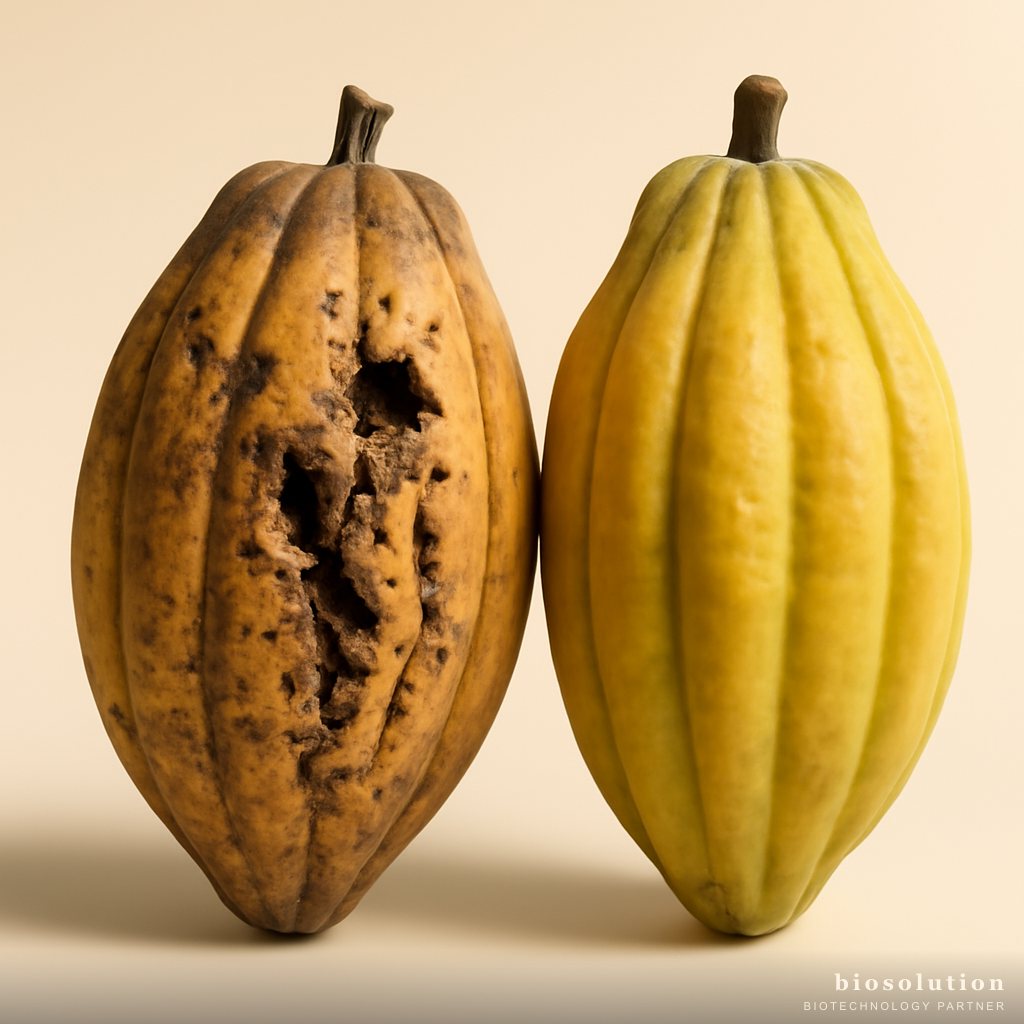
The trap method is a simple technique for detecting the presence of Phytophthora capsici and biocontrol agents in soil. The principle is to use bait in the form of susceptible plant tissue, such as chili leaf pieces or young cocoa fruit. The bait is planted in the soil sample for 24-48 hours, then observed for the emergence of mycelium or lesions. To distinguish between pathogen and biocontrol agents, selective media can be used. Trichoderma harzianum grows quickly with green mycelium, while Phytophthora forms characteristic sporangia. The trap method can also be modified by adding antibiotics to suppress bacteria, so that Pseudomonas fluorescens and Bacillus subtilis can be isolated. The advantage of this method is that it is inexpensive and can be done in the field. However, precision is needed to avoid contamination.
Steps of the Trap Method:
- Take soil samples from the rhizosphere of chili or cocoa plants (depth 5-15 cm).
- Mix soil with sterile water (1:1) and place into a container.
- Place fresh chili leaf pieces (1x1 cm) on the soil surface.
- Incubate at room temperature (25-28°C) for 24-48 hours.
- Observe mycelial growth on the leaf pieces. If white cottony mycelium appears, it is likely Phytophthora. If green mycelium appears, it is likely Trichoderma.
- For confirmation, transfer mycelium to PDA media or selective media.
Scout Method: In Situ Visual Plant Monitoring
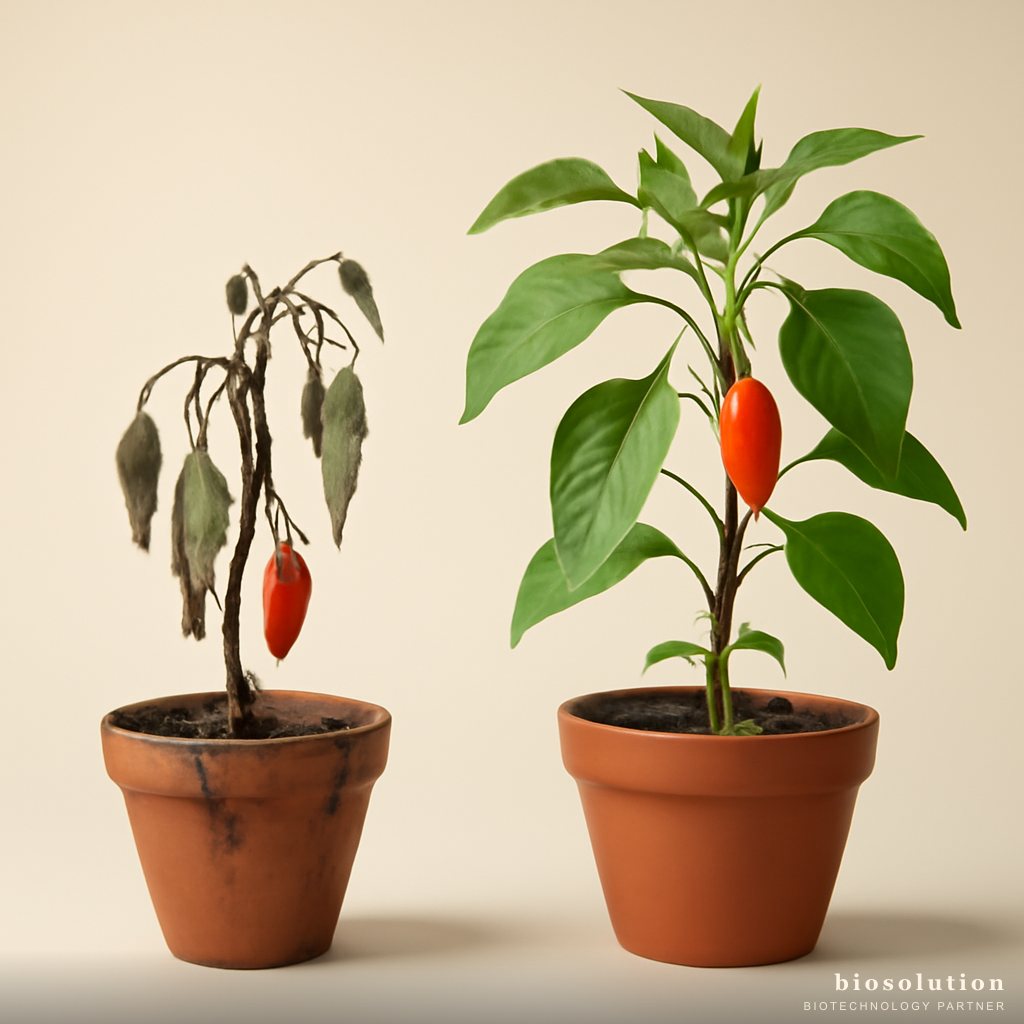
Scout is a direct visual monitoring method on plants in the field. Farmers or extension workers walk along plant rows and record symptoms of phytophthora rot: sudden wilting, stem base rot, or shriveled fruit. For biocontrol, scout also observes signs of successful biological agents, such as Trichoderma mycelium growth around the stem base or changes in root color. Bacillus subtilis often forms a biofilm that appears as a thin layer on the root surface. Scout is conducted regularly, e.g., every week, especially after rain. Data collected includes the percentage of diseased plants and disease severity. This information is used to determine whether the biocontrol population is sufficient to suppress the pathogen. If symptoms increase despite biocontrol application, laboratory population evaluation is needed.
Tips for Effective Scout:
- Conduct in the morning when dew is still present, as wilting symptoms are easier to see.
- Also observe surrounding plants that appear healthy; compare with diseased plants.
- Record environmental conditions (temperature, humidity) as they affect biocontrol activity.
Threshold: When Should Biocontrol Populations Be Increased?
Threshold is the limit of pathogen population or damage level that triggers control action. For biocontrol, we need to set a minimum biological agent population threshold. Based on research, a minimum population of Trichoderma harzianum of 10^4 CFU/g soil is effective in suppressing Phytophthora. Pseudomonas fluorescens requires 10^5 CFU/g, while Bacillus subtilis is effective at 10^6 CFU/g. If monitoring shows populations below the threshold, reapplication of the Anti-Phytophthora Rot Formula is necessary. Conversely, if populations are high and disease symptoms are low, application can be delayed. Thresholds can also be based on the percentage of diseased plants: if >5% of plants show symptoms, immediately apply biocontrol or combine with botanical fungicides.
Example of Threshold Setting:
- Trichoderma population < 10^3 CFU/g: reapply at a dose of 5 ml/L.
- Pseudomonas population < 10^4 CFU/g: add root drench application.
- Percentage of diseased plants >10%: intervene with organic fungicide spraying.
Integrating Monitoring with Biosolution's Anti-Phytophthora Rot Formula
Biosolution's Anti-Phytophthora Rot Formula contains three superior biological agents: Trichoderma harzianum (mycoparasite and PGPR), Pseudomonas fluorescens (antagonist and ISR), and Bacillus subtilis (antibiosis and protective biofilm). These three work synergistically to control Phytophthora capsici. To maximize effectiveness, population monitoring must be conducted periodically. Trap and scout methods can be used by farmers independently, while for precise population counts, soil samples can be sent to a laboratory. With monitoring data, farmers can determine the right application time, appropriate dosage, and optimal frequency. This product is applied via root drench at a dose of 5 ml per liter of water every 14 days in the morning or evening. Benefits include suppression of stem and root rot, increased plant resistance through ISR, extended plant lifespan, and reduced use of synthetic fungicides.
Conclusion
Monitoring biocontrol populations for anti phytophthora rot in chili and cocoa is an important practice in integrated disease management. Trap, scout, and threshold methods provide simple yet effective tools for farmers to evaluate the success of biocontrol applications. By monitoring populations of Trichoderma harzianum, Pseudomonas fluorescens, and Bacillus subtilis, farmers can ensure that biological agents are at sufficient levels to suppress the pathogen. Biosolution's Anti-Phytophthora Rot Formula offers a reliable biocontrol solution, and with good monitoring, results can be optimal. For further consultation, contact us via WhatsApp or visit the product page Anti-Phytophthora Rot Formula.
FAQ
How to distinguish Trichoderma from Phytophthora in the trap method?
Trichoderma harzianum grows quickly and forms yellowish-green mycelium, while Phytophthora capsici has white cottony mycelium and often forms sporangia. Use a microscope to see spore structures: Trichoderma has branched conidiophores, Phytophthora has lemon-shaped sporangia.
What is the recommended monitoring frequency?
Monitoring using trap and scout methods should be done every 2 weeks, especially during the rainy season when the pathogen is active. If biocontrol populations are stable and plants are healthy, frequency can be reduced to once a month.
Can biocontrol population monitoring be done without a laboratory?
Yes, trap and scout methods can be done in the field without laboratory equipment. For rough population estimates, you can compare the number of colonies growing on simple media like potato. However, for precise counts, it is recommended to use laboratory services.
What should be done if biocontrol populations are low?
Immediately reapply the Anti-Phytophthora Rot Formula at a dose of 5 ml/L water. Ensure application is done in the morning or evening and the soil is moist. Also check environmental factors such as soil pH (ideally 5.5-6.5) and adequate moisture.
Can biocontrol be combined with synthetic fungicides?
Some fungicides can inhibit biological agents. Avoid simultaneous application. If necessary, use selective fungicides and apply with a minimum interval of 3 days after biocontrol. Consult an expert for specific recommendations.