Aphid and Whitefly Biocontrol: Biocontrol vs. Chemical Resistance
Horticultural farmers in Indonesia face a major challenge: aphids and whiteflies are becoming increasingly difficult to control with chemical pesticides. The resistance phenomenon causes production costs to soar while yields decline. However, there is an equally effective alternative solution: biocontrol of aphids and whiteflies using entomopathogenic fungi. This article will discuss why chemical pesticides fail and how biocontrol is the answer for sustainable agriculture.
Why Do Chemical Pesticides Fail? The Resistance Phenomenon
Chemical pesticides have been used massively for decades. However, excessive and improper use has led aphids and whiteflies to develop resistance. Resistance is the genetic ability of insects to survive despite exposure to pesticide doses that are lethal to normal populations. Resistance mechanisms include:
- Enzymatic detoxification: Insects produce enzymes such as esterases and oxidases that break down the active compounds of pesticides.
- Target site alteration: Nerve receptors or target proteins change so that pesticides cannot bind.
- Reduced cuticular penetration: The insect cuticle thickens, blocking pesticide entry.
- Behavioral avoidance: Insects tend to hide on the underside of leaves that are not hit by spray.
As a result, farmers must increase doses or application frequency, which accelerates resistance and pollutes the environment. Data from FAO shows that over 500 insect species are resistant to at least one class of pesticides. In Indonesia, whitefly Bemisia tabaci and aphid Aphis gossypii are reported resistant to organophosphates, pyrethroids, and neonicotinoids.
Biocontrol: A Smart Anti-Resistance Solution
Unlike chemical pesticides, biocontrol of aphids and whiteflies uses natural enemies such as predators, parasitoids, or pathogens. Entomopathogenic fungi are highly effective biocontrol agents because they work through direct contact, not through the nervous system. Fungi infect insects by penetrating the cuticle, then grow inside the body and produce lethal toxins. Because their mechanism of action is multi-target, insects find it difficult to develop resistance.
Advantages of Entomopathogenic Fungi
- Low resistance: The fungal infection mechanism involves several enzymes and toxins, so resistance is very rare.
- Safe for natural enemies: Entomopathogenic fungi are specific to pest insects and do not harm bees, predators, or parasitoids.
- Environmentally friendly: Leave no harmful residues, suitable for organic farming.
- Sustainable effect: Fungal spores can persist in the environment and infect subsequent pest generations.
Anti-Aphid & Whitefly Formula: The Right Solution
Biosolution presents the Anti-Aphid & Whitefly Formula containing two superior entomopathogenic fungal strains:
- Verticillium lecani: This fungus quickly infects aphids and whiteflies, especially under high humidity conditions. Spores attach to the cuticle, germinate, and penetrate the insect's body within 24-48 hours.
- Cordyceps spp.: Cordyceps fungi are known to infect various soft-bodied insects, including whiteflies. Fungal mycelium grows inside the body, consumes nutrients, and eventually kills the host.
The combination of these two strains provides broad and effective control.
Proper Application Method
For optimal results, application must be done correctly:
- Method: Spray onto the underside of leaves (under leaf), as aphids and whiteflies generally hide on the lower leaf surface.
- Dosage: 3 ml per liter of water.
- Frequency: Every 5 days when populations are high.
- Time: Late afternoon, when relative humidity (RH) > 70%. High humidity is required for fungal spore germination.
It is important to remember that entomopathogenic fungi are not instant poisons. Insect death occurs within 3-7 days after application, depending on environmental conditions. However, once the fungus infects, it spreads to other insects through direct contact or spores released from carcasses.
Case Study: Biocontrol Success in the Field
Several studies show the effectiveness of entomopathogenic fungi against whiteflies. According to a study from the International Rice Research Institute (IRRI), application of Verticillium lecani suppressed whitefly populations by up to 80% on tomato plants. Farmers in the Dieng Highlands who switched to biocontrol reported a 50% reduction in chemical pesticide use and improved crop quality.
On the other hand, aphid resistance to chemical pesticides has been reported in various regions. For example, the aphid Myzus persicae is resistant to imidacloprid in West Java. With biocontrol, farmers do not need to worry about resistance because the fungi work physically-mechanically.
Integration with Other Agricultural Practices
Biocontrol is most effective when integrated with Integrated Pest Management (IPM) practices. Steps that can be taken:
- Population monitoring: Regularly monitor the presence of aphids and whiteflies. Use yellow traps or direct observation.
- Field sanitation: Clean weeds and crop residues that serve as alternative hosts.
- Use of refugia plants: Plant flowers such as cosmos or marigolds around the field to attract natural enemies.
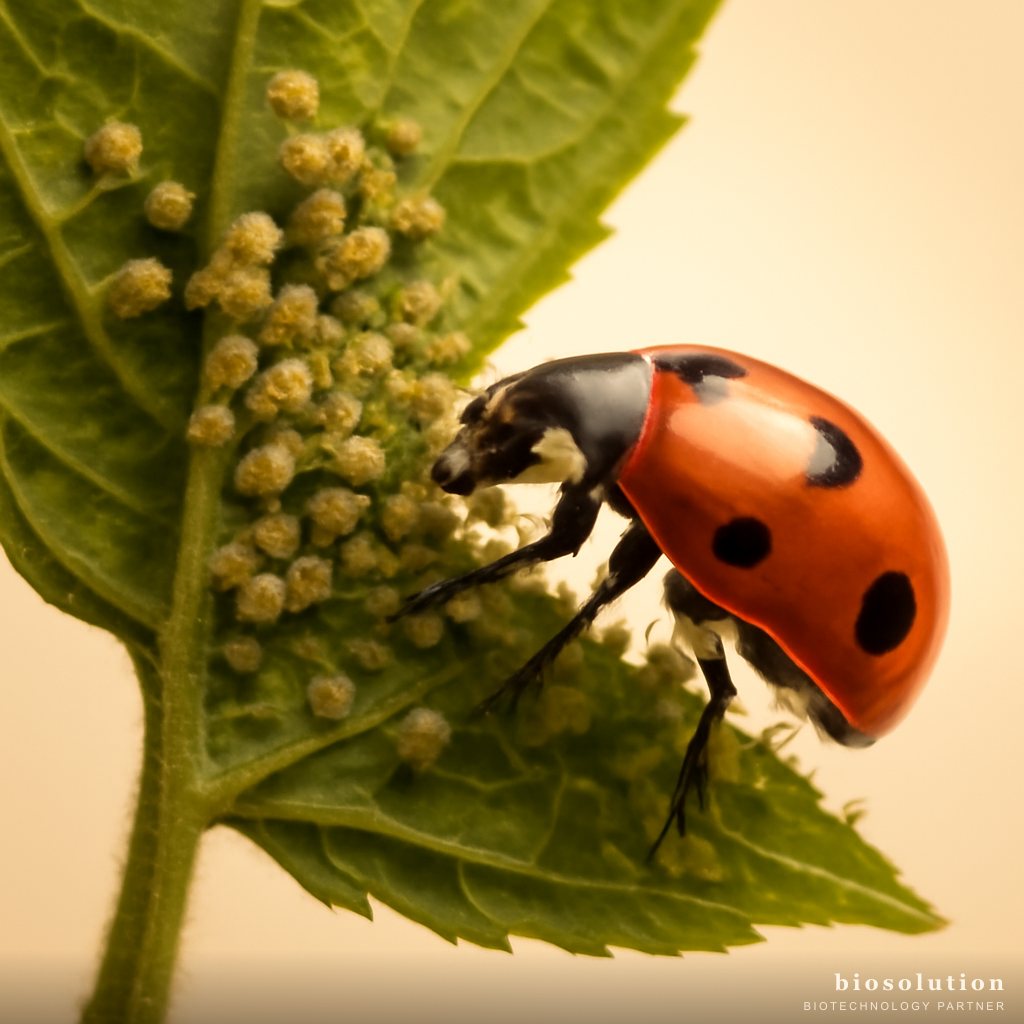
- Rotation of biological agents: Alternate use of entomopathogenic fungi with predators like Coccinellidae beetles or parasitoids Encarsia formosa.
- Conservation of natural enemies: Avoid using chemical pesticides that kill predators and parasitoids.
With this approach, farmers can maintain pest populations below the economic threshold without relying on chemical pesticides.
FAQ
1. Is biocontrol safe for plants and humans?
Yes, entomopathogenic fungi such as Verticillium lecani and Cordyceps spp. are safe for plants, humans, and animals. These fungi only infect insects, not plants or mammals. Biocontrol products also leave no harmful residues, making them suitable for organic farming.
2. How long does it take to see results?
After application, insect death begins to appear within 3-7 days, depending on environmental conditions. Maximum effect is usually achieved after 2-3 applications at 5-day intervals. High humidity (>70%) and temperatures of 25-30°C accelerate infection.
3. Can biocontrol be used together with chemical pesticides?
It is best not to mix directly with chemical pesticides, as chemicals can kill fungal spores. However, applications can be scheduled alternately with a minimum interval of 3 days. For best results, avoid chemical pesticides during the biocontrol program.
4. How should biocontrol products be stored?
Store the product in a cool, dry place, away from direct sunlight. Ideal storage temperature is 4-10°C (refrigerator). Do not freeze. Properly stored products can last up to 6 months.
5. Is biocontrol effective for all types of pests?
This product is specifically formulated for soft-bodied pests such as aphids and whiteflies. For other pests like caterpillars or thrips, different biological agents are needed. However, some Cordyceps strains are also effective against other soft-bodied insects.
Conclusion
Resistance of aphids and whiteflies to chemical pesticides is a serious threat to horticultural productivity. However, by switching to biocontrol of aphids and whiteflies using entomopathogenic fungi, farmers can effectively control pests without triggering resistance. The Anti-Aphid & Whitefly Formula from Biosolution is the right solution that is safe, environmentally friendly, and sustainable. For further consultation, contact our team via WhatsApp.