Application of Metarhizium anisopliae for Soil Pests: 4 Effective Biological Control Formulas
Soil pests such as beetles, caterpillars, and root-boring insects are a nightmare for plantation farmers because they are difficult to detect and damage the root system. The use of synthetic chemical insecticides is often ineffective in the long term and leaves harmful residues. A natural solution now widely adopted is the application of Metarhizium anisopliae, an entomopathogenic fungus capable of specifically infecting and killing soil pests. In this article, we will discuss the correct application of Metarhizium anisopliae, from dosage, application timing, to combination with adjuvants for optimal and environmentally friendly pest control.
Why is Metarhizium anisopliae Effective for Soil Pests?
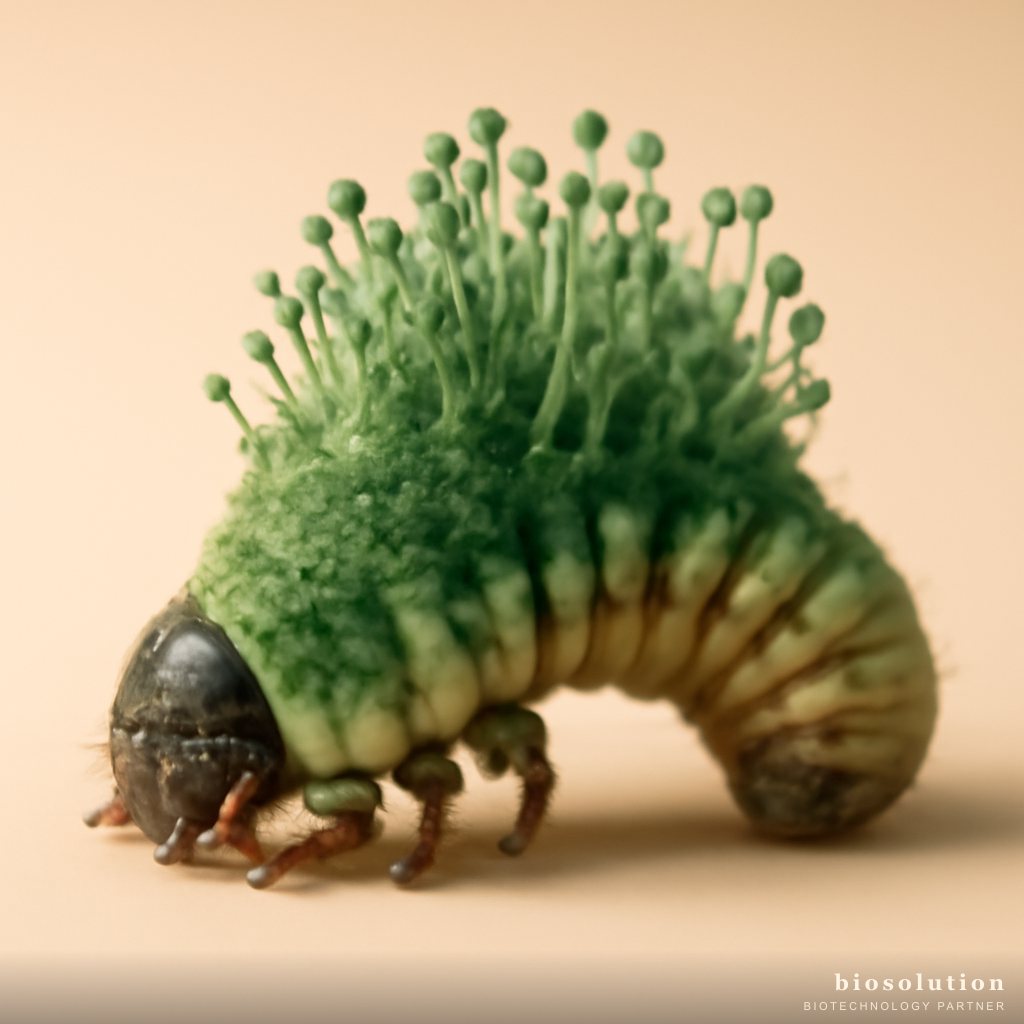
Metarhizium anisopliae is an entomopathogenic fungus that attacks insects through direct contact. Fungal spores adhere to the insect cuticle, then germinate and penetrate the host's body with the help of enzymes such as proteases and chitinases. Once inside, the fungus grows mycelium in the hemolymph, disrupts insect physiology, and eventually causes death within 3–7 days. The main advantage of Metarhizium anisopliae is its ability to survive in the soil and infect pests living in the rhizosphere, such as the beetle Oryctes rhinoceros on oil palm or the cutworm Agrotis ipsilon on secondary crops.
In broad-spectrum biological insecticide formulas, Metarhizium anisopliae is combined with Beauveria bassiana to expand the target range. This combination can control soft-bodied pests (e.g., caterpillars) and hard-cuticle pests (beetles) simultaneously. At a concentration of 10⁶ CFU/ml per strain, this product provides 80–85% efficacy against target pests without leaving chemical residues on harvested products. Additionally, sporulation on insect carcasses creates a chain effect (epizootic) so that pest populations can be naturally suppressed.
Correct Dosage and Application Method of Metarhizium anisopliae
Dosage for Various Formulations
Biological insecticide products are available in two main forms: liquid (EC) and powder (WP). For Metarhizium anisopliae application, the recommended dosage is:
- Liquid formulation (EC): 2–3 ml per liter of water
- Powder formulation (WP): 3–5 grams per liter of water
This dosage applies for thorough spraying onto the plant canopy and soil surface around the stem base. Ensure the water used is clean, does not contain excess chlorine, and has a neutral pH (6–7) to avoid damaging spores. For large-scale plantation areas, use a pressurized sprayer with a fine nozzle to produce droplets of 100–200 microns so that spores adhere perfectly.
Effective Application Techniques
- Even spraying: Spray the solution onto all parts of the plant, especially the underside of leaves and the stem base where soil pests often hide.
- Soil application: For pests living in the soil, also spray onto the soil surface around the root zone at a volume of 200–300 ml per mature plant.
- Frequency: Repeat every 7–10 days when pest populations increase. During the dry season, frequency can be reduced to 14 days due to low humidity.
- Best time: Perform spraying in the afternoon (3:00–5:00 PM) when relative humidity is >70% and temperature <30°C. These conditions maximize spore viability and accelerate infection.
Combination with Adjuvants
To improve spore adhesion and spread, add adjuvants such as non-ionic surfactants (e.g., 0.1% Tween 80) or vegetable oils (2–5 ml/L). Adjuvants help spores adhere to the slippery insect cuticle and accelerate penetration. Avoid using bactericidal or fungicidal adjuvants as they can kill Metarhizium anisopliae spores.
Optimal Application Timing for Soil Pests Based on Life Cycle
Metarhizium anisopliae application must be adjusted to the target pest's life cycle. Generally, the larval or nymph stage is the most vulnerable because the cuticle is still thin. Here is a timing guide for several major soil pests:
- Rhinoceros beetle (Oryctes rhinoceros): Apply during instar 1–2 larvae (1–2 months old) in breeding sites such as compost piles or decaying oil palm trunks. Spray the solution onto the medium at a dosage of 5 ml/L.
- Cutworm (Agrotis ipsilon): Spray onto the soil surface around the plant base in the afternoon when caterpillars are actively feeding. Repeat every 3 days for a week.
- Root-boring beetle (Holotrichia spp.): Apply at the beginning of the rainy season when eggs hatch. Spray the solution onto the soil around host plants.
It is important to monitor pest populations using pheromone traps or visual observation. Preventive application when populations are still low (control threshold) is more effective than curative application when pests have already exploded.
Combination of Metarhizium anisopliae with Other Biological Insecticides
For more comprehensive pest control, Metarhizium anisopliae can be combined with Beauveria bassiana in a single application. These two fungi have complementary targets and mechanisms:
- Beauveria bassiana is more effective at attacking soft-bodied insects such as caterpillars and aphids.
- Metarhizium anisopliae excels against beetles and soil pests.
Combining both in the Broad-Spectrum Biological Insecticide Formula provides 80–85% efficacy against various pests. This product is also compatible with Integrated Pest Management (IPM) programs and safe for natural enemies such as predators and parasitoids.
Additionally, you can combine it with other biological agents such as Bacillus thuringiensis (Bt) for leaf caterpillars, as long as they are not mixed in the same tank because Bt is sensitive to UV light. Apply alternately: Bt in the morning and Metarhizium in the afternoon.
Tips for Successful Metarhizium anisopliae Application in Large-Scale Plantations
- Solution preparation: Prepare the solution in a clean container, stir until homogeneous, and use within 2–4 hours after mixing. Do not store the solution for more than 24 hours.
- Sprayer calibration: Ensure the nozzle produces fine droplets and the spray volume is appropriate (200–400 L/ha for plantation crops).
- Avoid direct sunlight: UV rays can kill spores within 30 minutes. Spray when it is cloudy or in the afternoon.
- Integration with cultural practices: Perform land sanitation, pruning, and good drainage to reduce excess humidity that triggers disease.
- Regular monitoring: Evaluate pest populations weekly. If efficacy decreases, check product quality (expiration) and environmental conditions.
Conclusion
Proper application of Metarhizium anisopliae—accurate dosage, afternoon application, and adjuvant combination—can effectively control soil pests up to 85%. By using the Broad-Spectrum Biological Insecticide Formula from Biosolution, plantation farmers can reduce dependence on chemical pesticides, maintain soil health, and produce residue-free harvests. For optimal results, apply consistently in an IPM program and consult our experts via WhatsApp for specific recommendations for your land.