Bactrocera Fruit Fly Control: Integrating Biological Formula in IPM for Mango and Guava
Fruit flies Bactrocera spp. are major pests of tropical fruit crops such as mango and guava in Indonesia. Fruit fly attacks can cause losses of up to 60% if not properly controlled. To address this challenge, Bactrocera fruit fly control based on biological agents offers an effective and environmentally friendly solution. This article discusses the integration of Biosolution's Anti-Fruit Fly Formula containing Metarhizium anisopliae into an Integrated Pest Management (IPM) strategy, enabling farmers to reduce chemical pesticide use, meet export standards, and preserve ecosystem health.
Understanding Bactrocera Fruit Flies and Their Impact on Mango and Guava Production
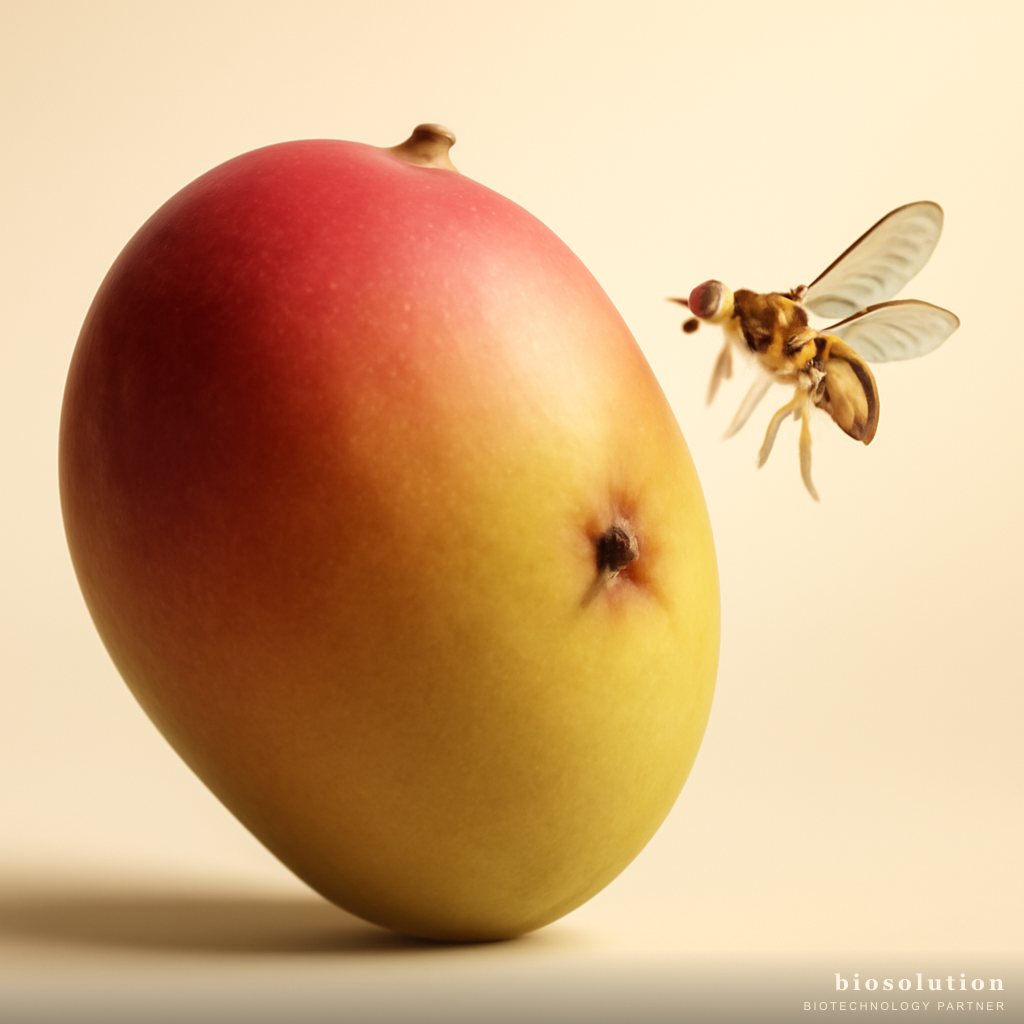
Bactrocera spp., especially B. dorsalis and B. carambolae, are fruit flies that attack ripe and semi-ripe fruits. Females puncture the fruit skin to lay eggs, and the hatching larvae feed on the fruit flesh, causing rot and premature fruit drop.
Life Cycle and Damage
The fruit fly life cycle is relatively short (20-30 days in tropical temperatures), allowing populations to explode quickly. Eggs hatch into larvae within 2-3 days, then larvae fall to the ground to pupate. Pupae remain in the soil for 7-10 days before emerging as adult flies. Damage not only reduces harvest quantity but also fruit quality, causing rot spots and holes that render fruit unmarketable.
Economic Losses
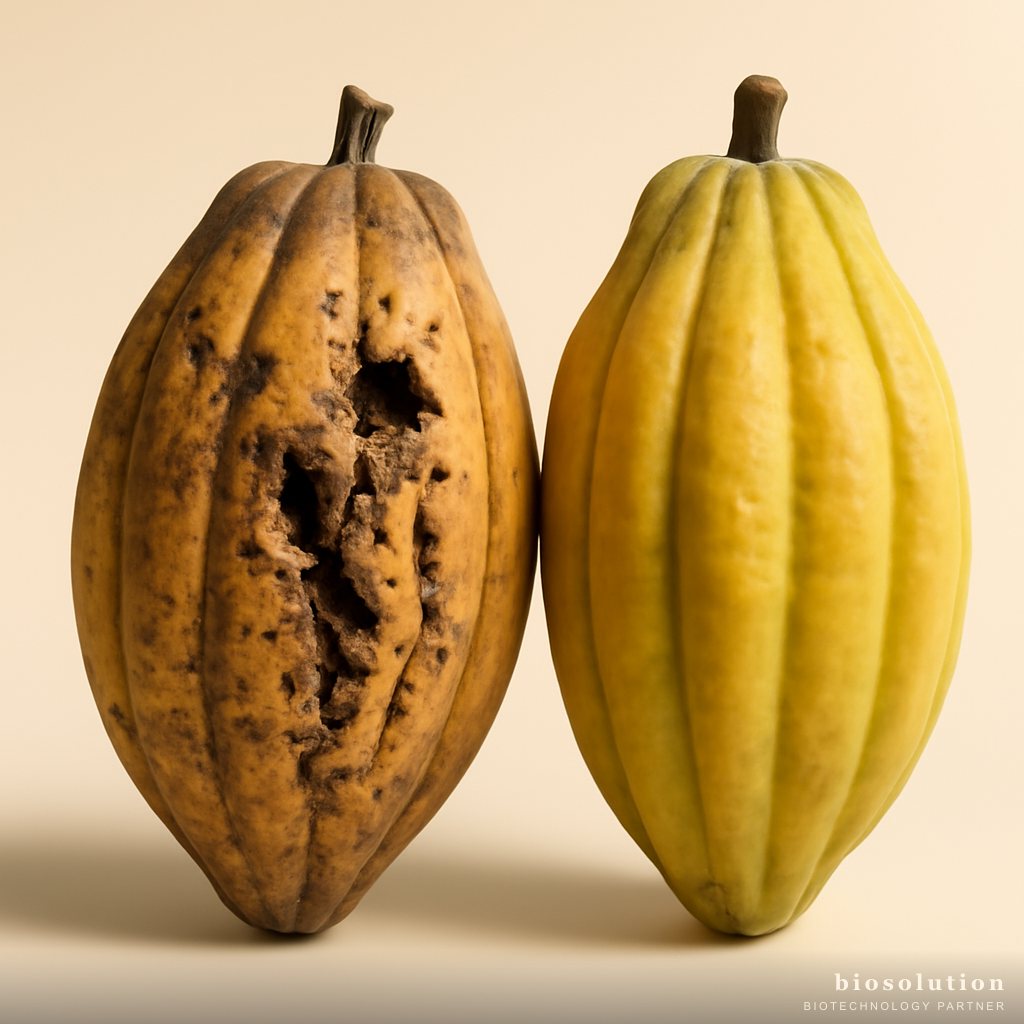
In mango, fruit fly attacks can cause losses of up to 50-60% in production centers such as Cirebon and Pasuruan. For guava, similar losses are common, especially in sweet varieties. This situation drives farmers to seek effective and safe fruit fly control methods.
Integrated Pest Management (IPM) Concept for Fruit Flies
Integrated Pest Management (IPM) is a holistic approach that combines various control methods synergistically. The goal is not to eradicate pests entirely but to suppress their populations below economic thresholds while minimizing negative impacts on the environment and health.
Key Components of IPM for Fruit Flies
- Monitoring and Early Detection: Using attractant traps (e.g., methyl eugenol) to monitor fruit fly populations.
- Cultural Control: Orchard sanitation by removing rotten fruits and practicing pruning.
- Physical/Mechanical Control: Bagging fruits with paper or plastic.
- Biological Control: Utilizing natural enemies such as parasitoids, predators, and insect pathogens.
- Rational Chemical Control: Only when populations exceed thresholds, using selective insecticides.
Role of Anti-Fruit Fly Formula in IPM
Biosolution's Anti-Fruit Fly Formula is a biological agent containing Metarhizium anisopliae, an entomopathogenic fungus that infects fruit fly pupae in the soil. By applying this formula to the soil around the tree base, we disrupt the fruit fly life cycle at the pupal stage, reducing the next generation's population. This integration is highly effective because it does not harm above-ground natural enemies (such as adult parasitoids) and is environmentally friendly.
Biosolution Anti-Fruit Fly Formula: Mechanism and Application
Composition and Mode of Action
Biosolution's Anti-Fruit Fly Formula contains Metarhizium anisopliae at an effective concentration. When applied to the soil, fungal spores germinate and penetrate the fruit fly pupal cuticle, then grow inside the body, producing lethal toxins. This process takes 3-7 days, depending on soil conditions and humidity.
Dosage and Application Method
- Dosage: 5 ml of formula per liter of water.
- Spray volume: 1 liter of solution per tree, evenly applied to the soil around the tree base (radius of about 50 cm from the trunk).
- Frequency: Every 30 days during the fruiting season.
- Application time: Morning or late afternoon to avoid direct UV light that can damage spores.
Advantages of Anti-Fruit Fly Formula
- Significantly reduces fruit fly attacks: Field data show a reduction in fruit fly populations of up to 70% after regular application.
- Helps meet export standards: Fruits are free of chemical pesticide residues, meeting requirements of destination countries such as Japan and the European Union.
- Reduces use of chemical attractants: With controlled fruit fly populations, the need for synthetic attractants can be minimized.
- Safe for organic farming: This formula is registered and suitable for organic farming systems.
Integration with Other Natural Enemies
IPM emphasizes conservation and augmentation of natural enemies. Several natural enemies of fruit flies that can be integrated with the Anti-Fruit Fly Formula include:
Parasitoids: Fopius arisanus and Diachasmimorpha longicaudata
These parasitoids lay their eggs inside fruit fly eggs or larvae, thus inhibiting pest development. Since the Anti-Fruit Fly Formula works on the pupal stage in the soil, above-ground active parasitoids are not disturbed. In fact, with reduced adult fruit fly populations, parasitoid pressure can be more effective.
Predators: Ants and Ground Beetles
Ants such as Oecophylla smaragdina and ground beetles (Carabidae) prey on fruit fly larvae and pupae. Applying Metarhizium anisopliae to the soil can actually enhance soil biodiversity if done correctly, as it does not directly kill soil predators.
Other Pathogens: Beauveria bassiana and Bacillus thuringiensis
Although mixing several biological agents in one application is not recommended (due to competition), rotating Metarhizium anisopliae with Beauveria bassiana can prevent resistance. Meanwhile, Bacillus thuringiensis is effective against Lepidoptera larvae, not fruit flies, so it remains safe for use against other pests.
Case Study: Field Application
In Sumbermujur Village, Pasuruan Regency, mango farmers have integrated Biosolution's Anti-Fruit Fly Formula into their IPM program. With regular application every 30 days, combined with methyl eugenol traps and orchard sanitation, the number of rotten fruits due to fruit flies decreased from 45% to only 12%. Additionally, pest control costs were reduced by 30% as weekly chemical insecticide spraying was no longer needed.
Guava farmers in Cijeruk District, Bogor, also reported improved fruit quality after using this formula. Guavas marketed to local supermarkets had longer shelf life due to the absence of fruit fly puncture wounds. They also successfully obtained primatani certification, which requires minimal pesticide use.
Practical Steps for Implementing IPM with Anti-Fruit Fly Formula
- Install monitoring traps to track fruit fly population fluctuations.
- Practice orchard sanitation: collect and bury rotten fruits at least once a week.
- Apply Anti-Fruit Fly Formula according to dosage every 30 days, starting when fruits begin to form.
- Conserve natural enemies: plant flowering plants around the orchard as nectar sources for parasitoids.
- Evaluate: record the number of infested fruits and compare with pre-application data.
Conclusion
Integrating Biosolution's Anti-Fruit Fly Formula containing Metarhizium anisopliae into an IPM strategy is a smart step to control Bactrocera fruit flies on mango and guava. By suppressing pupal populations in the soil, this formula complements the role of natural enemies and cultural practices, enabling farmers to reduce losses, meet export standards, and farm sustainably. For maximum results, consult with field experts or contact us via WhatsApp for specific recommendations tailored to your orchard conditions.
FAQ
1. Is the Anti-Fruit Fly Formula safe for plants and the environment? Yes, this formula is based on an entomopathogenic fungus that specifically infects insects; it is non-toxic to plants, animals, or humans. Its use aligns with organic farming principles and leaves no harmful residues on fruits.
2. How long does the effect of the Anti-Fruit Fly Formula last in the soil? Metarhizium anisopliae spores can persist for 2-4 weeks in the soil depending on humidity and temperature. Therefore, application is repeated every 30 days to maintain effective spore populations.
3. Can this formula be mixed with chemical pesticides? Mixing with chemical fungicides or insecticides is not recommended, as they can inhibit fungal growth. If chemical pesticides must be used, allow at least a 7-day interval before or after applying the biological formula.
4. Is the Anti-Fruit Fly Formula effective against all types of fruit flies? This formula is specifically formulated for Bactrocera spp., the dominant fruit flies in Indonesia. Optimal results are obtained on mango and guava, but it can also be used on other fruit crops such as starfruit, citrus, and chili.
5. Where can I buy the Anti-Fruit Fly Formula? This product is available at Biosolution partner agricultural stores or can be ordered directly via WhatsApp. For more information, visit our product page: Anti-Fruit Fly Formula.