Biocontrol of Phytophthora Rot in Chili and Cocoa: Life Cycle, Symptoms, Economic Threshold
Phytophthora rot in chili and cocoa is one of the most destructive diseases faced by farmers in Indonesia. The pathogen Phytophthora capsici attacks roots, stem bases, fruits, and leaves, causing losses of up to tens of percent. Without proper control, this disease can wipe out entire plant populations in a short time. This article thoroughly examines the pathogen's life cycle, symptoms to watch for, economic thresholds as control references, and the role of biocontrol using Biosolution's Anti-Phytophthora Rot Formula to suppress the disease effectively and environmentally friendly.
Life Cycle of Phytophthora capsici
Phytophthora capsici belongs to the class Oomycetes, not true fungi, so its response to conventional fungicides is often suboptimal. This pathogen has a complex life cycle, including asexual and sexual phases, allowing it to survive long in the soil.
Asexual Phase
Under humid conditions and temperatures of 20-28°C, sporangia form on mycelium. Sporangia release flagellated zoospores that swim in soil water and infect roots or wet plant parts. Infection occurs within hours. Zoospores then encyst and germinate, penetrating plant tissues.
Sexual Phase
P. capsici is heterothallic, requiring two mating types (A1 and A2) to form oospores. Oospores are thick-walled survival structures that can persist in soil for years even without host plants. They serve as the initial inoculum source for the next growing season.
Disease Cycle in the Field
Initial inoculum comes from oospores in soil or plant debris. When rain or excessive irrigation occurs, zoospores spread through surface water. Root infection causes root rot, while soil splashed onto stems and fruits triggers stem and fruit rot. The disease spreads rapidly during the rainy season.
Symptoms of Attack on Chili and Cocoa
Symptoms of Phytophthora rot vary depending on the infected plant part. In chili, early symptoms are often overlooked, yet disease progression is very rapid.
On Chili
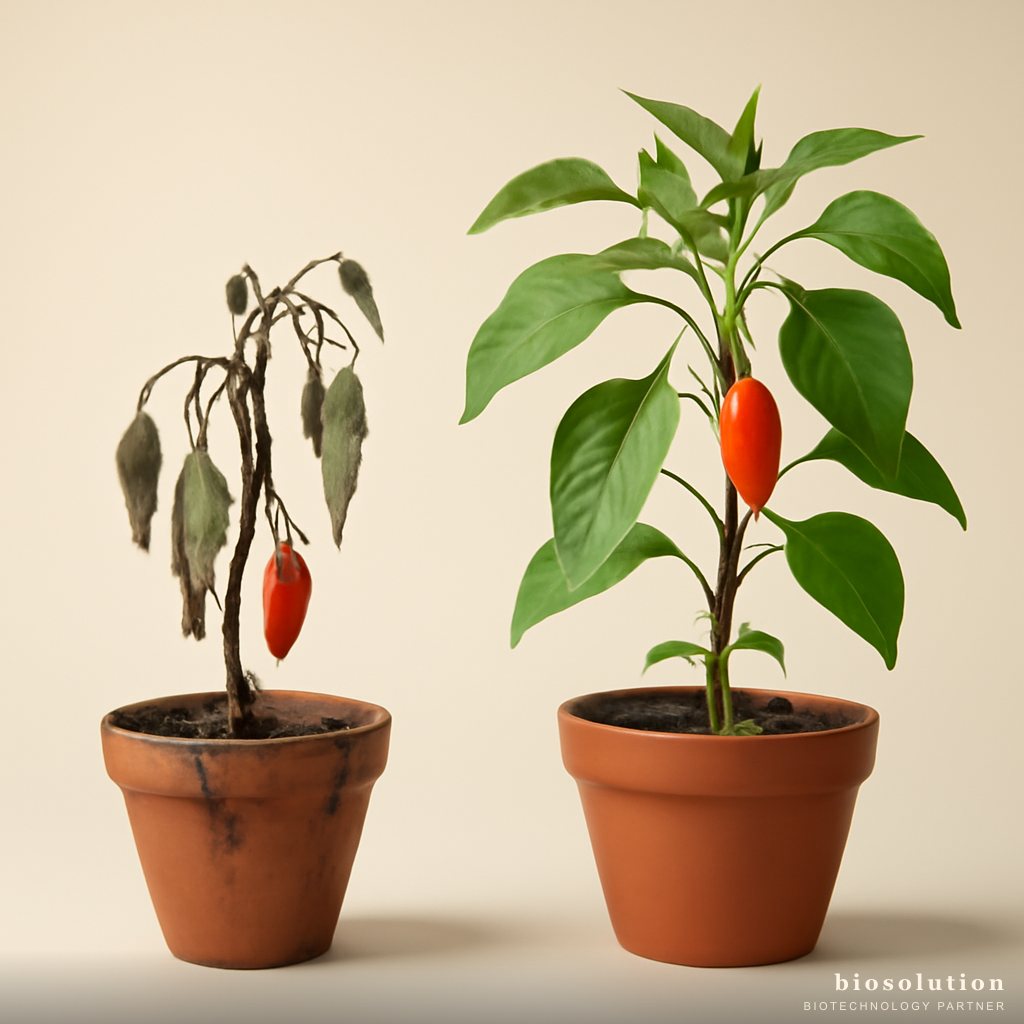
- Root and stem base rot: Leaves wilt suddenly even though soil is moist, stem base turns blackish brown, tissue peels. If the stem is cut, brown vascular tissue is visible.
- Leaf rot: Dark green water-soaked spots, rapidly enlarging, leaves drop.
- Fruit rot: Water-soaked spots on fruit, then shrivel and covered with white mycelium. Fruits drop before ripening.
On Cocoa
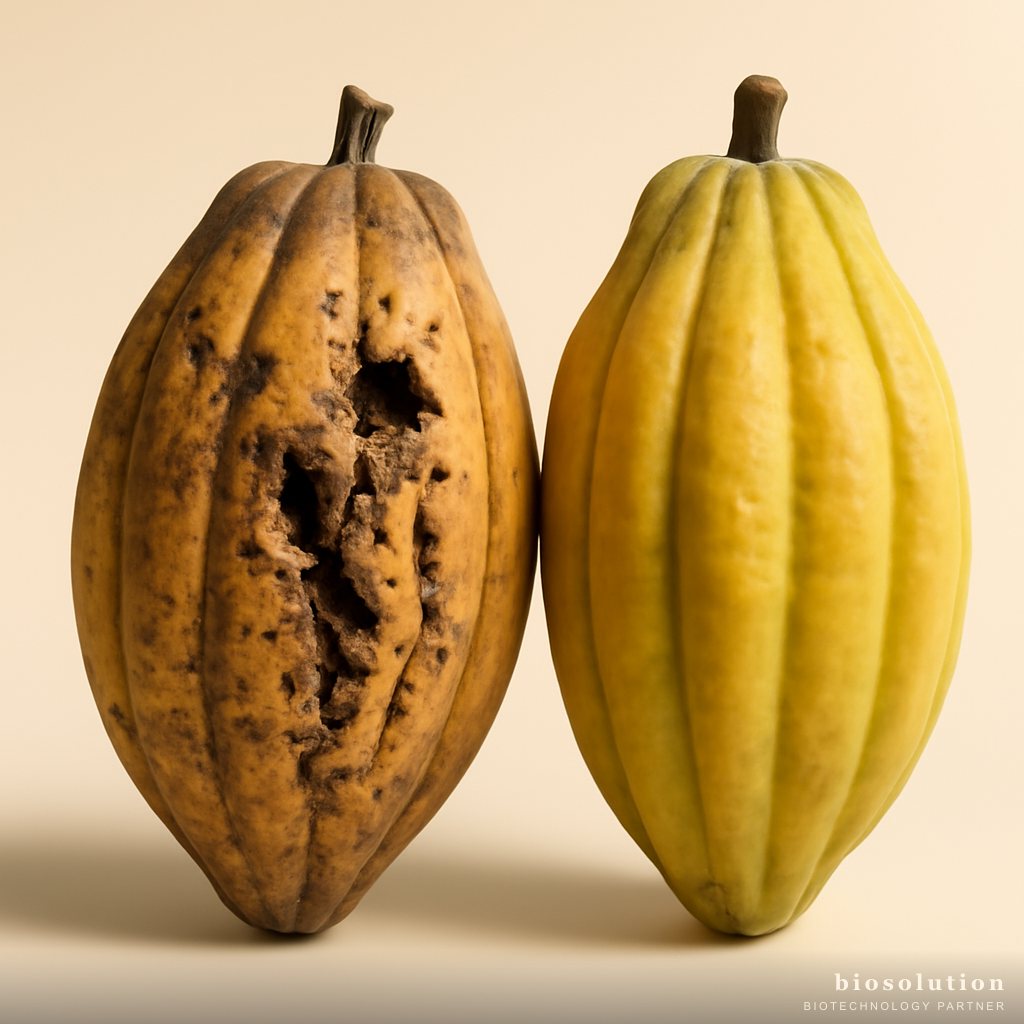
- Fruit rot (black pod): Blackish brown spots on pods, rapidly expanding, entire pod turns black and hard. White mycelium grows on the pod surface.
- Stem rot and canker: Stem exudes reddish brown sap, bark dies, canopy yellows and dies.
- Root rot: Plant wilts, leaves yellow, roots rot.
Economic Threshold and Risk Factors
The economic threshold is the level of attack that requires control action to prevent losses exceeding control costs. For Phytophthora rot in chili and cocoa, the economic threshold varies depending on growth stage and market price.
Economic Threshold for Chili
- Vegetative stage: 5-10% of plants showing wilt or stem base rot symptoms.
- Generative stage: 2-5% of fruits showing rot symptoms.
- During rainy season: Threshold lowered due to rapid disease development.
Economic Threshold for Cocoa
- Fruit rot: 5% of pods infected at the start of the rainy season.
- Stem canker: 1-2% of trees showing active cankers.
Main Risk Factors
- High humidity: Rainfall >200 mm/month or excessive irrigation.
- Poor drainage: Waterlogging triggers zoospores.
- High plant density: Poor air circulation.
- Monoculture: Inoculum buildup.
- Other host plants: Tomatoes, eggplants, pumpkins are also susceptible.
Biocontrol Strategy with Anti-Phytophthora Rot Formula
Controlling Phytophthora rot requires an integrated approach. Biocontrol using antagonistic microbes is a sustainable solution that reduces dependence on chemical fungicides. Biosolution presents the Anti-Phytophthora Rot Formula, containing three superior biocontrol agents: Trichoderma harzianum, Pseudomonas fluorescens, and Bacillus subtilis. Each has a synergistic mechanism of action.
Trichoderma harzianum: Mycoparasite and PGPR
Trichoderma harzianum is a mycoparasitic fungus that directly attacks Phytophthora mycelium by coiling and secreting lytic enzymes such as chitinase and glucanase. Additionally, T. harzianum acts as a Plant Growth-Promoting Rhizobacteria (PGPR) by producing growth hormones and solubilizing phosphate, making plants more vigorous and tolerant to pathogen attack.
Pseudomonas fluorescens: Antagonist and Inducer of Systemic Resistance (ISR)
Pseudomonas fluorescens produces antibiotics such as 2,4-diacetylphloroglucinol (DAPG) and siderophores that bind iron, thereby inhibiting Phytophthora growth. More importantly, this bacterium induces Systemic Resistance (ISR) in plants, triggering the production of defense compounds like phytoalexins and peroxidase enzymes, so plants are better prepared to fight infection.
Bacillus subtilis: Antibiosis and Protective Biofilm
Bacillus subtilis produces antimicrobial peptides (iturin, surfactin) that destroy Phytophthora cell membranes. This bacterium also forms a biofilm on the root surface, creating a physical barrier that prevents pathogen penetration. This biofilm also helps plants absorb nutrients more efficiently.
Application of Anti-Phytophthora Rot Formula
- Method: Root drenching to reach the root zone.
- Dosage: 5 ml per liter of water.
- Frequency: Every 14 days, especially at the start of the rainy season or when early symptoms appear.
- Time: Morning or evening to avoid direct UV light.
Regular application will build up antagonistic microbial populations in the rhizosphere, suppressing Phytophthora development both preventively and curatively.
Benefits of Biocontrol Compared to Chemical Fungicides
The use of synthetic chemical fungicides to control Phytophthora is often ineffective in the long term because the pathogen quickly develops resistance. Additionally, fungicide residues pollute the environment and harm farmers. Biocontrol with the Anti-Phytophthora Rot Formula offers several advantages:
- Environmentally friendly: Leaves no harmful residues.
- Reduces resistance: Multi-target mechanisms from three agents are difficult for the pathogen to overcome.
- Improves soil health: Antagonistic microbes improve soil structure and nutrient cycling.
- Extends plant lifespan: Plants remain healthier and productive longer.
- Reduces costs: Routine application prevents disease outbreaks that would require high-dose fungicides.
Conclusion
Phytophthora rot in chili and cocoa is caused by Phytophthora capsici, which has a complex life cycle and long-term survival ability in soil. Early symptoms are often undetected, so economic thresholds should be used as a reference for timely control. Biocontrol using Biosolution's Anti-Phytophthora Rot Formula containing Trichoderma harzianum, Pseudomonas fluorescens, and Bacillus subtilis offers an effective, environmentally friendly, and sustainable solution. With regular root drenching applications, farmers can suppress the disease, enhance plant resistance, and reduce chemical fungicide use. For further consultation on dosage and application schedule, contact the Biosolution team via WhatsApp or visit the product page Anti-Phytophthora Rot Formula.
Also read related articles: Prevention of Root Rot in Chili and Biocontrol in Cocoa.