Biologically Controlling Fall Armyworm: 10 Anti-FAW Formulas
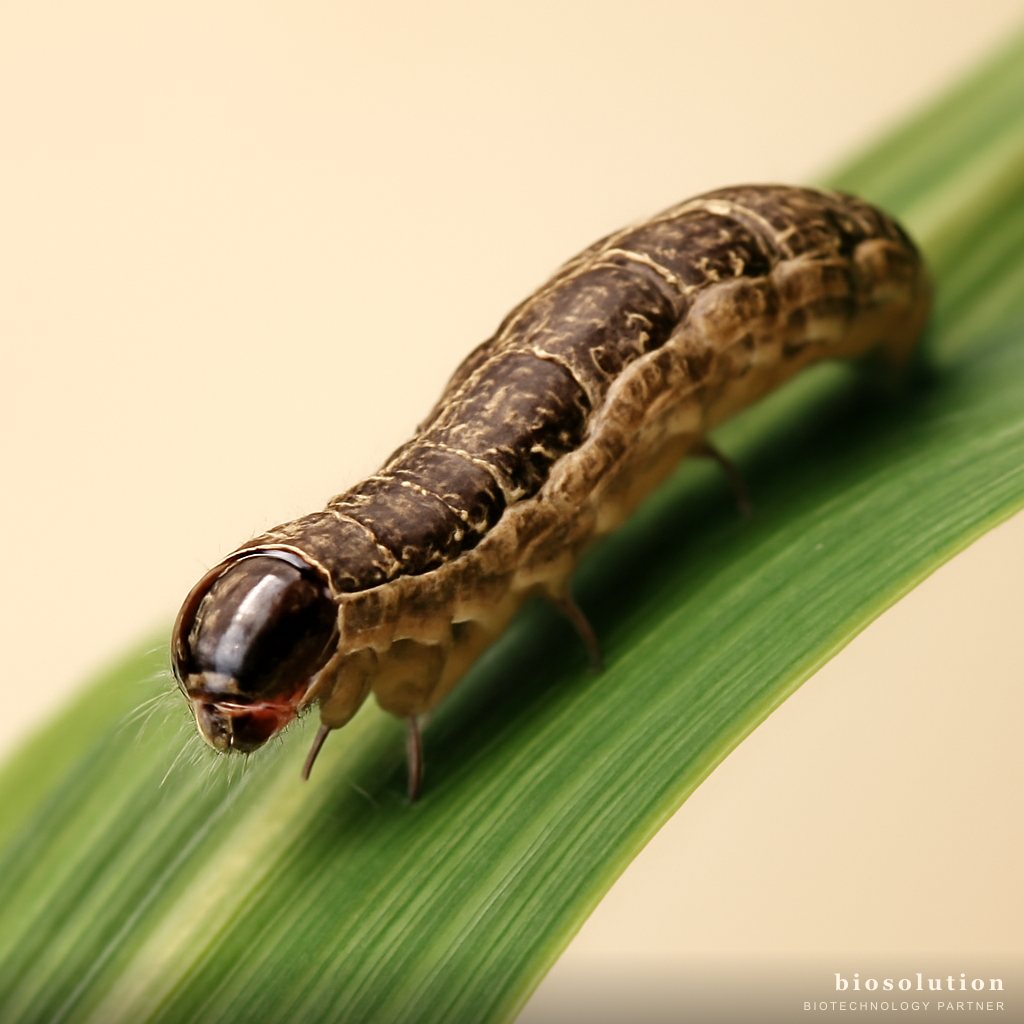
Fall armyworm (Spodoptera frugiperda), known as FAW, has been a scourge for corn farmers in Indonesia since its first invasion in 2019. This pest can reduce production by up to 60% if not properly controlled. However, massive use of chemical insecticides triggers resistance and pollutes the environment. The good news is that biologically controlling fall armyworm is now a proven effective, safe, and environmentally friendly solution. This article will thoroughly discuss biocontrol strategies using the Anti-FAW Formula from Biosolution, containing Bacillus thuringiensis and Beauveria bassiana.
Why is Fall Armyworm (FAW) Difficult to Control?
FAW has a rapid life cycle (30-40 days) with high reproductive capacity. A single female can lay up to 1,500 eggs. Eggs are laid in clusters on leaf surfaces, and early instar larvae feed on leaves, while late instar larvae bore into the ear. This behavior often renders chemical insecticides ineffective because larvae are protected within plant tissues. Additionally, FAW has developed resistance to many active chemical ingredients such as cypermethrin and chlorantraniliprole. Therefore, a biological approach with specific agents is key.
Controlling Fall Armyworm with Bacillus thuringiensis (Bt)
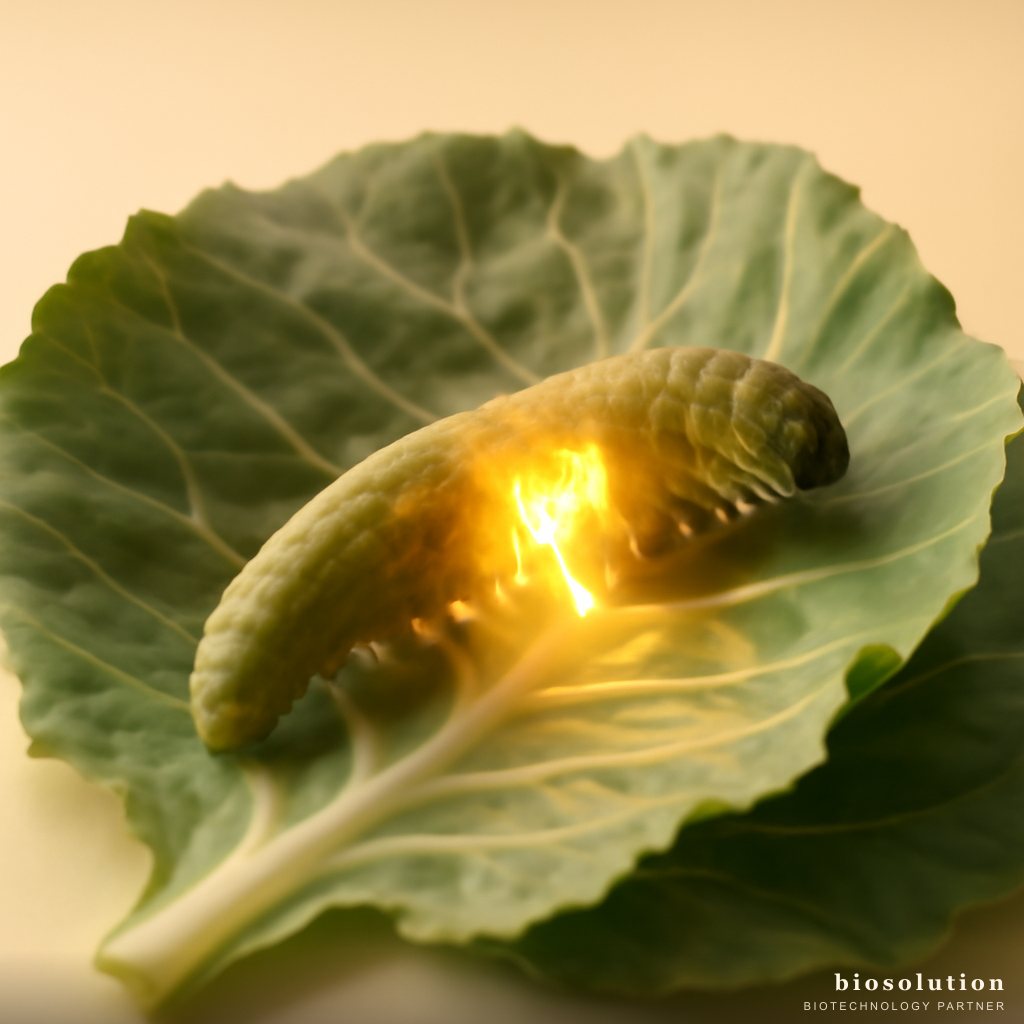
Bacillus thuringiensis is a soil bacterium that produces protein crystals (δ-endotoxin) toxic to Lepidoptera larvae. These crystals dissolve in the alkaline larval gut, releasing toxins that perforate the gut wall, causing larvae to stop feeding and die within 24-48 hours. The advantage of Bt is its high selectivity: it only affects caterpillar larvae, safe for pollinators, natural predators, and humans. In the Anti-FAW Formula, the Bt strain used has been optimized for Spodoptera frugiperda and S. litura.
Proper Application of Bt
- Spray time: Late afternoon (3:00-5:00 PM) to avoid UV degradation.
- Spray target: Egg masses and young larvae (instar 1-2) still on leaf surfaces.
- Dosage: 3 ml per liter of water, sprayed evenly over the entire plant.
- Frequency: Every 5-7 days, especially during vegetative to early flowering stages.
Beauveria bassiana: A Deadly Entomopathogenic Fungus
Beauveria bassiana is a fungus that infects insects through contact. Spores that adhere to the larval cuticle germinate, penetrate the skin, and grow inside the body, producing toxins (beauvericin) that paralyze the immune system. Infected larvae turn pink and die within 3-7 days. The advantage of B. bassiana is its ability to infect late instar larvae and pupae, complementing Bt which is more effective on young larvae.
Application Technique for Beauveria bassiana
- Concentration: Follow label dosage (3 ml/L) to achieve adequate spore density.
- Environmental conditions: Humidity >70% and temperature 20-30°C are optimal for infection. Spray during cloudy weather or late afternoon.
- Rotation with Bt: Use Bt in the first week, then B. bassiana in the second week to avoid resistance and cover all larval stages.
10 Anti-FAW Formulas: Synergy of Bt and Beauveria bassiana
The product Anti-FAW Formula for Rice & Corn from Biosolution combines these two biological agents in one formulation. Here are 10 advantages:
- Dual mode of action – Bt attacks the gut, B. bassiana infects the body, making it difficult for larvae to develop resistance.
- Broad spectrum – Effective against FAW and armyworm (S. litura).
- Safe for natural enemies – Does not kill predators like Coccinellidae beetles and Trichogramma egg parasitoids.
- Environmentally friendly – Leaves no harmful residues, suitable for sustainable agriculture.
- Supports export programs – Chemical-free products meet Japanese, European, and American standards.
- Easy to apply – Simply mix with water and spray.
- Economical – Low dosage (3 ml/L) with 5-7 day intervals.
- Non-phytotoxic – Safe for corn plants at all growth stages.
- Compatible with biofertilizers – Can be mixed with liquid organic fertilizers for efficiency.
- Available at nearby agricultural stores – Easy to obtain.
Integrated Pest Management (IPM) Strategy for FAW
Biocontrol is not the only method. Integrate with the following practices:
Routine Monitoring
- Inspect plants weekly, especially young leaves and growing points.
- Use pheromone traps to detect adult moths.
- Control threshold: 20% of plants infested during vegetative stage.
Use of Resistant Varieties
- Choose relatively resistant corn varieties, such as BISI-18 or NK212.
- Varieties with high silica content are less preferred by larvae.
Field Sanitation
- Clean up crop residues after harvest to reduce pupal populations in the soil.
- Practice minimal tillage to disrupt the life cycle.
Conservation of Natural Enemies
- Plant refugia crops like sunflowers or marigolds along field edges.
- Avoid chemical insecticides that kill predators.
Case Study: Success on Farmer's Land
In Kediri Regency, corn farmer Mr. Budi successfully suppressed FAW attack to <5% after switching to biocontrol. He sprayed Anti-FAW Formula every 5 days during the vegetative phase, combined with Trichoderma application for soil health. As a result, corn production increased by 30% compared to the previous season using chemical insecticides. "The cost is lower, plants are healthier, and my corn is accepted by exporters," he said.
FAQ: Common Questions About FAW Biocontrol
Can biocontrol completely replace chemical insecticides?
Yes, if applied consistently and integrated with IPM. However, during severe attacks, it can be combined with selective insecticides that are safe for natural enemies.
How long does the effect of Anti-FAW Formula last?
The effect of Bt lasts 3-5 days, while B. bassiana can last up to 7 days if environmental conditions are favorable. Reapply according to schedule.
Is this product safe for livestock that eat corn stover?
Safe. Bt and B. bassiana are non-toxic to mammals, poultry, or fish. Sprayed corn stover remains safe as feed.
How should biocontrol products be stored?
Store in a cool, dry place, protected from direct sunlight. Ideal storage temperature is 10-25°C. Do not freeze.
Is biocontrol effective for all corn varieties?
Yes, effectiveness does not depend on variety. However, more susceptible varieties may require higher spray frequency.
Conclusion
Biologically controlling fall armyworm is not only possible but also more profitable in the long run. By utilizing the synergy of Bacillus thuringiensis and Beauveria bassiana in the Anti-FAW Formula, farmers can effectively suppress FAW populations without damaging the ecosystem. This product is the right solution for farmers who want to increase productivity while meeting export standards. For more information or free consultation, contact us via WhatsApp. Together with Biosolution, realize sustainable and residue-free corn farming.