Broad-Spectrum Biological Insecticide: 4 Pest Control Formulas with Beauveria and Metarhizium
In crop cultivation, pest attacks often drastically reduce yields. Indonesian farmers have long relied on chemical insecticides, but residue impacts and pest resistance drive the need for more environmentally friendly alternatives. Broad-spectrum biological insecticides offer a modern solution that not only effectively controls various pests but is also safe for humans, animals, and ecosystems. This article thoroughly discusses application methods, dosage, spraying time, and adjuvant combinations for formulas based on Beauveria bassiana and Metarhizium anisopliae.
Why Choose Broad-Spectrum Biological Insecticides?
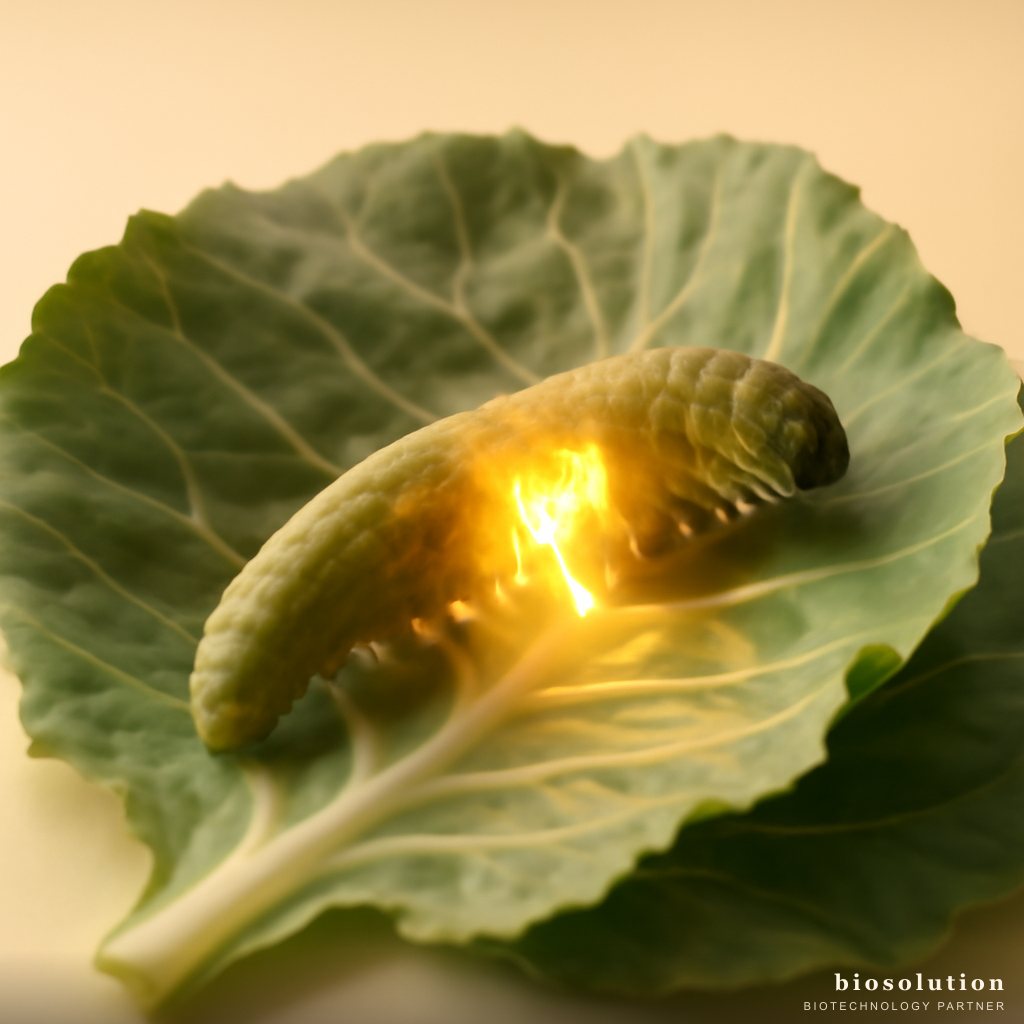
Broad-spectrum biological insecticides are biopesticide products containing entomopathogenic microorganisms, i.e., fungi that naturally infect and kill insects. Their main advantage is the ability to control various pests in a single application, unlike chemical insecticides which are often specific. Formulas combining Beauveria bassiana and Metarhizium anisopliae can attack pests from the orders Lepidoptera (caterpillars), Coleoptera (beetles), Hemiptera (bugs), and Orthoptera (grasshoppers).
Field trial data show efficacy of 80–85% against target pests such as armyworm (Spodoptera litura), stem borers, and aphids. Additionally, these products leave no chemical residue on harvested crops, making them highly suitable for organic farming and integrated pest management (IPM) programs. Regular use also helps suppress pest populations without causing resistance, due to the complex mechanism of fungal action involving physical and enzymatic penetration.
Composition and Mechanism of Biological Formulas
Beauveria bassiana: Specialist for Soft-Bodied Insects
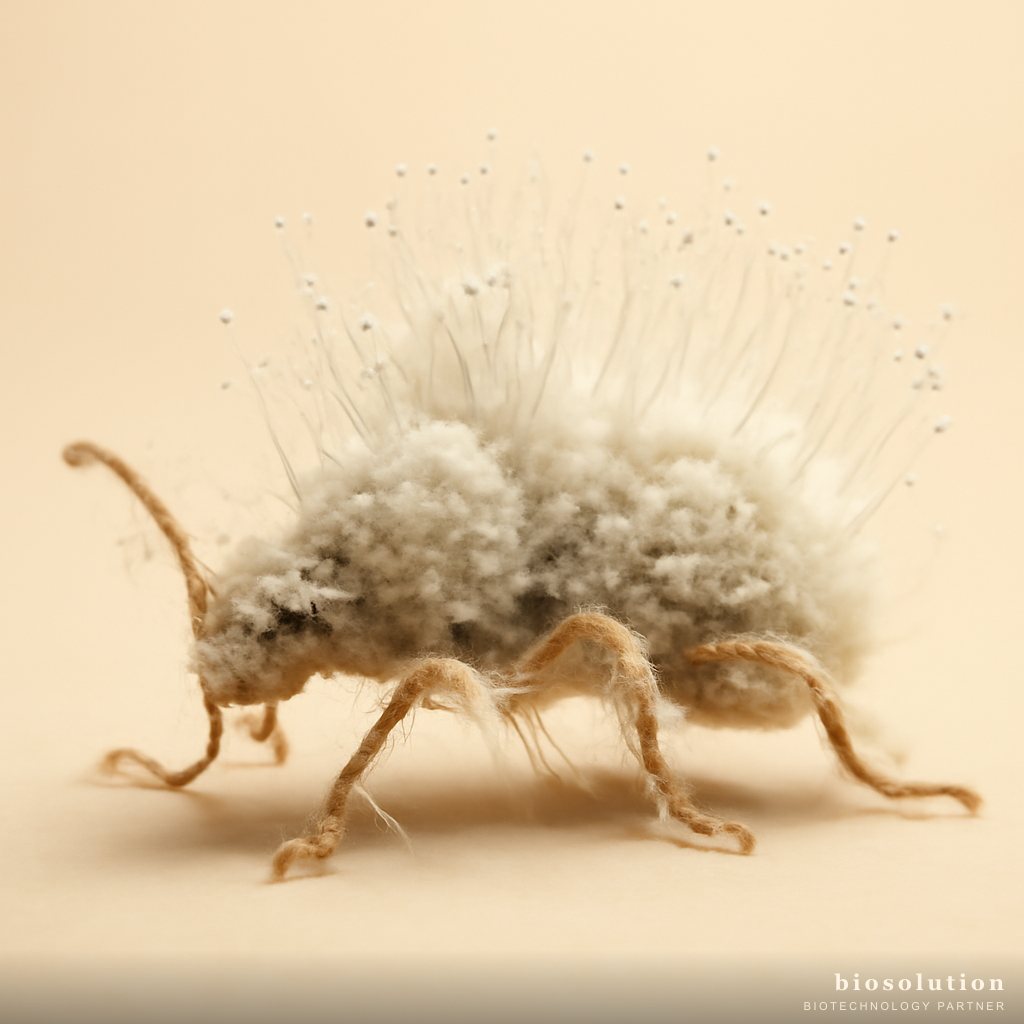
Beauveria bassiana is an entomopathogenic fungus that works by spores attaching to the insect cuticle. In humid conditions, spores germinate and produce protease and chitinase enzymes that dissolve the cuticle layer, then hyphae penetrate the host body. Inside the hemolymph, the fungus multiplies and produces beauvericin toxin, paralyzing the insect within 3–5 days. Infected insects harden like mummies and become covered with white mycelium, which then produces new spores to infect other pests. Beauveria is highly effective against aphids, planthoppers, thrips, and leaf-eating caterpillars.
Metarhizium anisopliae: Specialist for Beetles and Cutworms
Metarhizium anisopliae has a similar mechanism but is more tolerant of high temperatures and low humidity. This fungus produces strong chitinase enzymes and destruxin toxins. Metarhizium excels at controlling soil-dwelling pests such as grubs (coconut beetles) and cutworms, as well as stem borers. Combining both fungi in one formula provides a broader control spectrum, as each has different host preferences and environmental conditions.
Each strain in the formula is formulated with a minimum concentration of 10⁶ CFU/ml, ensuring high spore viability during application. For more complete information about this product, visit the Biological Pest Control Formula page.
Application of Biological Insecticides: Dosage, Timing, and Methods
Proper Dosage
The recommended dosage for liquid formula is 2–3 ml per liter of water, while for WP (wettable powder) form, it is 3–5 grams per liter of water. Ensure the solution is stirred until homogeneous before spraying. Dosage can be adjusted according to pest infestation levels; at high populations, use the maximum dosage. Do not excessively reduce dosage as it may decrease efficacy.
Optimal Application Timing
Spraying is done in the afternoon (3:00–5:00 PM) when relative humidity (RH) is above 70%. Ideal air temperature is below 30°C. These conditions support spore germination and penetration into the insect cuticle. Avoid spraying during rain or strong winds as it can wash spores off plant surfaces. Application frequency is every 7–10 days when pest populations begin to increase, or as a preventive measure during the growing season.
Spraying Method
Spray evenly over the entire plant canopy, especially the underside of leaves where pests often hide. Use a spray nozzle that produces a fine mist to expand coverage. Ensure sufficient spray volume until plants are evenly wet (run-off). For soil pests, apply the solution to the soil surface around the base of the stem.
Adjuvant Combinations to Increase Efficacy
Adjuvants are additives mixed into the spray solution to enhance the performance of biological insecticides. Here are some recommendations:
Stickers and Wetting Agents (Surfactants)
Adding non-ionic surfactant at 0.1–0.2% (e.g., 1–2 ml per liter) helps reduce water surface tension so the solution spreads and adheres more easily to waxy leaves. This is important because fungal spores need direct contact with the insect cuticle.
UV Protectants
Beauveria and Metarhizium spores are sensitive to ultraviolet light. Adding UV protectants such as lignin or plant extracts (e.g., garlic extract) can extend spore viability in the field. Some commercial products already contain UV protectants, but if not, farmers can add 0.5% sucrose or molasses.
Nutrient Sources
Adding sugar (e.g., 5 grams of granulated sugar per liter) provides energy for spores to germinate faster. However, be careful because sugar can also attract ants; use only when necessary and in controlled areas.
pH Adjustment
Entomopathogenic fungi grow optimally at neutral to slightly acidic pH (6–7). If water is hard or alkaline, add 0.1% citric acid to lower pH. Ensure the spray solution pH is not above 8, as it can inhibit spore germination.
Case Study: Successful Field Application
On a chili plantation in East Java, farmers complained about aphid and fruit borer infestations resistant to chemical insecticides. After switching to a broad-spectrum biological insecticide at a dosage of 3 ml/l, sprayed every 7 days in the afternoon, pest populations dropped drastically within 2 weeks. Previously stunted plants turned green again, and fruit production increased by 30%. Farmers also reported no residue on chilies, resulting in higher selling prices in the organic market.
Another example in rice fields in West Java, brown planthopper infestations were suppressed by applying biological formula combined with light traps. As a result, chemical insecticide use decreased by 50% and populations of natural enemies (spiders, predatory beetles) were maintained.
Integration with Integrated Pest Management (IPM) Programs
Broad-spectrum biological insecticides are an important component of IPM. These products are compatible with other biological agents such as Trichoderma and Bacillus thuringiensis, and can be used together with pheromone traps or refugia plants. Avoid mixing with chemical fungicides as they can kill fungal spores. Rotation with virus- or bacteria-based biopesticides is also recommended to prevent pest adaptation.
Advantages Over Chemical Insecticides
- Safe: Non-toxic to humans, pets, and pollinating insects such as bees.
- Environmentally Friendly: Naturally degrades, does not contaminate soil and water.
- No Resistance Development: Multi-target mechanism (physical penetration, enzymatic, toxins) makes it difficult for pests to develop immunity.
- Long-Term Effect: Spores produced from insect carcasses can infect subsequent pest generations.
For farmers looking to transition to sustainable agriculture, this product is the right choice. Learn more about integrated pest control solutions at Sustainable Agriculture Solutions.
Conclusion
Broad-spectrum biological insecticides based on Beauveria bassiana and Metarhizium anisopliae offer an effective and environmentally friendly solution for controlling pests on various commodities. By following the recommended dosage of 2–3 ml/l, spraying in the afternoon when humidity is high, and adding adjuvants such as surfactants and UV protectants, farmers can achieve 80–85% efficacy without chemical residue. This product also supports IPM programs and is safe for ecosystems. For further consultation on application in your fields, contact our technical team via WhatsApp.
FAQ
Is broad-spectrum biological insecticide safe for pollinating bees?
Yes, this product is safe for bees and other pollinating insects because the fungi only infect specific target insects. However, avoid spraying directly when bees are actively foraging. Spray in the afternoon when bees return to the hive.
How to store the product after mixing with water?
The mixed solution should be used immediately within a maximum of 6 hours. Do not store for more than a day as spores may lose viability. Store the product in its original packaging in a cool, dry place away from direct sunlight.
Can it be mixed with foliar fertilizer?
It is best not to mix with foliar fertilizers containing heavy metals or extreme pH. If you want to apply together, first conduct a compatibility test by mixing a small amount and letting it sit for 30 minutes. If no clumping or color change occurs, the mixture is safe to use.
How long does it take to see the effect of biological insecticide?
Insects begin to die 3–7 days after application, depending on pest size and type. Full efficacy is achieved within 7–10 days. For optimal results, reapply according to schedule.
Is this product effective for all types of pests?
This product is effective against soft-bodied insect pests such as caterpillars, aphids, planthoppers, thrips, and beetles. It is not effective against hard-bodied pests like adult bugs or dormant pests. For specific pests, consult our technicians.
For more information and ordering, visit Biological Pest Control Formula or contact us via WhatsApp.