Broad-Spectrum Biological Insecticide: Integration with Natural Enemies for Integrated Pest Management
In an effort to suppress pest attacks without compromising ecosystem health, broad-spectrum biological insecticides have become a top choice for modern farmers. Products based on Beauveria bassiana and Metarhizium anisopliae are not only effective in controlling various insect species but also friendly to natural enemies and the environment. This article discusses how integrating these biological formulations with integrated pest management (IPM) strategies can enhance efficacy and sustainability in farming.
Why Are Broad-Spectrum Biological Insecticides Important in IPM?
Integrated pest management (IPM) is a holistic approach that combines various control methods—biological, cultural, physical, and chemical—wisely to keep pest populations below economic thresholds. Broad-spectrum biological insecticides play a crucial role because they can suppress target pests without disrupting the natural balance. Unlike chemical pesticides that often trigger resistance and kill natural enemies, biopesticides such as Beauveria bassiana and Metarhizium anisopliae work selectively through infection mechanisms specific to pest insects.
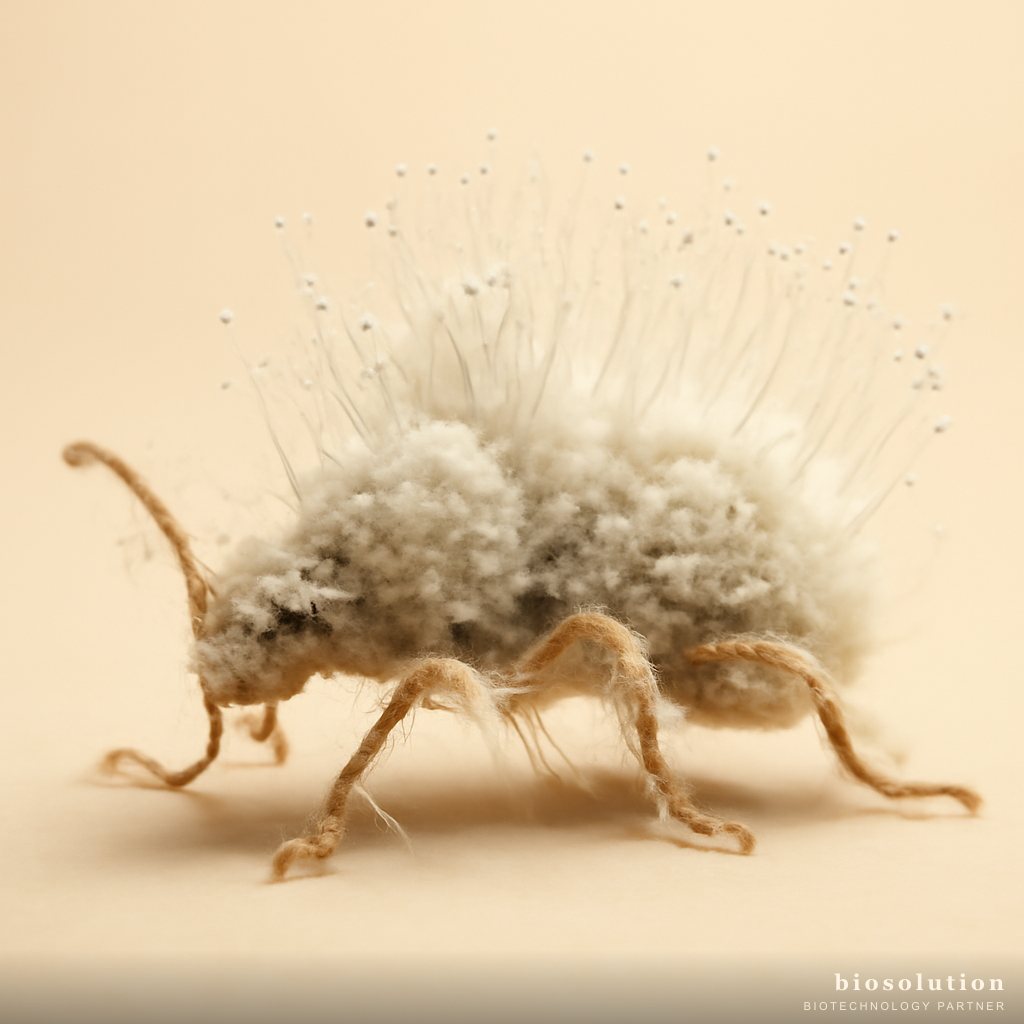
The main advantage of broad-spectrum biological insecticides is their ability to control multiple pest types in a single application. Beauveria bassiana effectively attacks soft-bodied insects such as caterpillars, aphids, and thrips, while Metarhizium anisopliae excels at controlling beetles and cutworms. With proper formulation, both entomopathogens can be applied together to cover a broader pest spectrum. Product efficacy reaches 80–85% against target pests, with a mechanism of action involving enzymatic penetration through the cuticle, mycelial growth inside the host, and sporulation on cadavers that triggers secondary infections in other pest populations.
Composition and Mechanism of Action of the Biological Formulation
The broad-spectrum biological insecticide product from Biosolution contains two superior entomopathogenic strains: Beauveria bassiana and Metarhizium anisopliae, each at a concentration of 10⁶ CFU/ml. Both fungi have complementary mechanisms of action:
Beauveria bassiana
- Target pests: Caterpillars, aphids, thrips, planthoppers, and other soft-bodied insects.
- Mode of action: Spores attach to the insect cuticle, then germinate and penetrate the cuticle using protease and chitinase enzymes. Mycelium grows inside the body, absorbs nutrients, and produces toxins that kill the host within 3–7 days.
- Advantage: Capable of infecting various insect stages (larvae, nymphs, adults) and spreading through sporulating cadavers.
Metarhizium anisopliae
- Target pests: Beetles (e.g., coconut beetle, rhinoceros beetle), cutworms, fruit flies, and soil insects.
- Mode of action: Spores attach to the cuticle, germinate, and perform enzymatic penetration. Once inside the hemolymph, the fungus multiplies and produces destruxins that paralyze the insect's immune system.
- Advantage: Effective under high humidity conditions and can persist in soil as a long-term biological agent.
The combination of these two strains provides broader pest coverage than single-strain use, so farmers do not need to mix multiple products to address diverse pest attacks.
Integration Strategies with Natural Enemies in IPM
One of the principles of IPM is utilizing natural enemies (predators, parasitoids, pathogens) as control components. Broad-spectrum biological insecticides are designed to be compatible with natural enemies. Here are integration strategies:
1. Proper Timing of Application
Application of biological insecticides should be done in the late afternoon when humidity is high (RH > 70%) and temperature is not too hot. This not only increases spore efficacy but also avoids the active periods of natural enemies such as parasitoid wasps and predatory beetles, which are generally active from morning to midday.
2. Spot or Partial Application
Instead of spraying the entire field, application can be focused on areas heavily infested with pests. This maintains stable natural enemy populations in other areas. For example, in rice cultivation, spray only on clumps showing symptoms of planthopper attack, while other areas are left as refugia for spiders and predatory beetles.
3. Rotation with Other Biological Agents
To prevent resistance and maintain effectiveness, biological insecticides can be rotated with other biological agents such as Bacillus thuringiensis or entomopathogenic viruses. Rotation also helps break the life cycle of pests that may begin to adapt to one type of pathogen.
4. Conservation of Natural Enemy Habitat
Planting flowering plants on bunds or field edges provides nectar and pollen for adult parasitoids and predators. With sufficient food sources, natural enemies survive and reproduce, optimizing synergy with biological insecticide applications.
A study by FAO shows that integrating biopesticides with natural enemies can reduce application frequency by up to 50% compared to using chemical pesticides alone.
Advantages of Using Broad-Spectrum Biological Insecticides
Residue-Free and Safe for Workers
Unlike chemical pesticides that leave residues on harvested products and are hazardous to farmers, biological insecticides have a safe shelf life. These products leave no chemical residues, so harvesting can be done immediately after application without contamination risk. This is crucial for meeting national and export food safety standards.
Environmentally Friendly
Beauveria and Metarhizium spores are specific to insects and do not affect non-target organisms such as earthworms, bees, or fish. Additionally, spores degrade naturally in the environment, thus not contaminating soil and water.
Supports Sustainability
By reducing reliance on chemical pesticides, farmers can maintain natural enemy populations and increase field biodiversity. In the long term, pest control costs can be reduced as pest populations are naturally regulated.
Proper Application Methods
For optimal results, follow these application guidelines:
- Dosage: 2–3 ml per liter of water (or 3–5 g/L for WP formulation).
- Method: Spray evenly over the entire plant canopy, especially the undersides of leaves where pests often hide.
- Frequency: Repeat every 7–10 days if pest populations remain high, or based on monitoring results.
- Timing: Apply in the late afternoon when humidity is high (RH > 70%) to maintain spore viability.
- Mixing: Avoid mixing with chemical fungicides as they can inhibit fungal growth. If necessary, conduct a compatibility test first.
Conclusion
Broad-spectrum biological insecticides integrating Beauveria bassiana and Metarhizium anisopliae are an effective and environmentally friendly solution in IPM. With 80–85% efficacy, residue-free nature, and compatibility with natural enemies, this product helps farmers control pests sustainably. For further consultation on application strategies suitable for your crop, contact the Biosolution team via WhatsApp or see the product Broad-Spectrum Biological Insecticide Formula for more detailed information.