Broad-Spectrum Biological Insecticide: A Guide to Monitoring Beauveria and Metarhizium Populations in the Field
The use of broad-spectrum biological insecticides is increasingly popular among farmers seeking effective and environmentally friendly pest control solutions. Products based on Beauveria bassiana and Metarhizium anisopliae offer 80–85% efficacy against various insect pests without leaving chemical residues on crops. However, application success heavily depends on accurate pest population monitoring. This article will technically discuss how to monitor pest populations to optimize the use of broad-spectrum biological insecticides.
Why Is Pest Population Monitoring Important?
Pest population monitoring is a crucial step in Integrated Pest Management (IPM). By knowing the types and numbers of pests in the field, farmers can determine the right timing for biological insecticide application, avoid unnecessary applications, and save costs. Broad-spectrum biological insecticides containing B. bassiana and M. anisopliae work optimally when pest populations are still low to moderate. If populations are very high, their effectiveness may decrease, requiring additional measures.
Monitoring also helps detect pests resistant to chemical insecticides, allowing farmers to switch to biological methods. Additionally, monitoring data is useful for evaluating application effectiveness and planning control strategies for the next season.
Pest Population Monitoring Techniques
1. Traps
Traps are tools to capture flying or crawling pests so their populations can be estimated. Common types of traps include:
- Light traps: Effective for moths, night beetles, and planthoppers. Place traps at a height of 1–1.5 meters, turn on from dusk to midnight. Count the number of trapped pests each night.
- Pheromone traps: Use sex pheromones to attract male pests. Suitable for stem borers, armyworms, and other specific pests. Install traps at the beginning of the growing season.
- Yellow sticky traps: Attract pests attracted to yellow color such as aphids, thrips, and whiteflies. Place at canopy height, replace weekly.
2. Scouting (Direct Monitoring)
Scouting is direct field observation by walking along plant rows. Conduct systematic random sampling, e.g., every 5 rows, observe 10 plants per point. Record:
- Types of pests found
- Number of pests per plant or per leaf
- Pest stage (egg, larva, pupa, adult)
- Level of plant damage (percent damaged leaves)
Perform scouting every 3–5 days, especially during critical growth stages (e.g., fruit set).
3. Action Threshold
Action threshold is the pest population level that requires control action. For broad-spectrum biological insecticides, action thresholds are usually lower than for chemical insecticides because biological effects are not instantaneous. Examples of action thresholds:
- Armyworm: 2–3 larvae per plant
- Aphids: 5–10 aphids per leaf
- Stem planthopper: 5–10 planthoppers per hill
- Fruit borer: 1–2 eggs or larvae per plant
If the population exceeds the threshold, biological insecticide application can be carried out. However, if the population is still below the threshold, natural biological control by predators and parasitoids may be sufficient.
Relationship Between Monitoring and Application of Broad-Spectrum Biological Insecticides
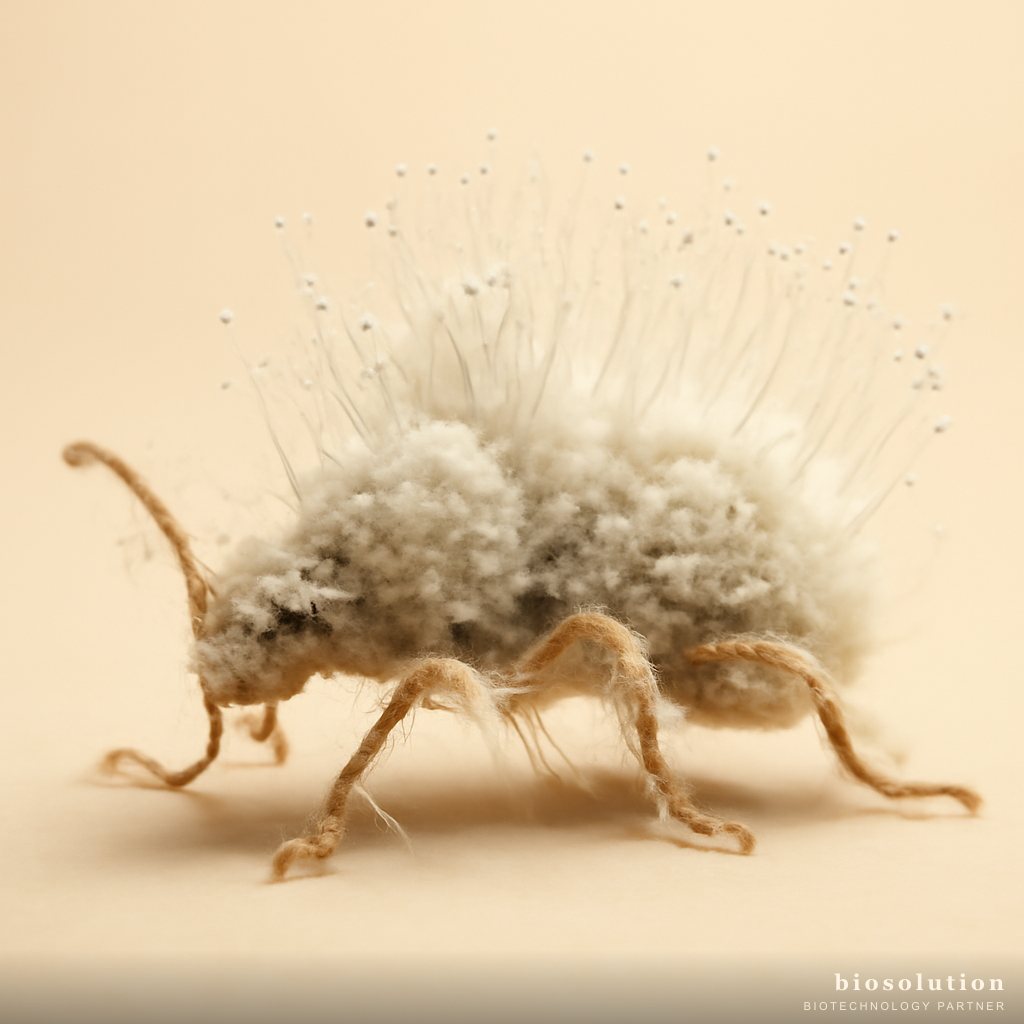
Broad-spectrum biological insecticides such as formulations containing B. bassiana and M. anisopliae work by spores adhering to the insect cuticle, then penetrating the body through protease and chitinase enzymes. Mycelium grows inside the host and kills it within 3–7 days. Sporulation on the carcass then spreads spores to other pests.
Therefore, application should be done when pests are still active and environmental conditions are favorable (humidity >70%, temperature 25–30°C). Monitoring helps determine the right application time: when pest populations begin to increase but have not yet severely damaged plants.
Application dosage: 2–3 ml per liter of water (or 3–5 g/L for WP formulation) for thorough spraying onto the plant canopy. Frequency: every 7–10 days when pest populations increase, preferably in the afternoon.
Case Study: Pest Monitoring on Chili Plants
On chili plants, major pests such as aphids (Myzus persicae), thrips (Thrips parvispinus), and armyworms (Spodoptera litura) often attack. By monitoring using yellow sticky traps and weekly scouting, farmers can detect early infestations. For example, if 10 aphids per leaf are found on 20% of plants, the action threshold has been exceeded and broad-spectrum biological insecticide application can be performed.
After application, monitoring continues to assess effectiveness. Typically, within 5–7 days the population decreases drastically. If pests remain, reapplication can be done. The advantage of biological insecticides is that they do not kill natural enemies such as Coccinellidae beetles, so natural biological control continues.
Conclusion
Pest population monitoring is an important step in optimizing the use of broad-spectrum biological insecticides. With trap, scout, and action threshold techniques, farmers can determine the right application time, reduce costs, and increase effectiveness. Biosolution products containing Beauveria bassiana and Metarhizium anisopliae offer 80–85% efficacy against target pests, safe for the environment and workers. For best results, combine routine monitoring with biological insecticide application at recommended dosages and frequencies.
Want to know more? Free consultation with our expert team or see the product Broad-Spectrum Biological Insecticide Formula.