Common Mistakes in Decomposing Chicken Manure and Cage Odor with Microbes
Decomposing chicken manure and cage odor with microbes is an effective biotechnological solution, but many farmers still make fatal mistakes that lead to suboptimal results. As a result, ammonia odor remains pungent, waste volume does not decrease, and the decomposition process is slow. This article discusses six most common mistakes and how to fix them using Biosolution's Organic Waste Decomposer Formula.
1. Not Cleaning the Cage Before Application
The first mistake is directly spraying microbes onto manure piles without cleaning leftover feed or other materials. Decomposer microbes such as Streptomyces sp. and the consortium of Bacillus + Aspergillus contained in the Organic Waste Decomposer Formula work optimally on homogeneous substrates. If mixed with leftover feed containing pathogens, the decomposition process can be hindered.
Clean the cage of leftover feed and foreign materials before application. Ensure the chicken manure pile is not mixed with non-organic items like plastic or stones. With a clean substrate, microbes can directly degrade odor-causing organic compounds.
2. Too Little or Too Much Microbial Dosage
Many farmers think that the more microbes, the faster the decomposition process. However, excessive dosage actually causes competition among microbes and reduces efficiency. Conversely, too little dosage means the microbial population is insufficient to decompose all the waste.
The Organic Waste Decomposer Formula is formulated with the correct dosage: 1 liter per cubic meter of waste. One application is enough for one pile. Do not increase the dosage unnecessarily, as the consortium balance has been optimized by Biosolution's R&D team.
3. Wrong Application Time
Decomposer microbes need supportive environmental conditions to thrive. Application during the day when cage temperature is high can kill microbes before they start working. Conversely, application in the evening when temperature is lower and humidity is higher is more ideal.
Biosolution recommends application in the late afternoon (around 4:00-6:00 PM) when sunlight is not too intense. Higher air humidity helps microbes survive and start working. Avoid application during heavy rain as microbes can be washed away.
4. Not Paying Attention to Pile Moisture
Microbes need water to move and digest organic matter. A pile that is too dry will make microbes dormant, while too wet causes anaerobic conditions that produce foul odors (methane and hydrogen sulfide).
The ideal moisture for aerobic decomposition is 50-60%. An easy way to test: grab a handful of waste; if water drips, it's too wet; if it crumbles immediately, it's too dry. Add water or dry material (husk, sawdust) to achieve optimal moisture before microbial application.
5. Ignoring Pile Aeration
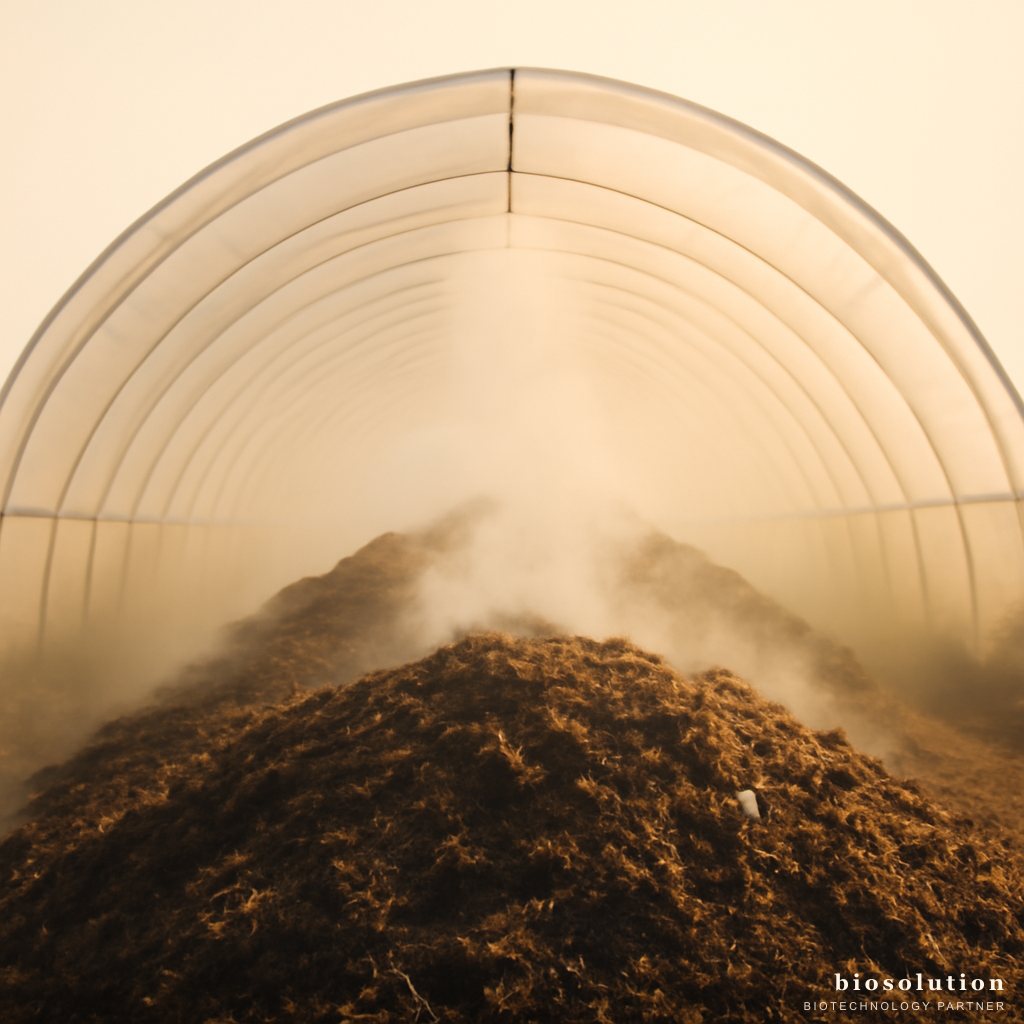
The decomposition process by Bacillus and Aspergillus is aerobic, meaning it requires oxygen. A pile that is too dense without aeration becomes anaerobic and produces worse odors. Many farmers leave waste piles piled up without turning.
Turn the pile every 3-5 days to supply oxygen. With the Organic Waste Decomposer Formula, waste volume can be reduced by 30-50% within 2-3 weeks, making turning easier. Ensure the pile is not too high (maximum 1.5 meters) for even aeration.
6. Not Using the Right Microbes for Chicken Waste
Not all microbes are suitable for all types of waste. Chicken manure has high nitrogen content (ammonia) and a sticky texture. Microbes like Streptomyces sp. produce enzymes and natural antibiotics that can suppress pathogens while decomposing nitrogen compounds. The consortium of Bacillus + Aspergillus accelerates lignocellulose decomposition from leftover feed.
Biosolution's Organic Waste Decomposer Formula is specifically designed for livestock waste, including chicken manure. This product has been proven to significantly reduce ammonia odor and produce ready-to-use compost in a short time. Do not use random microbes of unknown origin.
Correct Application Method
After understanding the mistakes above, here are the correct application steps:
- Clean the cage of leftover feed and non-organic materials.
- Collect chicken manure into a pile with a maximum height of 1.5 meters.
- Adjust moisture to 50-60% (handful test).
- Dilute 1 liter of Organic Waste Decomposer Formula in 10 liters of water.
- Spray evenly over the entire pile surface in the late afternoon.
- Turn the pile every 3-5 days for aeration.
- Within 2-3 weeks, odor disappears, volume decreases, and compost is ready to use.
Conclusion
Decomposing chicken manure and cage odor with microbes is not a complicated process, but it requires attention to detail. Avoid the six mistakes above so your microbial investment is not wasted. Use Biosolution's Organic Waste Decomposer Formula containing Streptomyces sp. and a consortium of Bacillus + Aspergillus for optimal results. Get this product through the Organic Waste Decomposer Formula product page or consult your needs with Biosolution's expert team via WhatsApp.
For more information on livestock waste management solutions, visit the waste solution page or read related articles on livestock waste management.