Controlling Fall Armyworm in Corn: Population Monitoring and Effective Biological Solutions
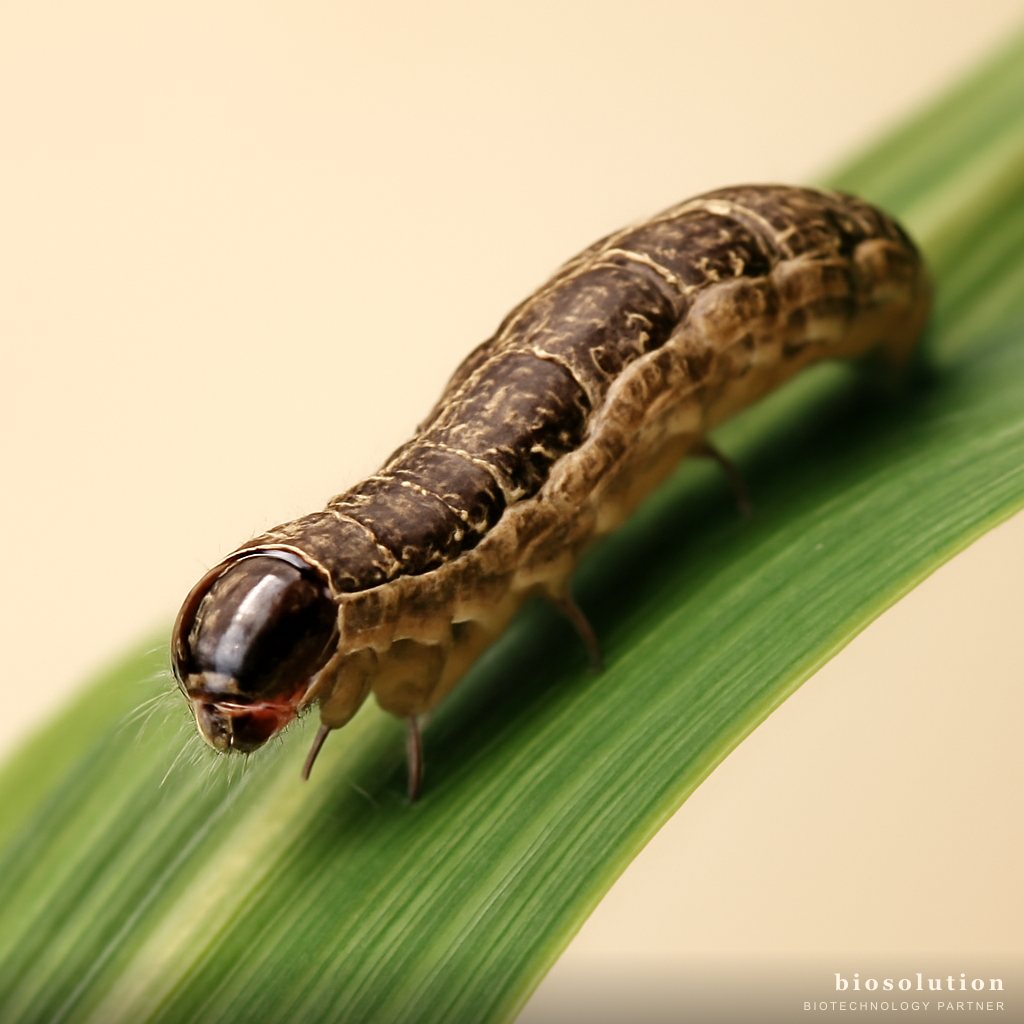
Fall armyworm (Spodoptera frugiperda, FAW) has become a scourge for corn farmers in Indonesia since it was first detected in 2019. This pest can reduce yields by up to 60% if not properly controlled. However, controlling fall armyworm does not always have to rely on expensive chemical insecticides with resistance risks. With a disciplined population monitoring approach—traps, scouting, and control thresholds—combined with the application of biological agents such as Bacillus thuringiensis and Beauveria bassiana, farmers can suppress FAW populations effectively, environmentally friendly, and sustainably.
Why is Population Monitoring Important in Controlling Fall Armyworm?
Many farmers act reactively: as soon as they see caterpillars, they spray immediately. In fact, effective control begins before the pest population reaches damaging levels. Routine population monitoring allows farmers to know:
- Population density: Is it still below the control threshold?
- Developmental stage: Are they eggs, early instar larvae, or large larvae?
- Spatial distribution: Is the attack uniform or only in certain spots?
With this data, farmers can decide when and where intervention is needed, making pesticide use (including biological) more efficient and targeted.
Traps for Early Detection
Sex pheromone traps or light traps are very helpful in detecting the presence of FAW moths before eggs are laid. Installing pheromone traps (e.g., delta traps with specific S. frugiperda lure) on field edges, with a density of 2-4 traps per hectare, can capture male moths. If catches increase sharply (e.g., >10 moths per night), it signals that the population is increasing and more intensive scouting is needed.
Scouting: Direct Field Observation
Scouting is the systematic observation of corn plants. During the vegetative phase (V1–V10), check 20 plants randomly per sample point (at least 5 points per hectare). Look for:
- Egg masses: Usually on the underside of leaves, covered with fine hairs.
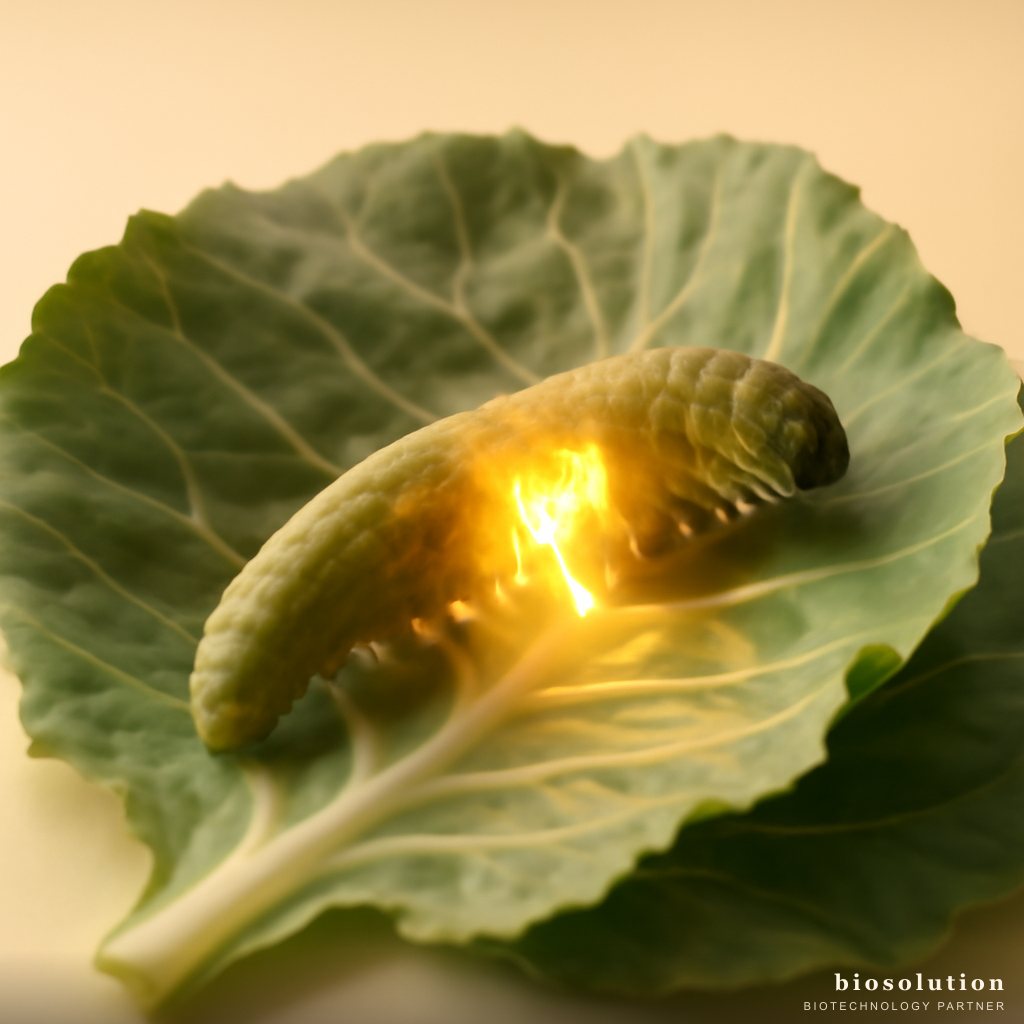
- Young larvae: Instars 1–2 are yellowish-green, often making small holes in leaves.
- Typical damage: Uniformly perforated leaves (window pane) or fresh frass near the whorl.
Record the number of infested plants and the average number of larvae per plant. This data forms the basis for determining control thresholds.
Control Threshold: When to Act?
Based on recommendations from the Cereals Research Institute and the International Maize and Wheat Improvement Center (CIMMYT), the control thresholds for FAW in corn are:
- Early vegetative phase (V1–V4): If >20% of plants show fresh damage symptoms or >1 larva per plant is found.
- Late vegetative phase (V5–V10): If >30% of plants are infested or >2 larvae per plant.
- Generative phase: If >10% of ears are infested.
If the threshold is exceeded, it is time to apply Anti-Fall Armyworm Formula for Rice & Corn from Biosolution.
Biological Solution: Anti-Fall Armyworm Formula Based on Bacillus thuringiensis and Beauveria bassiana
After monitoring shows the population is above the threshold, the next step is to choose an effective yet safe control agent. Anti-Fall Armyworm Formula for Rice & Corn is a biological product specifically formulated to control Spodoptera frugiperda and Spodoptera litura. Its active ingredients consist of two superior biological agents:
Bacillus thuringiensis (Bt): Larva-Specific Toxin
Bt produces protein crystals (δ-endotoxin) that are stomach poisons for Lepidoptera larvae. When larvae feed on leaves containing Bt spores, the crystals dissolve in the gut and activate toxins that damage the gut wall. Larvae stop feeding within hours and die within 2–4 days. The advantages of Bt are:
- Specific: Does not harm non-target insects, birds, or humans.
- No cross-resistance: Mode of action differs from chemical insecticides.
- Food chain safe: Leaves no harmful residues on corn.
Beauveria bassiana: Entomopathogenic Fungus
Beauveria bassiana is a fungus that infects insects through contact. After spores attach to the cuticle of larvae or pupae, the fungus germinates and penetrates the body, then grows in the hemolymph, producing toxins (beauvericin) that paralyze and kill the host. Advantages of Beauveria:
- Effective on various stages: Small to large larvae, even pupae.
- Persistence: Can survive in the environment and infect subsequent generations.
- Reduces residual population: Infects pupae in the soil.
Proper Application Method for Maximum Results
Spot Spray Method for Eggs and Young Larvae
Anti-Fall Armyworm Formula is applied by spraying directly on egg masses and young larvae. The recommended dosage is 3 ml per liter of water, with a frequency of every 5–7 days. The best application time is in the afternoon (3:00–5:00 PM) to avoid UV rays that can damage Beauveria and Bt spores.
Preparation of Spray Solution
- Mix 3 ml of Anti-Fall Armyworm Formula into 1 liter of clean water (non-chlorinated).
- Stir until homogeneous.
- Pour into a sprayer and spray evenly on the underside of leaves where eggs or young larvae are located.
Ensure the spray wets the entire target leaf surface. Repeat every 5–7 days as long as the population remains above the threshold, or until the generative phase.
Advantages of Anti-Fall Armyworm Formula Compared to Chemical Insecticides
| Aspect | Anti-Fall Armyworm Formula | Conventional Chemical Insecticides |
|---|---|---|
| Mechanism | Bt: stomach toxin; Beauveria: contact infection | Neurotoxins, enzyme inhibitors |
| Resistance | Does not trigger cross-resistance | Prone to resistance (many reports of FAW resistant to pyrethroids) |
| Safety | Safe for workers, consumers, natural enemies | Toxic to mammals, birds, fish |
| Residue | Leaves no harmful residues | Chemical residues can remain on ears |
| Ecosystem impact | Does not disrupt predator balance | Kills non-target insects |
Thus, controlling fall armyworm using this biological product is not only effective but also supports sustainable agriculture.
Integration with Integrated Pest Management (IPM) Practices
The use of Anti-Fall Armyworm Formula should not stand alone. Integrate it with other IPM components:
- Crop rotation: Do not plant corn consecutively in the same field.
- Conservation of natural enemies: Avoid broad-spectrum chemical sprays; let predators like spiders, ground beetles, and egg parasitoids (Trichogramma spp.) work.
- Use of tolerant varieties: Choose corn varieties more resistant to FAW.
- Field sanitation: Clean up crop residues and weeds that serve as alternative hosts.
For more information on other pest control solutions, see Caterpillar & Borer Control Formula (Bt) which is also effective for stem borer pests.
Case Study: Field Success
Corn farmers in Kediri Regency, East Java, implemented population monitoring from the start of planting. They installed pheromone traps and conducted scouting every 3 days. When the control threshold was exceeded at the V6 stage, they applied Anti-Fall Armyworm Formula at a dose of 3 ml/liter of water, sprayed in the afternoon. After 3 applications at 7-day intervals, the larval population dropped drastically from an average of 3.2 larvae per plant to 0.4 larvae. The harvest reached 8.2 tons/ha, far above the regional average of only 5.5 tons/ha. (Source: Kediri Agriculture Office Report, 2023)
Conclusion
Controlling fall armyworm effectively starts with disciplined population monitoring: traps, scouting, and control thresholds. When the threshold is exceeded, application of Anti-Fall Armyworm Formula based on Bacillus thuringiensis and Beauveria bassiana is a powerful, safe, and environmentally friendly biological solution. With a dose of 3 ml/liter of water, spray egg masses and young larvae every 5–7 days in the afternoon. This product does not cause cross-resistance and leaves no harmful residues. For optimal results, combine with IPM practices such as crop rotation and conservation of natural enemies. Get this product and consult your needs via WhatsApp or visit our product page.
FAQ
1. Is Anti-Fall Armyworm Formula safe for corn plants?
Yes, this product is safe because it consists of natural microorganisms (Bacillus thuringiensis and Beauveria bassiana) that are not phytotoxic. It does not cause leaf burn or growth disturbances. Safe to use at all growth stages of corn.
2. How long does it take to see results after application?
Larvae stop feeding within 6–12 hours after application, and death occurs within 2–4 days for Bt, while Beauveria takes 3–7 days depending on temperature and humidity. Maximum effect is seen after 2–3 applications.
3. Can this product be mixed with chemical pesticides?
It is best not to mix with fungicides or chemical insecticides, especially those that are bactericidal or fungicidal, as they can kill the biological agents. If chemical application is necessary, allow a gap of at least 3 days before or after biological application.
4. Is this product effective against large fall armyworm larvae (instars 4–6)?
The formula is more optimal for instars 1–3 larvae. For large larvae, increase the dose to 4 ml/liter or apply more intensively (every 5 days). However, the best control remains at early stages.
5. Where can I buy Anti-Fall Armyworm Formula?
This product is available at official Biosolution distributors in various regions. You can also order directly via WhatsApp or visit the product page for more information.