Controlling Fall Armyworm: Why Chemical Pesticides Fail and the Right Biological Solution
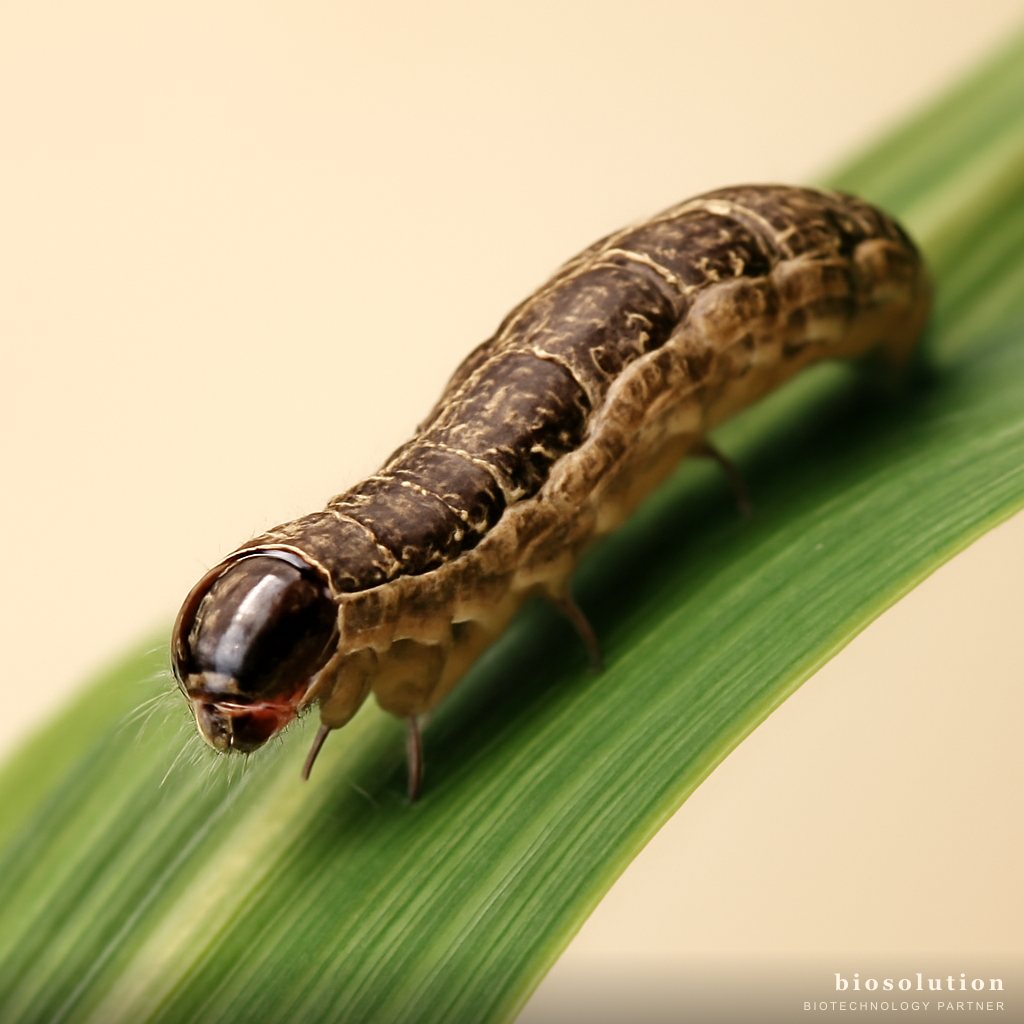
Fall armyworm (Spodoptera frugiperda, FAW) has been a scourge for Indonesian farmers since it was first reported attacking in 2019. This invasive insect from the Americas can cause yield losses of up to 60% if not managed properly. Many farmers rely on chemical pesticides to control fall armyworm, but in recent years, complaints about application failures have become more frequent. The phenomenon of resistance is the main cause. This article will thoroughly explore why chemical pesticides are no longer effective and how a biological approach using Bacillus thuringiensis and Beauveria bassiana in the Biosolution Anti-Fall Armyworm Formula is a smart solution for sustainable FAW control.
Why Chemical Pesticides Fail to Control Fall Armyworm?
Intensive use of chemical pesticides to control fall armyworm has caused a serious problem: resistance. FAW has a high genetic adaptability. Research from FAO (2021) notes that FAW populations in Southeast Asia have shown resistance to pyrethroids, organophosphates, and diamides. Resistance mechanisms include target site mutations (e.g., KDR resistance in sodium channels) and increased detoxification enzymes such as cytochrome P450. As a result, recommended doses are no longer lethal, and farmers tend to increase doses or application frequency, which accelerates resistance and harms the environment and health.
In addition to resistance, chemical pesticides also kill natural enemies of FAW, such as egg parasitoids Trichogramma spp. and predatory beetles Coccinella. The loss of these natural biological agents causes FAW populations to explode after application (resurgence). Therefore, a control strategy that does not trigger resistance and remains environmentally friendly is needed.
Biological Solution: Mechanism of Action of Anti-Fall Armyworm Formula
Biosolution presents the Anti-Fall Armyworm Formula for Rice & Corn containing two superior biological agents: Bacillus thuringiensis (Bt) and Beauveria bassiana. This product is specifically designed to control fall armyworm without causing cross-resistance. Here is how it works:
Bacillus thuringiensis: Larva-Specific Toxin
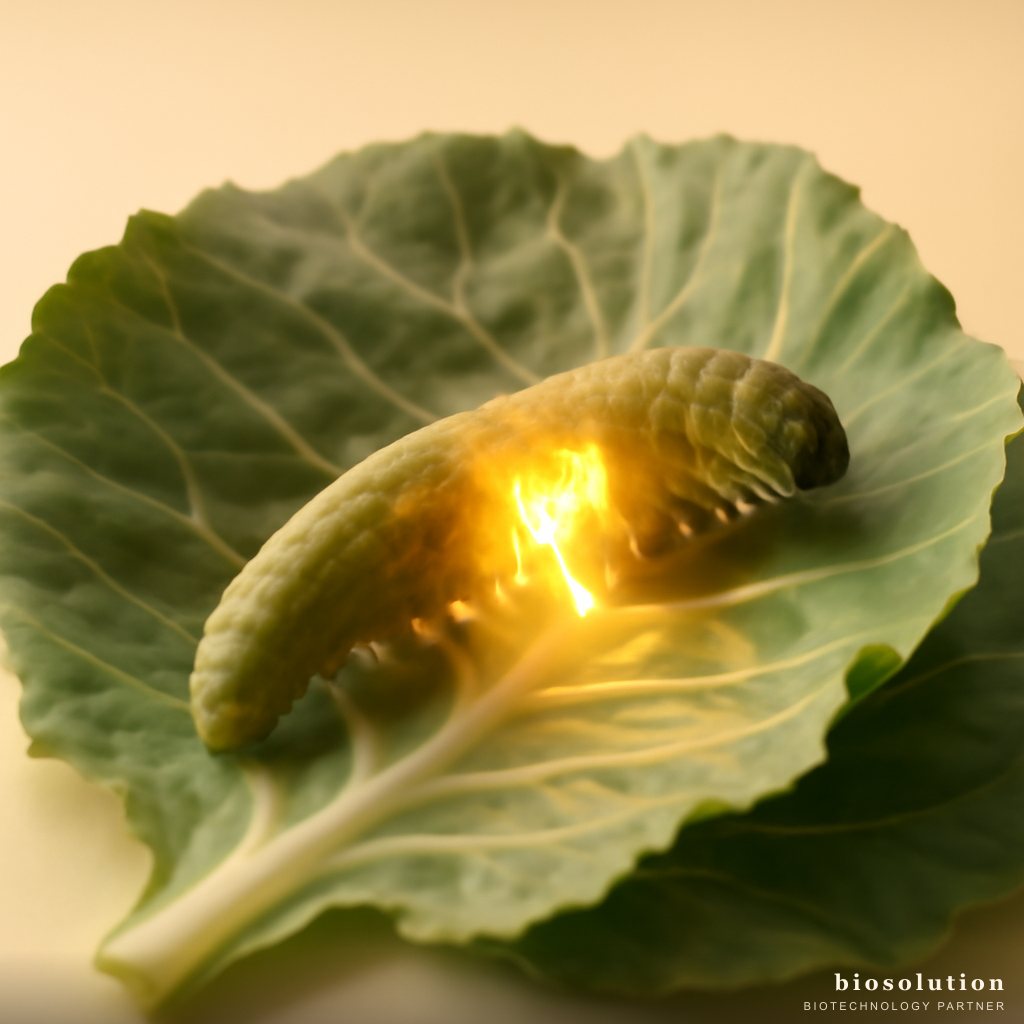
Bt is a soil bacterium that produces protein crystals (δ-endotoxin) during sporulation. When FAW larvae feed on leaves sprayed with Bt, the crystals dissolve in the alkaline larval gut and release toxins that damage gut epithelial cells. Larvae stop feeding within hours and die within 2-3 days. The advantage of Bt is that its toxin is highly specific to Lepidoptera larvae (including FAW) and is harmless to humans, animals, or non-target insects. Because its mechanism of action differs from chemical insecticides, the risk of cross-resistance is very low.
Beauveria bassiana: Entomopathogenic Fungus
Beauveria bassiana is a fungus that infects FAW larvae and pupae through contact. Fungal spores attach to the insect cuticle, germinate, and penetrate the body using chitinase enzymes. Inside the hemolymph, the fungus multiplies and produces beauvericin toxin that paralyzes the insect's immune system. Infected larvae show hardening symptoms (mummification) and are covered with white mycelium. Beauveria is effective against all larval stages and pupae, thus breaking the FAW life cycle.
Advantages of Anti-Fall Armyworm Formula Compared to Chemical Pesticides
- Does Not Trigger Resistance: The combination of two different mechanisms (gut toxicity and fungal infection) makes it difficult for FAW to develop resistance. Even if populations become tolerant to Bt, Beauveria remains effective, and vice versa.
- Selective and Safe: Does not kill beneficial insects such as bees, predators, and parasitoids. Safe for workers and consumers as it leaves no harmful residues.
- Environmentally Friendly: Does not contaminate soil and water, and degrades naturally.
- Effective on All Stages: Bt works optimally on young larvae (instar 1-2), while Beauveria is effective on older larvae and pupae. With regular application, FAW populations can be significantly suppressed.
Proper Application for Maximum Results
To control fall armyworm biologically, application must be timely and targeted. Here is a guide for using the Anti-Fall Armyworm Formula:
- Dosage: 3 ml per liter of water. Mix with clean water and stir well.
- Application Time: Late afternoon (3:00-5:00 PM) to avoid UV rays that can damage Beauveria spores.
- Method: Spray evenly on the growing point (whorl) and leaf axils, where eggs and young larvae are located. For corn plants aged 10-30 DAP, focus on the middle part of the plant.
- Frequency: Repeat every 5-7 days, especially when FAW populations are high. Conduct routine monitoring by checking 10% of sample plants.
- Note: Do not mix with chemical fungicides as they can inhibit Beauveria growth. If necessary, allow a 2-3 day interval.
Supporting Data: Field Effectiveness of Anti-Fall Armyworm Formula
Trials conducted by the Biosolution team in corn fields in East Java (2024) showed that application of the Anti-Fall Armyworm Formula at a dose of 3 ml/L every 5 days suppressed FAW larval populations by up to 85% after 3 applications, compared to controls using the chemical insecticide chlorantraniliprole which only achieved 60% and showed signs of resistance. Additionally, populations of natural enemies such as spiders and beetles remained high in the biological treatment.
Integrating Anti-Fall Armyworm Formula into Integrated Pest Management (IPM)
Biological control is not the only strategy. For optimal results, combine with other IPM practices:
- Crop Rotation: Rotate corn with legumes or rice to break the FAW cycle.
- Use of Resistant Varieties: Choose corn varieties that are relatively tolerant to FAW (e.g., local varieties with high lignin content).
- Conservation of Natural Enemies: Plant flowering plants at field edges as a nectar source for parasitoids.
- Field Sanitation: Destroy infected plant residues to reduce inoculum sources.
With this approach, controlling fall armyworm becomes more sustainable and economical.
Farmer Testimonial: Switching to Biological, Yields Increase
Mr. Budi, a corn farmer in Kediri, admitted he was frustrated because fall armyworm kept attacking even though he sprayed chemical pesticides every 3 days. After trying the Anti-Fall Armyworm Formula, he saw a difference within a week: "The caterpillars died, my plants turned green again. Costs were also lower because I didn't need to buy expensive pesticides." A similar story was shared by a farmer group in Lampung that successfully suppressed FAW attacks by up to 90% with regular application.
Conclusion
Controlling fall armyworm (FAW) requires a smart and sustainable approach. Continuous use of chemical pesticides worsens resistance problems and disrupts ecosystem balance. The Biosolution Anti-Fall Armyworm Formula, containing Bacillus thuringiensis and Beauveria bassiana, offers an effective, safe, and resistance-free biological solution. With proper application and integration into IPM, farmers can optimally control FAW while maintaining soil and environmental health. For best results, consult our experts or see the product directly Anti-Fall Armyworm Formula and related product Caterpillar & Borer Control Formula (Bt). Switch to biological, because nature has the solution.
This article is compiled based on product composition data and scientific references from FAO (2021) and internal Biosolution research.
Consult via WhatsApp or visit the bio solutions page for more information.