Entomopathogen Application Mistakes for Controlling Fall Armyworm in Corn
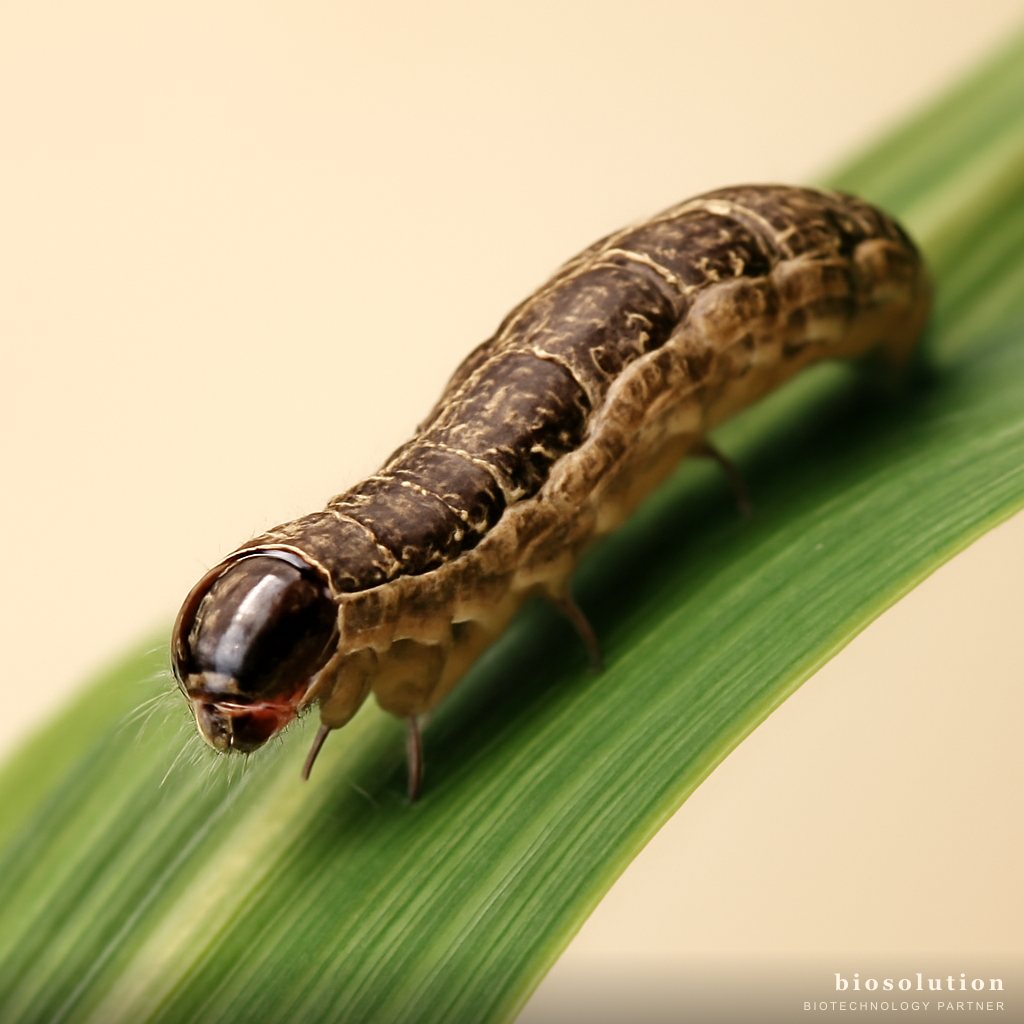
Biologically controlling fall armyworm (Spodoptera frugiperda, FAW) in corn is a top choice for farmers looking to reduce reliance on chemical insecticides. However, many fail due to mistakes in entomopathogen application. Entomopathogens such as Beauveria bassiana and Bacillus thuringiensis are powerful biological weapons, but their effectiveness depends heavily on how they are used. Without proper technique, costs and effort are wasted. This article reveals the 7 most common mistakes and how to avoid them so that biological control of FAW in corn is truly effective.
1. Incorrect Application Timing
One of the most critical mistakes is spraying entomopathogens during the hot midday sun. Beauveria bassiana and Bacillus thuringiensis are highly sensitive to ultraviolet (UV) light. Direct sunlight can deactivate spores and toxins within hours. Ideally, application should be done in the late afternoon (3:00–5:00 PM) or during cloudy weather. High temperatures also accelerate degradation. According to Biosolution product data, afternoon application increases pathogen persistence by up to 2 times. Don't forget to check the weather forecast; avoid spraying if heavy rain is expected within 6 hours, as spores will be washed off.
2. Insufficient or Excessive Dosage
Using doses below the recommendation often occurs because farmers want to save costs. A dose of 3 ml per liter of water for the Anti-Fall Armyworm Formula for Rice & Corn is research-based to achieve lethal concentration. If the dose is reduced, the caterpillar population does not die completely and may develop resistance. Conversely, excessive doses do not proportionally increase effectiveness, only waste product and pollute the environment. Always use accurate measuring tools, such as a pipette or special measuring cup, and follow the instructions on the packaging.
3. Poor Target Coverage
Young fall armyworms often hide inside leaf buds or behind leaf sheaths. If spraying is only from above, the pathogen does not reach their hiding places. Spray evenly over all parts of the plant, especially the growing points, undersides of leaves, and stem bases. Spray pressure must be strong enough to penetrate the canopy. Use a nozzle that produces fine droplets (200–400 microns) to more easily penetrate crevices. Ensure spray volume matches the corn growth stage: at early vegetative stage, 200 L/ha is sufficient; as plants grow taller, 400–600 L/ha may be needed.
4. Mixing with Incompatible Chemicals
Many farmers mix entomopathogens with fungicides or foliar fertilizers without knowing their compatibility. Beauveria bassiana is a living fungus; fungicides can kill it. Bacillus thuringiensis produces crystal proteins that can be damaged by extreme pH or heavy metals. If you want to mix, conduct a small-scale compatibility test: mix in a glass, let stand for 30 minutes, then spray on a leaf. If there is no color change or sediment, it is likely safe. It is best to apply entomopathogens separately, at least 3 days apart from chemical applications.
5. Ignoring Larval Stage
Entomopathogens are most effective on 1st–2nd instar larvae (young caterpillars). From the 3rd instar onward, caterpillars are more resistant due to thicker cuticles and stronger immune systems. Unfortunately, farmers often detect attacks too late. Conduct routine monitoring every 3 days, checking for damaged leaves and caterpillar droppings. If egg masses are found, immediately spray that area. The Anti-Fall Armyworm Formula contains Bacillus thuringiensis which produces δ-endotoxin specific to young larvae, effective in killing within 24–48 hours after ingestion.
6. Improper Storage
Entomopathogens are living organisms; storing them in hot places or direct sunlight reduces their viability. Beauveria bassiana should be stored at 4–8°C (refrigerator), while Bacillus thuringiensis is more stable at room temperature (20–25°C) as long as it is dry. Do not let the product be exposed to dew or moisture. Use clean water (pH 6–7) for dilution; well water containing chlorine can kill spores. Let the water sit overnight or use rainwater.
7. Not Repeating Applications Periodically
A single application is not enough to control newly hatched caterpillar generations. The FAW life cycle is about 30 days, and eggs are continuously laid. The recommended application interval is every 5–7 days, especially during the growing season when populations are high. Rotate with other entomopathogens or use the Caterpillar & Borer Control Formula (Bt) to prevent resistance. Record application dates and observe results; if live caterpillars remain, re-evaluate your application technique.
Why Do Entomopathogens Fail? Technical Evaluation
In addition to the seven mistakes above, environmental factors such as low humidity (<60%) also reduce the effectiveness of Beauveria bassiana because it requires high humidity to germinate. During the dry season, spray in the morning (when dew is still present) or increase irrigation frequency. Also ensure that natural enemy populations such as predators and parasitoids are not disturbed by chemical pesticides. Biological control works synergistically with a healthy agricultural ecosystem.
The Right Solution: Anti-Fall Armyworm Formula for Rice & Corn
Biosolution presents the Anti-Fall Armyworm Formula for Rice & Corn containing Bacillus thuringiensis and Beauveria bassiana in one package. This product is formulated to overcome common application mistakes: it has adjuvants that protect against UV, stable pH, and is easy to mix. Just 3 ml per liter of water, spray in the afternoon every 5–7 days. Field trial results show a reduction in FAW population of up to 85% after two applications. For further consultation, contact the Biosolution technical team via WhatsApp.
Conclusion
Biologically controlling fall armyworm in corn is not difficult if entomopathogen application techniques are done correctly. Avoid the seven main mistakes: application timing, dosage, coverage, mixing, larval stage, storage, and interval. By diligently applying these principles, you can reduce chemical insecticides, save costs, and protect the environment. Use quality products from Biosolution as your biological control partner. If you have questions, feel free to consult for free via WhatsApp.
FAQ
1. What is the best time to apply entomopathogens for FAW?
The best time is late afternoon (3:00–5:00 PM) when temperatures start to drop and UV light weakens. Avoid the hot midday sun as sunlight can deactivate spores and toxins. If it is cloudy, morning application can also be done.
2. What is the correct dosage for the Anti-Fall Armyworm Formula?
The recommended dosage is 3 ml per liter of water. Make sure to use an accurate measuring tool. Do not reduce the dose as it can lead to suboptimal control and trigger resistance.
3. Are entomopathogens safe for plants and humans?
Yes, entomopathogens such as Bacillus thuringiensis and Beauveria bassiana are specific to target insects and non-toxic to humans, animals, or plants. These products are safe for use on food crops and leave no harmful residues.
4. How should entomopathogens be stored properly?
Store in a cool, dry place away from direct sunlight. Beauveria bassiana should be stored at 4–8°C (refrigerator), while Bacillus thuringiensis is stable at room temperature 20–25°C. Do not let the product be exposed to moisture.
5. Is rotation with other products necessary?
Yes, rotation with other entomopathogens or botanical insecticides is recommended to prevent resistance. You can use the Caterpillar & Borer Control Formula (Bt) as an alternative in the next growing season.