Industrial Wastewater Bioremediation: A Successful Case Study in the Food and Textile Industry
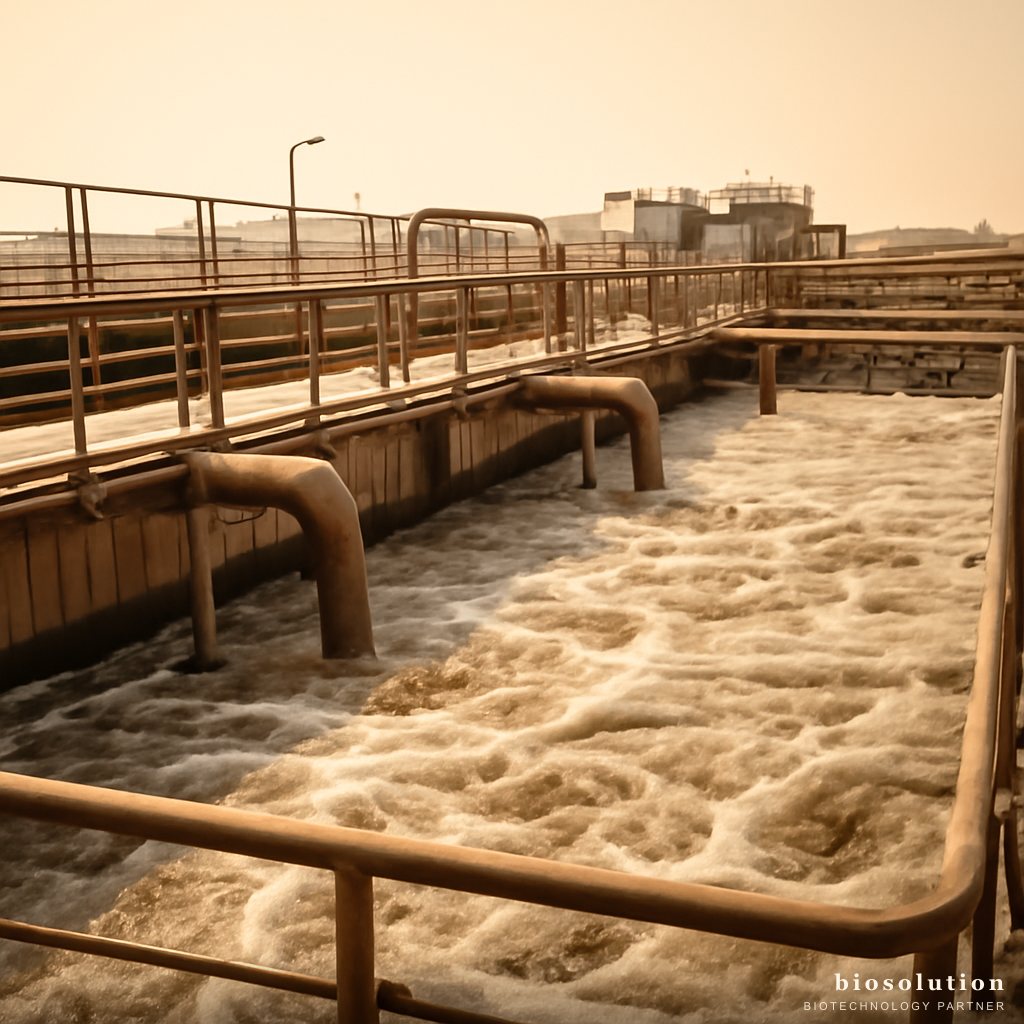
Industrial wastewater bioremediation has become a reliable solution for factories in the food and textile sectors to manage their wastewater in an environmentally friendly manner. By using decomposer microorganisms, this technology can significantly reduce pollutant levels such as BOD and COD, ensuring that discharged wastewater meets government quality standards. In this article, we will delve into real case studies from two facilities that successfully managed their wastewater using a bioremediation formula from Biosolution.
Why Is Industrial Wastewater Bioremediation Increasingly Important?
The food and textile industries produce wastewater with complex characteristics. Food industry wastewater typically contains high organic matter such as proteins, fats, and carbohydrates, while textile wastewater contains dyes, heavy metals, and synthetic chemical compounds. Both require special treatment to avoid environmental pollution. Conventional methods like chemical coagulation are often expensive and produce hazardous sludge. This is where industrial wastewater bioremediation offers a more economical and sustainable alternative.
The Role of Microorganisms in Bioremediation
An effective bioremediation formula usually contains a consortium of decomposer bacteria and fungi such as Aspergillus niger. Aspergillus niger is known for producing extracellular enzymes like amylase, protease, and cellulase that can break down complex organic molecules into simpler compounds. Meanwhile, decomposer bacteria work synergistically to further break down pollutants. With the right dosage—100–500 ml per m³ of initial WWTP volume—and weekly application, the WWTP system can operate optimally.
Case Study 1: Snack Food Factory in East Java
A snack food factory in East Java faced high BOD and COD levels in its wastewater, reaching 2,500 mg/L and 3,800 mg/L, far above the quality standards (BOD 150 mg/L, COD 300 mg/L). They used a conventional WWTP with aeration and chemical coagulants, but operational costs were high and results were inconsistent.
Application of the Bioremediation Formula
After consulting with the Biosolution team, they decided to apply the Industrial Wastewater Bioremediation Formula at an initial dose of 300 ml per m³. The process was simple: direct dosing into the aeration tank every week. Within 2 weeks, BOD dropped by 80% and COD by 75%. After 4 weeks, wastewater parameters stabilized below quality standards, with BOD at 120 mg/L and COD at 250 mg/L.
Financial and Operational Impact
The benefits were not only environmental but also financial. The cost of purchasing chemical coagulants decreased by 60%. Additionally, the factory avoided environmental fines that previously reached tens of millions of rupiah per month. The frequency of sludge removal also decreased because microbial biomass helped reduce sludge volume. Overall, ROI was achieved within 3 months.
Case Study 2: Textile Factory in Bandung
A textile factory in Bandung produced wastewater containing azo dyes that are difficult to biodegrade. Additionally, the wastewater had very high COD (4,500 mg/L) and a dark color. The existing treatment method used ozonation and activated carbon, but operational costs were very high and ineffective for color removal.
Integrated Bioremediation Solution
Biosolution recommended using the Industrial Wastewater Bioremediation Formula enriched with Aspergillus niger to degrade the dyes. An initial dose of 500 ml per m³ was applied directly to the aeration tank. Within 3 weeks, COD decreased by 85% and the wastewater color changed drastically from pitch black to light brown. After 5 weeks, COD reached 350 mg/L and the color was no longer visually apparent.
Additional Benefits
Besides meeting quality standards, the factory also reduced activated carbon usage by 70%, saving around IDR 15 million per month in operational costs. The bioremediation process also produced more stable and manageable sludge. WWTP operators reported that the system was more stable and did not require complicated dosage adjustments.
Working Mechanism of the Bioremediation Formula in WWTP
To understand the success of the case studies above, it is important to know the working mechanism of the bioremediation formula. The consortium of decomposer bacteria and Aspergillus niger works synergistically:
- Stage 1: Hydrolysis – Aspergillus niger produces extracellular enzymes that break down organic polymers (proteins, fats, carbohydrates) into monomers.
- Stage 2: Acidogenesis – Fermentative bacteria convert monomers into volatile fatty acids, alcohols, and gases.
- Stage 3: Acetogenesis – Acetogenic bacteria convert fermentation products into acetate, H2, and CO2.
- Stage 4: Methanogenesis – Methanogenic bacteria produce methane (under anaerobic conditions) or aerobic bacteria oxidize simple compounds into CO2 and H2O.
This process occurs naturally in the WWTP, and with the right microbial dosage, the decomposer bacteria population can be maintained at optimal levels.
Tips for Choosing the Right Bioremediation Formula
Not all bioremediation formulas are suitable for all types of waste. Here are some tips:
- Know Your Waste Characteristics – Conduct BOD, COD, pH, and heavy metal content analysis. Textile waste may require specific strains capable of degrading dyes.
- Choose a Product with Superior Strains – Ensure the product contains Aspergillus niger or proven decomposer bacteria. Biosolution products have been tested in various industries.
- Pay Attention to Dosage and Frequency – Follow the recommended initial dose of 100–500 ml per m³ and weekly maintenance. Do not overdose as it can cause bacterial blooming.
- Integrate with the WWTP System – Ensure the WWTP has adequate aeration and sufficient retention time. Bioremediation works optimally at temperatures of 25–35°C and pH 6–8.
Conclusion
Industrial wastewater bioremediation has proven effective in reducing pollutant loads in the food and textile industries. The case studies above show that with the right formula, such as one containing a consortium of decomposer bacteria and Aspergillus niger, companies can achieve quality standards, reduce treatment costs, and avoid environmental fines. If you want to implement a similar solution, do not hesitate to consult with the Biosolution expert team. Visit the product page Industrial Wastewater Bioremediation Formula for more information or contact us directly via WhatsApp for a free consultation.
FAQ
What is industrial wastewater bioremediation?
Industrial wastewater bioremediation is a wastewater treatment process that uses microorganisms (bacteria, fungi) to degrade organic and inorganic pollutants. This technique is environmentally friendly and effective in reducing BOD/COD, as well as reducing the use of chemicals.
How long does it take to see results from bioremediation?
Initial results are usually visible within 1-2 weeks after the first application. BOD/COD reduction can reach 70-80% within 2-4 weeks, depending on waste characteristics and WWTP conditions.
Is the bioremediation formula safe for the environment?
Yes, the microorganisms used are naturally occurring and non-pathogenic. Biosolution products have been tested and are safe to use, producing no harmful compounds.
How is the bioremediation formula applied to the WWTP?
Simply dose directly into the aeration tank or treatment tank according to the recommended dosage (100-500 ml per m³). Perform weekly maintenance with a maintenance dose.
Can bioremediation completely replace chemical treatment?
In many cases, bioremediation can reduce or replace the use of chemical coagulants. However, for waste with high heavy metal content, chemical pretreatment may still be necessary. Consult with an expert for an optimal system design.