Integrated Biocontrol in IPM: Field Pest Population Monitoring Strategy
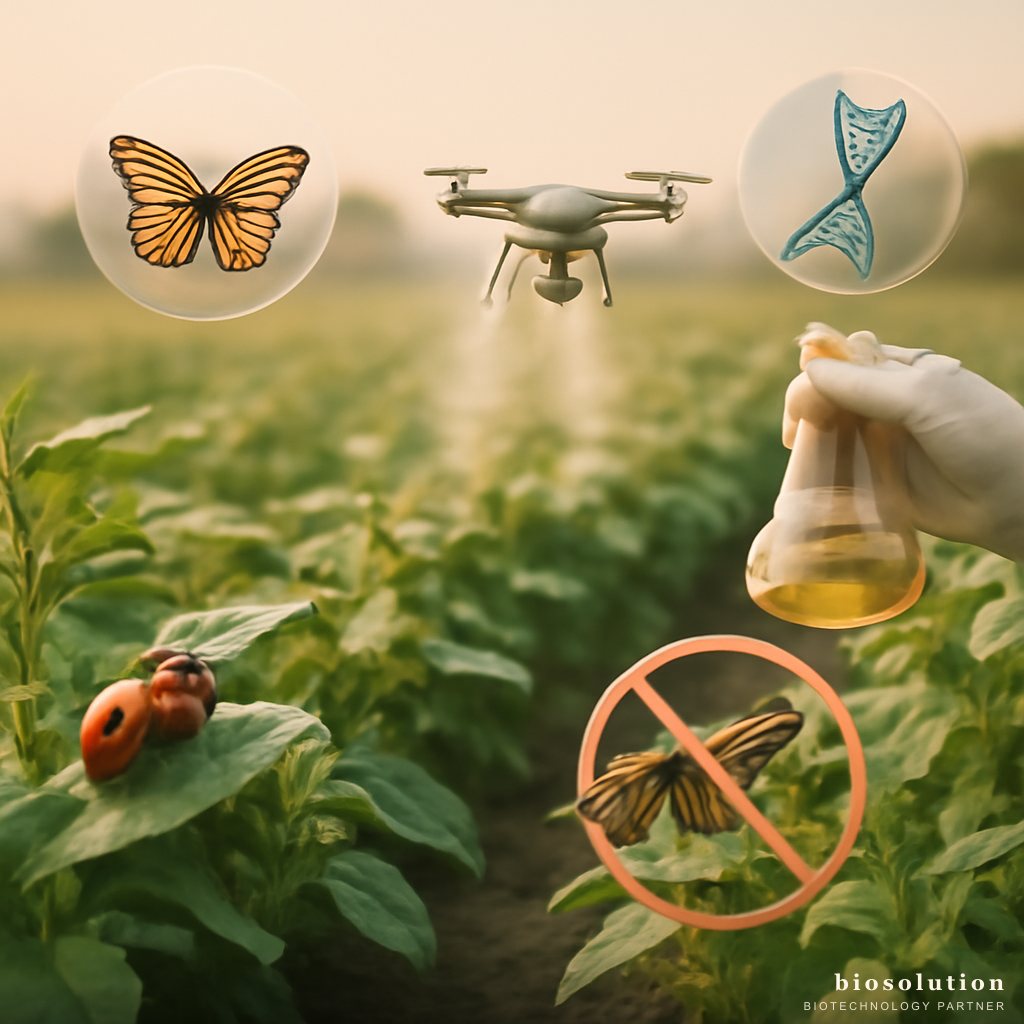
Integrated Pest Management (IPM) is a holistic approach that prioritizes ecosystem balance. In practice, integrated biocontrol in IPM is the backbone of sustainable pest management, especially in plantations. Its success hinges on accurate pest population monitoring: traps, scouting, and action threshold determination. Without precise field data, biocontrol applications can be inefficient. This article explores how integrated monitoring strategies are combined with biological agents such as Beauveria bassiana and Metarhizium anisopliae—formulated in Biological Pest Control Formula—to precisely suppress pest populations.
Why Is Pest Population Monitoring Important in IPM?
IPM aims to reduce reliance on synthetic chemical pesticides by optimizing biological and ecological factors. Pest population monitoring is the initial step that determines success: without accurate data, farmers may act too late or apply unnecessary treatments. The basic principle is "right target, right time, right dose."
In the context of integrated biocontrol in IPM, monitoring helps answer three key questions: (1) What is the current pest population? (2) Has it exceeded the action threshold? (3) When is the best time to apply biological agents? With monitoring data, farmers can decide whether intervention is needed or let natural enemies work. This aligns with the IPM concept that emphasizes natural control before curative actions.
Monitoring also enables early detection of invasive pests or population outbreaks. For example, fall armyworm (Spodoptera frugiperda) attacks on corn often go undetected until severe damage occurs. With routine monitoring using pheromone traps or light traps, farmers can take immediate action. Data from IRRI (International Rice Research Institute) shows that farmers who conduct routine monitoring can reduce pesticide applications by up to 30% without lowering crop yields.
Traps: Pest Population Monitoring Tools
Traps are simple yet effective tools for monitoring pest presence and population fluctuations. Several types of traps commonly used in IPM include:
Light Traps
These traps utilize the attraction of nocturnal insects to UV light. Suitable for pests such as stem borer moths, armyworms, and planthoppers. Installation is done at field edges, 1–2 units per hectare, operated from dusk to midnight. Catches are counted each morning to determine population trends.
Pheromone Traps
Using synthetic pheromones to attract male pests. Effective for specific pests like Spodoptera litura or Ostrinia furnacalis. These traps are highly sensitive and can detect even low populations. Install 4–5 per hectare, replace every 4–6 weeks.
Yellow Sticky Traps
Yellow sticky sheets attract insects such as aphids, thrips, and fruit flies. Placed at canopy height, 8–10 per hectare. These traps are cheap and easy to use, suitable for routine monitoring by farmers.
Data from traps help determine action thresholds. For example, for rice stem borer, the action threshold is 5–10 moths per light trap per night or 1 egg mass per square meter. If met, biocontrol intervention is immediately carried out.
Scouting and Action Thresholds
Scouting is direct field observation by walking along crop rows. This method provides quantitative and qualitative data on pest populations, developmental stages, and plant damage. Effective scouting steps include:
- Select sample areas: Take 5–10 points per hectare diagonally or in a zigzag pattern.
- Observe plants: Count pests per plant or per plant part (leaves, stems, panicles).
- Record pest stage: Eggs, early instar larvae, late instar larvae, pupae, or adults. The stage determines susceptibility to biological agents.
- Calculate damage: Percentage of damaged leaves, bored stems, or infested fruits.
The action threshold is the pest population level at which control measures must be taken to prevent economic loss. Threshold values differ for each pest and crop. Examples:
- Fall armyworm on corn: 2–3 larvae per plant or 10% infested plants.
- Brown planthopper on rice: 5–10 insects per hill.
- Aphids on chili: 20% infested leaves.
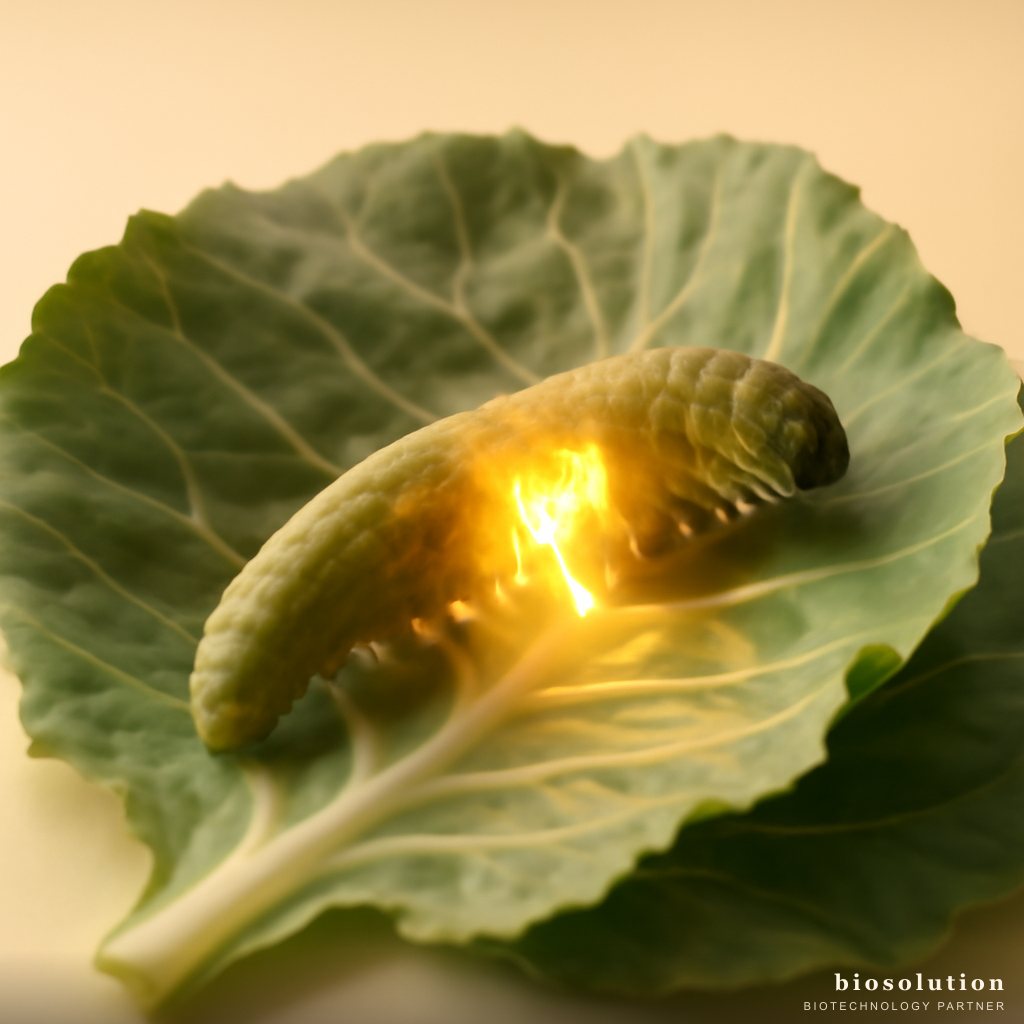
If the population has exceeded the threshold, biocontrol application can be performed. Formulas containing Beauveria bassiana and Metarhizium anisopliae are highly effective against early to late instar larvae. These entomopathogenic fungi penetrate the insect cuticle through protease and chitinase enzymes, then grow mycelium inside the host body, causing death within 3–7 days. Spores produced from insect cadavers can infect other pests (secondary infection), providing sustained effects.
Microbial Biocontrol as an Integrated IPM Solution
Biocontrol using microbes such as fungi, bacteria, and viruses is a key component of IPM. Its advantages include high selectivity, environmental friendliness, and no residue on harvested products. In integrated biocontrol in IPM, biological agent application is combined with cultivation techniques, natural enemies, and botanical pesticides.
One of Biosolution's flagship products is Biological Pest Control Formula containing two entomopathogenic strains: Beauveria bassiana and Metarhizium anisopliae. Each strain has a density of 10⁶ CFU/ml, with 80–85% efficacy against target pests. This product is applied at a dose of 2–3 ml per liter of water (or 3–5 g/L if WP formulation) every 7–10 days when pest populations increase, preferably in the afternoon when humidity >70%.
The working mechanism of this formulation begins with spores adhering to the insect cuticle, then germinating and penetrating using enzymes. Once inside the body cavity, mycelium grows and produces toxins that kill the host. Cadavers covered with white mycelium (for B. bassiana) or green mycelium (for M. anisopliae) become inoculum sources for subsequent infection cycles.
Another advantage is its compatibility with IPM programs. This product does not significantly kill natural enemies such as predators and parasitoids, unlike broad-spectrum chemical insecticides. Thus, beneficial insect populations are maintained, helping to naturally suppress pests.
Integrating Monitoring with Biocontrol Application
Once monitoring data shows that the pest population has exceeded the action threshold, the next step is to choose the appropriate control method. Here is a guide for integrating monitoring with biocontrol application:
- When population is low (< threshold): No intervention needed. Let natural enemies work. Increase scouting frequency.
- When population approaches threshold: Preventive application with low-dose biological agents. For example, spray Beauveria bassiana formula on vulnerable spots.
- When population exceeds threshold: Curative application at full dose (2–3 ml/L). Repeat every 7 days until population drops.
- After application: Conduct post-application monitoring to evaluate effectiveness. If no significant decrease within 3–5 days, check environmental factors (temperature, humidity, UV light) or possible resistance.
Case study: On a corn plantation in East Java, farmers used light traps to monitor Spodoptera frugiperda moths. When catches reached 10 moths per night, they sprayed Anti-Fall Armyworm Formula for Rice & Corn containing Metarhizium anisopliae. As a result, larval populations dropped by 70% within a week, and corn production increased by 15% compared to farmers relying solely on chemical pesticides.
Challenges and Solutions in Implementing Integrated Biocontrol
Although promising, the implementation of integrated biocontrol in IPM faces several challenges:
- Product quality: Biological agents must have high viability. Biosolution products guarantee a minimum spore density of 10⁶ CFU/ml and are stored in UV-proof packaging.
- Application timing: Entomopathogenic fungi are sensitive to direct sunlight and dryness. Afternoon application with high humidity increases effectiveness.
- Farmer education: Many farmers are still accustomed to chemical pesticides that show quick results. Assistance is needed to understand the concept of action thresholds and biocontrol mechanisms.
- Cost: Although per-application costs may be higher, in the long run biocontrol is cheaper because it does not require repeated applications like chemicals and does not cause resistance.
Possible solutions include IPM training for farmers, provision of low-cost monitoring tools, and partnerships with agricultural extension workers. The government, through the Ministry of Agriculture, also encourages the use of biocontrol through national IPM programs.
Conclusion
Integrated biocontrol in IPM requires synergy between accurate pest population monitoring and precise biological agent application. Traps, scouting, and action thresholds are three pillars that ensure efficient and effective intervention. Biosolution's biological insecticide formula containing Beauveria bassiana and Metarhizium anisopliae offers an environmentally friendly solution with high efficacy. With consistent implementation, farmers can suppress pest populations, reduce chemical residues, and sustainably increase land productivity.
For further consultation on IPM strategies for your land, contact the Biosolution technical team via WhatsApp. Get product recommendations and dosages tailored to your field conditions.