Metarhizium anisopliae Application for Soil Pests: Monitoring & Application Guide
Controlling soil pests such as grubs, beetles, and cutworms is often challenging due to difficulties in early detection and the limitations of safe chemical insecticides. This is where Metarhizium anisopliae application for soil pests becomes an effective and environmentally friendly biological solution. However, the success of biological control depends not only on the product but also on the precise timing of application based on accurate pest population monitoring. This article will guide you through field monitoring using trap, scout, and action threshold methods, as well as optimal application of Metarhizium anisopliae.
Why is Metarhizium anisopliae Effective for Soil Pests?
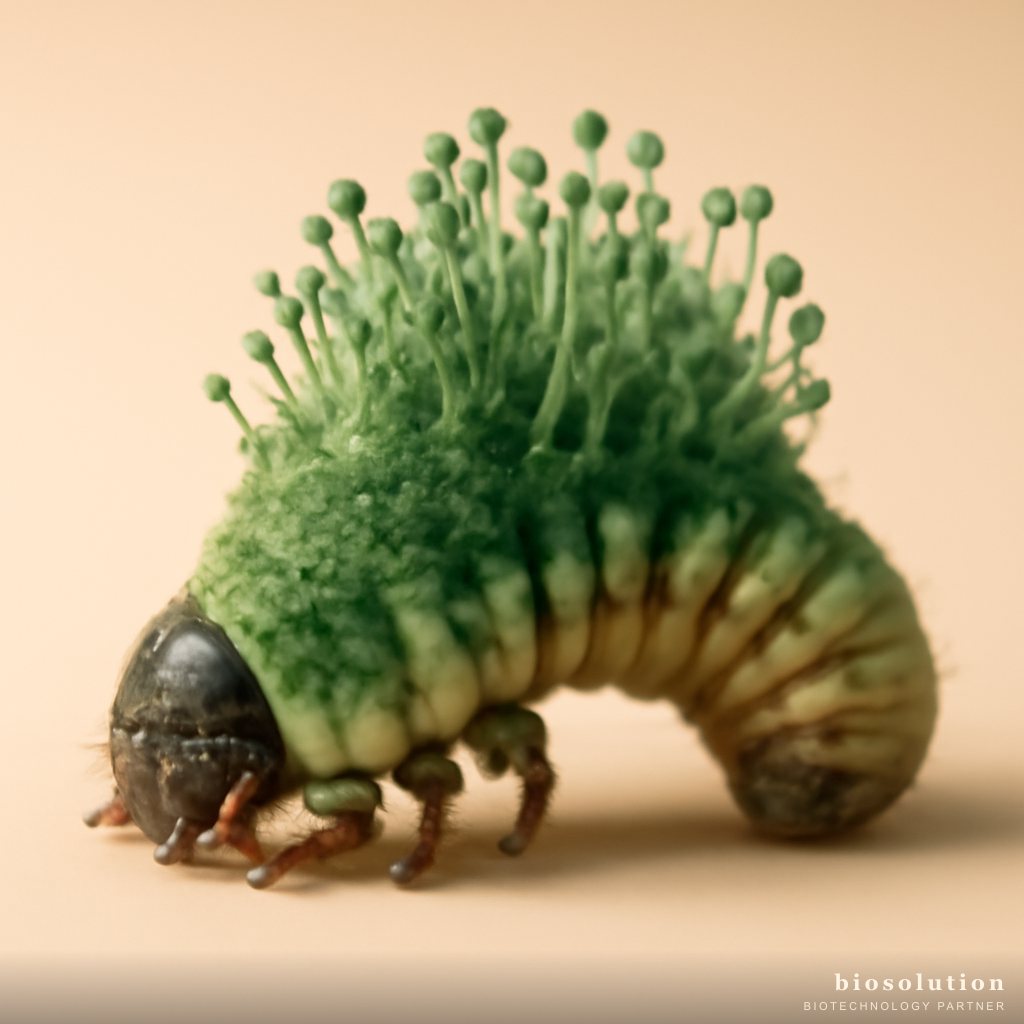
Metarhizium anisopliae is an entomopathogenic fungus that naturally infects soil insects. Its mechanism begins when fungal spores attach to the insect's cuticle, then penetrate the host's body with the help of protease and chitinase enzymes. Once inside, mycelium grows rapidly and produces toxins that kill the insect within 3–7 days. The main advantage of M. anisopliae is its ability to persist in the soil as dormant spores, providing long residual effects without environmental contamination. In Biosolution products, M. anisopliae is formulated with Beauveria bassiana to broaden the attack spectrum against various soil pests, including beetles and cutworms. Product efficacy reaches 80–85% against target pests, with a concentration of 10⁶ CFU/ml per strain.
Step 1: Population Monitoring with Trap Installation
Trap installation aims to detect soil pest presence early and estimate population density. Here are several common types of traps:
Light Trap
Suitable for moths or adult beetles active at night. Place a UV lamp above a container filled with soapy water or alcohol. Position at several points in the field, at least 2 per hectare, and operate from dusk until midnight.
Pheromone Trap
Uses specific sex pheromones to attract male insects. Effective for estimating populations of rhinoceros beetles or stem borers. Replace pheromones every 4–6 weeks as per instructions.
Pitfall Trap
For pests moving on the soil surface, such as ants or ground beetles. Dig a hole 10 cm in diameter, 15 cm deep, and fill with soapy water or ethylene glycol. Cover with a slightly raised lid to prevent rain entry. Check daily for a week.
Record the number of trapped pests daily. If catches show a significant increase, proceed to scouting.
Step 2: Scouting (Direct Observation) for Verification
Scouting is conducted to verify trap results and identify pest species and stages. This method involves visual inspection of plants and soil around the root zone.
Scouting Techniques
- Soil sampling: Take soil samples from 10 points per hectare diagonally, at a depth of 10–20 cm. Sieve the soil over a white tray and count pests (larvae, pupae, or adults).
- Plant inspection: Observe attack symptoms on leaves, stems, or roots. For example, sudden wilting, yellowing leaves, or bore holes in tubers/stems.
- Scouting frequency: Conduct weekly during the growing season, especially during early plant growth (0–30 DAP) and during tuber/fruit formation.
Case Example: Grubs (Lepidiota stigma)
In sugarcane, grubs attack roots causing plants to lodge easily. Scouting is done by digging soil around the base of the stem. If >2 grubs per plant are found, the population has exceeded the action threshold.
Step 3: Determining Action Threshold
The action threshold is the pest population level that requires control measures to prevent economic loss. Threshold values differ for each pest and crop. Here are examples of action thresholds for some soil pests:
| Pest | Crop | Action Threshold |
|---|---|---|
| Grub (Lepidiota) | Sugarcane | 2 per plant |
| Coconut beetle (Oryctes) | Oil palm | 5 per hectare (pheromone trap) |
| Cutworm (Agrotis) | Vegetables | 1 per 5 plants |
| Seedling fly (Atherigona) | Rice | 10% infested plants |
If scouting results show populations above the threshold, it's time to apply Metarhizium anisopliae.
Proper Application of Metarhizium anisopliae for Soil Pests
After monitoring confirms the need for control, application of Metarhizium anisopliae must be done correctly. Biosolution product (Broad-Spectrum Biological Insecticide Formula) contains M. anisopliae and B. bassiana at a concentration of 10⁶ CFU/ml. Here is the application guide:
Dosage and Spray Volume
- Dosage: 2–3 ml per liter of water (or 3–5 g/L if WP formulation).
- Spray volume: 400–600 L/ha for plantation crops (depending on canopy size).
Application Timing
- Late afternoon when humidity >70% (e.g., 4:00–6:00 PM).
- Avoid direct sunlight as UV rays damage spores.
- Do not apply during rain or if rain is expected within 4 hours.
Application Methods
- Soil spraying: Spray the solution evenly onto the soil surface around the root zone.
- Canopy spraying: For pests attacking above-ground parts, spray all plant parts until wet.
- Apply when soil is moist: Water the soil first if dry to help spore germination.
Frequency
Repeat every 7–10 days while pest populations remain high. During the dry season, increase the interval to 10–14 days as spores die faster.
Mechanism of Action & Field Efficacy
After spraying, M. anisopliae spores attach to the insect cuticle. Within 12–24 hours, spores germinate and penetrate the host body. Mycelium grows and produces toxins (destruxins) that paralyze the insect's immune system. Insects die within 3–7 days, and new spores grow from the carcass, ready to infect other insects (secondary infection).
Biosolution product efficacy reaches 80–85% against target pests such as grubs, beetles, and cutworms. Other advantages include no residue on harvest, safety for workers and natural enemies, and compatibility with Integrated Pest Management (IPM) programs.
Integration with Integrated Pest Management (IPM)
Metarhizium anisopliae application should not stand alone. Combine with other IPM practices:
- Healthy cultivation: Use organic fertilizers, mulch, and crop rotation to reduce pest populations.
- Conservation of natural enemies: Avoid chemical insecticides that harm predators like ground beetles and spiders.
- Field sanitation: Clean up crop residues and weeds that serve as pest shelters.
Biosolution product can be combined with other biological agents like Trichoderma for soil disease control, but do not mix with chemical fungicides as they can kill fungal spores.
Conclusion
The success of Metarhizium anisopliae application for soil pests heavily depends on accurate population monitoring through traps, scouting, and action threshold determination. By mastering these techniques, farmers can apply the entomopathogenic fungus at the right time, appropriate dosage, and supportive environmental conditions, achieving 80–85% control efficacy. Biosolution products containing M. anisopliae and B. bassiana are ready to help you realize sustainable, residue-free agriculture. For further consultation, contact our technical team via WhatsApp or see Biological Pest Control Formula and Anti-Borer Formula for Palm Weevil.
FAQ
1. How can I tell if the Metarhizium anisopliae application was successful?
Signs of success include finding insect carcasses covered with white or green mycelium (sporulation) around the application area. Additionally, pest populations in subsequent scouting drop drastically. Effects are usually visible 7–14 days after application.
2. Is Metarhizium anisopliae safe for plants and humans?
Yes, this fungus is specific to insects and does not infect plants or mammals. Biosolution products have been tested for safety and leave no harmful residues on harvest, making them safe for workers and consumers.
3. Can Metarhizium anisopliae be mixed with liquid fertilizers or chemical pesticides?
It is best not to mix with chemical fungicides as they can kill spores. However, it can be mixed with liquid organic fertilizers or other biological agents like Trichoderma as long as they are not fungicidal. Conduct a small-scale compatibility test first.
4. How long do Metarhizium anisopliae spores persist in the soil?
Spores can persist 2–4 months in soil depending on moisture and temperature. In dry and hot conditions, viability decreases faster. Therefore, reapplication every 7–10 days during high pest populations is highly recommended.
5. Is this product suitable for all types of soil pests?
This product is formulated for a broad spectrum, effective against grubs, beetles, cutworms, and some fly species. However, for specific pests like nematodes or snails, other biological agents are needed. Consult our technicians for specific recommendations.
Reference: FAO (2020). Guidelines on Integrated Pest Management. Available at www.fao.org.