Natural Rice Planthopper Control: 3 Powerful Formulas to Manage Brown & Green Planthoppers
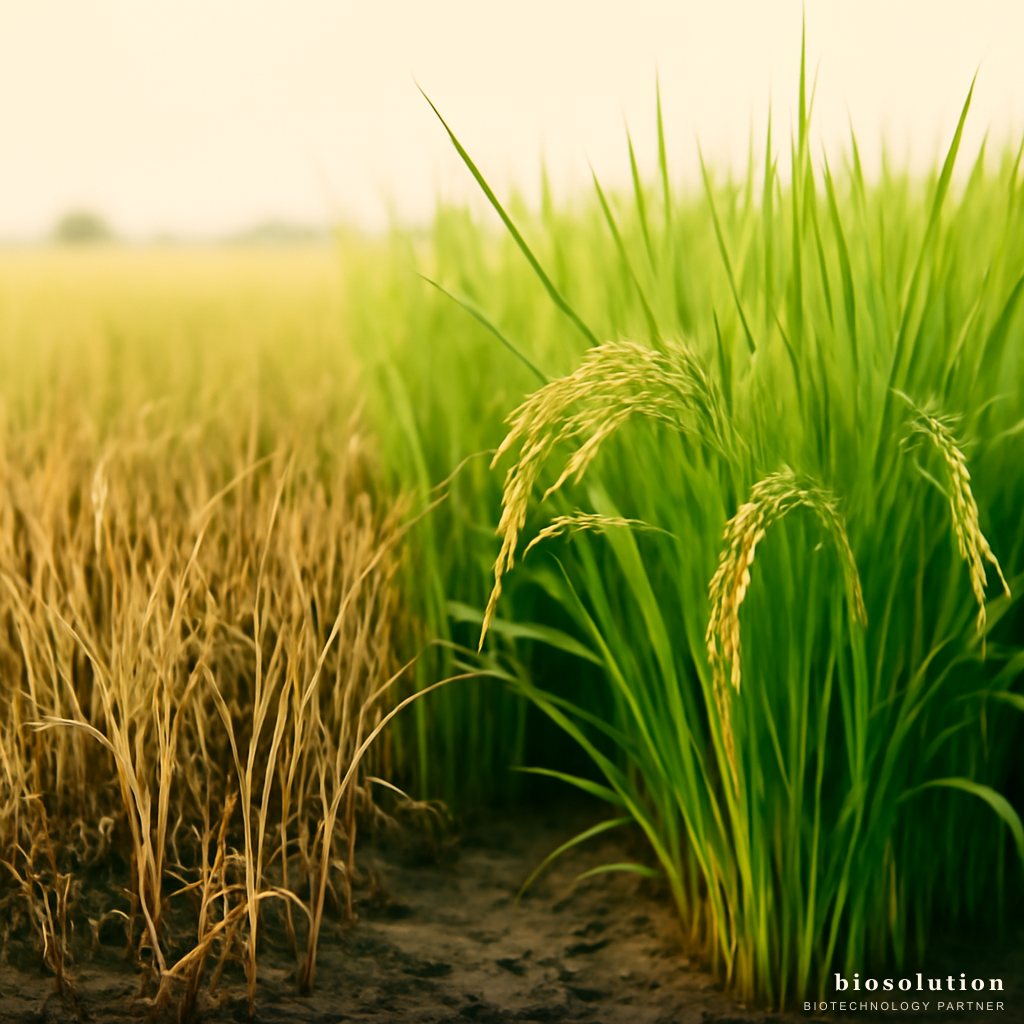
Brown planthopper (Nilaparvata lugens) and green planthopper (Nephotettix virescens) remain major rice pests in Indonesia. Their attacks not only directly reduce yields but also act as vectors for viruses such as tungro and grassy stunt. Ironically, continuous use of chemical pesticides triggers resistance, resurgence, and death of natural enemies. It is time to switch to natural rice planthopper control that is effective, environmentally friendly, and sustainable.
Why Chemical Pesticides Fail to Control Planthoppers?
Resistance: The Bite Back
Since the 1970s, brown planthoppers have shown remarkable adaptability to various insecticide classes. In Indonesia, resistance to organophosphates, carbamates, and pyrethroids has been widely reported. A study from the Indonesian Center for Rice Research (BB Padi) showed that planthopper populations in several production centers already have moderate to high resistance to imidacloprid, an active ingredient once considered most potent.
Planthopper resistance mechanisms include:
- Enzymatic detoxification: Planthoppers produce enzymes such as esterases and oxidases that break down insecticide molecules.
- Target-site insensitivity: Mutations in nerve receptors prevent insecticides from binding to their targets.
- Avoidance behavior: Planthoppers tend to stay on lower parts of plants or switch to alternative hosts under high insecticide pressure.
Resurgence: A Time Bomb for Pest Outbreaks
Chemical pesticides not only kill planthoppers but also their natural predators such as spiders, carabid beetles, and egg parasitoids. Without predators, surviving planthopper populations reproduce faster, causing outbreaks (resurgence) within a short time. This phenomenon often occurs 7–14 days after spraying broad-spectrum insecticides.
Formula 1: Beauveria bassiana – The Planthopper-Killing Fungus
Beauveria bassiana is an entomopathogenic fungus that naturally infects brown planthoppers. Fungal spores attach to the planthopper's cuticle, germinate, and penetrate the insect's body. Inside, mycelium grows and produces toxins (beauvericin) causing death within 3–7 days. Infected planthoppers appear covered in white cotton-like growth.
Advantages of Beauveria bassiana:
- Selective: Only attacks target insects, does not affect predators or pollinators.
- No resistance development: Complex physical and biochemical infection mechanisms make it difficult for planthoppers to develop immunity.
- Compatible with other biological agents: Can be used together with Metarhizium anisopliae or entomopathogenic bacteria.
How to Apply Beauveria bassiana
Products like Formula Anti-Wereng Padi from Biosolution contain high concentrations of Beauveria bassiana. For optimal results:
- Dosage: 3 ml per liter of water.
- Application time: Late afternoon (3:00–5:00 PM) when relative humidity >75% and UV light is low.
- Method: Spray evenly over the entire rice canopy, especially the lower leaf surfaces where planthoppers often gather.
- Frequency: Repeat every 7 days if planthopper populations remain above the economic threshold (average 5 individuals per hill for brown planthopper).
Formula 2: Metarhizium anisopliae – Deadly Synergy for Green Planthoppers
Metarhizium anisopliae is another entomopathogenic fungus highly effective against green planthoppers. Fungal spores attach and germinate on the cuticle, then penetrate and multiply in the hemolymph. Infected green planthoppers turn reddish or brownish and die within 4–10 days.
Advantages of Metarhizium anisopliae:
- Infects all stages: Eggs, nymphs, and adults of green planthoppers are susceptible.
- Persists in the environment: Spores can survive in soil and plant residues for several months, providing long-term protection.
- Gradual population reduction: Does not trigger secondary pest outbreaks.
Combination of Beauveria + Metarhizium: Stronger Together
Field studies show that a mixture of Beauveria bassiana and Metarhizium anisopliae has a synergistic effect. Both fungi infect through different pathways and do not inhibit each other. As a result, mortality of brown and green planthoppers can reach 80–90% within 7 days after application, higher than using either alone.
The product Formula Anti-Wereng Padi from Biosolution is formulated with an optimal ratio of both fungi, plus natural surfactants to improve spread and penetration into leaf crevices.
Formula 3: Ecosystem Management – Key to Long-Term Success
Natural planthopper control does not rely solely on biological sprays. Without improving the rice field ecosystem, planthoppers will keep returning. Here are practices that support the effectiveness of natural rice planthopper control:
3a. Conservation of Natural Predators
Wolf spiders (Pardosa pseudoannulata), ladybird beetles (Menochilus sexmaculatus), and egg parasitoids Anagrus spp. are highly effective natural enemies of planthoppers. Avoid spraying chemical insecticides that kill them. Provide shelter such as flowering border plants (refugia) like cosmos or sunflowers.
3b. Water and Fertilizer Management
Deep waterlogging promotes brown planthopper development. Manage drainage well (intermittent irrigation). Avoid excessive nitrogen fertilization as it makes plants more attractive to planthoppers. Use organic or biofertilizers.
3c. Resistant Varieties
Plant rice varieties with resistance to planthoppers, such as Inpari 13, Inpari 30, or modified Ciherang. This resistance is horizontal, so it is not easily broken by a single planthopper biotype.
Case Study: Farmers in Subang Successfully Suppress Planthoppers Without Chemicals
In the 2024 growing season, a group of farmers in Subang, West Java, implemented integrated planthopper control focusing on the application of Formula Anti-Wereng Padi from Biosolution. They sprayed every 7 days for 4 consecutive weeks, starting when planthopper populations reached 3 individuals per hill. Results:
- Brown planthopper population dropped from 15 individuals/hill to 2 individuals/hill within 2 weeks.
- Populations of spiders and other predators remained stable.
- Rice productivity reached 7.2 tons/ha, higher than neighboring farmers still using chemicals (6.5 tons/ha).
Conclusion
Chemical pesticides have failed to control planthoppers due to resistance and resurgence. The natural rice planthopper control solution based on Beauveria bassiana and Metarhizium anisopliae is proven effective, safe for the ecosystem, and sustainable. With proper application (dosage 3 ml/L, late afternoon, RH >75%), combined with ecosystem management, brown and green planthoppers can be suppressed below economic thresholds without harmful side effects.
Want to learn more about these biological products? Contact the Biosolution team via WhatsApp for a free consultation or visit the product page Formula Anti-Wereng Padi to order.