Natural Rice Planthopper Control: Application Guide for Microbial Formula for Maximum Results
Brown planthopper (Nilaparvata lugens) and green planthopper (Nephotettix virescens) remain major threats to rice farmers in Indonesia. Planthopper attacks not only cause hopperburn but also act as vectors for tungro virus. Continuous use of synthetic insecticides triggers resistance, resurgence, and death of natural enemies. Here, natural rice planthopper control becomes a smart solution. Biosolution's Anti-Planthopper Formula, containing Beauveria bassiana and Metarhizium anisopliae, can effectively suppress planthopper populations without damaging the rice field ecosystem. This article will technically discuss proper application methods: dosage, spray time, frequency, and adjuvant combination for optimal results.
Why Choose an Entomopathogenic Fungus-Based Anti-Planthopper Formula?
Advantages of Beauveria bassiana and Metarhizium anisopliae
Both fungi are proven biological agents effective in controlling planthoppers. Beauveria bassiana infects planthoppers through direct contact, producing enzymes that penetrate the insect cuticle. Inside the body, fungal mycelia develop and produce toxins causing death within 3-7 days. Meanwhile, Metarhizium anisopliae works synergistically, especially under high humidity conditions. Both are selective, do not attack plants, and are safe for natural predators such as spiders and carabid beetles. By using this formula, farmers not only control planthoppers but also maintain the balance of the rice field ecosystem.
Risks of Using Synthetic Insecticides
Chemical insecticides are often the first choice due to their quick effect. However, their long-term impacts are detrimental: planthopper resistance, resurgence (population explosion after application due to natural enemy death), and residues on grain. Data from IRRI indicates that brown planthoppers in some areas have become resistant to pyrethroid and organophosphate groups. Therefore, using biological agents like the Anti-Planthopper Formula is a more sustainable integrated pest management (IPM) strategy.
Proper Dosage and Application Methods
Recommended Dosage: 3 ml per Liter of Water
The recommended dosage for the Anti-Planthopper Formula is 3 ml per liter of water. For a 14-liter spray tank, 42 ml of formula is needed. Ensure the water used is clean and free of chlorine or chloramine, which can kill fungal spores. If using well or river water, let it sit for 30 minutes to settle particles.
Effective Spraying Technique
Spray the solution evenly over all plant parts, especially the rice canopy where planthoppers usually gather. Use a spray nozzle that produces fine droplets (200-300 microns) to increase contact with planthoppers. Direct the spray from bottom to top to reach the underside of leaves, which are often hiding places for planthoppers. Recommended spray volume is 200-400 liters per hectare depending on plant density.
Best Application Time: Afternoon with RH >75%
Entomopathogenic fungi require high humidity to germinate and infect. Therefore, the most effective application is in the afternoon (3:00-5:00 PM) when relative humidity (RH) is above 75%. Avoid spraying during hot midday sun because UV rays can damage spores and low humidity inhibits infection. If cloudy or after rain, application can be done earlier but still monitor RH.
Application Frequency: Every 7 Days When Population Increases
When planthopper populations begin to increase (e.g., >5 per hill for brown planthopper in vegetative stage), apply every 7 days. This interval allows the fungal infection cycle to proceed optimally. If populations are high, apply twice a week with the same dosage. After populations drop below the economic threshold, frequency can be reduced to every 10-14 days as prevention.
Combination with Adjuvants to Increase Effectiveness
Adjuvants such as stickers and wetting agents (e.g., non-ionic surfactants) can be added at 0.5-1 ml per liter of water. Adjuvants help spread the solution evenly on leaf surfaces and improve spore adhesion to planthopper bodies. Some farmers also add granulated sugar (10 grams per liter) as an energy source for the fungi, although it is not mandatory. Avoid mixing with chemical fungicides as they can kill fungal spores.
Mechanism of Action of the Anti-Planthopper Formula
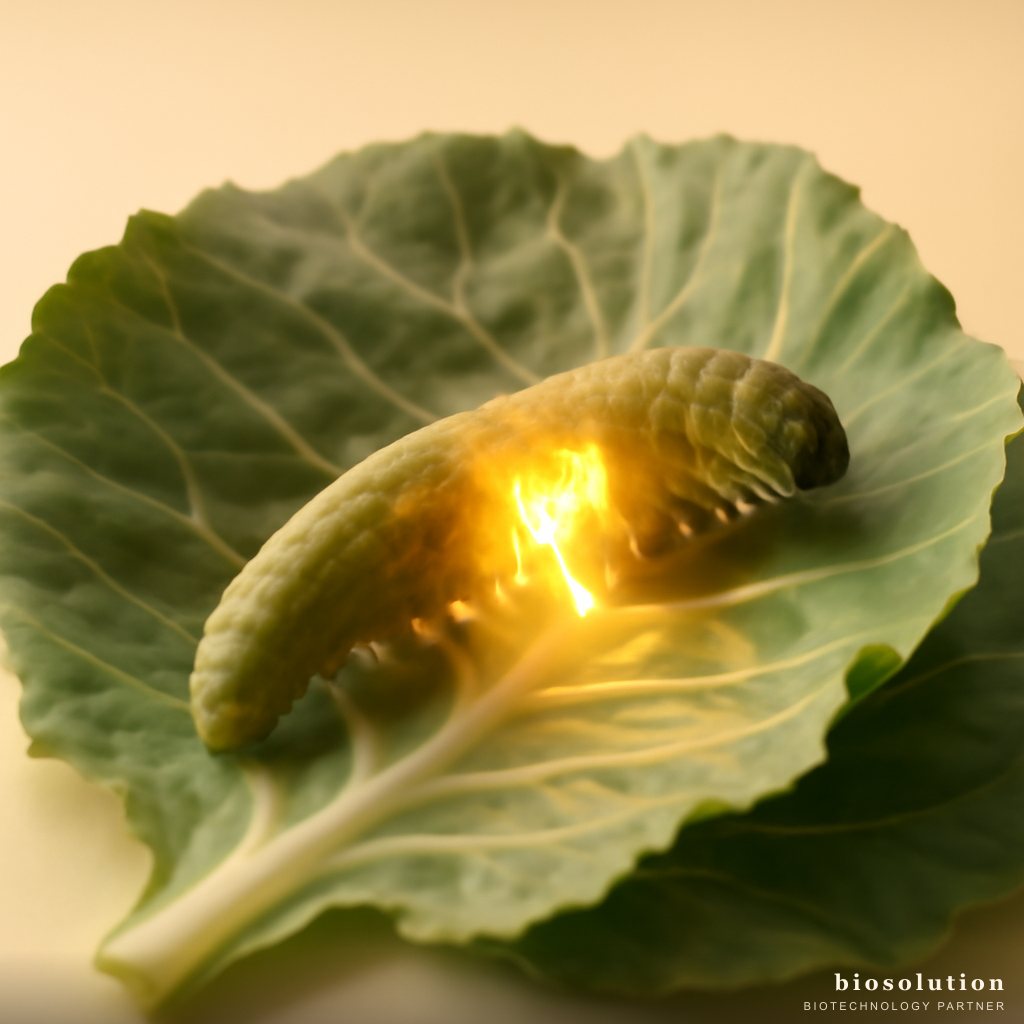
The infection process begins when fungal spores attach to the planthopper cuticle. Under humid conditions, spores germinate and form germ tubes that penetrate the insect's waxy layer. Beauveria bassiana produces chitinase and protease enzymes that digest the cuticle. Once inside the body, the fungus multiplies in the hemolymph and produces beauvericin toxin, causing paralysis and death. Infected planthoppers typically turn reddish or brownish and harden (mummification). New spores are then produced on the surface of the dead planthopper, ready to infect others. This cycle continues as long as environmental conditions are favorable.
Case Study: Field Effectiveness
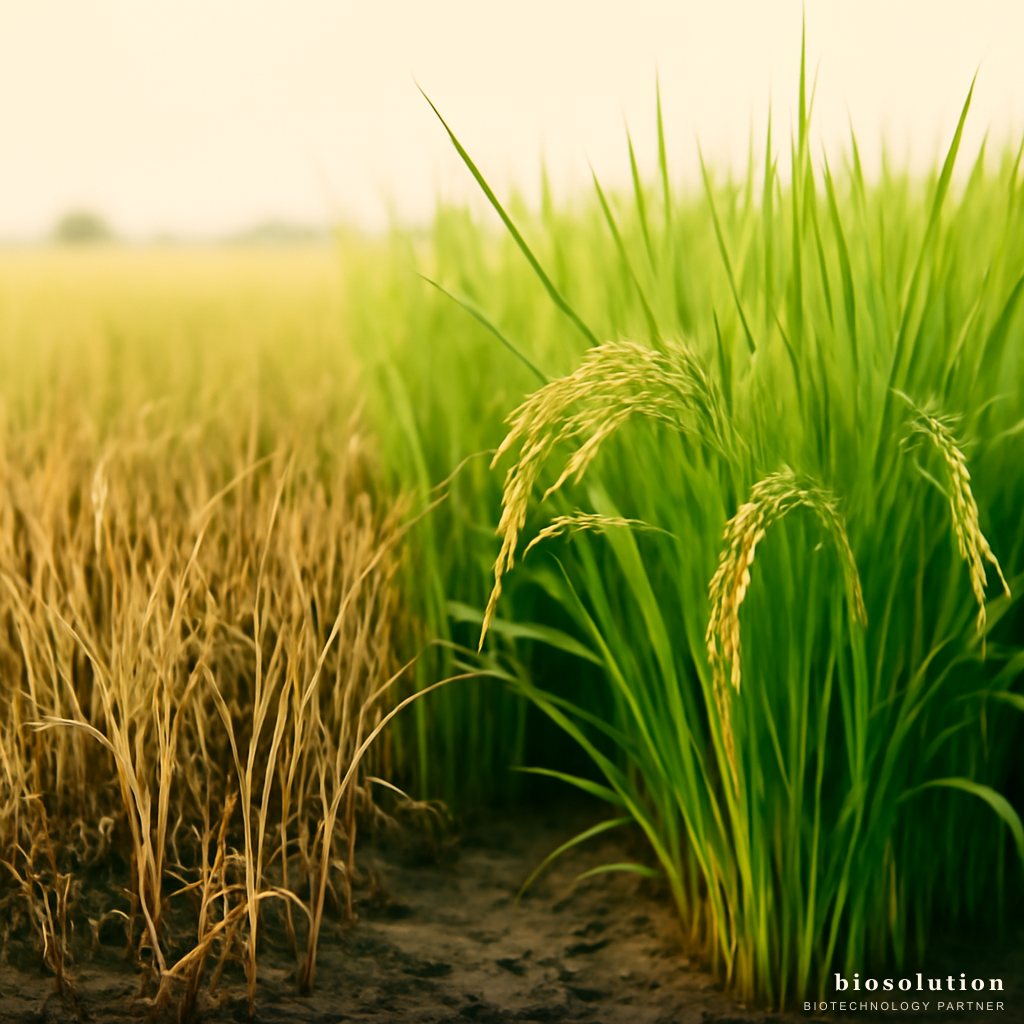
Trials in rice fields in Subang Regency showed that application of the Anti-Planthopper Formula at a dosage of 3 ml/L water every 7 days suppressed brown planthopper populations by up to 80% within 3 weeks. Predator populations such as spiders remained high because they were unaffected by the fungi. Harvest yields increased by 15% compared to plots using synthetic insecticides. These data indicate that natural rice planthopper control is not only effective in pest management but also environmentally friendly.
Tips for Maximizing Application Results
- Conduct routine monitoring: Use yellow traps or sweep nets to monitor planthopper populations every 3-5 days.
- Preventive application: Start spraying when plants are 15-20 days after transplanting (DAT) even if populations are still low, to establish fungal populations in the field.
- Avoid application during heavy rain: Rain can wash spores off plants. If rain falls within 2 hours of spraying, reapply.
- Store formula in a shaded place: High temperatures and direct sunlight can reduce spore viability. Refrigerate (4-8°C) for long-term storage.
- Use clean water: Water with pH 6-7 and free of chlorine is highly recommended.
Conclusion
Biosolution's Anti-Planthopper Formula offers an effective, safe, and sustainable natural rice planthopper control solution. With a dosage of 3 ml per liter of water, afternoon application when RH >75%, frequency every 7 days, and addition of adjuvants, farmers can control brown and green planthoppers without the risk of resistance or ecosystem damage. Switching to biological control is a smart step for long-term rice productivity. For further consultation on product application, contact Biosolution's technical team via WhatsApp.
Also read our articles on integrated pest management in rice and other biological products.
External references: IRRI - Rice Knowledge Bank: Brown Planthopper and Ministry of Agriculture - Guidelines for Planthopper Pest Control.