Natural Rice Planthopper Control: Manage Brown and Green Planthoppers Without Chemicals
Brown planthopper (Nilaparvata lugens) and green planthopper (Nephotettix virescens) are major pests that threaten rice production in Indonesia every season. Severe attacks can cause hopperburn and even crop failure. Farmers often rely on synthetic insecticides, but overuse triggers resistance, resurgence, and residues that hinder export programs due to strict food safety standards. So, how can we control both pests without chemicals? The answer is natural rice planthopper control based on biocontrol agents such as entomopathogenic fungi Beauveria bassiana and Metarhizium anisopliae. This article will thoroughly discuss effective biological control strategies for planthoppers that are safe for the ecosystem and suitable for export markets.
Why Are Brown and Green Planthoppers Difficult to Control?
High Adaptability
Brown planthoppers have a short life cycle (20-30 days) and high fecundity (up to 300 eggs per female). Populations can explode in a short time if environmental conditions are favorable. Green planthoppers, besides being direct pests, also act as vectors of the highly damaging tungro virus.
Resistance to Insecticides
Reports from IRRI (International Rice Research Institute) indicate that brown planthoppers in Asia have become resistant to various insecticide groups such as organophosphates, carbamates, and pyrethroids. In Indonesia, resistance to imidacloprid and fipronil has been detected. The use of chemical insecticides actually kills natural enemies like spiders and carabid beetles, triggering planthopper resurgence.
Climate Change
Rising temperatures and erratic rainfall patterns accelerate planthopper development. The optimal temperature for brown planthoppers is 25-30°C with high humidity. These conditions often occur during the wet dry season, making planthopper populations difficult to predict.
How Do Beauveria bassiana and Metarhizium anisopliae Work?
Infection Mechanism
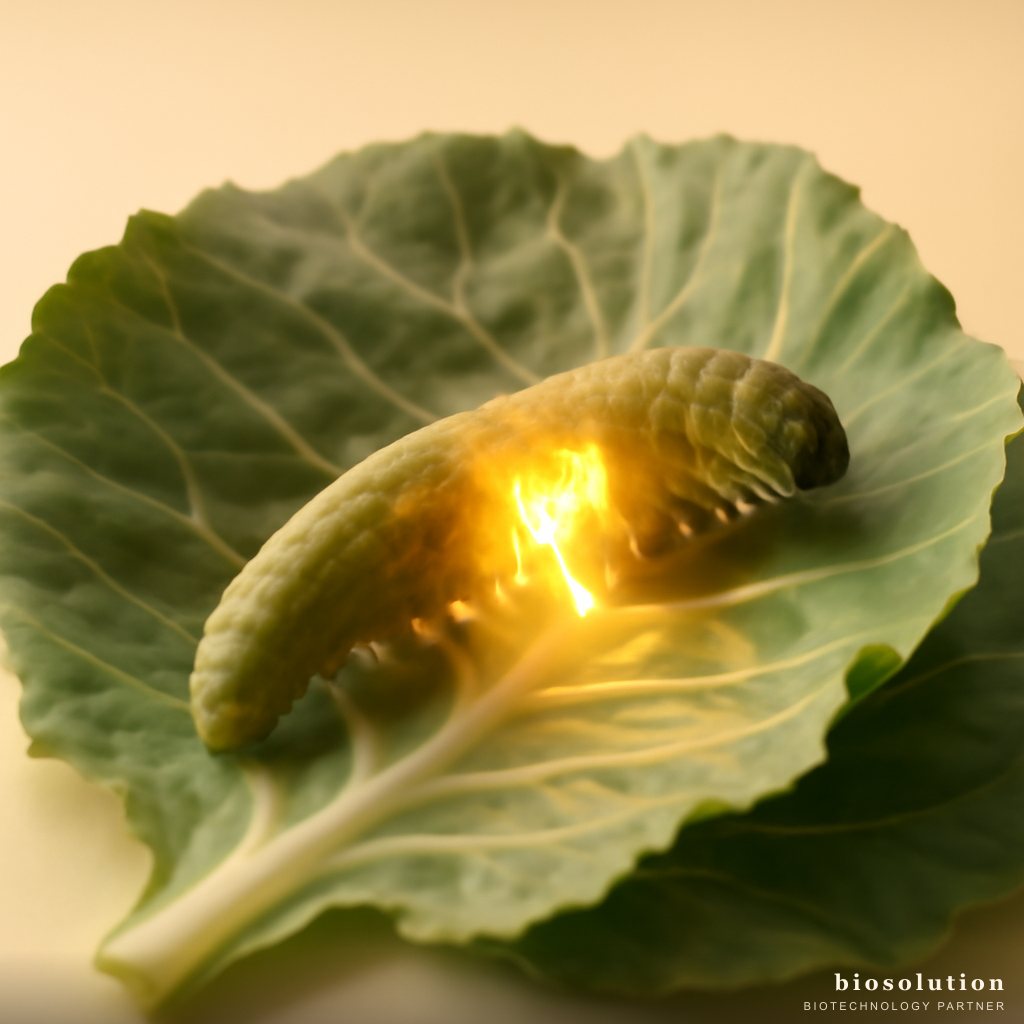
Both are entomopathogenic fungi that infect planthoppers through contact. Fungal spores attach to the planthopper's cuticle, germinate, and penetrate the body using chitinase and protease enzymes. Inside the hemolymph, the fungi multiply and produce toxins (beauvericin, destruxin) that cause paralysis and death within 3-7 days. Infected planthoppers harden like mummies and produce new spores that infect other planthoppers.
Specific Advantages
Beauveria bassiana is effective against brown planthoppers at all stages (nymphs to adults), while Metarhizium anisopliae is also effective against green planthoppers. The combination of both in a natural rice planthopper control formula provides a broader control spectrum and reduces resistance risk due to multi-mechanism action.
Safety for Predators
Unlike chemical insecticides, entomopathogenic fungi do not harm natural predators such as spiders, coccinellid beetles, and egg parasitoids. This is important for maintaining the rice field ecosystem balance and supporting integrated pest management (IPM).
Proper Application Methods for Natural Rice Planthopper Control
Dosage and Application Timing
For optimal results, use a dosage of 3 ml per liter of water (equivalent to 300 ml per 15-liter spray tank). Spray onto the rice canopy in the afternoon (3:00-5:00 PM) when relative humidity is >75%. High humidity helps spores germinate and adhere to planthoppers. Apply every 7 days when planthopper populations begin to increase, or after heavy rain that washes off spores.
Spraying Technique
- Use a spray nozzle that produces fine droplets (100-200 microns) to reach the underside of leaves where planthoppers hide.
- Add a non-ionic surfactant (spreader-sticker) at 0.1% to improve spore spread and adhesion.
- Avoid application during rain or when temperatures exceed 35°C, as UV light can damage spores.
Integration with Other Practices
- Planting pattern management: Synchronize planting within a single area to break the planthopper life cycle.
- Use of resistant varieties: Choose varieties such as Ciherang, Mekongga, or Inpari that have partial resistance to planthoppers.
- Conservation of natural enemies: Plant flowering plants on rice field bunds (e.g., cosmos, sunflowers) as nectar sources for parasitoids.
Case Study: Biocontrol Success in the Field
Efficacy Data of Anti-Planthopper Formula
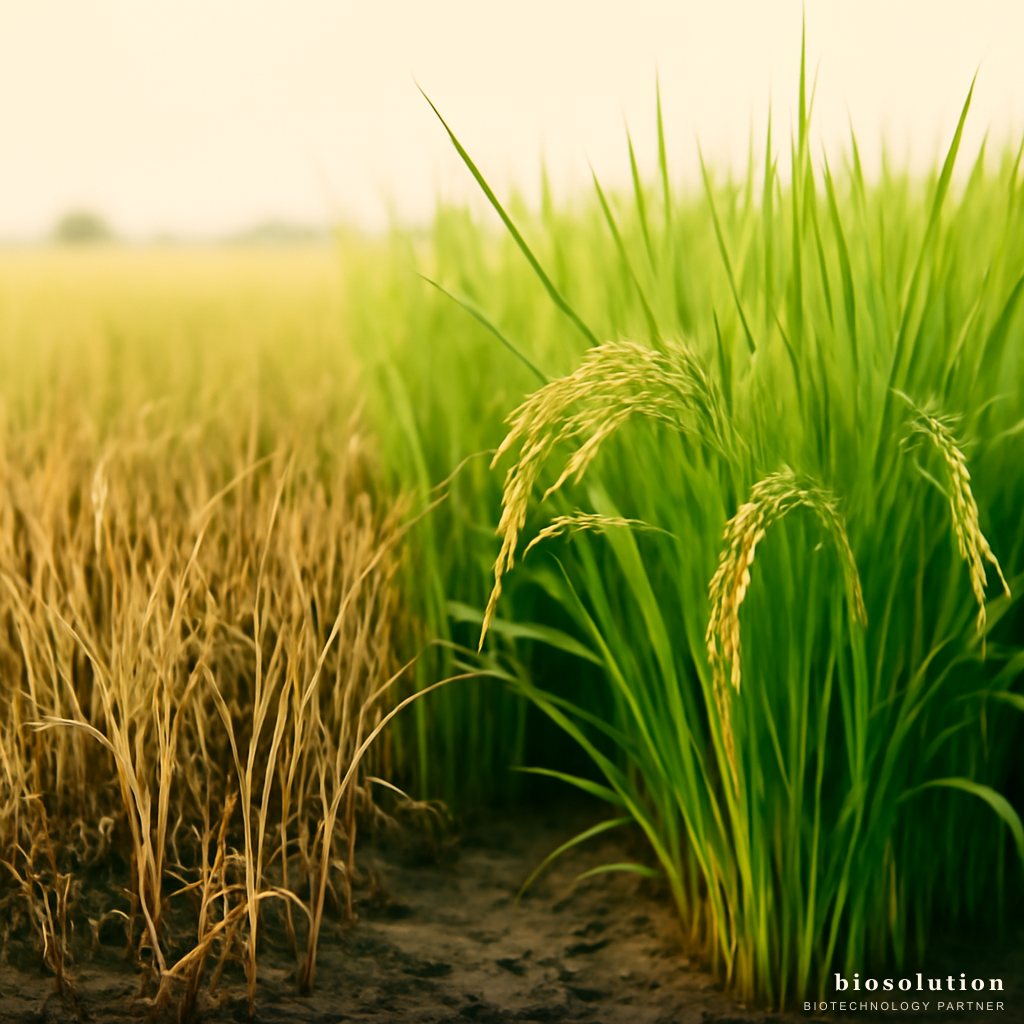
In field trials in West Java, application of the anti-planthopper formula (combination of B. bassiana and M. anisopliae) at 3 ml/l every 7 days for 4 weeks suppressed brown planthopper populations by up to 85% and green planthoppers by up to 78%, compared to untreated controls. Populations remained below the economic threshold (5 individuals per hill for brown planthoppers).
Impact on Yield
Fields treated with biocontrol produced 6.8 tons/ha of harvested dry grain, 15% higher than fields using chemical insecticides (5.9 tons/ha). This was due to no planthopper resurgence and maintained predator populations.
Certification for Export
Rice produced from fields with biological control is free from chemical pesticide residues, thus meeting Japanese (Positive List System) and European Union (EU Pesticide MRLs) standards. Export partner farmers in Central Java have successfully exported organic rice to Europe at premium prices.
FAQ: Common Questions About Natural Rice Planthopper Control
Is this formula safe for rice plants?
Yes, B. bassiana and M. anisopliae are specific to insect pests and not pathogenic to plants. These fungi only infect planthoppers and some other insects, but do not damage rice tissue.
How long does the effect last?
Fungal spores can survive on leaf surfaces for 3-5 days under dry conditions, but if humidity is high, the infection effect can last up to 7 days. Reapplication every 7 days is recommended to maintain optimal spore populations.
Can it be mixed with other pesticides?
Avoid mixing with chemical fungicides as they can kill the fungi. However, it can be mixed with botanical insecticides (e.g., neem extract, citronella) or organic foliar fertilizers. Conduct a compatibility test first.
Is it effective against green planthoppers?
Yes, Metarhizium anisopliae in the formula is very effective against green planthoppers. The combination of both fungi provides dual control against both planthopper species.
How should the formula be stored?
Store in a cool, dry place at 4-10°C (refrigerator) if possible. Avoid direct sunlight. The liquid formula can last up to 6 months at room temperature, but it is recommended to use within 3 months after purchase.
Conclusion
Controlling brown and green planthoppers with natural rice planthopper control based on Beauveria bassiana and Metarhizium anisopliae is an effective, environmentally friendly solution that supports residue-free rice export programs. With a dosage of 3 ml/l, afternoon application, and integration with IPM practices, farmers can suppress planthopper populations below the economic threshold without the risk of resistance or resurgence. Additionally, biocontrol preserves natural predators and produces rice that meets global food safety standards. For further consultation on using the anti-planthopper formula, contact our technical team via WhatsApp. Also see the product Natural Rice Planthopper Control Formula for more detailed information.