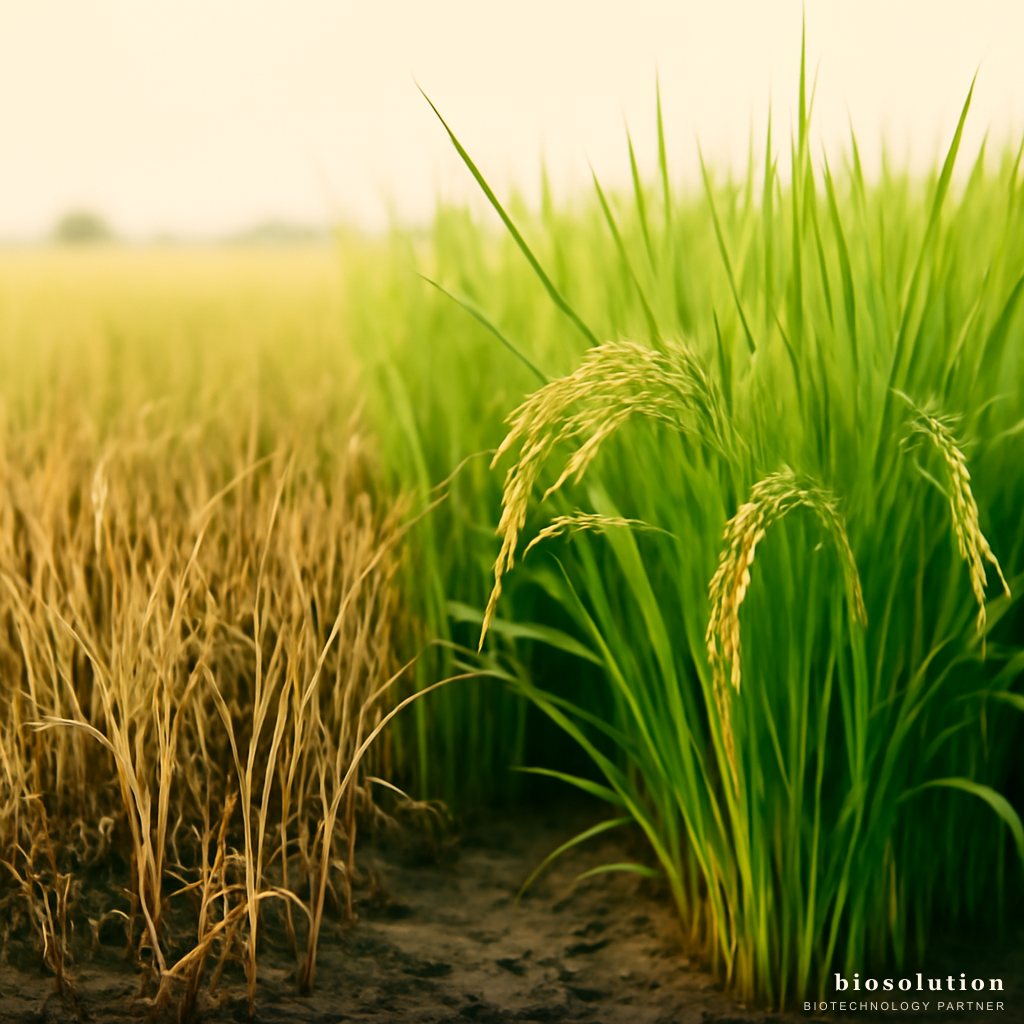
Natural Rice Planthopper Control: Monitoring & Chemical-Free Management
Brown planthopper (Nilaparvata lugens) and green leafhopper (Nephotettix virescens) are major pests of rice that can cause yield losses of up to 60% if not managed properly. Continuous use of synthetic insecticides triggers resistance, resurgence, and death of natural enemies. Therefore, a natural rice planthopper control approach is a sustainable solution that prioritizes population monitoring, traps, scouting, and economic thresholds as a basis for decision-making.
Why Is Planthopper Population Monitoring Important?
Planthopper population monitoring is the first step in integrated pest management (IPM). Without accurate population data, farmers tend to spray on a schedule or reactively, which is often ineffective and costly. The objectives of monitoring are:
- To determine the species and density of planthoppers in the field.
- To detect early infestations before populations explode.
- To determine the right timing for control applications.
- To evaluate the effectiveness of control measures.
Monitoring is carried out regularly, ideally every 3-7 days during the vegetative to generative stages of rice. Data collected includes the number of planthoppers per hill or per trap, as well as the presence of natural enemies such as spiders, beetles, and parasitoids.
Trap Methods for Planthoppers
Traps are used to passively monitor planthopper populations. Several types of traps commonly used:
Light Trap
This trap utilizes the attraction of planthoppers to ultraviolet light. It is installed at night (18:00-06:00) above the rice canopy. Catches are counted every morning. Light traps are effective for detecting brown planthoppers and green leafhoppers that are active at night.
Yellow Sticky Trap
Yellow sticky traps are placed at canopy height, about 10-15 per hectare. The yellow color attracts adult green leafhoppers. These traps are easy to use and provide an overview of daily population fluctuations.
Funnel Trap
Used to catch planthoppers that fall from plants. Suitable for monitoring brown planthoppers that often stay at the base of stems.
Monitoring results from traps are used to determine whether the population has exceeded the economic threshold. If trap catches show a significant increase, more intensive scouting is needed.
Scouting Techniques in the Field
Scouting is direct observation of rice plants to count the number of planthoppers per hill. Steps:
- Select sample hills randomly at 10-20 points per hectare (diagonal or zigzag pattern).
- Observe the base of stems (for brown planthoppers) and leaves (for green leafhoppers).
- Count the number of adult planthoppers and nymphs per hill.
- Also record the presence of natural enemies such as spiders, Coccinellidae beetles, and egg parasitoids.
Scouting is done in the morning or late afternoon when planthoppers are active. Scouting frequency increases during the generative stage because planthoppers reproduce more easily.
Economic Thresholds for Brown Planthopper and Green Leafhopper
The economic threshold (ET) is the pest population density at which control measures must be taken to prevent economic loss. Based on IRRI and Balitbangtan recommendations, the ET for brown planthopper and green leafhopper are:
- Brown planthopper: 5-10 insects per hill (vegetative stage) or 10-20 insects per hill (generative stage).
- Green leafhopper: 10-20 insects per hill (vector of tungro virus, ET lower if disease is present).
If the population has reached or exceeded the ET, control must be carried out immediately. However, if still below the ET, regular monitoring and conservation of natural enemies are sufficient.
Natural Control with Anti-Planthopper Formula
After monitoring shows planthopper populations above the economic threshold, the next step is application of biological agents. Anti-Planthopper Formula from Biosolution contains two superior entomopathogenic fungi:
- Beauveria bassiana: A strain isolated and specially formulated to infect brown planthoppers and green leafhoppers. Fungal spores penetrate the insect cuticle, grow inside the body, and produce toxins that kill planthoppers within 3-7 days.
- Metarhizium anisopliae: As a supporter, this fungus is effective at high humidity and infects planthoppers at the base of stems.
Both fungi work synergistically, suppressing planthopper populations without causing resistance. Application is done by spraying the rice canopy using a spray nozzle that produces fine droplets. Recommended dosage: 3 ml per liter of water, sprayed evenly over all plant parts, especially the stem base and lower leaves.
Proper Application Timing
- Frequency: Every 7 days when planthopper populations show an increase, or immediately after reaching the economic threshold.
- Time: Late afternoon (16:00-18:00) when temperature drops and relative humidity (RH) >75%. These conditions are optimal for fungal spore germination.
- Avoid spraying during rain or direct sunlight as it can reduce spore viability.
Advantages of Anti-Planthopper Formula
- Suppresses planthopper populations below the economic threshold without causing resurgence.
- Safe for natural enemies such as spiders, beetles, and parasitoids. Unlike synthetic insecticides that kill predators non-selectively.
- Leaves no chemical residues on grain, making it safe for consumers and the environment.
- Reduces spraying frequency and production costs in the long term.
Case Study: Field Effectiveness
In a trial on a farmer's field in West Java, application of Anti-Planthopper Formula at a dose of 3 ml/liter of water every 7 days for 4 weeks reduced brown planthopper populations from an average of 25 insects/hill to 3 insects/hill, while spider populations remained stable. Farmers reported no tungro virus transmission by green leafhoppers, and yields increased by 15% compared to plots sprayed with synthetic insecticides.
Integration with Other Cultivation Practices
Natural planthopper control will be more effective if combined with:
- Intermittent irrigation: Reduces micro-humidity at the stem base, making it less suitable for brown planthoppers.
- Balanced fertilization: Avoid excessive nitrogen fertilization, which makes plants more attractive to planthoppers.
- Conservation of natural enemies: Plant flowering plants on bunds as a nectar source for parasitoids.
- Variety rotation: Use rice varieties that are relatively resistant to planthoppers.
Conclusion
Controlling brown planthoppers and green leafhoppers on rice without chemicals is not impossible. With natural rice planthopper control based on population monitoring, traps, scouting, and economic thresholds, farmers can make timely and targeted control decisions. Anti-Planthopper Formula from Biosolution containing Beauveria bassiana and Metarhizium anisopliae is an effective, environmentally friendly solution that is safe for natural enemies and supports sustainable agriculture.
For more information about the product and application methods, consult our experts via WhatsApp or visit the product page Anti-Planthopper Formula. Also get other integrated pest management tips in related articles.