Reducing BOD and COD of Liquid Waste with Integrated WWTP Bioremediation
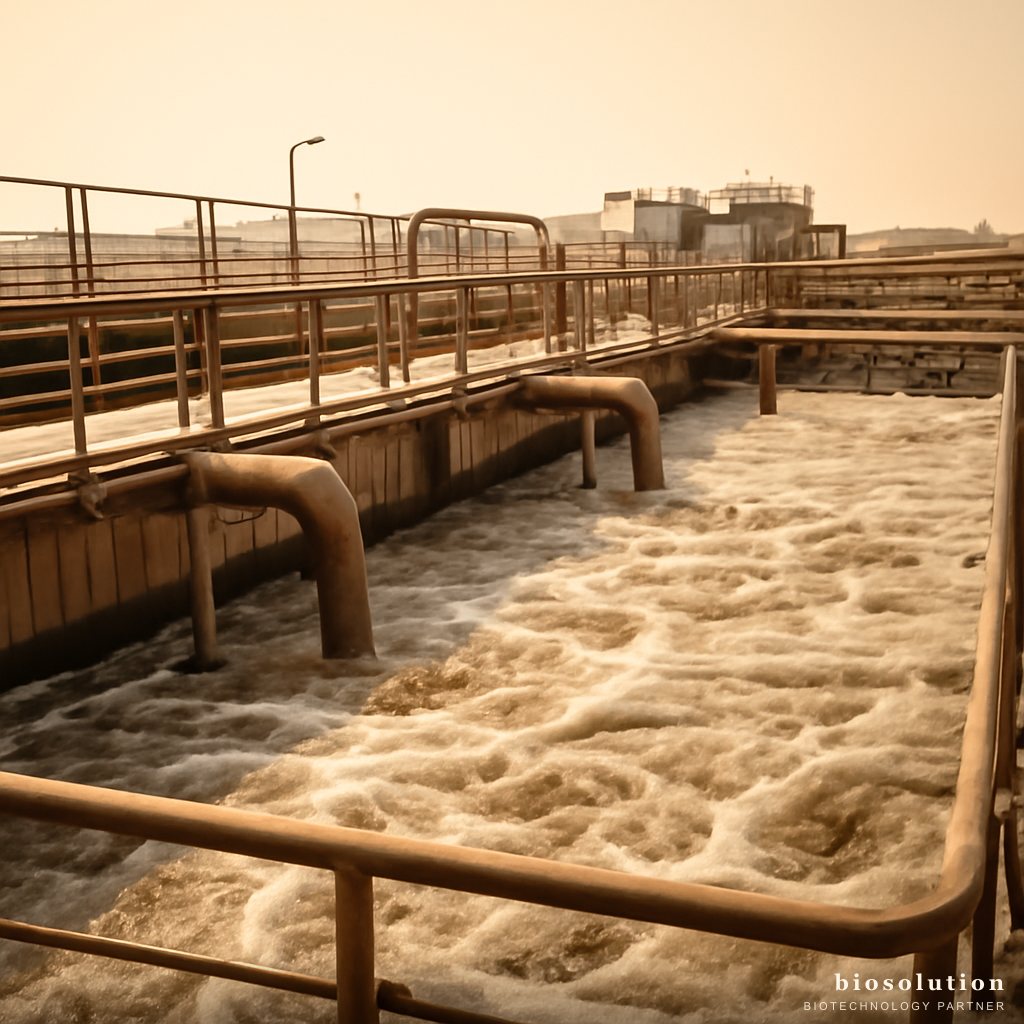
BOD (Biochemical Oxygen Demand) and COD (Chemical Oxygen Demand) are key parameters in industrial liquid waste quality standards. When BOD and COD values exceed government-set thresholds, companies face risks of environmental fines, reputational damage, and even operational license revocation. Many industries have invested heavily in Wastewater Treatment Plants (WWTP), yet results are often suboptimal due to technological limitations or fluctuating pollutant loads. The right solution is to integrate bioremediation based on a consortium of decomposer bacteria and Aspergillus niger into existing WWTPs. This approach not only significantly reduces BOD/COD but also lowers operational costs and reliance on chemicals.
Why Do BOD and COD of Liquid Waste Often Exceed Standards?
BOD measures the amount of oxygen required by microorganisms to decompose organic matter in water, while COD measures the total oxygen needed to chemically oxidize both organic and inorganic matter. Both are primary indicators of wastewater quality. Indonesian quality standards refer to the Ministry of Environment and Forestry Regulation, e.g., for the textile industry, maximum BOD is 60 mg/L and COD is 150 mg/L (Permen LHK No. P.16/MENLHK/SETJEN/KUM.1/4/2019).
Main causes of high BOD/COD include:
- Excess organic load due to production surges or raw material changes.
- Microbial population imbalance in biological WWTPs, e.g., from shock loading or toxicity.
- Declining WWTP performance due to sludge buildup, aerator damage, or lack of maintenance.
- Excessive chemical use that actually inhibits biological activity.
Without proper handling, this problem recurs and drains company budgets. This is where bioremediation with a consortium of decomposer bacteria and Aspergillus niger becomes a strategic solution.
Integrating Bioremediation with Existing WWTP: A Synergistic Approach
Bioremediation is not a replacement for WWTP, but a booster that works synergistically with existing systems. The liquid waste bioremediation formula from Biosolution contains a consortium of decomposer bacteria capable of degrading various complex organic compounds, along with Aspergillus niger which produces extracellular enzymes such as amylase, protease, and lipase. These enzymes break down large molecules into simple compounds easily consumed by bacteria.
How Integration Works
- Direct dosing into WWTP ponds: The formula is added directly to aeration or biological ponds. Initial dosage is 100–500 ml per m³ depending on WWTP volume and pollution level.
- Microbial activation: The bacterial and fungal consortium immediately begins decomposing the organic load. Aspergillus niger grows forming mycelium that helps trap particles and increase contact between enzymes and substrates.
- Efficiency improvement: Within 1–2 weeks, significant BOD/COD reduction occurs. The microbial population stabilizes and can withstand load fluctuations.
- Weekly maintenance: Maintenance doses are given weekly to keep the microbial population optimal.
Advantages Over Conventional Methods
| Aspect | Chemical Method | Integrated Bioremediation |
|---|---|---|
| Cost | High (purchase of coagulants, flocculants) | Lower (small dosage, natural) |
| Effectiveness | Limited to certain compounds | Broad, capable of degrading various pollutants |
| Environmental Impact | Hazardous chemical residues | Environmentally friendly, non-toxic |
| Sustainability | Requires continuous addition | Microbes reproduce on their own |
Scientific Evidence: Mechanism of Bacterial Consortium and Aspergillus niger
The decomposer bacterial consortium consists of aerobic and facultative species that work synergistically. Bacteria such as Pseudomonas, Bacillus, and Nitrosomonas degrade carbohydrates, proteins, fats, and aromatic compounds. Aspergillus niger acts as an extracellular enzyme producer that cuts long polymer chains into monomers. According to research from the University of Indonesia (2023), the combination of Aspergillus niger and bacterial consortium can reduce COD by up to 85% within 48 hours in tofu industry liquid waste.
Enzymes produced by Aspergillus niger include:
- Amylase: Breaks down starch into glucose.
- Protease: Degrades proteins into amino acids.
- Lipase: Hydrolyzes fats into glycerol and fatty acids.
- Cellulase: Decomposes cellulose fibers.
With these enzymes, decomposer bacteria can work faster because substrates are already available in simple forms. The end result is a drastic reduction in BOD and COD, as well as reduced biological sludge due to more efficient biomass.
Practical Implementation Steps in the Field
1. WWTP Audit and Waste Profile
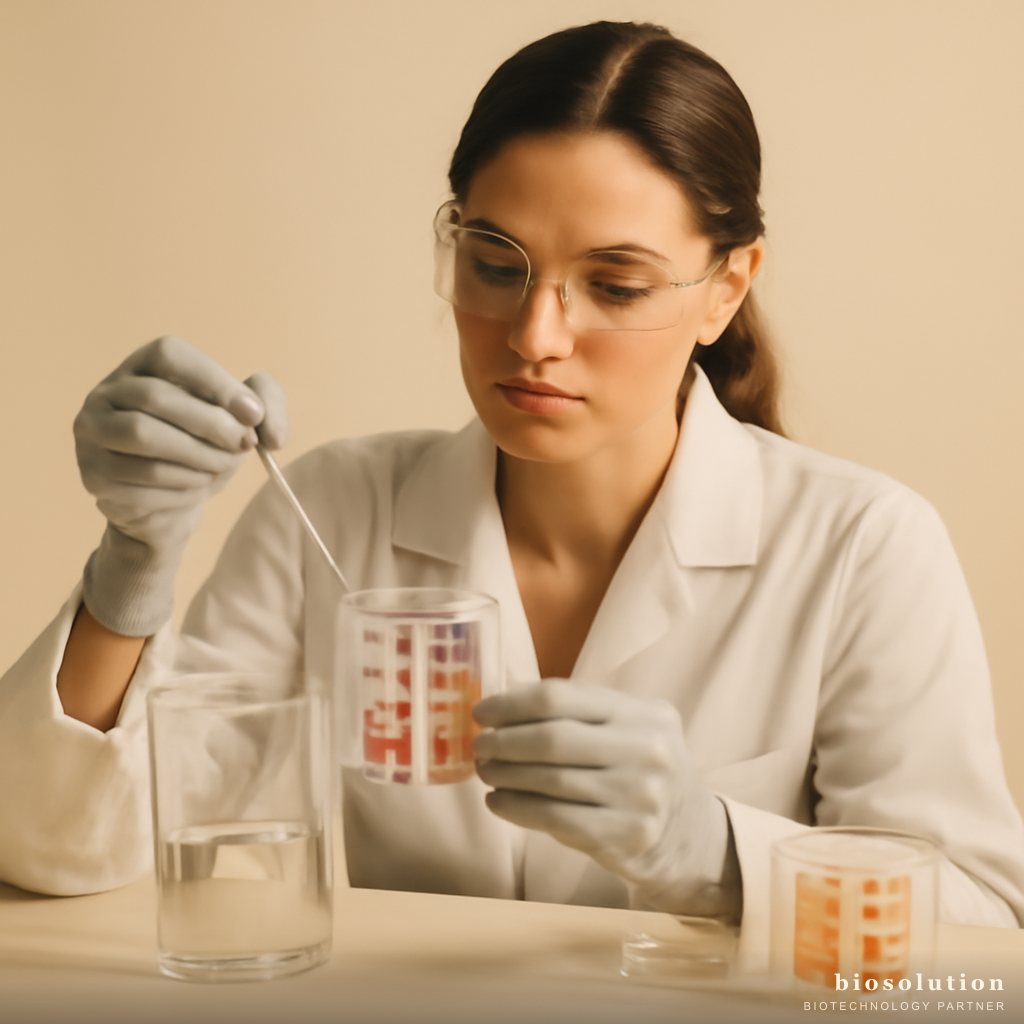
Before application, characterize the waste: measure BOD, COD, pH, temperature, and heavy metal content. Ensure pH is in the range of 6–8 and temperature 25–35°C for optimal microbial activity.
2. Initial Dosage Preparation
The initial dosage of the bioremediation formula is 100–500 ml per m³ of WWTP volume. For a WWTP with a volume of 100 m³, the initial dose is 10–50 liters. Mix the formula with clean water (1:10) before evenly distributing it into the aeration pond.
3. Weekly Monitoring
After application, measure BOD/COD every 3 days for 2 weeks. If the reduction has not reached the target, increase the dosage by 20% or the application frequency. Typically, significant improvement is seen within 7–14 days.
4. Maintenance
Once the target is achieved, give a maintenance dose of 50–200 ml per m³ every week. Adjust according to daily waste load. Do not forget to maintain aeration and control pH.
5. Periodic Evaluation
Conduct monthly evaluations to adjust dosage. Record BOD/COD data, operational costs, and sludge volume. Compare with pre-application data to calculate ROI.
Case Study: BOD/COD Reduction in a Food Industry
A food processing industry in East Java had a WWTP with a capacity of 500 m³/day. Before bioremediation, average BOD was 450 mg/L and COD 800 mg/L, exceeding quality standards (BOD 100 mg/L, COD 250 mg/L). After integrating Biosolution's bioremediation formula with an initial dose of 300 ml/m³, within 10 days BOD dropped to 80 mg/L and COD to 200 mg/L. Treatment costs decreased by 40% due to reduced coagulant use. The company successfully avoided environmental fines and improved its green reputation.
Conclusion
Integrating bioremediation with existing WWTP is an effective solution for reducing BOD/COD of liquid waste to meet quality standards. By utilizing a consortium of decomposer bacteria and Aspergillus niger, industries can achieve high efficiency, low costs, and environmental sustainability. Biosolution's liquid waste bioremediation formula is ready to help you solve waste problems thoroughly. For more information and free consultation, contact our team via WhatsApp or see the product Liquid Waste Bioremediation Formula on our website. Get the right solution for your WWTP.
FAQ
1. How long does it take to see BOD/COD reduction after application?
Significant reduction is usually seen within 3–7 days after the initial dose. However, to achieve stability according to quality standards, 1–2 weeks are needed depending on pollutant load and WWTP conditions. Regular monitoring is highly recommended.
2. Is this formula safe for the environment and operators?
Yes, the formula consists of natural microorganisms that are non-pathogenic and do not produce toxins. Aspergillus niger is classified as Generally Recognized as Safe (GRAS) by the FDA. Operators are still advised to use standard PPE during application.
3. Can this formula be used for all types of industrial liquid waste?
This formula is designed for organic waste such as from food, beverage, textile, pulp & paper, and livestock industries. For waste with high heavy metal content or toxic compounds, prior consultation is needed as these can inhibit microbial activity.
4. Is it necessary to modify the existing WWTP system?
No. The formula is designed to be integrated into existing WWTPs without major modifications. Simply add a dosing point in the aeration or biological pond. Ensure aeration is functioning well and pH is controlled.
5. How do I calculate the correct dosage?
Initial dosage is 100–500 ml per m³ of WWTP volume. For a more accurate calculation, conduct a laboratory-scale trial using a waste sample. Biosolution's technical team can help determine the optimal dosage through free consultation.