Root and Stem Biofungicide: A Solution for Controlling Pathogenic Fungi in Horticultural Crops
Diseases attacking roots and stem bases pose a serious threat to the productivity of horticultural crops. Soilborne pathogens such as Fusarium spp., Rhizoctonia solani, and Sclerotium rolfsii can cause economic losses of up to tens of percent if not managed properly. Root and stem biofungicides offer an environmentally friendly and effective alternative for control. This article thoroughly discusses the pathogen life cycle, symptoms, economic thresholds, and how products based on antagonistic microbes can be the main solution.
Understanding Root and Stem Base Pathogens in Horticultural Crops
Pathogens causing root and stem base diseases are generally soilborne fungi that persist in soil or plant debris. Some major pathogens include:
- Fusarium oxysporum: causes fusarium wilt in tomatoes, chili peppers, and bananas. This pathogen enters through roots and blocks xylem vessels.
- Rhizoctonia solani: causes root rot and damping-off in many vegetable crops.
- Sclerotium rolfsii: causes stem base rot in legumes and tubers, characterized by white mycelium and sclerotia.
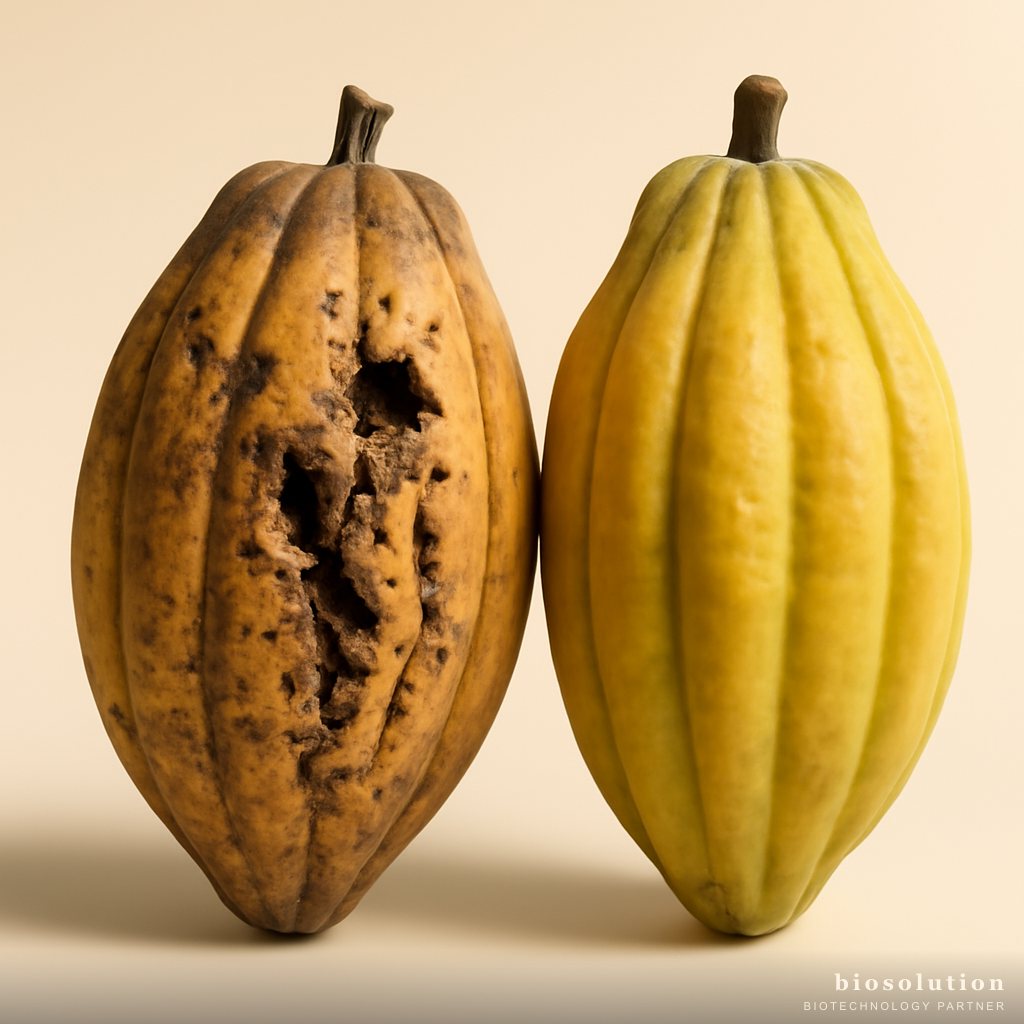
- Phytophthora spp.: oomycetes causing root and stem rot in chili, tomato, and cocoa plants.
These pathogens can survive in dormant structures such as chlamydospores, sclerotia, or mycelium in soil for years. Infection typically occurs through root wounds or active root tips, then spreads to the stem base.
Pathogen Life Cycle and Disease Triggers
Understanding the pathogen life cycle is important for determining the right timing for biofungicide application. Generally, the soilborne pathogen cycle includes:
- Survival in soil: Pathogens survive as saprophytes on plant debris or as dormant structures.
- Dispersal: Through irrigation water, wind-blown soil, farm tools, or infected seedlings.
- Infection: When environmental conditions are favorable (high humidity, temperature 25-30°C, acidic soil pH), pathogens germinate and penetrate roots or stem bases.
- Colonization and symptoms: Pathogens grow within plant tissues, producing toxins or enzymes that damage cells.
- Secondary spread: Pathogens produce reproductive structures that spread to other plants.
Factors triggering disease outbreaks include:
- Waterlogged soil or poor drainage
- Continuous monoculture
- Use of unhealthy seedlings
- Low organic matter leading to reduced antagonistic microbes
- Excessive use of chemical fungicides that kill beneficial microbes
Symptoms of Pathogen Attack on Roots and Stem Bases
Early symptoms are often non-specific but can be observed visually:
- Wilting leaves during the day and recovery at night (fusarium wilt).
- Stunted growth, yellowing leaves, and leaf drop.
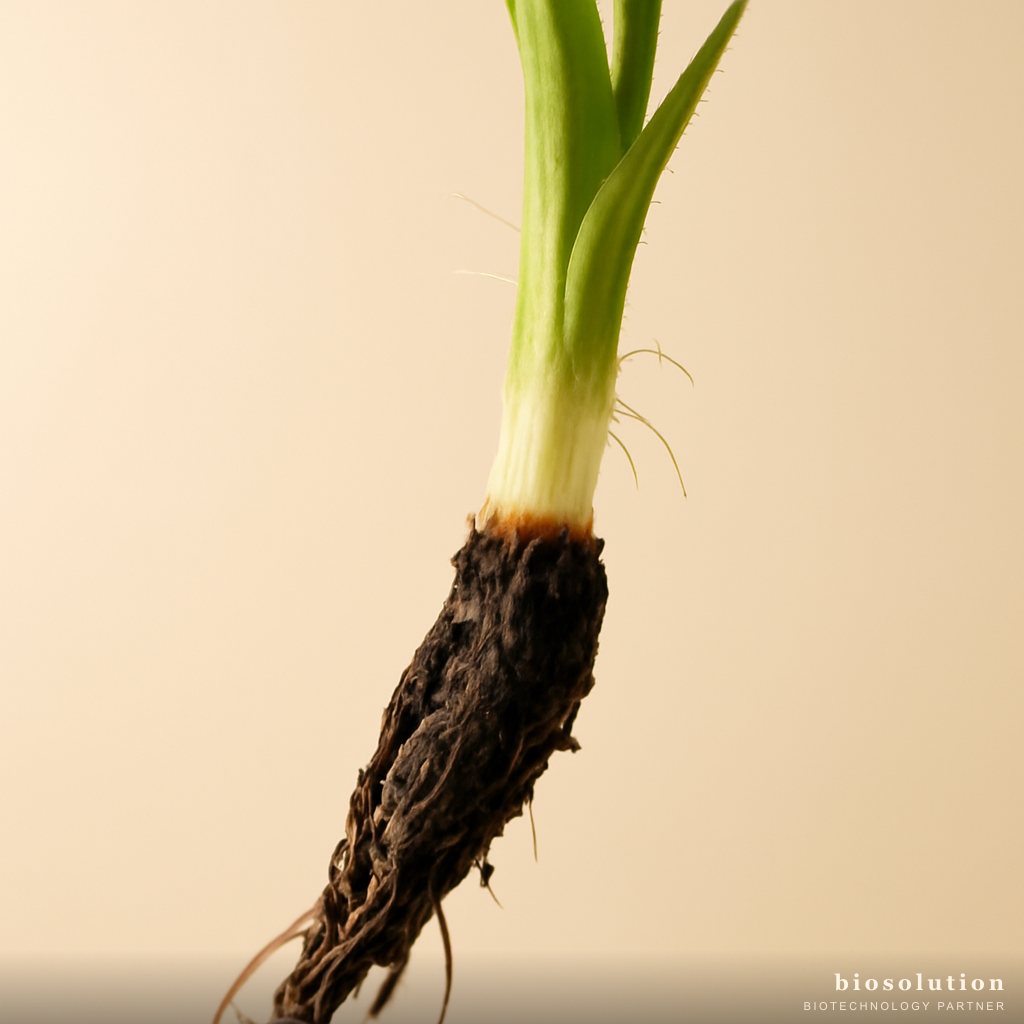
- Root rot: roots turn dark brown, soft, and easily break.
- Stem base rot: wet brown lesions at the stem base, often followed by lodging.
- White mycelium: in Sclerotium rolfsii infection, cotton-like white mycelium appears at the stem base and soil surface.
- Sclerotia: small white to brown granules resembling mustard seeds around the stem base.
- Chlorosis and necrosis on older leaves.
If symptoms are advanced, plants are difficult to save. Therefore, preventive control with root and stem biofungicides is highly recommended.
Economic Thresholds and When to Act
The economic threshold is the disease severity level at which control costs are still lower than yield losses. For root and stem diseases, the economic threshold is usually determined by:
- Percentage of affected plants: If 5-10% of plants show early symptoms, control should be initiated immediately.
- Disease intensity: Disease severity score (e.g., 0-5) multiplied by the percentage of infected plants.
- Crop economic value: High-value crops like chili and tomato have lower thresholds.
- Field history: Fields with a history of severe disease require preventive measures from the start of planting.
Regular weekly monitoring during the vegetative phase is crucial. If 1-2 wilted or rotten plants are found, immediately apply root and stem biofungicide via root drench and stem spray.
Formula for Controlling Root & Stem Fungi: A Superior Biological Solution
Biosolution presents the Formula for Controlling Root & Stem Fungi, containing three superior antagonistic microbes: Trichoderma sp., Pseudomonas fluorescens, and Bacillus subtilis. They work synergistically to control soilborne pathogens while stimulating plant growth.
Mechanism of Action of Antagonistic Microbes
- Trichoderma sp. is mycoparasitic, infecting and destroying pathogenic fungal hyphae. It also produces chitinase and glucanase enzymes that degrade pathogen cell walls.
- Pseudomonas fluorescens produces siderophores that bind iron in the rhizosphere, depriving pathogens of iron for growth. This bacterium also produces antibiotics such as 2,4-diacetylphloroglucinol (DAPG) that inhibit pathogens.
- Bacillus subtilis is a PGPR (Plant Growth-Promoting Rhizobacterium) that stimulates root growth and induces systemic resistance in plants. It forms spores resistant to extreme environmental conditions.
Proper Application Method
The product is applied at a dose of 5 ml per liter of water, using the root drench and stem spray method. Application frequency is every 14 days starting from soil preparation until the vegetative phase. For fields with a history of severe disease, applications can be accelerated to every 7-10 days.
Application steps:
- Mix 5 ml of product into 1 liter of water, stir well.
- Drench 200-300 ml of solution into each planting hole during soil preparation.
- Spray onto the stem base and root zone until wet.
- Repeat every 14 days during the vegetative phase.
Benefits of Using Root and Stem Biofungicides
- Effective control against Fusarium, Rhizoctonia, Sclerotium, and Phytophthora.
- Stimulation of root growth due to auxin and cytokinin hormones produced by Bacillus subtilis.
- Enhanced plant resistance through induced systemic resistance.
- Reduced dependence on chemical fungicides, making it environmentally friendly and safe for farmers.
- Improved soil health as antagonistic microbes increase rhizosphere biodiversity.
Integrated Disease Management Strategy with Biofungicides
Root and stem biofungicides are most effective when integrated into Integrated Pest Management (IPM). Here are the steps:
- Field sanitation: Clean infected plant debris, till the soil properly.
- Use of healthy seedlings: Use pathogen-free seedlings or those treated with biofungicide.
- Crop rotation: Avoid planting host crops consecutively.
- Proper irrigation: Avoid overwatering, improve drainage.
- Preventive biofungicide application: Start from soil preparation and regularly every 14 days.
- Monitoring: Check for symptoms weekly; if found, reapply immediately.
- Combination with other biological agents: e.g., Streptomyces or Mycorrhizae for synergy.
With this approach, the use of Biosolution's root and stem biofungicide can reduce disease severity by 70-80% compared to untreated controls.
Conclusion
Root and stem base diseases caused by soilborne pathogens such as Fusarium, Rhizoctonia, and Sclerotium are serious threats to horticultural productivity. Root and stem biofungicides based on antagonistic microbes like Trichoderma sp., Pseudomonas fluorescens, and Bacillus subtilis offer an effective, environmentally friendly, and sustainable solution. The Formula for Controlling Root & Stem Fungi from Biosolution can be applied via root drench and stem spray at a dose of 5 ml/L every 14 days. For optimal results, integrate with other IPM practices. Want further consultation? Contact us via WhatsApp for specific recommendations for your field. Also see related product: Formula for Controlling Soilborne Pathogenic Fungi.