Root and Stem Biofungicide: Antagonist Microbe Population Monitoring Guide
The use of root and stem biofungicides is increasingly popular among horticultural farmers who want to control soilborne pathogens like Fusarium, Rhizoctonia, and Phytophthora in an environmentally friendly way. However, the effectiveness of biofungicides greatly depends on the ability of antagonistic microbes to survive and thrive in the rhizosphere. Therefore, population monitoring is key to success. This article discusses three monitoring methods—trap, scout, and threshold—that can be applied to ensure optimal performance of root and stem biofungicides.
Why Is Biofungicide Population Monitoring Important?
Root and stem biofungicides work through mechanisms of competition, mycoparasitism, and production of antimicrobial compounds. However, environmental factors such as soil pH, moisture, and the presence of other microbes can affect the population of biological agents. Without monitoring, farmers do not know whether the populations of Trichoderma sp., Pseudomonas fluorescens, and Bacillus subtilis are still high enough to suppress pathogens. Monitoring helps determine the timing of reapplication and evaluate the effectiveness of products like Root & Stem Fungus Control Formula.
Trap Method: Capturing Microbes from Soil
The trap method uses "bait" in the form of selective media or indicator plants to isolate antagonistic microbes from soil samples. Steps:
- Take soil samples from the root zone of plants that have been treated with biofungicide.
- Place the samples on agar media containing antibiotics to suppress other bacteria.
- Incubate at 25-30°C for 3-5 days.
- Count the growing colonies and identify them morphologically or molecularly.
This method provides quantitative data on populations of Trichoderma (characterized by green colonies) and Bacillus (white wrinkled colonies). Perform trapping every 2 weeks after application to observe population trends.
Scout Method: Visual Observation and Symptoms
Scouting is direct field observation to detect disease symptoms and the presence of biofungicides. Farmers can:
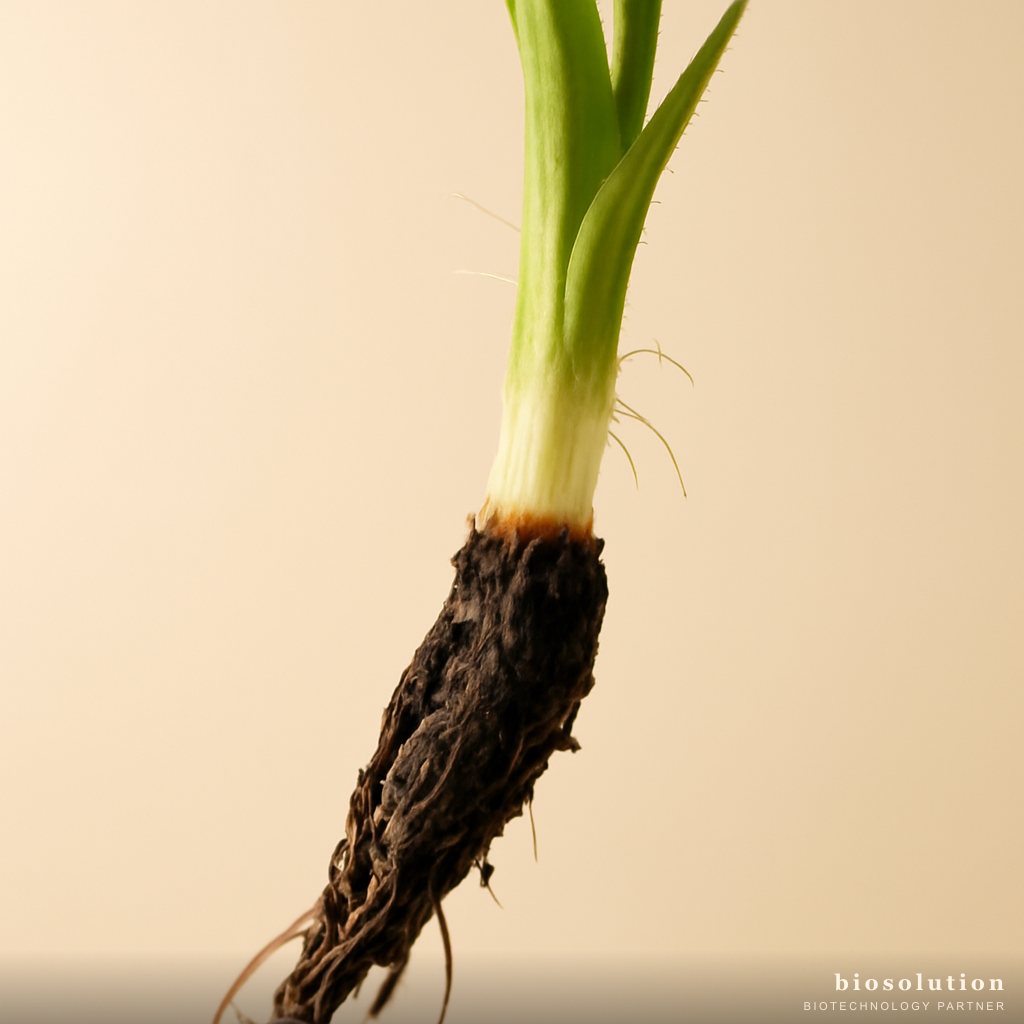
- Examine the stem base and roots of sample plants (10-20 plants per hectare).
- Record wilted plants, root rot, or brown spots.
- Use a magnifying glass to see fungal mycelium or bacterial colonies on root surfaces.
The presence of Trichoderma is often visible as green mycelium around roots, while Pseudomonas produces yellow-green fluorescent pigment in moist soil. Scouting is done during watering or after rain to facilitate detection.
Threshold: When Should Biofungicide Population Be Increased?
The threshold is the minimum population of antagonistic microbes below which control failure risk increases. Based on research, a minimum population of Trichoderma of 10^3 CFU/g soil and Bacillus of 10^4 CFU/g soil is effective in suppressing pathogens. If trap results show populations below the threshold, reapply root and stem biofungicide at a dose of 5 ml/L water every 14 days according to product instructions. Factors that reduce population include:
- Use of broad-spectrum chemical fungicides.
- Drought or waterlogging.
- Soil poor in organic matter.
To increase population, applying compost or organic matter together with biofungicide can provide nutrients for microbes.
Integration with Related Products
In addition to Root & Stem Fungus Control Formula, farmers can combine it with Soil Pathogen Fungus Control Formula containing Trichoderma and Bacillus for broader protection. Population monitoring is also important for these products to maintain synergy between strains.
Case Study: Field Monitoring
A trial on chili plants in West Java showed that applying root and stem biofungicide every 2 weeks suppressed fusarium wilt by up to 70%. Monitoring using the trap method showed that Trichoderma population remained stable at 10^4 CFU/g soil during the rainy season. However, during the dry season, the population dropped to 10^2 CFU/g soil, requiring more frequent reapplication. Farmers who conducted routine monitoring were able to save application costs and increase yields.
Conclusion
Monitoring root and stem biofungicide populations using trap, scout, and threshold methods is crucial to ensure effective pathogen control. By understanding the population dynamics of Trichoderma sp., Pseudomonas fluorescens, and Bacillus subtilis, horticultural farmers can optimize application timing and product dosage. For best results, combine with good agricultural practices and use quality products like Root & Stem Fungus Control Formula. Consult with Biosolution expert team via WhatsApp for specific recommendations for your land.
FAQ
1. What is meant by root and stem biofungicide? Root and stem biofungicides are biological products containing antagonistic microbes such as Trichoderma, Pseudomonas, and Bacillus that can suppress pathogens causing root and stem base diseases. These products are applied by drenching the roots and spraying the stems.
2. How to perform the trap method for biofungicide monitoring? The trap method is done by taking soil samples from the root zone, then growing microbes on selective media. The growing colonies are counted to determine the population of antagonistic microbes. Perform every 2 weeks to monitor trends.
3. When should biofungicide reapplication be done? Reapplication is necessary if the antagonistic microbe population is below the threshold (e.g., <10^3 CFU/g soil for Trichoderma), or after heavy rain, or if disease symptoms begin to appear. The standard frequency is every 14 days.
4. Is it safe to mix biofungicide with chemical fertilizers? It is best to avoid mixing biofungicide with chemical fungicides or strongly acidic fertilizers as they can kill the microbes. However, they can be applied alternately with a minimum interval of 3 days. Consultation with an expert is recommended.
5. How to increase biofungicide population in soil? Population can be increased by adding organic matter such as compost, maintaining soil moisture, and reducing the use of chemical pesticides. Regular application of biofungicide also helps build a stable population.