Root-Knot Nematode Biocontrol: 5 Application Mistakes of Nematode Control Formula
Root-knot nematode biocontrol is an environmentally friendly strategy that relies on antagonistic microorganisms to suppress parasitic nematode populations, especially Meloidogyne spp., in vegetable and tomato crops. The Root-Knot Nematode Control Formula from Biosolution contains Paecilomyces lilacinus and Bacillus firmus, two biological agents proven to reduce root gall formation by 70–80%. However, the effectiveness of biocontrol is highly dependent on proper application techniques. Many farmers fail to achieve optimal results due to application errors. This article identifies five most common mistakes and how to avoid them.
Mistake 1: Application at the Wrong Time
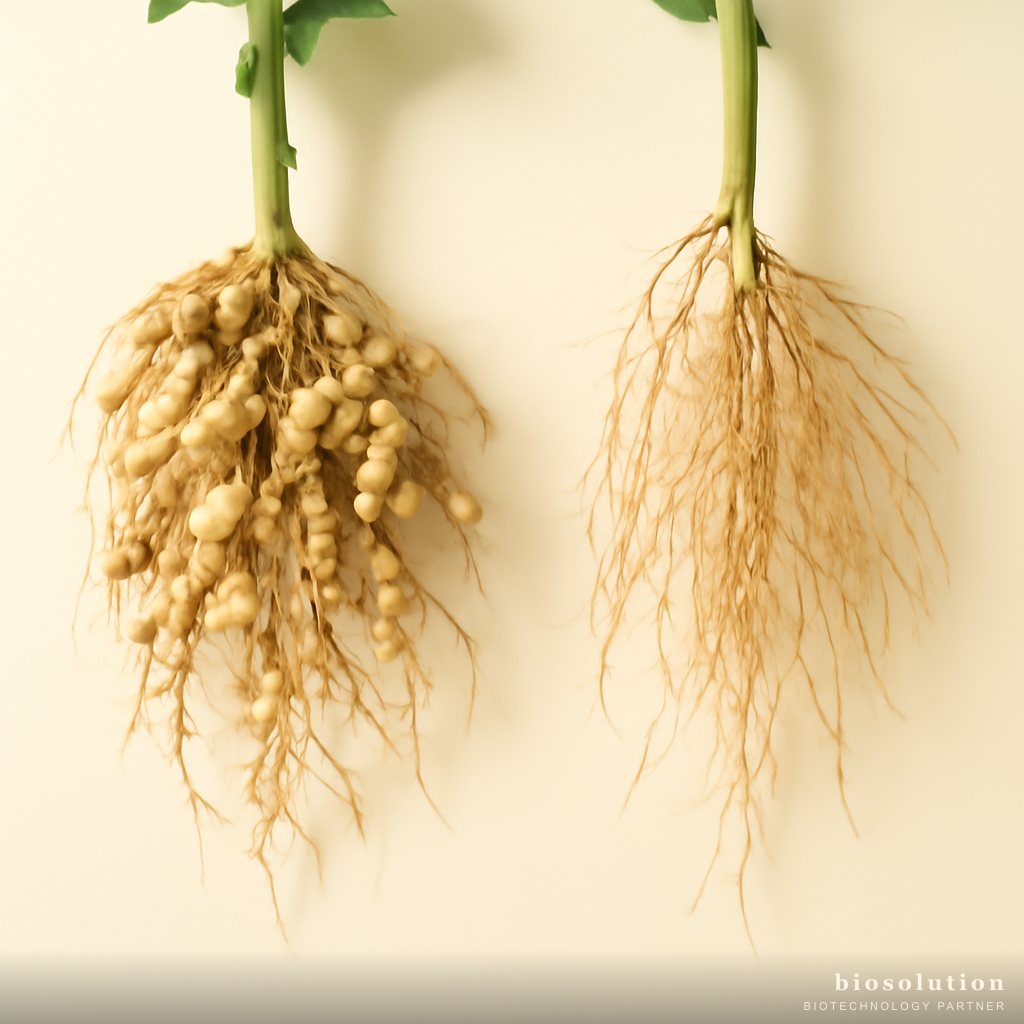
One of the most critical mistakes is not applying root-knot nematode biocontrol at the right time. The Root-Knot Nematode Control Formula should be applied at planting and after pruning. Many farmers only use the product after plants show severe infestation symptoms, such as wilting during the day or roots full of galls. At that stage, nematode populations are already very high and root damage is advanced, making biocontrol less effective.
Solution: Apply the Root-Knot Nematode Control Formula preventively. Start drenching roots at a dose of 5 ml per liter of water at planting, then repeat every 14 days. At least 4 applications per growing season are needed to establish biological agent populations in the rhizosphere. With regular application, Paecilomyces lilacinus will infect nematode eggs, while Bacillus firmus produces toxins that inhibit nematode juveniles, keeping populations under control from the start.
Mistake 2: Too Low or Too High Dosage
Incorrect dosage is another common mistake. Some farmers use too low a dose due to cost concerns, resulting in insufficient biological agent concentration to suppress nematodes. Conversely, others use excessive doses hoping for faster results, but this does not significantly improve effectiveness and only wastes product.
Solution: Follow the recommended dose of 5 ml per liter of water. For optimal results, ensure the solution is evenly drenched over the entire root zone. In heavily infested soil, application frequency can be increased to every 10 days, but the dose remains the same. Do not mix with chemical fungicides or bactericides that can kill biological agents. If other pesticides are necessary, allow a minimum 3-day interval.
Mistake 3: Incorrect Application Method
Root-knot nematode biocontrol requires root drenching, not foliar spraying. Many farmers mistakenly spray the formula on leaves or stems, so the biological agents do not reach the target. Nematodes live in the soil and attack roots, so biological agents must be applied to the root zone. Additionally, water quality matters; water with high chlorine content can kill microorganisms.
Solution: Use the root drench method with sufficient solution volume to wet the entire root system. For tomato plants, about 200–300 ml of solution per plant is needed depending on size. Let water sit for 24 hours if it contains chlorine, or use well water. Application should be done in the morning or late afternoon to avoid direct UV light that can damage biological agents.
Mistake 4: Ignoring Soil Conditions and Irrigation
The effectiveness of Paecilomyces lilacinus and Bacillus firmus is greatly influenced by soil conditions. Both microbes require adequate moisture to thrive. Soil that is too dry hinders the movement and infection of biological agents against nematodes. Conversely, waterlogged soil can create anaerobic conditions that do not support Bacillus firmus growth. Extreme soil pH (below 4.5 or above 8.5) can also reduce biological agent viability.
Solution: Ensure the soil is moist before and after application. Irrigate regularly to maintain soil moisture, but avoid waterlogging. If soil pH is too acidic, apply lime first. Adding organic matter such as compost can also increase biological agent populations by providing additional nutrients. With an optimal environment, root-knot nematode biocontrol will work maximally.
Mistake 5: Not Rotating or Combining with Other Methods
Relying solely on biocontrol is often insufficient, especially in fields with high nematode infestation. Nematodes have complex life cycles and can survive as eggs or cysts in the soil. Without crop rotation or use of resistant varieties, nematode populations can rebound. Some farmers also do not realize that biocontrol needs to be integrated with other cultivation practices.
Solution: Integrate root-knot nematode biocontrol with rotation of non-host crops, such as corn or legumes, to break the nematode life cycle. Use tolerant or resistant tomato varieties if available. Additionally, sanitize farm tools to prevent nematode spread. With an integrated approach, biocontrol effectiveness can be enhanced and reliance on chemical pesticides reduced.
Conclusion
Root-knot nematode biocontrol with the Root-Knot Nematode Control Formula from Biosolution offers an effective and environmentally friendly solution for controlling Meloidogyne in vegetable and tomato crops. However, its success depends heavily on proper application. Avoid the five mistakes above: wrong application timing, incorrect dosage, wrong method, ignoring soil conditions, and not integrating with other methods. By applying correct techniques, you can suppress nematode populations by 70–80% and increase crop yields. For further consultation, contact the Biosolution team via WhatsApp or see the product Root-Knot Nematode Control Formula on our website. Also get information on other biocontrol solutions for sustainable agriculture.
FAQ
What is root-knot nematode biocontrol?
Root-knot nematode biocontrol is a method of controlling parasitic nematodes using antagonistic microorganisms such as Paecilomyces lilacinus and Bacillus firmus. These microbes infect eggs, juveniles, or produce toxins that inhibit nematodes, reducing their populations without harming the environment.
How to correctly apply the Root-Knot Nematode Control Formula?
Application is done by root drenching at a dose of 5 ml per liter of water. The solution is drenched into the root zone at planting and after pruning, repeated every 14 days for at least 4 times per season. Avoid direct sunlight and ensure the soil is moist.
Is root-knot nematode biocontrol safe for plants and soil?
Yes, it is very safe. Biological agents like Paecilomyces lilacinus and Bacillus firmus are natural microbes that are not phytotoxic. They also do not disturb other beneficial soil microbes, thus maintaining soil ecosystem balance.
How long does it take to see results from biocontrol?
Improvement is usually seen after 2-3 weeks of regular application, marked by reduced wilting symptoms and better plant growth. Significant nematode population suppression requires 1-2 growing seasons with consistent application.
Can biocontrol be combined with chemical pesticides?
It is best to avoid direct mixing with chemical fungicides or bactericides. If other pesticides are necessary, allow a minimum 3-day interval before or after biocontrol application. For optimal results, prioritize biocontrol and good cultivation practices.