Root-Knot Nematode Biocontrol: Effective Solution Against Resistance
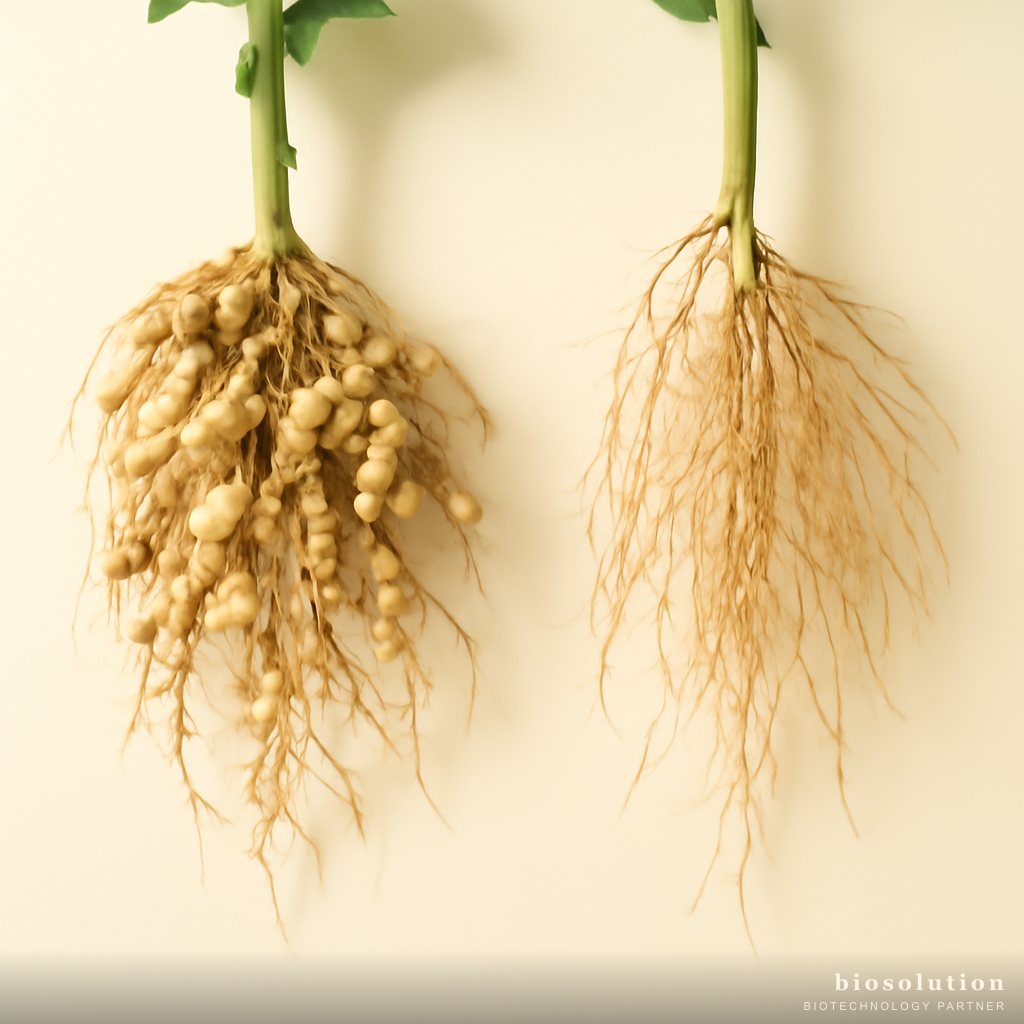
Vegetable and tomato farmers in Indonesia often face serious problems due to attacks by parasitic nematodes Meloidogyne spp., which cause root galls and reduce yields. For years, chemical pesticides were the mainstay, but now many reports indicate that these compounds are becoming ineffective. The phenomenon of nematode resistance to active chemical ingredients is spreading, driving the need for alternative approaches. Root-knot nematode biocontrol with biological agents such as Paecilomyces lilacinus and Bacillus firmus presents a science-based solution that is not only effective in suppressing nematode populations but also environmentally friendly. This article will explore why chemical pesticides fail, how biocontrol mechanisms work, and how you can apply them in the field.
Why Do Chemical Pesticides Fail to Control Nematodes?
The continuous use of chemical pesticides creates strong selection pressure on nematode populations. As a result, individuals with resistant genes survive and reproduce, making the nematode population immune to the active ingredient. This phenomenon has been documented in Meloidogyne incognita against carbamates and organophosphates. Additionally, chemical pesticides kill natural enemies of nematodes, such as predatory fungi and antagonistic bacteria, thereby exacerbating nematode population explosions in the long term. Chemical residues also contaminate soil and water and endanger farmers' health. This is why root-knot nematode biocontrol is a more sustainable choice.
Mechanism of Root-Knot Nematode Biocontrol by Paecilomyces lilacinus and Bacillus firmus
Root-knot nematode biocontrol works through several complementary mechanisms. Paecilomyces lilacinus is an entomopathogenic fungus capable of infecting nematode eggs and juveniles. Fungal mycelia penetrate the eggshell and destroy the embryo, preventing hatching. Meanwhile, Bacillus firmus produces nematicidal toxins and triggers plant defense systems. The combination of these two biological agents provides dual protection: suppressing nematode populations in the soil and reducing root gall formation. Root drench application allows the microbes to reach the rhizosphere, where nematodes are active.
Paecilomyces lilacinus: Nematode Egg Parasite
The fungus Paecilomyces lilacinus has a unique ability to detect and infect nematode eggs. The chitinase enzyme it produces breaks down the chitin-rich eggshell, then mycelia grow inside and absorb nutrients. This process stops the nematode life cycle before hatching. Research shows that application of P. lilacinus can suppress Meloidogyne populations by up to 70% in tomato plants.
Bacillus firmus: Toxin Producer and Plant Resistance Inducer
Bacillus firmus produces bioactive compounds such as lipopeptides that are nematicidal. These toxins damage the cuticle and digestive tract of nematodes, causing death. Additionally, this bacterium triggers plant defense responses via the salicylic acid pathway, making plants more resistant to nematode attack. The combination of these two mechanisms makes B. firmus a potent biocontrol agent.
Root Drench Application: The Right Way to Use Nematode Control Formula
The Root Nematode Control Formula product from Biosolution contains Paecilomyces lilacinus and Bacillus firmus in a ready-to-use formula. The application method is simple: root drench at a dose of 5 ml per liter of water, applied every 14 days, at least 4 times per growing season. The best time is at planting and after pruning to ensure the microbes are in the rhizosphere before nematodes attack. The root drench method ensures the biological agents directly reach the target in the root zone, maximizing effectiveness.
Advantages of Biocontrol Over Chemicals
- Safe for agroecosystems: Does not kill natural enemies and earthworms.
- No residues: Biological products degrade naturally.
- Reduces resistance: Dual mechanisms make it difficult for nematodes to develop resistance.
- Improves plant health: Bacillus firmus also stimulates root growth.
Data from field trials show that routine application of the Nematode Control Formula can suppress nematode populations by up to 80% and significantly reduce the number of root galls. Infected tomato plants showed improved plant height and fruit weight after 4 applications.
Case Study: Success of Biocontrol on Tomato Plants
A study in West Java on tomato plants of the 'Permata' variety infected with Meloidogyne incognita showed that root drench application with P. lilacinus and B. firmus reduced the root gall index from 4.5 (scale 0-5) to 1.2 after 8 weeks. Juvenile populations in the soil decreased by 78% compared to the control. Yield increased by 35% in the treatment group. These findings align with reports from FAO on integrated nematode management which recommend biocontrol as a key component.
FAQ
What is root-knot nematode biocontrol?
Root-knot nematode biocontrol is a method of controlling parasitic nematodes using biological agents such as antagonistic fungi and bacteria. Its mechanisms include parasitism, antibiosis, and induction of plant resistance. This approach is more environmentally friendly and sustainable than chemical pesticides.
How does Paecilomyces lilacinus work against nematodes?
Paecilomyces lilacinus infects nematode eggs by producing chitinase enzymes that break down the eggshell. Fungal mycelia then grow inside the egg and destroy the embryo, preventing hatching. This fungus can also infect newly hatched juveniles.
Is root-knot nematode biocontrol safe for plants and humans?
Yes, biological agents such as P. lilacinus and B. firmus are safe for plants, animals, and humans. They leave no harmful residues and do not disrupt soil ecosystem balance. These products are registered with the Ministry of Agriculture and recommended for organic farming.
What is the application dose for the Root Nematode Control Formula?
The recommended dose is 5 ml per liter of water, applied as a root drench. Application frequency is every 14 days, at least 4 times per growing season. The first application should be done at planting for initial protection.
Can biocontrol overcome nematode resistance?
Because biocontrol uses dual mechanisms (parasitism and toxins), nematodes find it more difficult to develop resistance compared to chemical pesticides that have only one target. Therefore, biocontrol is an effective long-term solution.
Conclusion
The phenomenon of nematode resistance to chemical pesticides shows that conventional approaches are no longer adequate. Root-knot nematode biocontrol with Paecilomyces lilacinus and Bacillus firmus offers an effective, safe, and sustainable alternative. With proper root drench application, you can suppress nematode populations by up to 80%, improve plant growth, and increase yields. Don't let nematodes ruin your investment. For further consultation or product ordering, contact the Biosolution team via WhatsApp or visit the Root Nematode Control Formula page for complete information.