Tomato Fusarium Wilt: 5 Powerful Formulas to Suppress Disease by Up to 80%
Fusarium wilt in tomatoes and chilies caused by the pathogenic fungus Fusarium oxysporum is one of the most damaging soil-borne diseases in Indonesia. Yield losses can reach 50-70% and even up to 100% in severe attacks. However, a plantation in West Java successfully suppressed this disease by up to 80% using an anti-fusarium wilt formula based on biological agents. This article will thoroughly discuss proven effective biological control strategies, complete with mechanisms of action and application guidelines.
Why is Fusarium Wilt Difficult to Control?
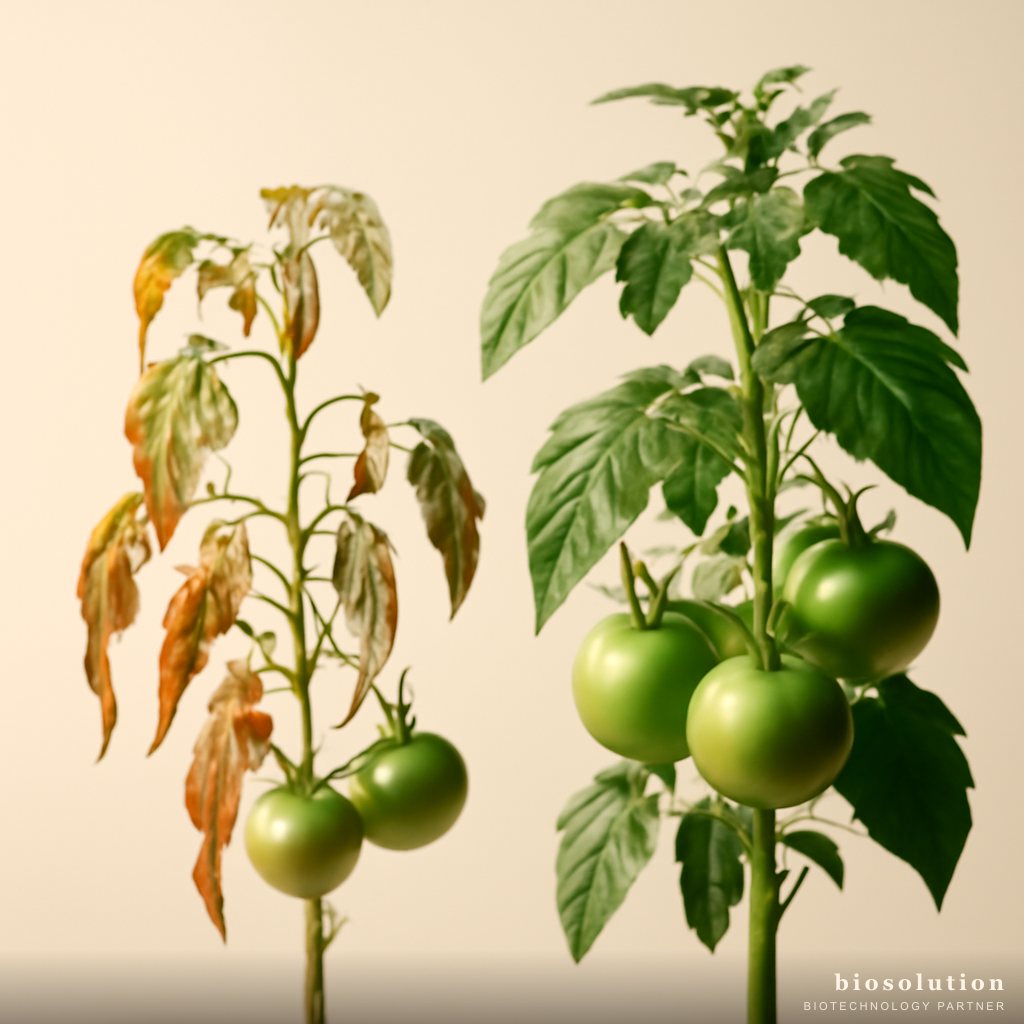
Fusarium oxysporum is a pathogenic fungus that can survive in soil for years in the form of chlamydospores. This pathogen attacks plant roots, enters the xylem vessels, and blocks water and nutrient flow. As a result, plants wilt suddenly, leaves turn yellow, and eventually die. Chemical control is often ineffective because the pathogen has become resistant and fungicide residues pollute the environment. Therefore, a biological approach is the main solution.
Anti-Fusarium Wilt Formula: Combination of 3 Superior Biological Agents
The anti-fusarium wilt formula used in this case study contains three antagonistic microbes: Trichoderma harzianum, Gliocladium virens, and Pseudomonas fluorescens. Each has complementary mechanisms of action.
Trichoderma harzianum: Mycoparasite and Antibiotic
Trichoderma harzianum is an antagonistic fungus that can directly parasitize Fusarium oxysporum. Trichoderma hyphae will coil around and penetrate the pathogen's hyphae, then absorb nutrients from within. Additionally, Trichoderma produces enzymes such as chitinase and glucanase that degrade the pathogen's cell wall. This fungus also produces antibiotics like harzianic acid that inhibit Fusarium growth.
Gliocladium virens: Antibiosis and Competition
Gliocladium virens (synonym Trichoderma virens) works by producing antimicrobial compounds such as gliotoxin and gliovirin. These compounds are fungistatic, inhibiting Fusarium spore germination. Moreover, Gliocladium also competes for space and nutrients in the rhizosphere, drastically reducing pathogen populations.
Pseudomonas fluorescens: Siderophore Producer and Plant Resistance Inducer
Pseudomonas fluorescens is a rhizosphere bacterium that produces siderophores, which are iron (Fe3+) binding molecules. By binding iron, this bacterium creates an iron-poor environment, hindering optimal Fusarium growth. Additionally, Pseudomonas induces systemic resistance (ISR) in plants through the production of salicylic acid and volatile compounds. Plants become more prepared to face pathogen attacks.
Case Study: Tomato Plantation in West Java Successfully Suppresses Disease by 80%
A 2-hectare tomato plantation in Lembang, West Java, experienced a severe fusarium wilt attack in the previous growing season. Farmers lost more than 60% of their plants. In the following season, they applied the anti-fusarium wilt formula at a dose of 5 ml per liter of water, applied as a root drench at planting and repeated every 14 days until the vegetative phase. The results were surprising: only 20% of plants showed mild wilt symptoms, and production increased by 40% compared to the previous season. This success was due to the synergistic combination of three biological agents.
Proper Application Method for Anti-Fusarium Wilt Formula
For optimal results, the application of the anti-fusarium wilt formula must be done correctly:
Application Timing
- At planting: Drench 200 ml of solution (5 ml formula + 1 liter water) per plant into the planting hole.
- Vegetative phase (14 days after planting): Repeat root drench with the same dose.
- Every 14 days: Continue application until plants enter the generative phase (about 3-4 applications).
Solution Preparation
Mix 5 ml of anti-fusarium wilt formula into 1 liter of clean water, stir well. Use within 2 hours after mixing. Avoid direct sunlight when storing the solution.
Success Tips
- Application should be done in the morning or evening when temperatures are not too hot.
- Ensure the soil is moist before application.
- Combine with organic fertilizer to enhance the effectiveness of biological agents.
Advantages of Biological Formula Compared to Chemical Fungicides
Using the anti-fusarium wilt formula has several advantages:
- Environmentally safe: Leaves no harmful residues.
- Compatible with organic farming: Suitable for farmers seeking organic certification.
- Does not cause resistance: Dual mechanisms make it difficult for pathogens to adapt.
- Improves soil health: Biological agents increase soil microbial diversity.
- Cost-effective: Cheaper than chemical fungicides in the long run.
Why the Anti-Fusarium Wilt Formula is a Must-Try?
Fusarium wilt in tomatoes and chilies is no longer a death sentence for plants. With the anti-fusarium wilt formula containing Trichoderma harzianum, Gliocladium virens, and Pseudomonas fluorescens, farmers can suppress the disease by up to 80% while increasing crop yields. This technology has been field-tested and is ready for adoption by farmers across Indonesia.
Conclusion
Fusarium wilt caused by Fusarium oxysporum can be effectively controlled with an anti-fusarium wilt formula based on biological agents. The combination of Trichoderma harzianum, Gliocladium virens, and Pseudomonas fluorescens works synergistically through mycoparasitism, antibiosis, competition, and induced plant resistance. A case study in West Java demonstrated disease suppression of up to 80% with root drench applications every 14 days. For best results, use the Anti-Fusarium Wilt Formula from Biosolution. Consult your needs with our expert team via WhatsApp for appropriate recommendations.
FAQ
What is the main cause of fusarium wilt in tomatoes?
Fusarium wilt in tomatoes is caused by the pathogenic fungus Fusarium oxysporum f. sp. lycopersici. This fungus attacks the roots and blocks xylem vessels, preventing the plant from absorbing water and nutrients. The pathogen can survive in soil as chlamydospores for years.
How to distinguish fusarium wilt from bacterial wilt?
Fusarium wilt usually causes gradual yellowing and wilting of leaves, starting from the lower leaves. If the stem is cut crosswise, a brown ring will be visible in the vascular tissue. In contrast, bacterial wilt (e.g., Ralstonia solanacearum) causes sudden wilting without yellowing, and if the stem is cut, bacterial ooze will appear.
Is the anti-fusarium wilt formula safe for chili plants?
Yes, this formula is also effective for chilies because Fusarium oxysporum f. sp. capsici has similar characteristics. The dosage and application method are the same as for tomatoes. Some chili farmers in East Java have also reported a reduction in attacks of up to 75%.
How long does the effect of the anti-fusarium wilt formula last in the soil?
The biological agents in the formula can persist in the soil for 2-4 weeks depending on environmental conditions. Therefore, applications are repeated every 14 days to maintain high populations. In soils with high organic matter, the persistence of biological agents is longer.
Can this formula be combined with chemical fertilizers?
It is best to avoid direct mixing with chemical fertilizers, especially those containing fungicides. Chemical fertilizers can be applied 3-5 days after the biological formula application. Combination with organic fertilizer is highly recommended to support the growth of biological agents.