Tomato Fusarium Wilt: Complete Control Guide with Biological Agents
Fusarium wilt caused by the pathogenic fungus Fusarium oxysporum is one of the most destructive soil-borne diseases in tomato and chili plants. In Indonesia, this disease is a scourge for horticultural farmers, causing yield losses of up to 50% or more in heavily infected growing seasons. Chemical control is often ineffective because the pathogen persists in the soil as long-lasting chlamydospores. Therefore, biological control approaches using antagonistic microorganisms are becoming increasingly popular. This article will thoroughly discuss the life cycle of Fusarium oxysporum, symptoms of attack, economic threshold, and control strategies using Anti-Fusarium Wilt Formula from Biosolution, which contains Trichoderma harzianum, Gliocladium virens, and Pseudomonas fluorescens.
Understanding Fusarium oxysporum and Its Life Cycle
Fusarium oxysporum is a soil-borne pathogenic fungus that can survive in extreme environmental conditions. This pathogen has strong saprophytic ability, allowing it to live on plant debris or organic matter in the soil without a host. The life cycle of Fusarium oxysporum begins when chlamydospores germinate upon detecting root exudates from host plants such as tomato and chili. Hyphae then penetrate root tips or natural wounds and enter the xylem vascular tissue. Inside the xylem, the fungus multiplies and produces mycotoxins that disrupt water and nutrient transport, causing the plant to wilt.
The pathogen can spread through irrigation water, contaminated agricultural tools, and infected seedlings. Chlamydospores can survive in the soil for years without a host, making short-term crop rotation often ineffective. Optimal soil temperature for infection ranges from 25-30°C, with high soil moisture exacerbating disease development. Understanding this life cycle is crucial for determining the right timing and control methods, especially using biological agents that can suppress pathogen populations in the soil.
Symptoms of Fusarium Wilt in Tomato and Chili
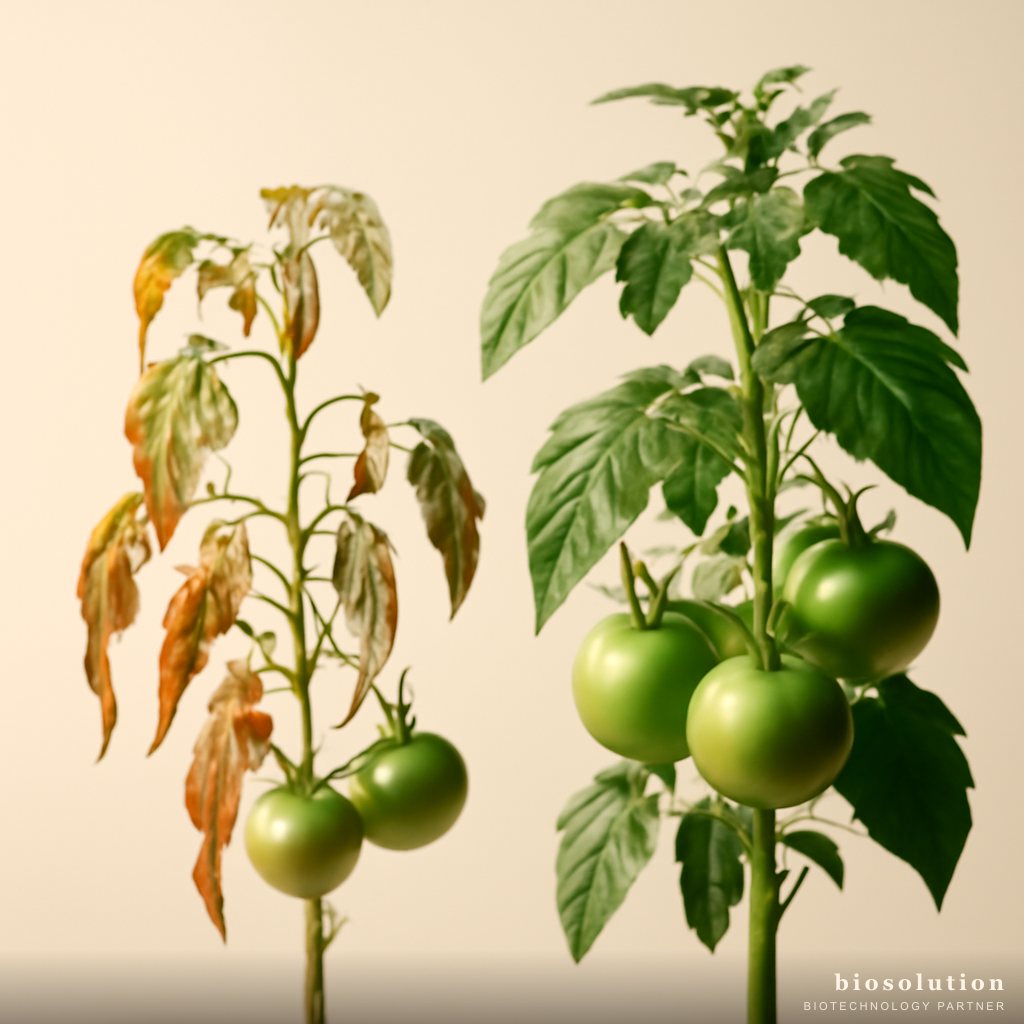
Early symptoms of Fusarium wilt usually appear as yellowing of lower leaves, which then wilt during the day and recover at night. As the disease progresses, wilting becomes permanent and spreads to upper leaves. In tomato plants, symptoms often occur on only one side of the plant, causing leaves to curl and dry. Cross-sectioned stems show brown discoloration in the vascular tissue (xylem). In chili, similar symptoms occur but often lead to plant death more quickly.
A difference from bacterial wilt (caused by Ralstonia solanacearum) is that Fusarium wilt does not produce bacterial ooze from cut stems. Fusarium wilt symptoms are also often accompanied by stunted plant growth and drastically reduced fruit production. In severe infections, plants die before producing fruit. It is important for farmers to perform early diagnosis so that control can be implemented promptly. Using healthy seedlings and good soil management are initial preventive steps. However, if symptoms have appeared, control with biological agents such as Anti-Fusarium Wilt Formula can help suppress pathogen development.
Economic Threshold and Risk Factors
The economic threshold for Fusarium wilt in tomato and chili is relatively low due to the disease's rapid spread and plant-killing nature. Generally, if 5-10% of plants are infected in the early vegetative stage, control measures must be taken immediately to prevent greater losses. Key risk factors include:
- Infected soil: Fields previously planted with tomato or chili and affected by Fusarium have high risk.
- Unhealthy seedlings: Seedlings from contaminated nurseries can carry the pathogen.
- Poor drainage: Waterlogged soil facilitates infection.
- Excessive nitrogen fertilization: Promotes susceptible plant growth.
- Monoculture: Continuous planting of host crops increases pathogen populations.
Chemical control with fungicides often yields unsatisfactory results because the pathogen resides inside vascular tissue and is difficult to reach. Moreover, continuous fungicide use can disrupt soil microbial balance and lead to resistance. Therefore, an integrated control approach combining cultural practices, resistant varieties, and biological agent application is a more sustainable choice.
Biological Control Strategy with Anti-Fusarium Wilt Formula
Biosolution presents Anti-Fusarium Wilt Formula, a synergistic formulation of three superior antagonistic microorganisms: Trichoderma harzianum, Gliocladium virens, and Pseudomonas fluorescens. Each has complementary mechanisms of action:
- Trichoderma harzianum: Acts as a mycoparasite, coiling around and penetrating Fusarium oxysporum hyphae and degrading its cell walls. Additionally, Trichoderma produces chitinase and glucanase enzymes that destroy the pathogen's structure.
- Gliocladium virens: Produces antibiotics such as gliotoxin with fungistatic properties, and effectively competes for space and nutrients in the rhizosphere.
- Pseudomonas fluorescens: Produces siderophores that bind iron ions (Fe3+) around the roots, depriving Fusarium of iron for growth. This bacterium also induces systemic resistance in plants.
Application of Anti-Fusarium Wilt Formula is done by root drenching or soil mixing at planting at a dose of 5 ml per liter of water, repeated every 14 days during the vegetative phase. Regular use not only suppresses Fusarium populations but also improves soil health and enhances plant resistance. This product is safe for organic farming and leaves no harmful residues.
Practical Field Application
For optimal results, application of Anti-Fusarium Wilt Formula should begin at the nursery stage. Seedlings are sprayed or dipped in a solution of Anti-Fusarium Wilt Formula before transplanting. At planting, the solution is drenched into the planting hole at 200-300 ml per plant. Repeat every 14 days until the plant enters the generative phase. Additionally, cultural practices such as good drainage, crop rotation with non-host plants (e.g., rice or corn), and use of silver-black plastic mulch can help reduce soil moisture and suppress pathogen development.
It is important to remember that biological agents work preventively and in early curative stages. If plants already show severe wilting symptoms, the chance of recovery is low. Therefore, early detection and regular application are highly recommended. Farmers can also combine this with fermented organic fertilizer to increase antagonistic microbial populations in the soil. For further consultation, contact the Biosolution team via WhatsApp at the number listed on the website.
Conclusion
Fusarium wilt caused by Fusarium oxysporum is a serious threat to tomato and chili cultivation. Its control requires an integrated approach that prioritizes prevention and the use of biological agents. Biosolution's Anti-Fusarium Wilt Formula, containing Trichoderma harzianum, Gliocladium virens, and Pseudomonas fluorescens, offers an effective, environmentally friendly, and safe solution for organic farmers. With proper and consistent application, farmers can reduce losses from Fusarium wilt and sustainably increase land productivity.
FAQ
1. Can Anti-Fusarium Wilt Formula be used for crops other than tomato and chili? Yes, this product is also effective for other crops susceptible to Fusarium oxysporum, such as melon, watermelon, banana, and chrysanthemum. However, dosage and application frequency may need adjustment based on crop type and disease severity. Consultation with the Biosolution technical team is recommended for specific recommendations.
2. How long does the effect of Anti-Fusarium Wilt Formula last in the soil? The microorganisms in this product can survive and multiply in the rhizosphere as long as soil conditions are favorable (adequate moisture, pH 5.5–7.0, and available organic matter). Regular application every 14 days helps maintain sufficient antagonistic populations to suppress pathogens. In healthy soil, the effect can last up to one growing season.
3. Is this product safe if mixed with chemical fertilizers or pesticides? Avoid direct mixing with chemical fungicides, as they can kill antagonistic microorganisms. However, this product can be applied alternately with organic fertilizers or biofertilizers. If chemical pesticides are necessary, allow a minimum interval of 7 days before or after applying Anti-Fusarium Wilt Formula.
4. How should Anti-Fusarium Wilt Formula be stored? Store the product in a cool, dry place away from direct sunlight. Ideal storage temperature is 4–25°C. Do not expose the product to extreme temperatures above 40°C, as this can reduce microorganism viability. Ensure the bottle cap is tightly closed after use.
5. Are there any side effects of using Anti-Fusarium Wilt Formula on plants or the environment? There are no negative side effects. This product is based on natural microorganisms already present in the environment. On the contrary, regular use can improve soil structure and increase beneficial microbial diversity. This product is registered and safe for organic farming.
For more information, consult your agricultural issues with the Biosolution expert team via WhatsApp or visit our product page.