Tomato Fusarium Wilt Control: Manage with Field Pathogen Population Monitoring
Fusarium wilt in tomatoes and chilies is a soil-borne disease caused by the fungus Fusarium oxysporum. This pathogen can survive long in soil as chlamydospores, making it difficult to eradicate. Many farmers experience crop failure due to sudden widespread attacks. The key to effective control is routine monitoring of pathogen populations in the field. By understanding the presence of F. oxysporum early, farmers can take timely action before the disease reaches damaging levels. This article thoroughly discusses monitoring techniques—trap, scout, and action threshold determination—as well as the role of Biosolution's Anti-Fusarium Wilt Formula as a proven biological solution.
Why is Monitoring Fusarium oxysporum Populations Important?
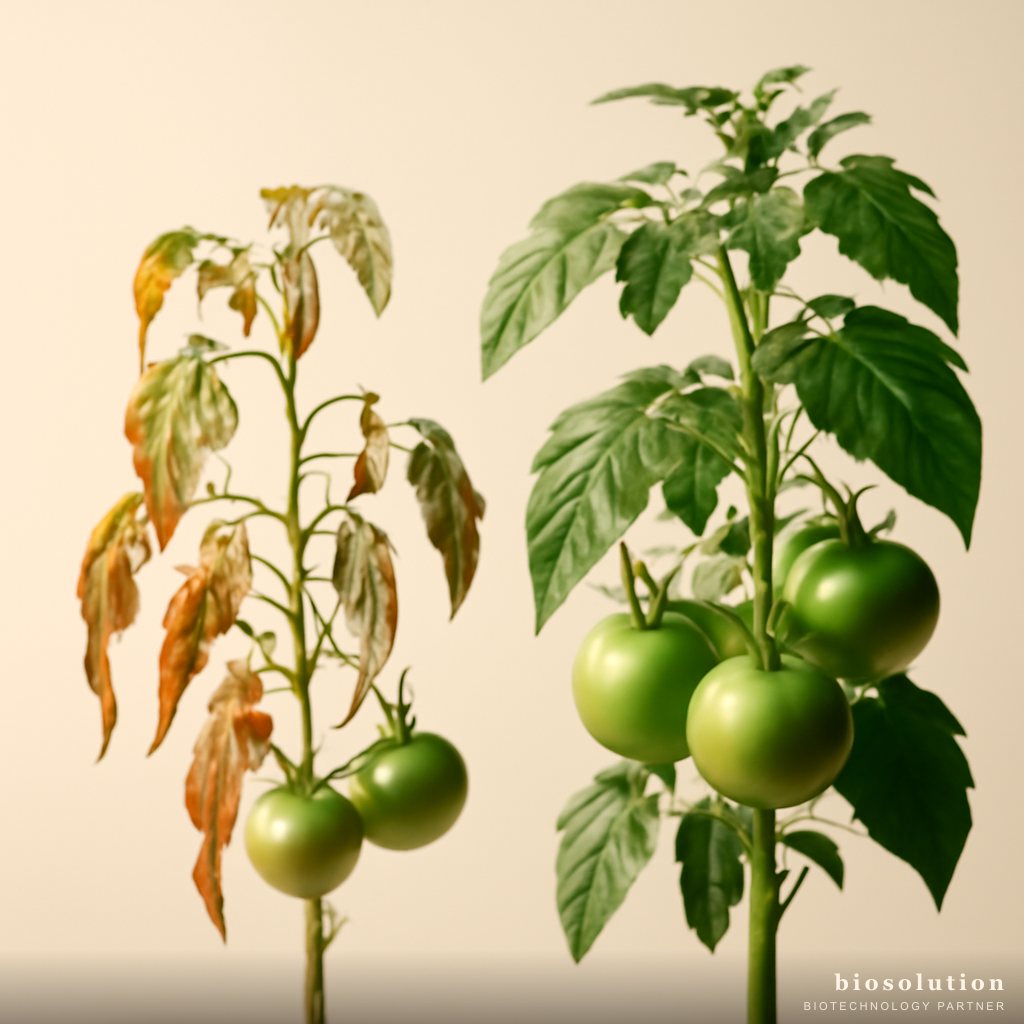
Fusarium wilt disease is often only detected after plants show permanent wilting symptoms, even though infection has been ongoing since the root stage. F. oxysporum infects through root tips, then spreads to xylem vessels, hindering water and nutrient transport. Heavily infected plants cannot recover. Therefore, early detection through monitoring pathogen populations in soil and plants becomes crucial.
Population monitoring allows farmers to:
- Determine the level of pathogen presence in the field before planting.
- Identify early infection foci (disease hotspots).
- Determine the right timing for control applications.
- Evaluate the effectiveness of control measures already taken.
Without monitoring, control is only reactive and often too late. With population data, farmers can implement more rational and efficient integrated pest management (IPM) strategies.
Trap Technique: Trapping Pathogens from Soil
The trap technique is a method to detect the presence of F. oxysporum in soil using bait plants. The principle is to plant susceptible crops in suspected soil samples, then observe the appearance of wilt symptoms. This method is simple and can be done by farmers with the help of extension workers.
Steps for the trap technique:
- Take soil samples from several points in the field (0-20 cm depth).
- Mix soil samples with sterile planting medium (1:1 ratio).
- Plant susceptible tomato or chili seedlings (e.g., tomato variety Gondol).
- Maintain for 2-4 weeks, observe wilt symptoms.
- If wilting occurs, isolate the pathogen from stems for confirmation.
The advantage of the trap technique is that it can detect pathogens even at low populations. However, this method requires time and space. For faster results, a baiting technique with selective media in the laboratory can be used.
Scout Technique: Direct Field Monitoring
Scouting or direct monitoring is done by systematically observing plants in the field. The goal is to find early symptoms of Fusarium wilt and determine disease distribution. Scouting frequency should be weekly, especially during early vegetative to flowering stages.
Effective scouting steps:
- Divide the field into blocks (e.g., 10 rows x 10 plants per block).
- Observe each plant in the block, record the number of plants showing wilting, chlorosis, or stunted growth.
- Pay attention to the stem base: if brownish-black, it indicates Fusarium infection.
- Use tools like a hand lens to see mycelium or spores.
- Create a disease distribution map to determine focus points.
Scouting data is then compared with the action threshold to decide whether control measures are needed.
Setting the Action Threshold
The action threshold is the level of pathogen population or disease intensity that, if exceeded, requires immediate control action. For Fusarium wilt in tomatoes and chilies, the action threshold can be set based on:
- Percentage of symptomatic plants: If >5% wilted plants are found in one block, intervention is needed.
- Propagule density in soil: Using dilution methods or real-time PCR, the critical threshold is usually >1000 CFU/g soil for F. oxysporum f. sp. lycopersici.
- Environmental conditions: Soil temperature 25-30°C and high humidity increase risk.
Setting the action threshold is location-specific. Farmers can consult with local agricultural extension officers or use historical field data. If the threshold is exceeded, the next step is to apply control measures, either chemical or biological.
Biological Solution: Anti-Fusarium Wilt Formula
One effective and environmentally friendly control method is using biological agents. Biosolution presents the Anti-Fusarium Wilt Formula containing three superior microorganisms:
- Trichoderma harzianum: Acts as a mycoparasite, infecting and degrading F. oxysporum hyphae.
- Gliocladium virens: Produces antibiotic compounds that inhibit pathogen growth, and competes for space and nutrients.
- Pseudomonas fluorescens: Produces siderophores that bind iron ions, depriving the pathogen of iron for growth.
These three agents work synergistically to suppress F. oxysporum populations in the rhizosphere. Application is done by root drenching and soil mixing at planting, at a dose of 5 ml per liter of water, every 14 days during the vegetative phase. With regular use, the Anti-Fusarium Wilt Formula can suppress wilt incidence by up to 70% and improve plant resistance.
Integration of Monitoring and Biological Application
Successful control of Fusarium wilt requires integration of accurate monitoring and timely biological agent application. Here are practical steps:
- Before planting: Conduct a trap test to determine pathogen status in the field. If positive, apply Anti-Fusarium Wilt Formula to the soil 7 days before planting.
- At planting: Dip seedling roots in Anti-Fusarium Wilt Formula solution (5 ml/L) for 10 minutes, then plant.
- During growth: Conduct weekly scouting. If wilted plants >5% are found, immediately drench the soil around healthy plants with Anti-Fusarium Wilt Formula solution.
- After harvest: Clean up plant residues and reapply Anti-Fusarium Wilt Formula to reduce soil inoculum.
With this approach, farmers not only control the disease but also build soil microbial balance that supports long-term plant health.
Conclusion
Fusarium wilt in tomatoes and chilies can be effectively controlled through integrated pathogen population monitoring. Trap, scout, and action threshold determination techniques provide accurate information for decision-making. Biosolution's Anti-Fusarium Wilt Formula, containing Trichoderma harzianum, Gliocladium virens, and Pseudomonas fluorescens, is a proven biological solution that naturally suppresses Fusarium oxysporum. By consistently applying monitoring and biological applications, farmers can reduce the risk of crop failure and increase sustainable land productivity.
For more information about the product and application methods, consult with the Biosolution team via WhatsApp or visit the product page Anti-Fusarium Wilt Formula. Also get complete guides for controlling other plant diseases at Bio Solutions.
FAQ
Q: What is Fusarium wilt in tomatoes? A: Fusarium wilt is a disease caused by the fungus Fusarium oxysporum. This fungus infects roots and clogs xylem vessels, causing plants to wilt, leaves to yellow, and eventually die. The disease is difficult to control because the pathogen can survive long in soil.
Q: How to distinguish Fusarium wilt from bacterial wilt? A: Fusarium wilt usually causes gradual yellowing and wilting, starting from lower leaves. If the stem is cut crosswise, a brown ring is visible in the vessels. Bacterial wilt (Ralstonia) causes sudden wilting, and if the stem is cut, bacterial ooze appears.
Q: When is the best time to monitor Fusarium populations? A: Monitoring should be done before planting (trap test) to determine pathogen levels in soil. During the growing season, scouting is done weekly, especially during vegetative to flowering stages, as plants are most susceptible during that period.
Q: Is the Anti-Fusarium Wilt Formula safe for plants and the environment? A: Very safe. This product contains natural microorganisms that leave no harmful residues. Suitable for organic farming and does not disturb natural enemies. Be sure to follow the recommended dosage (5 ml/L) and application interval of 14 days.
Q: How long does the effect of the Anti-Fusarium Wilt Formula last in soil? A: The microorganisms in the product can survive and multiply in the rhizosphere as long as soil conditions support (adequate moisture, pH 5.5-7). Routine application every 14 days helps maintain sufficient biological agent populations to suppress pathogens.