Trichoderma Biofungicide for Soilborne Pathogens: Biocontrol Solution in Export Programs
Indonesian commercial farmers now face a dual challenge: controlling soilborne pathogens such as Fusarium oxysporum, Phytophthora spp., and Sclerotium rolfsii that cause significant losses, while meeting strict export standards for pesticide residues. Trichoderma biofungicide emerges as the answer. By harnessing natural biocontrol mechanisms, this product not only effectively suppresses diseases but also helps reduce dependence on synthetic fungicides. This article thoroughly examines the mode of action, application, and benefits of Trichoderma biofungicide to support Indonesia's agricultural export programs.
Why Is Trichoderma Biofungicide Important for Soilborne Pathogens?
Soilborne pathogens are major enemies of horticultural and secondary crops. Unlike airborne pathogens, soilborne pathogens are difficult to control because they reside in the rhizosphere and can persist for long periods as spores or sclerotia. Synthetic fungicides often fail to reach their target optimally and leave residues harmful to health and the environment. This is where Trichoderma biofungicide plays a role.
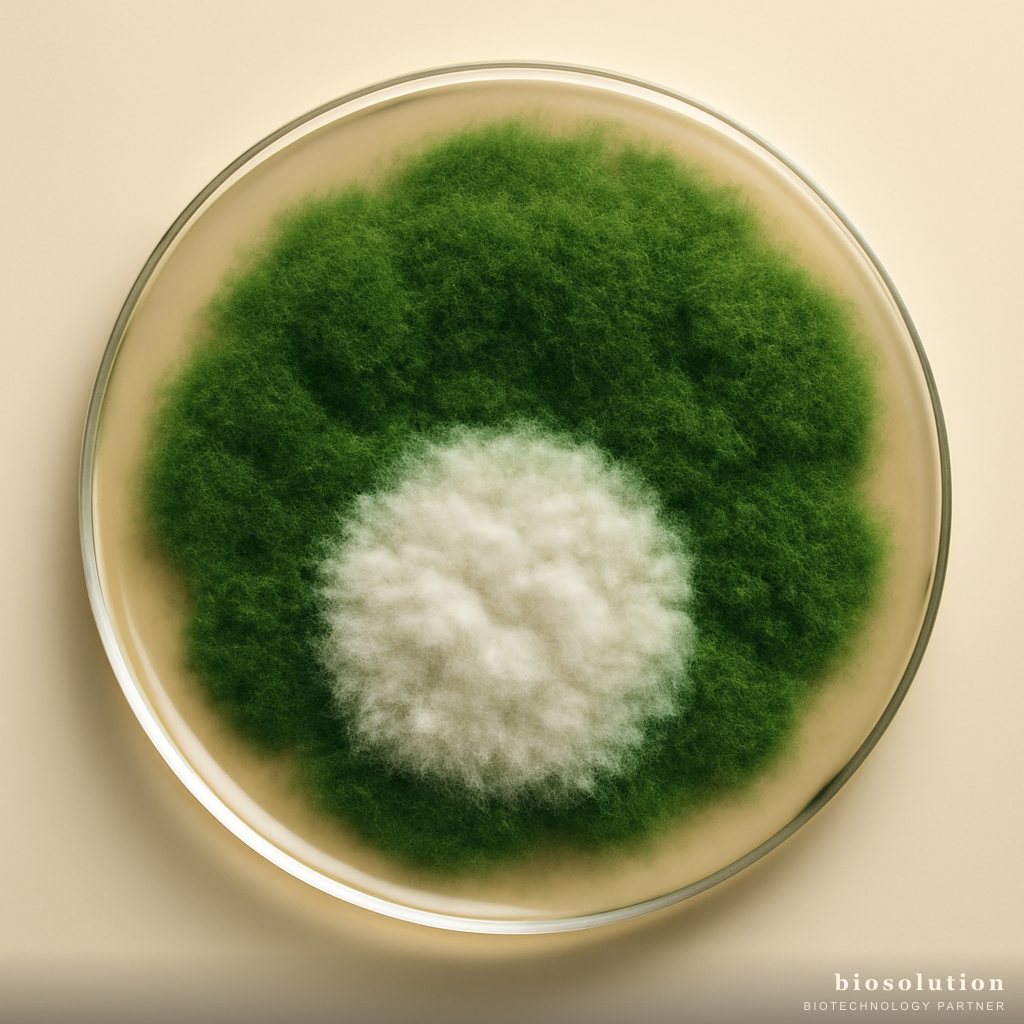
Trichoderma is an antagonistic fungus naturally found in soil. Species such as Trichoderma harzianum possess mycoparasitic ability: it coils around and penetrates the pathogen's hyphae, then absorbs its nutrients. Additionally, Trichoderma produces lytic enzymes (chitinases, glucanases) that degrade the cell walls of pathogenic fungi. This mechanism is highly effective for controlling Fusarium, Phytophthora, and Sclerotium.
For commercial farmers who export, using Trichoderma biofungicide adds value. Agricultural products free of chemical residues are more accepted in international markets such as the European Union, Japan, and the US. Thus, Trichoderma biofungicide is not only a disease control tool but also a bridge to better export certification.
Biocontrol Mechanisms of Trichoderma and Gliocladium
The Soilborne Fungal Pathogen Control Formula product from Biosolution contains two superior strains: Trichoderma harzianum and Gliocladium virens. Both work synergistically through three main mechanisms:
Mycoparasitism
Trichoderma harzianum recognizes the pathogen through lectins and chemotropism. Upon contact, it forms appressoria and coils around the pathogen's hyphae. The lytic enzymes produced then degrade the cell wall, causing cytoplasmic leakage and pathogen death.
Antibiosis
Gliocladium virens produces antibiotic compounds such as gliovirin and viridin that are toxic to pathogens. These compounds inhibit mycelial growth and spore germination of Fusarium, Phytophthora, and Sclerotium.
Competition and Induced Plant Resistance
Both strains also compete for nutrients and space in the rhizosphere. Additionally, they trigger induced systemic resistance (ISR) in plants by producing metabolites that activate defense genes. As a result, plants become more resistant to pathogen attack.
Proper Application of Trichoderma Biofungicide
For optimal results, Trichoderma biofungicide must be applied correctly. Based on product data, here is the application guide:
- Method: Drench or mix with compost. Drenching is done by pouring the solution around the base of the plant until it soaks into the root zone. Mixing with compost enriches the growing medium with antagonistic microbes.
- Dosage: 5 ml per liter of water. For an area of 1000 m², approximately 200 liters of solution (1000 ml of product) is needed.
- Frequency: Every 14 days or during soil cultivation. At the start of the growing season, the first application is done during land preparation. Repeat applications are made if disease symptoms appear.
- Best time: Early in the growing season or at the first sign of disease. Prevention is more effective than cure.
Ensure the soil is moist so that Trichoderma can thrive. Avoid using broad-spectrum synthetic fungicides simultaneously as they can kill the antagonistic fungi.
Case Study: Success of Trichoderma Biofungicide on Export Crops
In a chili production center in Central Java, farmers reported a reduction in Fusarium wilt incidence by up to 70% after three routine applications of Trichoderma biofungicide. Plants showed denser root systems and a 20% increase in yield. Moreover, residue tests showed no detection of synthetic fungicides on the fruit, meeting export requirements to Japan.
In a strawberry plantation in Lembang, drench application with Trichoderma and Gliocladium successfully suppressed Phytophthora root rot, which had previously caused losses of up to 40%. Farmers can now reduce chemical fungicide use by 50% without sacrificing harvest yields.
Trichoderma Biofungicide vs. Synthetic Fungicides: Which Is Better?
| Aspect | Trichoderma Biofungicide | Synthetic Fungicides |
|---|---|---|
| Mechanism | Mycoparasitism, antibiosis, competition | Direct toxicity to pathogens |
| Residue | None | Potentially high |
| Selectivity | Specific to fungal pathogens | Broad-spectrum, kills non-target microbes |
| Safety | Environmentally friendly, safe for humans and animals | Hazardous if not used according to regulations |
| Long-term effectiveness | Sustainable, improves soil health | Pathogen resistance, soil contamination |
For export farmers, Trichoderma biofungicide is clearly superior because it leaves no residues. However, in acute infection conditions, integration with selective chemical fungicides can be done with a specific time interval.
FAQ About Trichoderma Biofungicide
Is Trichoderma biofungicide safe for plants and humans?
Yes, Trichoderma is a natural fungus that is not pathogenic to plants or humans. This product has been tested and is safe for use on food crops, horticulture, and plantations. There is no risk of poisoning or harmful residues.
How long does the effect of Trichoderma biofungicide last in the soil?
Trichoderma can persist in the soil for several weeks to months, depending on environmental conditions. Routine application every 14 days maintains a high population. After application, the fungus will multiply and form colonies in the rhizosphere.
Can Trichoderma biofungicide be mixed with other fertilizers or pesticides?
It is best not to mix it directly with broad-spectrum synthetic fungicides. However, it can be combined with organic fertilizers, compost, or biostimulants. For best results, apply separately with a 3-5 day interval.
Is Trichoderma biofungicide effective against all types of soilborne pathogens?
This product is highly effective against soilborne fungal pathogens such as Fusarium, Phytophthora, Sclerotium, Rhizoctonia, and Pythium. However, it is not effective against bacteria or viruses. For other pathogens, consult an expert.
How should Trichoderma biofungicide be stored?
Store in a cool, dry place at 4-8°C (refrigerator) to maintain viability. Avoid direct sunlight exposure. The product in sealed packaging can last up to 6 months.
Conclusion
Trichoderma biofungicide is an effective, safe, and environmentally friendly biocontrol solution for managing soilborne pathogens. With the mycoparasitic and antibiosis mechanisms of Trichoderma harzianum and Gliocladium virens, this product helps commercial farmers increase productivity while meeting residue-free export standards. Proper application at a dosage of 5 ml/liter every 14 days provides optimal protection. Do not hesitate to switch to sustainable agriculture with Trichoderma biofungicide. For further consultation, contact the Biosolution team via WhatsApp or visit the product page Soilborne Fungal Pathogen Control Formula.