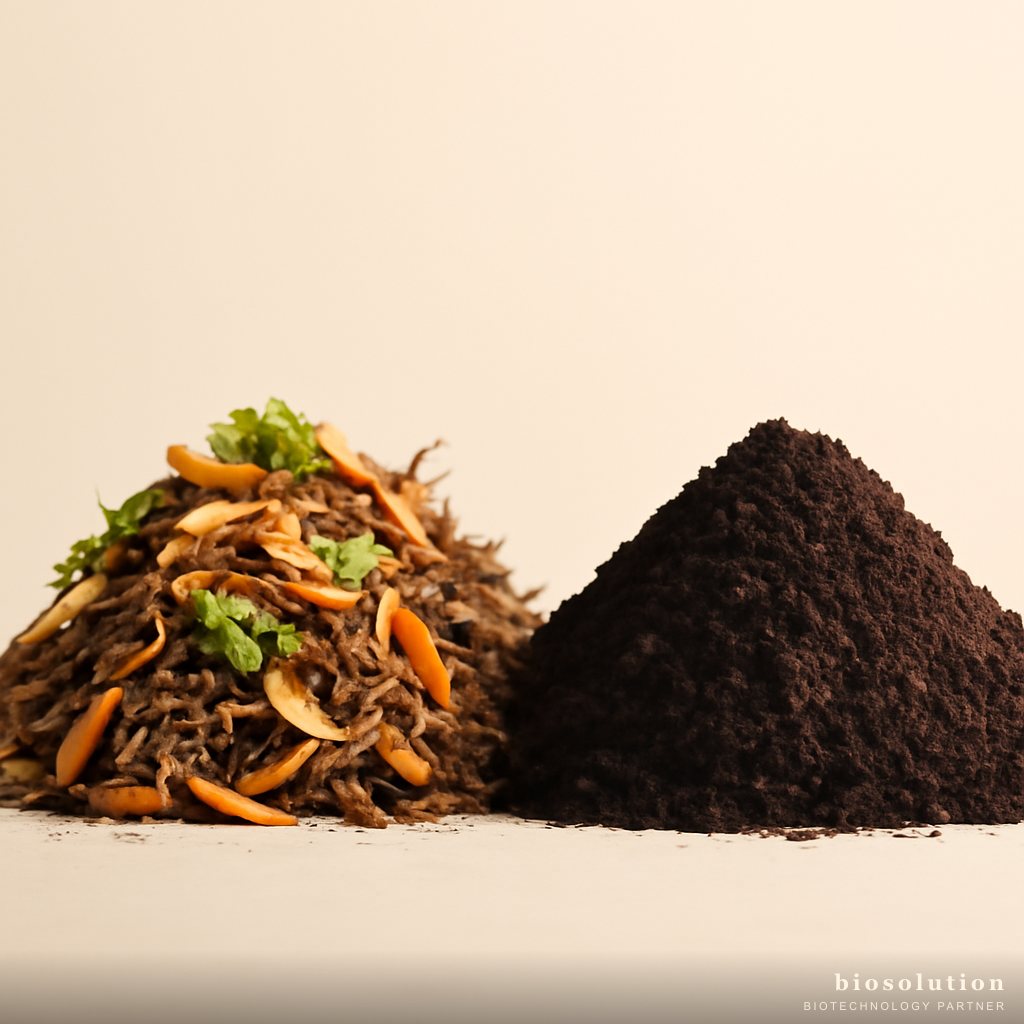
14-Day Fast Compost: How to Make It with Microbial Decomposer
Have you ever imagined making compost in just 14 days? With microbial decomposer technology, this is no longer a dream. Organic farmers are often constrained by the long composting time, which can naturally take 2-3 months. However, by utilizing superior microorganisms such as Aspergillus niger, Trichoderma viride, and Thiobacillus sp., the decomposition process can be drastically accelerated. This article will thoroughly discuss how to make 14-day fast compost with a microbial decomposer, and its important role in regenerative agriculture.
Why Is 14-Day Fast Compost Important for Organic Farmers?
Organic agriculture heavily relies on the availability of quality compost. However, the natural composting process takes a long time, so farmers often lack supply. With 14-day fast compost, the compost production cycle can be cut by up to 50%, allowing farmers to produce compost continuously. This is especially important when the planting season arrives, when compost demand surges.
Moreover, making fast compost helps reduce straw burning, which damages the environment. In Indonesia, straw burning is still common practice because it is considered practical. In fact, the smoke causes air pollution and health problems. By processing straw into compost in a short time, farmers not only get organic fertilizer but also help protect the environment.
The Role of Microbes in Accelerating Decomposition
Microorganisms are the key to the composting process. They work to break down complex organic materials into simple compounds that plants can easily absorb. In the Straw & Organic Waste Decomposer Formula, there are three superior microbes that work synergistically:
Aspergillus niger
This fungus produces cellulase enzymes and organic acids. Cellulase breaks down cellulose, the main component of plant cell walls, into simple sugars. Organic acids help lower the compost pH, creating an optimal environment for other microbes.
Trichoderma viride
Known as a fast lignocellulose decomposer. Trichoderma viride can degrade lignin, a compound that is difficult to break down, thus speeding up the overall process. This fungus also produces natural antibiotics that suppress soil pathogens, improving compost quality.
Thiobacillus sp.
This bacterium oxidizes sulfur, helping to lower the compost pH. An acidic environment (pH 5-6) is ideal for decomposer fungus activity. Additionally, Thiobacillus sp. plays a role in the sulfur cycle, providing essential nutrients for plants.
These three microbes work synergistically, accelerating the decomposition of straw and organic waste into mature compost in just 14-21 days.
How to Make 14-Day Fast Compost: Step by Step
Here is a practical guide to making fast compost with a microbial decomposer:
1. Prepare Raw Materials
Collect rice straw, agricultural waste (e.g., crop residues, dry leaves), and livestock waste (cow/chicken manure). Chop the raw materials to a size of 5-10 cm to speed up decomposition. Ideal ratio: 2 parts carbon-rich material (straw) : 1 part nitrogen-rich material (manure).
2. Arrange the Pile
Make a pile 1-1.5 meters high, 1-2 meters wide. The pile should not be too dense to ensure good aeration. Place it in a shaded area, protected from direct rain.
3. Apply the Decomposer
Dissolve 1 liter of Straw & Organic Waste Decomposer Formula in 10 liters of water. Sprinkle evenly over the pile of raw materials. Correct dosage: 1 liter of decomposer for 1 ton of raw materials. Do this in the afternoon to avoid UV rays that can kill microbes.
4. Maintain Moisture and Aeration
Ideal moisture is around 50-60% (fist test: a little water drips when squeezed). If too dry, sprinkle with water; if too wet, add dry material. Turn the pile every 5-7 days to supply oxygen and even out the decomposition process.
5. Monitor Temperature
On days 2 to 5, the pile temperature will rise to 50-60°C. This is normal due to microbial activity. If the temperature exceeds 70°C, immediately turn the pile to cool it down.
6. Harvest the Compost
After 14-21 days, the compost is mature. Characteristics: dark brown color, crumbly texture, earthy smell, stable temperature, and C/N ratio <20. The compost is ready to use or package.
Advantages of the Decomposer Formula for Fast Compost
The Straw & Organic Waste Decomposer Formula product from Biosolution offers several advantages:
- Composting time 14-21 days: 50% faster than natural (40-60 days).
- Efficient dosage: 1 liter is enough for 1 ton of raw materials, saving costs.
- Superior compost quality: Final C/N ratio <20, meeting SNI standards.
- Easy to apply: Just sprinkle, no special equipment needed.
- Environmentally friendly: Reduces straw burning, lowers carbon emissions.
By using a microbial decomposer, farmers can produce their own compost independently, reduce dependence on chemical fertilizers, and support regenerative agriculture.
The Role of Fast Compost in Regenerative Agriculture
Regenerative agriculture aims to restore soil health, increase biodiversity, and sequester carbon. 14-day fast compost plays an important role:
- Increases soil organic matter: Compost provides humus that improves soil structure, increases water retention, and nourishes soil microbes.
- Reduces emissions: By composting straw, farmers avoid burning that releases CO2 and harmful particles.
- Provides balanced nutrition: Compost contains macro and micronutrients that are released slowly, according to plant needs.
- Suppresses soil diseases: Antagonistic microbes in compost help control soil-borne pathogens.
Thus, fast compost is not only a practical solution but also a long-term investment for land fertility.
Tips for Successful 14-Day Fast Compost Making
- Use fresh raw materials: Materials that are too dry or rotten will slow down the process.
- Maintain aeration: Turn the pile regularly every 5-7 days. If the pile is too dense, add structural materials like husks or small twigs.
- Control moisture: Do not let it become too wet (anaerobic) or too dry (microbes die).
- Protect from rain: Cover the pile with a tarp if it rains, but not too tightly so that air circulation remains smooth.
- Use quality decomposer: Choose a product containing live and active microbes, such as the Straw & Organic Waste Decomposer Formula.
Conclusion
Making 14-day fast compost with a microbial decomposer is a smart solution for organic farmers. By utilizing the synergy of Aspergillus niger, Trichoderma viride, and Thiobacillus sp., the composting process can be accelerated by up to 50%. Besides saving time, the resulting compost is of high quality with a low C/N ratio. This practice also supports regenerative agriculture by reducing straw burning and improving soil health. Interested in trying? Consult your needs with the Biosolution team via WhatsApp to get the right product and guidance.
FAQ
1. Can 14-day fast compost use raw materials other than straw?
Yes, this decomposer formula is also effective for other agricultural waste such as dry leaves, crop residues, grass, and manure. Make sure the materials are chopped and the C/N ratio is appropriate.
2. How do I know when the compost is mature?
Mature compost has the following characteristics: dark brown color, crumbly texture, earthy smell like forest soil, pile temperature stable near ambient temperature, and does not attract insects. Simple test: put the compost in a plastic bag; if there is no ammonia smell after 2-3 days, it is mature.
3. Is the microbial decomposer safe for plants and humans?
Yes, the microbes used such as Aspergillus niger, Trichoderma viride, and Thiobacillus sp. are non-pathogenic and widely used in organic agriculture. This product is safe when applied according to dosage.
4. What is the correct dosage for large-scale composting?
The recommended dosage is 1 liter of decomposer for 1 ton of raw materials. For large scale, dissolve in water at a ratio of 1:10, then sprinkle evenly over the pile.
5. Can 14-day fast compost be applied directly to plants?
It is better to let the compost sit for 1-2 weeks after maturity to stabilize. However, compost from the fast process is safe to use directly because pathogenic microbes have died during the thermophilic phase.
For more information, contact us via WhatsApp.