Urea Replacement: Nitrogen-Fixing Biofertilizer as a Smart Solution for Modern Farmers
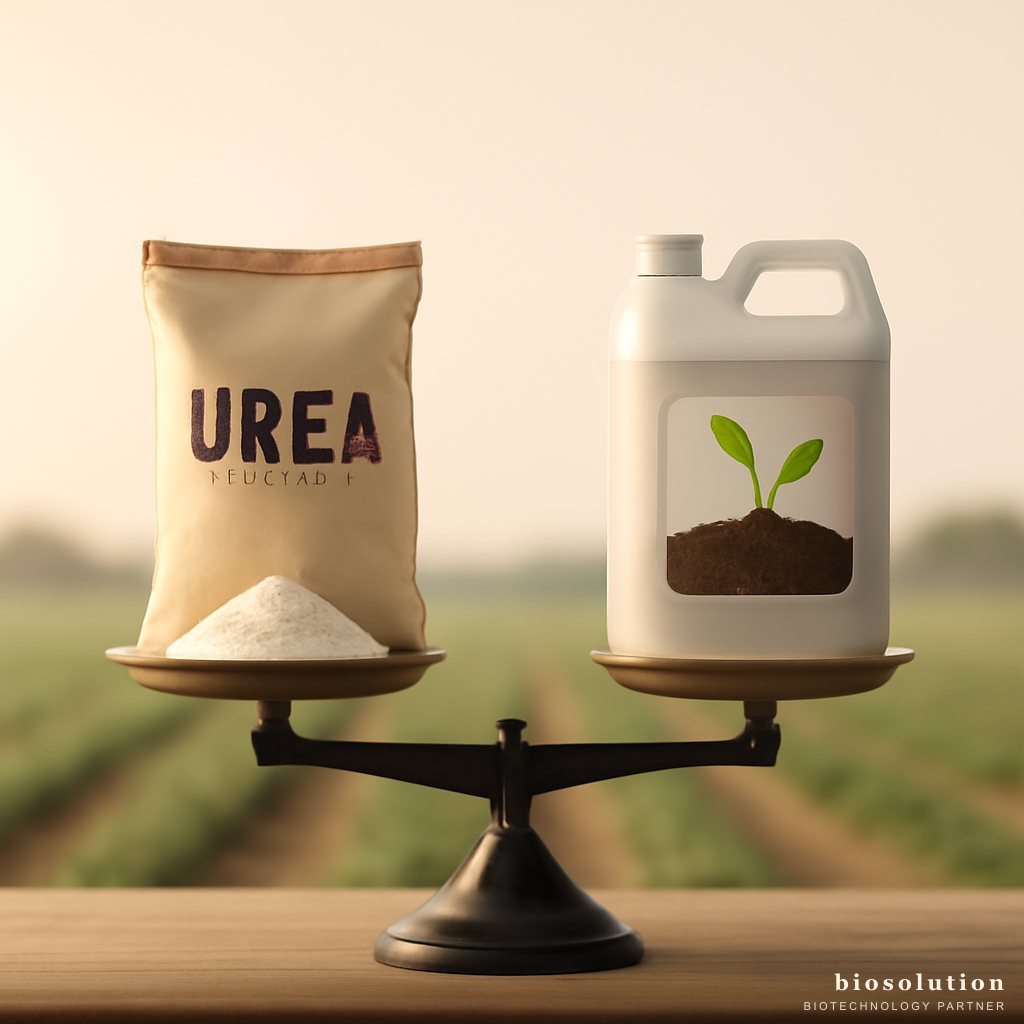
Urea fertilizer has long been a mainstay for farmers to meet plant nitrogen needs. However, fluctuating prices and the negative impacts of overuse on soil and the environment are driving the search for more eco-friendly alternatives. One proven effective solution is urea replacement in the form of nitrogen-fixing biofertilizer. Products like Liquid 5-in-1 Biofertilizer Formula from Biosolution offer a microbial consortium that naturally provides nitrogen, reducing dependence on urea by up to 50%.
Why Reduce Urea Fertilizer Use?
Environmental and Economic Impacts of Urea
Urea provides nitrogen in the form of ammonium, which is quickly available. However, excessive use causes several problems:
- Groundwater pollution from nitrate leaching.
- Greenhouse gas emissions (N₂O) 300 times more potent than CO₂.
- Soil acidification in the long term.
- High production costs due to rising urea prices.
Advantages of N-Fixing Biofertilizer
Nitrogen-fixing biofertilizer works biologically, fixing N₂ from the air and converting it into ammonia that plants can absorb. Thus, farmers can save on chemical fertilizer costs while improving soil health.
Criteria for Choosing the Best N-Fixing Biofertilizer
1. Appropriate Microbial Strain Content
Quality products must contain at least one N-fixing strain, either symbiotic (e.g., Rhizobium for legumes) or associative (e.g., Azospirillum for rice, corn). Biosolution products, for example, contain Rhizobium sp. and Azospirillum sp., making them suitable for various crops.
2. Multifunctional Consortium
The best biofertilizers not only provide N but also solubilize phosphate, produce phytohormones, and suppress pathogens. Products like Liquid 5-in-1 Biofertilizer Formula contain 5 strains: Rhizobium sp. (N-fixer), Azospirillum sp. (N-fixer), Bacillus subtilis (P-solubilizer and PGPR), Pseudomonas fluorescens (biocontrol), and Trichoderma sp. (biocontrol and decomposer).
3. Microbial Density (CFU/ml)
Ensure the product lists the number of bacterial colonies per ml. A minimum of 10⁸ CFU/ml per strain is the industry standard. Biosolution products meet this standard.
4. Certification and Legality
Choose products registered with the Ministry of Agriculture. Certification guarantees safety and effectiveness. Avoid products without distribution permits.
5. Ease of Application
Liquid biofertilizers are generally easier to apply. Biosolution products are simply dissolved at 5-10 ml per liter of water, drenched onto the root zone or sprayed onto the soil every 10-14 days.
Mechanism of Action of N-Fixing Biofertilizer in Replacing Urea
Nitrogen Fixation by Rhizobium and Azospirillum
Rhizobium symbiotically associates with legume roots to form root nodules, where bacteria convert N₂ into ammonia. Azospirillum lives around the roots of grasses (rice, corn) and also fixes N₂ associatively. Both contribute nitrogen equivalent to 30-50 kg N/ha per season.
Phosphate Solubilization and Phytohormone Production
Bacillus subtilis solubilizes bound phosphate in the soil, increasing P availability. Additionally, this bacterium produces IAA hormone that stimulates root growth, making plants more efficient at nutrient uptake.
Protection from Soil Pathogens
Pseudomonas fluorescens and Trichoderma sp. suppress pathogens such as Fusarium and Pythium through antibiosis and competition. Healthy plants are better able to utilize nitrogen.
Case Study: Biofertilizer Effectiveness on Rice
Data from various studies show that application of N-fixing biofertilizer can reduce urea use by 30-50%. In rice, using a consortium of Azospirillum and Bacillus increased grain yield by 20-30% compared to controls without biofertilizer. Biosolution products have been tested on rice, corn, and horticultural crops with similar results.
According to IRRI research, biofertilizer use can reduce N₂O emissions by up to 60% without reducing production. This shows that biofertilizer is a win-win solution for productivity and the environment.
Proper Biofertilizer Application Methods
Dosage and Frequency
For optimal results, apply 5-10 ml of product per liter of water, drench onto the root zone. Repeat every 10-14 days, for a total of 3-5 times per growing season. Apply in the morning or late afternoon to avoid direct UV light.
Integration with Chemical Fertilizers
Biofertilizer does not completely replace urea but reduces its dosage. For example, if you normally use 200 kg urea/ha, reduce to 100 kg and apply biofertilizer. Yields remain optimal or even better.
Storage and Safety
Store in a cool place (4-30°C), away from direct sunlight. Liquid products have a shelf life of 6-12 months. Ensure the bottle is tightly sealed.
FAQ
Can biofertilizer completely replace urea fertilizer?
Not completely, but it can reduce urea dosage by up to 50% without reducing yields. On fertile soils, the reduction can be greater. Biofertilizer provides nitrogen gradually, while urea provides quick N. A combination of both is optimal.
How long does it take to see the effects of biofertilizer?
Effects on root growth are visible within 1-2 weeks. Yield increases are only seen at harvest, typically 20-30% higher compared to without biofertilizer.
Is biofertilizer safe for plants and soil?
Yes, the microbes used are natural strains that have been tested. They leave no harmful chemical residues. In fact, they improve soil structure and increase soil microbial populations.
Can biofertilizer be used for all types of plants?
Yes, especially for food crops like rice, corn, soybeans, as well as vegetables and fruits. Products with Rhizobium are specific to legumes, but general consortia like Biosolution products are suitable for all plants.
How to choose genuine and quality biofertilizer?
Check the label: there should be a Ministry of Agriculture registration number, strain composition, CFU/ml count, expiration date, and application instructions. Buy from authorized distributors.
Conclusion
Replacing part of urea fertilizer with nitrogen-fixing biofertilizer is a smart step to save costs, increase yields, and protect the environment. Choose a product with a multifunctional consortium, high density, and certification. Liquid 5-in-1 Biofertilizer Formula from Biosolution meets all these criteria. Interested in trying? Contact our team via WhatsApp for a free consultation.