Application Schedule for POC Flower and Fruit Stimulant for Maximum Yield
The generative phase is a crucial moment in fruit crop cultivation. At this stage, plants begin to form flowers and fruits, which are the main determinants of productivity and harvest quality. However, many farmers face challenges such as flower drop, few fruits, or uneven fruit size. To overcome these challenges, proper nutrition and stimulants are needed. Biosolution's Flower & Fruit Trigger POC Formula is an organic solution that can stimulate flowers and fruits optimally. This product contains a PGPR (Plant Growth Promoting Rhizobacteria) consortium that triggers growth hormones, seaweed extract rich in natural cytokinins, and humic and fulvic acids that increase nutrient availability. For maximum results, application must be done at the right time according to the growth phase. This article will guide you in creating an effective application schedule.
Why Does the Generative Phase Require Special Stimulants?
In the generative phase, plants shift energy from vegetative growth (leaves, stems, roots) to the formation of reproductive organs (flowers, fruits, seeds). This process requires balanced macro and micronutrient availability, especially phosphorus (P) and potassium (K), as well as hormones like cytokinins and gibberellins. Unfortunately, many agricultural lands in Indonesia are saturated or deficient in micronutrients due to imbalanced chemical fertilization. As a result, plants often fail to flower uniformly or the fruits that form easily drop.
The PGPR consortium in the Flower & Fruit Trigger POC Formula acts as a biological agent that produces auxin, cytokinin, and gibberellin hormones naturally. PGPR also helps dissolve phosphorus bound in the soil, making it available to plants. Seaweed extract contains natural cytokinins (zeatin) that directly stimulate cell division in flower primordia. Meanwhile, humic and fulvic acids act as natural chelators that increase the uptake of micronutrients such as zinc (Zn) and boron (B), essential for pollen viability and fruit set. With this combination, plants are not only stimulated to produce more flowers, but the fruits that form are of higher quality and less prone to drop.
Application Schedule Phase 1: Planting Preparation and Early Vegetative
Although the main target is the generative phase, preparation from the start is crucial for successful flowering. During the planting preparation phase (0–14 DAP), POC can be applied by drenching the planting medium or planting hole. The recommended dose is 3–5 ml per liter of water, given 1–2 times per week. The goal is to establish a PGPR population in the rhizosphere early on, so that when the plant enters the generative phase, the bacteria are already active in producing hormones and dissolving nutrients.
In the early vegetative phase (15–30 DAP), application continues with a 7–10 day interval. At this stage, the focus is on strengthening roots and stems, and preparing energy reserves for flowering. Although flowers are not yet visible, stimulation from PGPR and cytokinins begins to trigger flower primordia initiation in meristematic tissues. For annual fruit crops like chili, tomato, or melon, application at this stage is crucial for determining the number of flowers that will appear later.
Application Schedule Phase 2: Late Vegetative to Flower Initiation
The late vegetative phase (30–45 DAP or depending on plant type) is the right time to increase dosage and application frequency. At this stage, plants begin to form flower buds (primordia). Application of the Flower & Fruit Trigger POC Formula should be done every 7 days, at a dose of 5 ml per liter of water, sprayed evenly over the entire leaf surface (foliar spray) or drenched onto the root zone. Spraying should be done in the morning before 10 AM when stomata are fully open for optimal absorption.
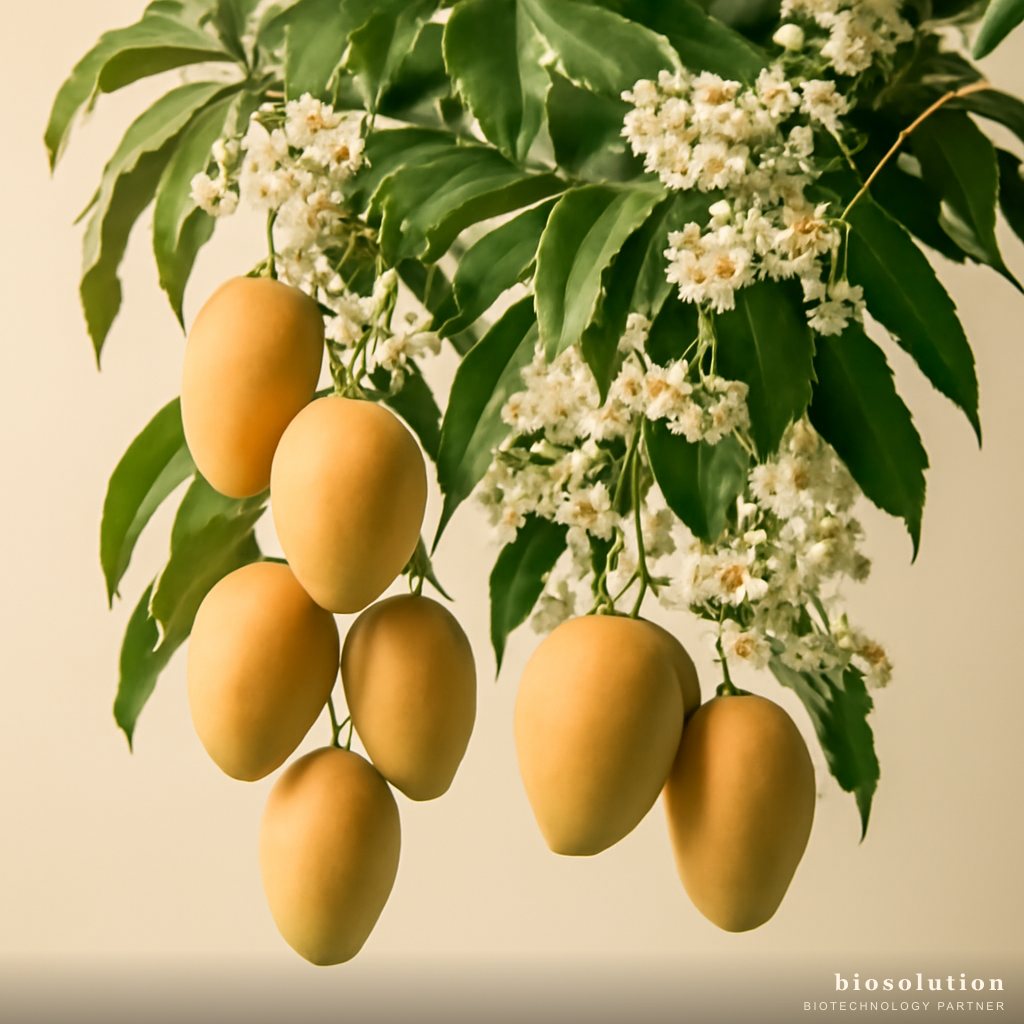
The cytokinin content from seaweed extract encourages the differentiation of vegetative shoots into generative shoots. PGPR also continues to produce hormones that trigger flowering. As a result, plants will flower uniformly, facilitating pollination and harvest management. For perennial fruit crops like mango, citrus, or avocado, this phase is usually triggered by the dry season or special treatments like pruning. POC application at this stage helps ensure that emerging flowers do not drop due to water stress or nutrient deficiency.
Application Schedule Phase 3: Pre-Flower to Full Bloom
When flower buds begin to appear (pre-flower phase), POC application should be more intensive. Spraying interval is accelerated to 5–7 days, with a fixed dose of 3–5 ml per liter of water. At this stage, plants require significant energy to open flowers and produce nectar that attracts pollinators. If the weather is too hot or dry, flowers are prone to drop. The humic acid content in POC helps plants retain water and nutrients, increasing stress tolerance.
When flowers begin to open, avoid direct spraying onto open flowers to prevent pollination disruption. Application can be focused on leaves and stems. The established PGPR in the rhizosphere will continue to supply nutrients, while cytokinins from seaweed extract prevent premature flower drop. With proper application, the fruit set rate can reach 70–80%, higher than the average 50–60% under normal conditions.
Application Schedule Phase 4: Post-Flower to Fruit Filling
After fruits form (post-flower to fruit filling phase), POC application is still needed to improve fruit quality. At this stage, the dose can be reduced to 3 ml per liter of water, with a 7–10 day interval. The main goals are to reduce young fruit drop, increase fruit size, and improve sugar content or total soluble solids. Data from Biosolution shows that using the Flower & Fruit Trigger POC Formula can reduce flower/fruit drop by up to 30% and increase fruit weight per tree by 15–25%.
The PGPR content also helps suppress soil-borne pathogens that often attack roots during fruit development. Humic and fulvic acids act as nutrient carriers, making elements like potassium and calcium more easily absorbed. Potassium is important for sweet and dense fruit formation, while calcium prevents fruit cracking and blossom-end rot. With regular application, harvested fruits have a longer shelf life, reducing post-harvest losses.
Application Tips and Combination with Other Fertilizers
For optimal results, the Flower & Fruit Trigger POC Formula can be combined with organic base fertilizers such as compost or manure. Avoid mixing with chemical fertilizers containing chlorine or harsh chemicals in the same tank, as they can kill PGPR. If using chemical pesticides, allow a gap of at least 2–3 days between POC and pesticide applications. This product is safe for organic certification and leaves no harmful residues on fruit.
Product storage also needs attention. Store in a cool, shaded place, away from direct sunlight. Opened bottles should be used within 1–2 months. Before application, shake the bottle well to ensure the bacterial consortium is evenly mixed. For commercial scale, using a sprayer with a fine nozzle will provide more uniform coverage.
Conclusion
Proper application schedule is the key to successfully stimulating flowers and fruits using Biosolution's Flower & Fruit Trigger POC Formula. From planting preparation to fruit filling, each phase requires adjusted dosage and intervals. With its content of PGPR, seaweed extract, and humic acid, this product not only promotes uniform flowering but also improves fruit quality, reduces drop, and extends shelf life. Data shows a 15–25% increase in fruit weight and up to 30% reduction in drop. For further consultation or product orders, you can contact the Biosolution team via WhatsApp or visit the product page Flower & Fruit Trigger POC Formula. Also get information about other organic farming solutions at Farm Solutions.