Basic Pond Preparation Before Stocking: Key to Successful Aquaculture
Basic pond preparation before stocking is a crucial step often overlooked by new cycle farmers. Yet, effective preparation determines the health of shrimp or fish, feed conversion, and final profit. Without proper preparation, the pond becomes a breeding ground for pathogens, accumulates organic waste, and experiences extreme pH fluctuations. This article discusses the causes of pond preparation failure, resulting losses, and how Biosolution's Basic Pond Preparation Formula helps create an optimal aquaculture environment.
Why Does Basic Pond Preparation Before Stocking Often Fail?
Many novice farmers consider pond preparation merely as drying and liming. In fact, several critical factors cause ineffective preparation.
1. Incomplete Decomposition of Organic Residues
Leftover feed, feces, and dead plankton from the previous cycle accumulate on the pond bottom. If not fully decomposed, toxic compounds like ammonia (NH₃) and hydrogen sulfide (H₂S) are released when the pond is filled with water. Without decomposer microbes, the natural breakdown process is slow and incomplete.
2. Unstable Pond Bottom pH
The pond bottom soil often has low pH (acidic) due to pyrite oxidation or accumulation of organic acids. Acidic conditions stress the seed, reduce appetite, and facilitate disease attacks. Liming alone is not enough; biological agents that can naturally neutralize pH are needed.
3. High Pathogenic Bacterial Populations
Pathogenic bacteria such as Vibrio spp. can survive in pond sediment even after drying. If not suppressed, newly stocked seed will be directly exposed and at high risk of disease.
4. Low Dissolved Oxygen at the Bottom
Decomposing organic residues consume oxygen, creating an anoxic zone at the pond bottom. This condition inhibits the growth of beneficial bacteria and triggers the growth of anaerobic bacteria that produce toxins.
Losses Due to Poor Pond Bottom Preparation
Haphazard preparation leads to significant financial losses. Here are the real impacts:
High Seed Mortality (Early Mortality)
Seed stocked into ponds with poor water quality will be stressed and prone to death within the first week. Data shows that pond preparation failure can cause mortality up to 30% in the first week.
Slow Growth and High FCR
A suboptimal environment forces shrimp/fish to expend more energy on adaptation rather than growth. Consequently, growth slows and feed conversion ratio (FCR) increases, reducing profits.
Recurrent Disease Outbreaks
Ponds with dirty bottoms become pathogen reservoirs. Diseases such as white spot syndrome virus (WSSV) in shrimp or bacterial infections in fish easily outbreak. Treatment is expensive and often ineffective if the environment remains poor.
Total Crop Failure
In worst cases, accumulation of toxic gases like H₂S can kill the entire population in a short time. Farmers suffer total loss and must start over.
Microbiology Solution: Biosolution Basic Pond Preparation Formula
To address the above problems, Biosolution presents the Basic Pond Preparation Formula, an innovative product based on superior microbes specifically designed for pre-stocking pond preparation.
Composition and Mechanism of Action
This product contains three main components that work synergistically:
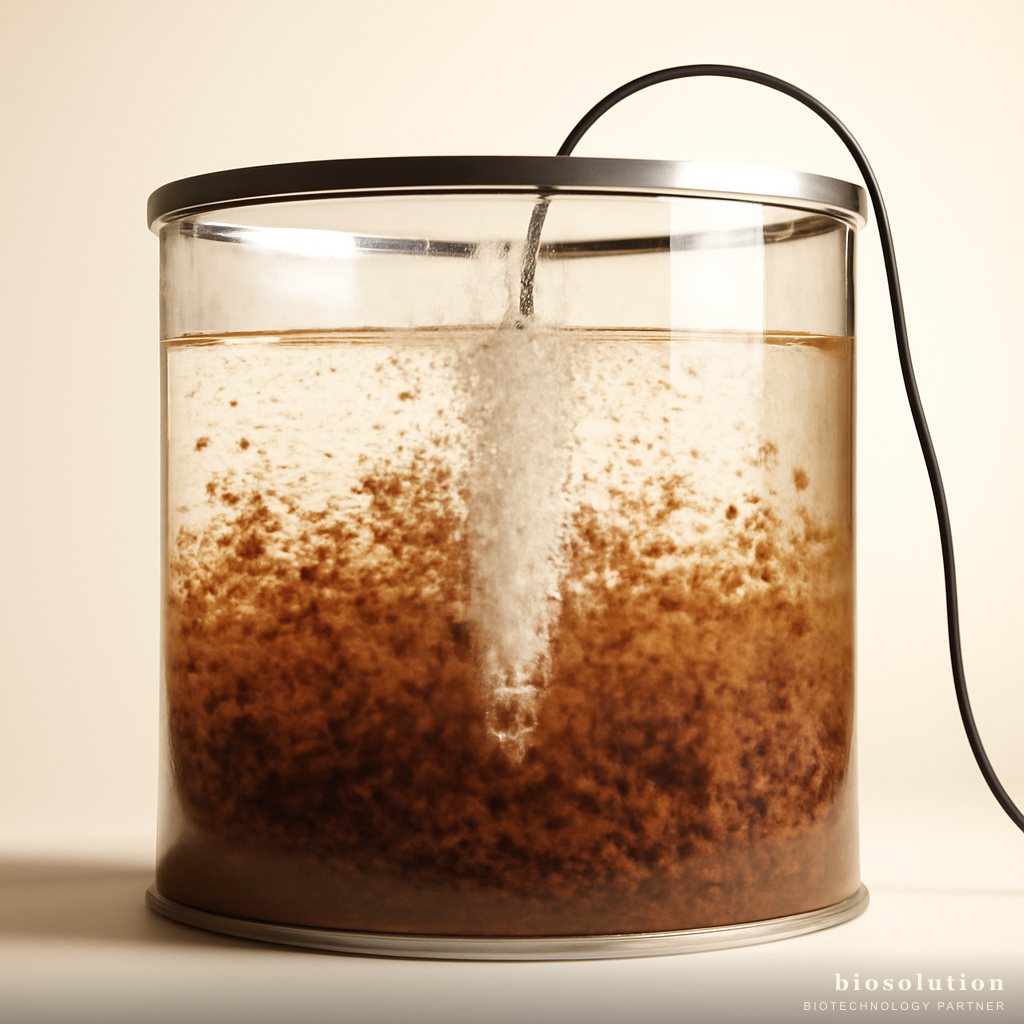
- Bacillus subtilis: A decomposer bacterium capable of breaking down complex proteins, carbohydrates, and fats into simple compounds. B. subtilis also produces extracellular enzymes such as protease, amylase, and lipase that accelerate decomposition of organic residues. Additionally, this bacterium produces antimicrobial compounds that suppress pathogen growth.
- Thiobacillus sp.: A chemosynthetic bacterium that oxidizes sulfur compounds (e.g., H₂S) into non-toxic sulfate. This process helps stabilize pond bottom pH because sulfur oxidation produces sulfuric acid, which is then neutralized by calcium carbonate. Thus, soil pH becomes more neutral and stable.
- Extracellular enzymes: A blend of enzymes that directly break down organic matter without waiting for bacterial adaptation. These enzymes ensure rapid decomposition even at low temperatures or suboptimal conditions.
Practical Application Method
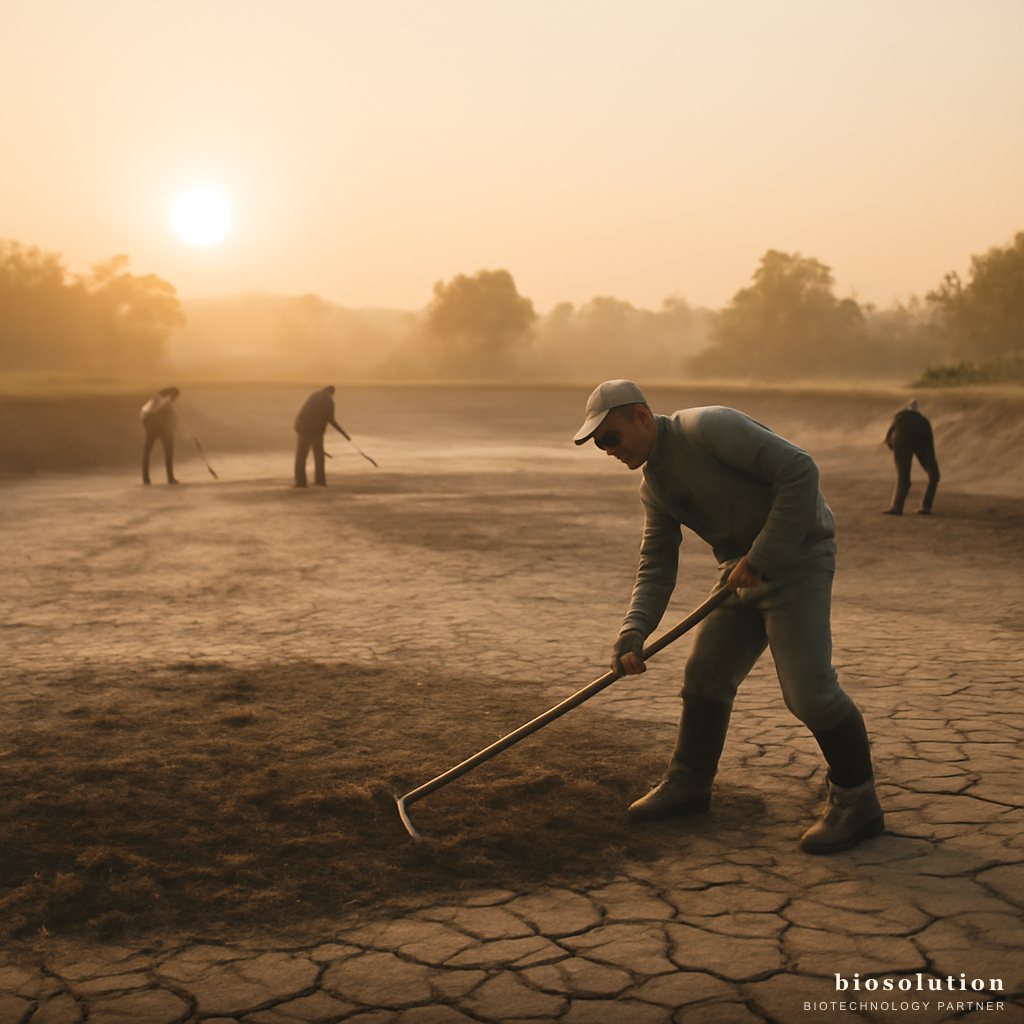
Applying the Basic Pond Preparation Formula is very easy. Simply spread 5 liters of product per hectare onto the pond during drying (after harvest and before filling with new water). Do this in the morning to avoid UV rays that can damage microbes. The product needs only one application per cycle, saving time and effort.
Real Benefits in the Field
Farmers using the Basic Pond Preparation Formula report several advantages:
- Clean start to the cultivation cycle: No foul odor, clearer water, and no black muddy bottom.
- Reduced early disease attacks: Beneficial bacterial populations dominate, suppressing pathogens from the start.
- Safer higher stocking density: Due to stable water quality, farmers can stock seed at higher densities without fear of failure.
- Recurring purchase every cycle: Because results are proven, farmers tend to buy this product regularly for each cultivation cycle.
Steps for Effective Basic Pond Preparation Before Stocking
Here is a complete guide for basic pond preparation using the Basic Pond Preparation Formula:
1. Drying and Cleaning
After harvest, dry the pond until the soil cracks. Remove remaining black sludge and other debris. Ensure the pond bottom is exposed to direct sunlight for 3-5 days to kill surface pathogens.
2. Liming
Spread agricultural lime (CaCO₃) or dolomite as needed to raise soil pH. General dosage is 1-2 tons per hectare, depending on soil conditions. Leave for 2-3 days.
3. Application of Basic Pond Preparation Formula
Spread 5 liters of product per hectare evenly over the entire pond surface. Do this in the morning. The product will work to decompose remaining organic residues and stabilize pH.
4. Water Filling and Plankton Culture
After 3-5 days, fill the pond with water to a depth of 30-40 cm. Add organic or inorganic fertilizer to stimulate plankton growth as natural feed. Let the water sit for 5-7 days until the water turns greenish-brown (indicating plankton growth).
5. Water Quality Check
Before stocking seed, measure key parameters: pH (7.5-8.5), temperature (28-32°C), dissolved oxygen (>4 ppm), ammonia (<0.1 ppm), and nitrite (<0.5 ppm). If all are ideal, the seed is ready for stocking.
Conclusion
Effective basic pond preparation before stocking is an initial investment that determines the success of aquaculture. By using Biosolution's Basic Pond Preparation Formula, farmers can overcome problems of organic residue decomposition, pH instability, and pathogen dominance biologically. The result: a cleaner cultivation cycle, reduced disease risk, and increased productivity. For further consultation or product ordering, contact the Biosolution team via WhatsApp at [WhatsApp link] or see product details on the product page.
FAQ
1. What is basic pond preparation before stocking?
Basic pond preparation before stocking is a series of activities carried out before seed is stocked, aimed at creating an optimal environment for shrimp or fish growth. It includes drying, cleaning, liming, sterilization, and water conditioning. Good preparation prevents disease, improves water quality, and increases productivity.
2. What is the dosage of Basic Pond Preparation Formula per hectare?
The recommended dosage is 5 liters per hectare. The product is spread evenly onto the pond during drying, with one application per cycle sufficient. For maximum results, apply in the morning and ensure the pond is dry.
3. Is this product safe for shrimp/fish seed?
Very safe. The Basic Pond Preparation Formula contains natural bacteria and enzymes that are not harmful to cultured organisms. In fact, the product helps suppress pathogens, making the seed healthier. Ensure application is done before water filling and stocking.
4. When is the best time to apply the product?
The best time is in the morning when the pond is dry after harvest. Avoid application during intense sunlight as UV rays can kill bacteria. The product works optimally at temperatures of 25-35°C.
5. Should it be combined with other products?
The Basic Pond Preparation Formula is sufficient for basic preparation. However, for better results, it can be combined with water probiotics such as Lactobacillus sp. after the pond is filled with water. Consult with the Biosolution team for specific recommendations according to your pond conditions.