Foliar biofertilizer has become the top choice for leafy vegetable farmers who want to improve harvest quality and quantity organically. During the vegetative phase, plants need sufficient nutrients to form green, wide, and thick leaves. Foliar biofertilizer not only provides nutrients but also improves soil health and stimulates root growth. This article will discuss the criteria for choosing the best foliar biofertilizer, its mechanism of action, and scientifically tested product recommendations.
What is Foliar Biofertilizer and Why is it Important?
Foliar biofertilizer is a liquid organic fertilizer containing living microorganisms, such as plant growth-promoting rhizobacteria (PGPR), as well as natural organic compounds like seaweed extract and humic acid. Unlike synthetic chemical fertilizers, biofertilizers work biologically by increasing nutrient availability in the rhizosphere, producing growth hormones, and improving soil structure. In leafy vegetables, the vegetative phase is a critical period where plants need sufficient nitrogen, potassium, and micronutrients to form chlorophyll and leaf tissue. Foliar biofertilizer helps meet these needs sustainably.
The importance of foliar biofertilizer is increasing along with farmers' awareness of the negative impacts of chemical fertilizers on the environment and health. Using biofertilizers also supports sustainable agriculture programs and facilitates organic certification. With proper application, foliar biofertilizer can increase harvest weight by 15-25% and reduce flower or fruit drop by up to 30%.
Criteria for Choosing the Best Foliar Biofertilizer for Vegetative Phase
Choosing the right foliar biofertilizer requires understanding several key criteria:
1. Superior Microorganism Content
Choose a fertilizer containing a consortium of PGPR (Plant Growth Promoting Rhizobacteria) such as Bacillus spp., Pseudomonas spp., or Azospirillum spp. These microorganisms can fix nitrogen, solubilize phosphate, and produce phytohormones like auxin and cytokinin that stimulate leaf growth. A good product lists the species and colony count (CFU/ml) on the label.
2. Active Organic Matter Content
Besides microbes, a good foliar biofertilizer contains organic matter such as seaweed extract rich in natural cytokinins, humic and fulvic acids that act as nutrient chelators, and essential micronutrients. This combination ensures balanced nutrient availability and easy plant absorption.
3. Certification and Legality
Ensure the product has a distribution permit from the Ministry of Agriculture and is registered as an organic biofertilizer. Certification guarantees product quality, safety, and effectiveness. Products without permits may contain pathogens or harmful substances.
4. Ease of Application and Proper Dosage
An ideal foliar biofertilizer can be applied as a foliar spray or soil drench. The recommended dosage is generally 3-5 ml per liter of water, applied every 7-10 days in the morning before 10 AM. Choose a product that provides clear and practical guidance.
5. Compatibility with Farming Systems
If you practice certified organic farming, ensure the chosen foliar biofertilizer meets organic standards. Products based on natural ingredients and microbes are generally safe for certification.
Mechanism of Action of Foliar Biofertilizer in Boosting Vegetative Growth
Foliar biofertilizer works through several synergistic mechanisms:
Growth Hormone Stimulation
The PGPR consortium in biofertilizer produces phytohormones such as auxin (IAA), gibberellins, and cytokinins. Auxin stimulates cell division and leaf cell elongation, making leaves wider. Cytokinins from seaweed extract delay leaf senescence and keep the green color fresh.
Increased Nutrient Availability
Phosphate and potassium solubilizing microbes convert bound nutrients in the soil into forms available to plants. Additionally, nitrogen-fixing bacteria provide essential nitrogen for chlorophyll formation. Humic and fulvic acids help transport micronutrients like iron, zinc, and manganese to the leaves.
Improved Soil and Root Structure
Regular application of foliar biofertilizer improves soil aggregation and porosity, making it easier for roots to absorb water and nutrients. Healthy, well-developed roots support optimal leaf growth.
Product Recommendation: Formula POC Pertumbuhan Daun from Biosolution
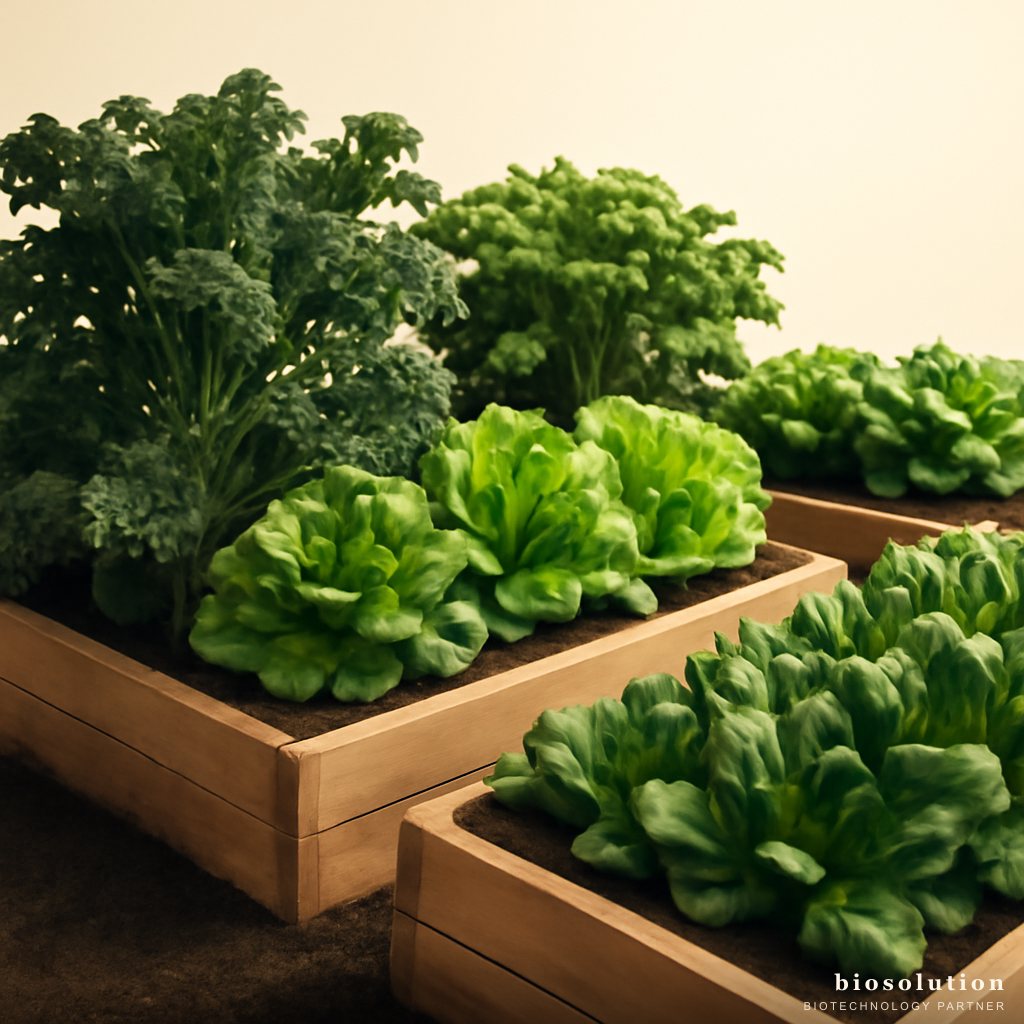
One foliar biofertilizer that meets the above criteria is Formula POC Pertumbuhan Daun from Biosolution. This product is specially formulated for the vegetative phase of leafy vegetables such as mustard greens, water spinach, spinach, and lettuce. Its composition includes:
- PGPR Consortium: Stimulates root and leaf growth through natural hormone production.
- Seaweed Extract: Source of cytokinins and micronutrients that strengthen leaf tissue.
- Humic and Fulvic Acids: Increase nutrient uptake efficiency and stimulate root development.
Based on field trials, foliar application of Formula POC Pertumbuhan Daun at a dosage of 3-5 ml per liter of water every 7-10 days can increase harvest weight by 15-25% and reduce flower/fruit drop by up to 30%. This product is also safe for organic certification and easy to apply.
Effective Application of Foliar Biofertilizer
For optimal results, follow these steps:
- Application time: Spray in the morning (before 10 AM) or late afternoon (after 4 PM) to avoid evaporation and direct sunlight.
- Dosage: Mix 3-5 ml of fertilizer per liter of water. Stir until homogeneous.
- Method: Use a pressure sprayer to spray the entire leaf surface, especially the underside where stomata are more numerous. For soil drench, pour the solution onto the root zone.
- Frequency: Repeat every 7-10 days during the vegetative phase (approximately the first 3-4 weeks after planting).
- Combination: Can be combined with organic base fertilizer and adequate irrigation.
Avoid mixing with chemical pesticides or fungicides at the same time as it can reduce microbial effectiveness. Allow a gap of at least 2-3 days if you want to use pesticides.
Advantages of Foliar Biofertilizer Over Chemical Fertilizers
Foliar biofertilizer offers several advantages over synthetic chemical fertilizers:
- Environmentally friendly: Leaves no harmful chemical residues in soil and water.
- Improves soil fertility: Enhances soil microbial activity and soil structure.
- Improves harvest quality: Leaves are greener, thicker, and have longer shelf life.
- Supports sustainable agriculture: Suitable for organic systems and reduces dependence on imported fertilizers.
- Cost efficient: Low dosage and less frequent application.
Conclusion
Foliar biofertilizer is the right choice to maximize vegetative growth of leafy vegetables. By choosing a product containing a consortium of PGPR, seaweed extract, and humic acid, and having official certification, farmers can increase production organically and sustainably. Formula POC Pertumbuhan Daun from Biosolution is one of the leading products proven effective. For further consultation on foliar biofertilizer application, contact our team via WhatsApp.
FAQ
1. Is foliar biofertilizer safe for all types of leafy vegetables?
Yes, foliar biofertilizer is generally safe for all types of leafy vegetables such as mustard greens, water spinach, spinach, lettuce, and others. However, follow the recommended dosage on the product label. For very sensitive plants, conduct a trial on a small portion first.
2. How long does it take to see the effect of foliar biofertilizer?
The first effects are usually visible within 3-7 days after application, indicated by greener and fresher leaves. Increased harvest weight can be observed at the end of the growing cycle, especially after regular application during the vegetative phase.
3. Can foliar biofertilizer be mixed with chemical fertilizers?
It is best not to mix them directly because chemical fertilizers can kill the microbes in the biofertilizer. If you want to use both, allow a gap of at least 2-3 days between applications.
4. Does foliar biofertilizer have a shelf life?
Yes, foliar biofertilizer has a limited shelf life because it contains living microorganisms. Store in a cool, dark place and use before the expiration date on the packaging. Typically, the shelf life is 6-12 months.
5. How to distinguish genuine foliar biofertilizer from counterfeit?
Check the product label for the distribution permit number from the Ministry of Agriculture, microbial composition (species and CFU count), and production and expiration dates. Buy from authorized distributors or trusted agricultural stores. Genuine products usually have a seal and registered barcode.
For more information about foliar biofertilizer and related products, visit our agricultural solutions page.