Biofertilizer for Bananas: 5-in-1 Complete Plant Nutrient Formula
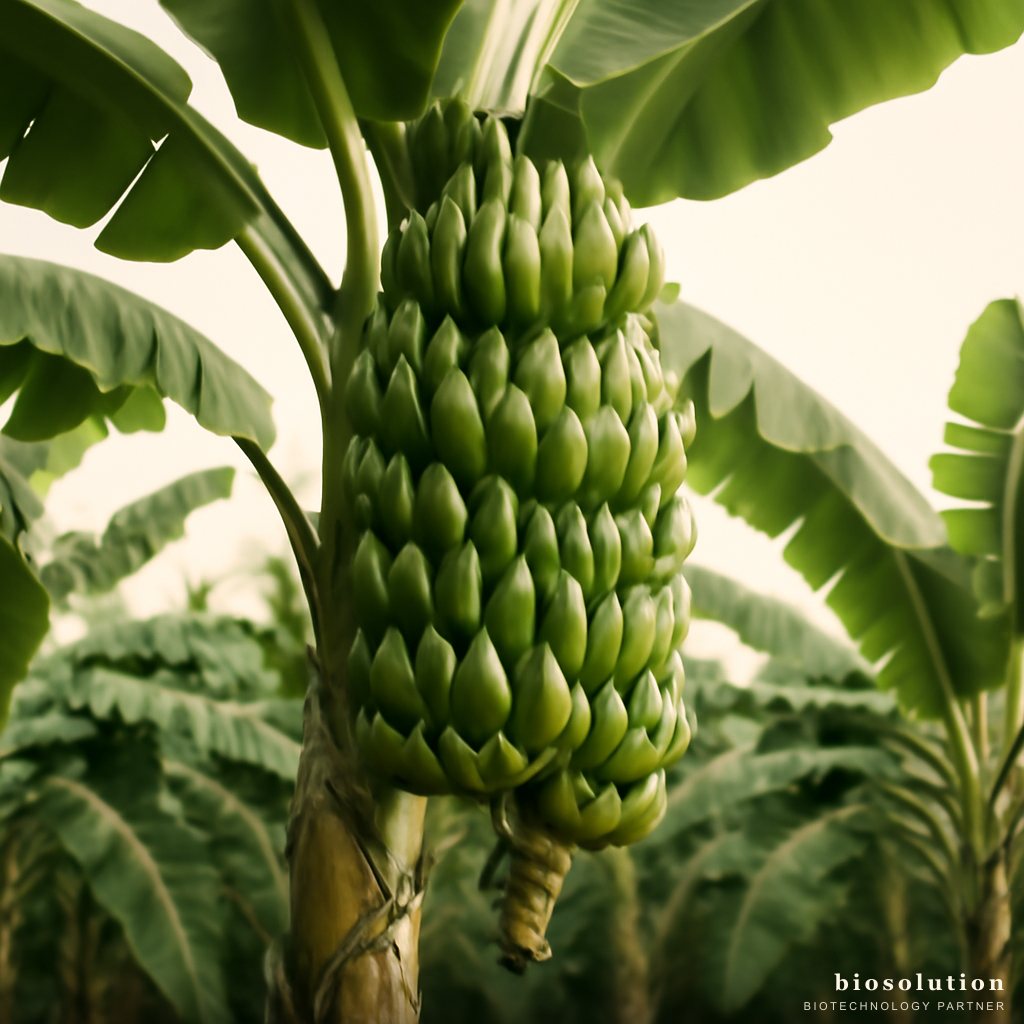
Banana farmers in Indonesia, whether cultivating Cavendish bananas for export or local varieties such as Ambon, Raja, and Kepok, now face challenges of productivity and sustainability. Continuous use of chemical fertilizers causes soil degradation, pathogen resistance, and high production costs. This is where biofertilizer for bananas comes as a revolutionary solution. Biofertilizers not only enrich the soil but also enhance plant resistance to diseases. This article will discuss the criteria for choosing the best biofertilizer, the working mechanism of microbial consortia, and a recommended flagship product from Biosolution.
Why Do Bananas Need Biofertilizer?
Bananas are heavy feeders, especially of potassium, nitrogen, and phosphorus. Intensive cultivation often depletes soil fertility. Biofertilizers contain living microorganisms that help provide nutrients naturally. Unlike chemical fertilizers that only provide instant nutrients, biofertilizers work symbiotically with plant roots to improve nutrient uptake and soil structure.
Main Benefits of Biofertilizer for Bananas
- Increases N, P, K availability through nitrogen fixation and phosphate solubilization.
- Suppresses soil-borne pathogens such as Fusarium oxysporum f. sp. cubense (Panama disease) and Pseudomonas spp.
- Improves soil aggregation for better aeration and drainage.
- Reduces chemical fertilizer use by up to 50% without yield loss.
- Increases fruit weight and taste quality due to more balanced nutrition.
For Cavendish bananas susceptible to Fusarium wilt, the use of biofertilizer is an effective prevention strategy.
Criteria for Choosing Biofertilizer for Cavendish and Local Bananas
Not all biofertilizers are suitable for bananas. Here are criteria to consider:
1. Appropriate Microbial Strain Content
A good biofertilizer must contain strains tested on banana plants. For example, Bacillus subtilis and Pseudomonas fluorescens are known as effective PGPR (Plant Growth-Promoting Rhizobacteria) on bananas. Trichoderma sp. is also important as a biocontrol agent.
2. Multi-Strain Consortium
Products with a consortium of several strains are superior due to synergistic effects. Biosolution Complete Plant Nutrient Formula contains 5 strains in one bottle: Rhizobium sp., Bacillus subtilis, Azospirillum sp., Pseudomonas fluorescens, and Trichoderma sp. This combination covers N fixation, P solubilization, growth promotion, and biocontrol.
3. Microbial Density (CFU/ml)
Products must have at least 10⁸ CFU/ml per strain to be effective. Biosolution guarantees this density.
4. Certification and Legality
Ensure the product is registered with the Ministry of Agriculture and has a distribution permit. Avoid products without clear labels.
5. Packaging and Application Instructions
Choose products with practical packaging and easy-to-follow instructions. Biosolution provides a dosage of 5-10 ml per liter of water, applied every 10-14 days.
Working Mechanism of Microbial Consortium in Biofertilizer
Understanding how microbes work helps farmers optimize application. Here are the roles of each strain in biofertilizer for bananas:
Rhizobium sp. – Symbiotic Nitrogen Fixer
Although bananas are not legumes, Rhizobium can live in the rhizosphere and contribute nitrogen through non-symbiotic fixation under certain conditions. This helps meet the plant's N needs.
Bacillus subtilis – Phosphate Solubilizer and PGPR
B. subtilis produces organic acids that solubilize bound phosphate in the soil, making P available to roots. Additionally, this bacterium produces growth hormones like IAA that stimulate root development.
Azospirillum sp. – Associative N Fixer
Azospirillum lives around banana roots and fixes nitrogen from the air, releasing it to the plant. This is very useful for reducing N fertilizer requirements.
Pseudomonas fluorescens – Pathogen Antagonist
This bacterium produces siderophores that bind iron, depriving pathogens of iron and preventing their growth. P. fluorescens also produces antibiotics that suppress Fusarium and Pythium.
Trichoderma sp. – Biocontrol and Decomposer
This fungus colonizes roots and produces enzymes that degrade pathogen cell walls. Additionally, Trichoderma accelerates the decomposition of organic matter into humus.
Effective Application of Biofertilizer for Bananas
For optimal results, follow these application guidelines:
Application Timing
- First application at planting (drench into planting hole).
- Continue every 10-14 days for 3-5 times per growing season.
- Apply in the morning (before 10 AM) or afternoon (after 4 PM) to avoid UV light that kills microbes.
Dosage and Method
- Mix 5-10 ml of biofertilizer per liter of water.
- Drench the root zone with 200-500 ml per plant (depending on age).
- For large areas, spray onto the soil around the stem.
Integration with Chemical Fertilizers
- Reduce chemical fertilizer dosage by up to 50% after applying biofertilizer.
- Do not mix biofertilizer directly with fungicides or bactericides. Allow a minimum 3-day interval.
Storage
- Store in a cool place (4-30°C) away from direct sunlight.
- Use within 6 months of production.
Case Study: Increased Yield of Cavendish Bananas with Biofertilizer
In Lampung, Cavendish banana farmers using 5-in-1 biofertilizer reported an average bunch weight increase of 25% compared to chemical controls. Additionally, Fusarium wilt incidence dropped drastically due to the antagonistic activity of Trichoderma and Pseudomonas. Farmers also saved up to 40% on fertilizer costs.
Data from Biosolution trials show:
- Yield increase +20–30% across various crops.
- Chemical fertilizer reduction −50%.
- Microbial density 10⁸ CFU/ml per strain.
Advantages of Biosolution's Complete Plant Nutrient Formula
Biosolution presents a biofertilizer product specifically designed for modern agriculture. Here are its advantages:
- 5 superior strains in one bottle: synergy of N fixer, P solubilizer, PGPR, and biocontrol.
- High density: 10⁸ CFU/ml per strain, ensuring effectiveness.
- Easy to apply: just drench or spray, no special equipment needed.
- Safe: leaves no chemical residues, environmentally friendly.
- Officially registered: certified by the Ministry of Agriculture.
By using this product, Cavendish and local banana farmers can increase productivity while maintaining long-term soil health.
Conclusion
Biofertilizer for bananas is a smart investment for farmers seeking sustainable yield increases. By choosing the right product, such as Biosolution's Complete Plant Nutrient Formula, farmers get a microbial consortium that works synergistically to provide nutrients, suppress diseases, and improve soil. Don't hesitate to switch to more efficient and environmentally friendly microbe-based agriculture.
Free consultation with the Biosolution team via WhatsApp for dosage recommendations and application schedules tailored to your land conditions. Visit the product page biofertilizer for bananas for more information.