Biofertilizer for Bananas: 7 Common Mistakes & Right Solutions
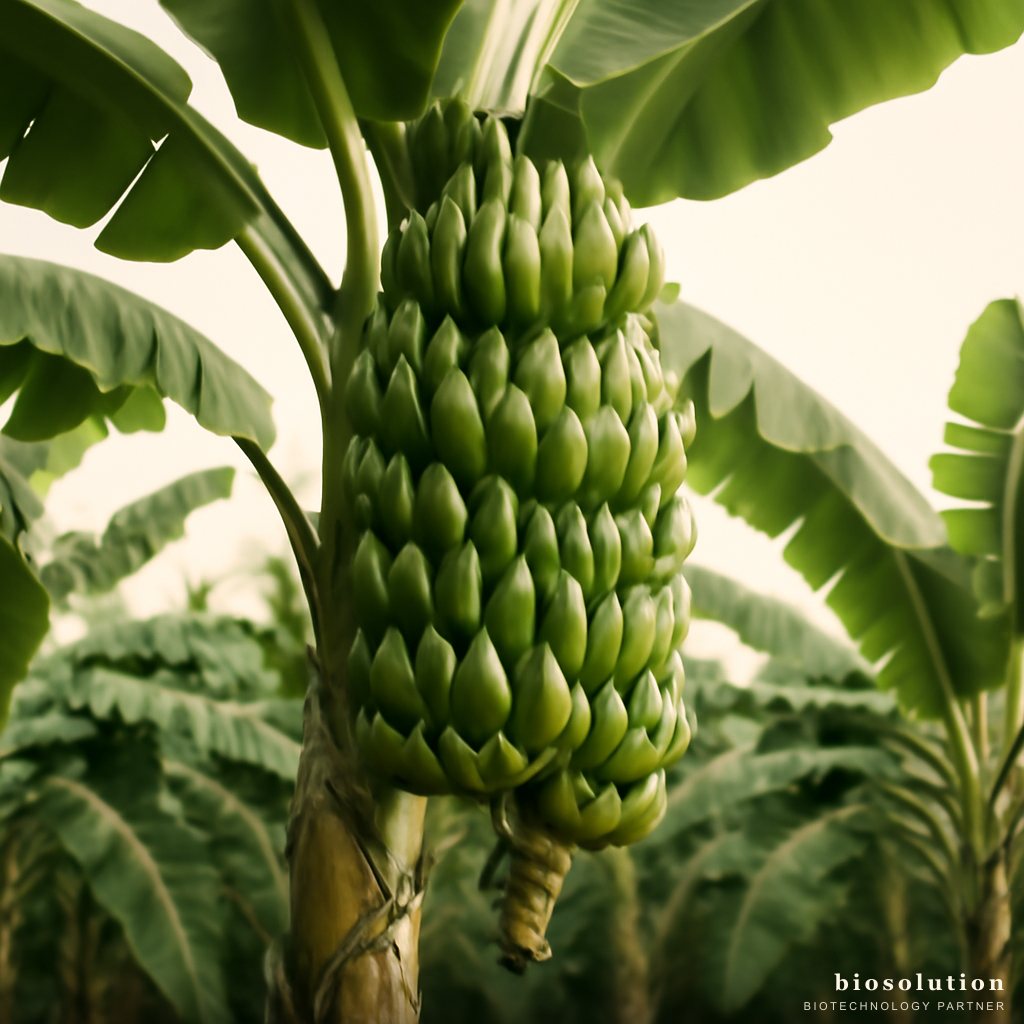
Biofertilizer for bananas has become a mainstay solution for modern farmers who want to increase productivity while maintaining soil health. However, many farmers fail to experience optimal benefits due to various application mistakes. This article will discuss the 7 most common mistakes when using biofertilizer on Cavendish and local bananas, and provide technical guidance so that your biofertilizer investment yields maximum results.
1. Choosing Biofertilizer Without Checking the Microbial Strain Composition
The first mistake is buying a product without knowing the microbial strains inside. A good biofertilizer must contain microbes with specific functions. Products like 5-in-1 Liquid Biofertilizer Formula from Biosolution contain five strains: Rhizobium sp., Bacillus subtilis, Azospirillum sp., Pseudomonas fluorescens, and Trichoderma sp.. Each has a role: nitrogen fixation, phosphate solubilization, root growth promotion, pathogen control, and decomposition. Without a complete consortium, the effectiveness of biofertilizer is drastically reduced.
2. Ignoring the Right Application Time
Biofertilizer contains live microbes that are sensitive to UV light and extreme temperatures. Application during the hot midday sun can kill up to 90% of the microbial population. The best time is in the morning before 10 AM or in the afternoon after 4 PM. For bananas, the first application is done when planting seedlings, then repeated every 10–14 days. Too long an interval prevents the microbial colony from forming optimally in the rhizosphere.
3. Dosage Too Low or Too High
Many farmers use a lower dosage than recommended due to fear of waste. In fact, a minimum microbial population of 10⁸ CFU/ml per strain is needed for significant effects. The standard dosage is 5–10 ml per liter of water, applied as a drench of 200–300 ml per tree, depending on age. Conversely, excessive dosage does not proportionally increase results and only wastes product. Follow the instructions on the packaging.
4. Mixing Carelessly with Chemical Fertilizers
Chemical fertilizers, especially those that are acidic or contain chlorine, can kill the microbes in biofertilizer. If you want to combine them, apply biofertilizer 2–3 days after chemical fertilizer. Avoid mixing directly in one tank. As a strategy, regular use of biofertilizer can reduce the need for chemical fertilizer by up to 50% without reducing yield, as proven by Biosolution products.
5. Not Paying Attention to Soil Conditions
Biofertilizer works optimally in soil with neutral pH (6–7) and adequate moisture. Acidic soil (pH <5) or overly dry soil inhibits microbial activity. Before application, apply lime if pH is low, and ensure the soil is moist. For bananas, organic mulch helps maintain moisture and provides a substrate for microbes.
6. Storing Biofertilizer in Hot Places or Exposed to Direct Sunlight
The microbes in biofertilizer are alive and susceptible to death if stored at temperatures above 40°C or exposed to direct sunlight. Store in a cool (15–30°C), dry, and dark place. Do not leave the bottle open for too long. Products with UV-proof packaging are recommended.
7. Stopping Application After Seeing the First Results
Biofertilizer is not a chemical fertilizer with instant effects. Benefits are only seen after 2–3 growing seasons because microbes need to build up their population. Farmers often stop after one season because they do not see drastic changes. In fact, consistent application 3–5 times per growing season will improve soil structure, increase nutrient availability, and suppress diseases gradually. Data shows a 20–30% increase in yield with regular use.
Solution: 5-in-1 Liquid Biofertilizer Formula from Biosolution
To avoid the above mistakes, choose a product with a complete and tested microbial consortium. 5-in-1 Liquid Biofertilizer Formula contains 5 strains at a concentration of 10⁸ CFU/ml, complete with clear application instructions. This product has been proven to increase banana yield by up to 30% and reduce chemical fertilizer use by half. Get further guidance by contacting our technical team via WhatsApp.
Conclusion
Biofertilizer for Cavendish and local bananas offers great potential if used correctly. Avoid seven common mistakes: choose a product with complete strains, apply at the right time, use appropriate dosage, do not mix carelessly with chemicals, pay attention to soil conditions, store properly, and apply consistently. By following this guide, you will experience increased productivity and sustainable soil health.
FAQ
1. What is the right dosage of biofertilizer for bananas? The standard dosage is 5–10 ml per liter of water, applied as a drench of 200–300 ml per mature tree every 10–14 days. For new seedlings, use a lower dosage (5 ml/L) to avoid overburdening the roots.
2. Can biofertilizer be combined with chemical pesticides? It is best not to mix them directly. Allow a minimum of 3 days between chemical pesticide and biofertilizer application. Pesticides with active ingredients like copper or sulfur are highly toxic to microbes.
3. When is the best time to apply biofertilizer for bananas? Morning before 10 AM or afternoon after 4 PM. Avoid application during heavy rain or waterlogged soil as microbes can be washed away.
4. How long does it take to see the effects of biofertilizer? Initial effects like better root growth are visible within 2–4 weeks. Significant yield increase is only noticeable after 2–3 growing seasons because microbes need to build up their population.
5. Is biofertilizer safe for local banana varieties like kepok or raja? Very safe. The microbial consortium in biofertilizer is non-pathogenic and compatible with all banana varieties. In fact, it helps increase resistance to Fusarium wilt disease that often attacks local bananas.