Biofertilizer for Bananas: Biological Solution for Cavendish and Local Varieties
Banana cultivation—both Cavendish and local varieties—faces serious challenges due to excessive use of chemical fertilizers. Soil becomes hard, beneficial microbes die, and productivity declines. This is where biofertilizer for bananas emerges as a breakthrough. A biological approach relying on a superior microbial consortium can improve soil health, provide nutrients naturally, and significantly increase yields. This article will thoroughly discuss why chemical fertilizers are insufficient and how biofertilizer is the answer for modern banana farmers.
Why Chemical Fertilizers Fail for Cavendish and Local Bananas?
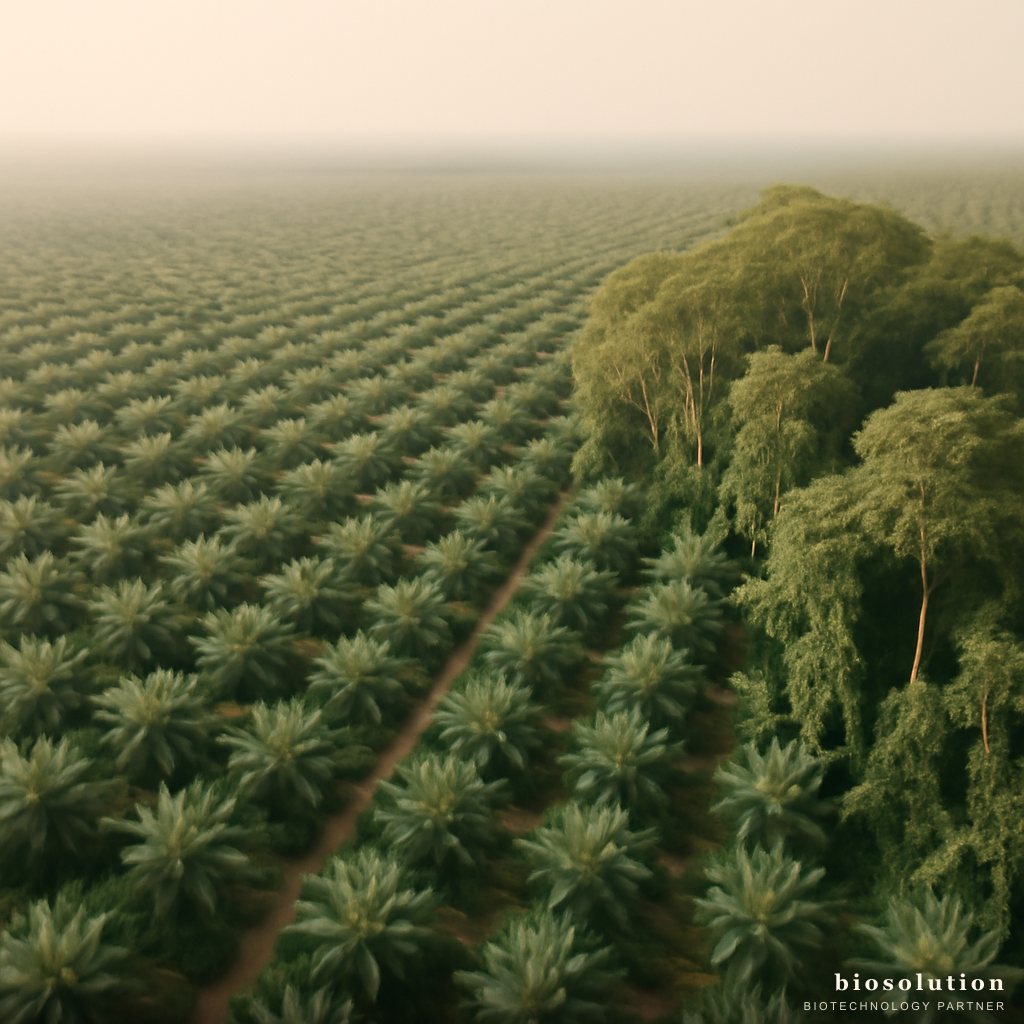
Bananas are nutrient-hungry plants, especially potassium (K) and nitrogen (N). Chemical fertilizers provide quick nutrients, but in the long term cause serious problems: soil becomes acidic, soil structure is damaged, and beneficial microbial populations decline. In intensively monocultured Cavendish bananas, this problem is exacerbated. Meanwhile, local bananas often grown on marginal land also suffer because chemical fertilizers cannot holistically improve soil fertility.
Data shows that chemical fertilizer efficiency is only about 30-40%. The rest is lost through leaching, volatilization, or fixation by soil. As a result, farmers must continuously increase doses, costs swell, and yields stagnate. Moreover, chemical fertilizer residues pollute the environment and reduce fruit quality.
Biological Approach: Working Mechanism of 5-in-1 Biofertilizer
An effective biofertilizer for bananas must contain a microbial consortium with complementary functions. Biosolution presents Liquid 5-in-1 Biofertilizer Formula consisting of five superior strains:
- Rhizobium sp.: Symbiotic nitrogen fixer that works with legume roots, but also helps provide N to surrounding plants through root exudates.
- Bacillus subtilis: Phosphate (P) solubilizer and phytohormone producer (IAA, gibberellins) that stimulates root growth. This bacterium also increases availability of potassium and micronutrients.
- Azospirillum sp.: Associative nitrogen fixer that lives around banana roots and directly contributes N.
- Pseudomonas fluorescens: Antagonist to soil-borne pathogens such as Fusarium oxysporum causing fusarium wilt in bananas. Produces siderophores that bind iron, causing pathogen iron deficiency.
- Trichoderma sp.: Antagonistic fungus that controls Fusarium, Pythium, and Rhizoctonia. Also decomposes organic matter into humus.
This consortium works synergistically: N fixation, P solubilization, phytohormone production, and disease biocontrol. As a result, banana plants grow healthier, with more roots and optimal nutrient uptake.
Advantages of Biofertilizer for Cavendish vs Local Bananas
Cavendish Bananas
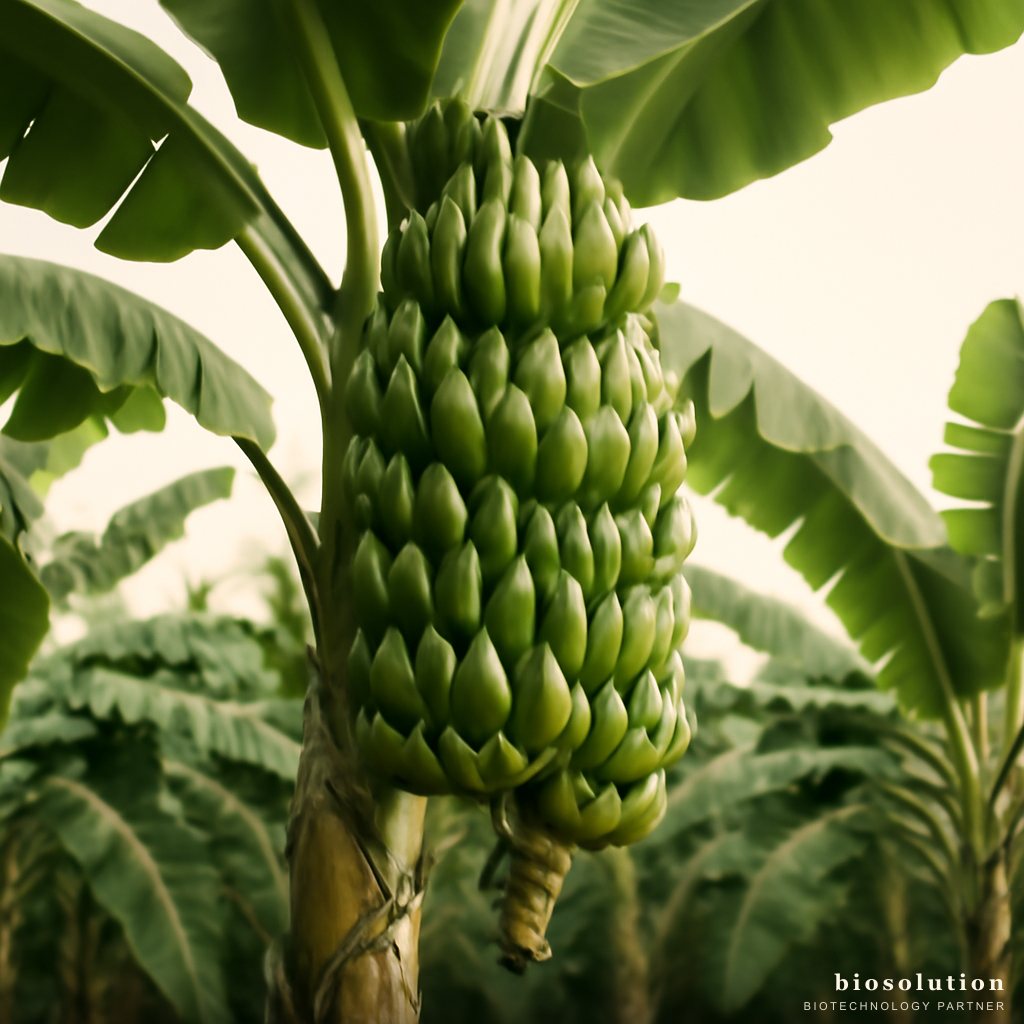
Cavendish bananas are grown in high-density monoculture. The risk of Fusarium Tropical Race 4 (TR4) attack is very high. The 5-in-1 biofertilizer with Trichoderma and Pseudomonas can suppress soil pathogen development. Additionally, high N and K requirements can be met through the activity of Azospirillum and Bacillus which solubilize K from soil minerals. Cavendish farmers report a reduction in chemical fertilizer use by up to 50% and a yield increase of 20-30% after routine use of biofertilizer.
Local Bananas
Local varieties such as kepok, raja, or ambon bananas are more tolerant of suboptimal land conditions. However, their productivity is often hampered by nutrient-poor soil. Biofertilizer helps improve soil structure, increase organic matter, and provide nutrients gradually. With routine application, vegetative growth is faster, bunches are larger, and fruits are sweeter.
Proper Application Method of Biofertilizer for Bananas
The 5-in-1 biofertilizer is applied by drenching the root zone or soil spraying. Recommended dosage: 5-10 ml per liter of water, applied every 10-14 days for 3-5 times per growing season. Best time is morning before 10 AM or afternoon after 4 PM to avoid UV rays that can damage microbes.
Tips:
- Ensure soil is moist before application.
- Do not mix with chemical fertilizers at the same time; allow at least 2 days interval.
- Use clean water without chlorine (let well water settle overnight).
- For optimal results, combine with organic fertilizer (compost or manure).
Performance Data and Dosage
| Parameter | Value |
|---|---|
| Yield increase | +20–30% |
| Chemical fertilizer reduction | −50% |
| Microbial density | 10⁸ CFU/ml per strain |
| Number of strains per bottle | 5 consortium strains |
These data were obtained from field trials on rice, corn, and horticulture. For bananas, similar responses are expected because microbial mechanisms are universal.
Conclusion
Biofertilizer for bananas—both Cavendish and local—offers a sustainable solution amid the chemical fertilizer crisis. With a complete microbial consortium, farmers can reduce chemical fertilizer costs by up to 50% while increasing yields by 20-30%. Soil becomes healthier, plants are more disease-resistant, and the environment is preserved. It is time to switch to smart biological farming. If you are interested in trying Liquid 5-in-1 Biofertilizer Formula or want free consultation, contact us via WhatsApp to get dosage recommendations according to your land conditions.