Biofertilizer for Bananas: Efficient and Eco-Friendly Solution
Banana farmers in Indonesia, whether cultivating Cavendish for export or local varieties like kepok and raja, often face high fertilization costs. Conventional chemical fertilizers provide quick results, but in the long term can damage soil and increase production costs. This is where biofertilizer for bananas comes in as an alternative that is not only cheaper but also sustainable. This article thoroughly examines the cost comparison between conventional fertilization and biofertilizer use, and how products like Biosolution's 5-in-1 Liquid Biofertilizer can be a smart solution for banana farmers.
Why Biofertilizer for Bananas Is Increasingly in Demand?
Bananas are plants that require large amounts of nutrients, especially potassium, nitrogen, and phosphorus. In conventional systems, farmers typically use high doses of NPK fertilizers, whose costs continue to rise with fluctuating chemical fertilizer prices. Moreover, continuous use of chemical fertilizers leads to decreased soil fertility, increased acidity, and pathogen resistance.
Biofertilizer offers a solution by utilizing beneficial microorganisms that naturally provide nutrients to plants. For instance, the consortium in Complete Plant Nutrient Formula contains five superior strains: Rhizobium sp., Bacillus subtilis, Azospirillum sp., Pseudomonas fluorescens, and Trichoderma sp.. These microbes work synergistically to fix nitrogen, solubilize phosphate, produce phytohormones, and control soil pathogens. As a result, chemical fertilizer requirements can be reduced by up to 50% without decreasing productivity.
Cost Comparison: Conventional vs Biofertilizer on Cavendish Bananas
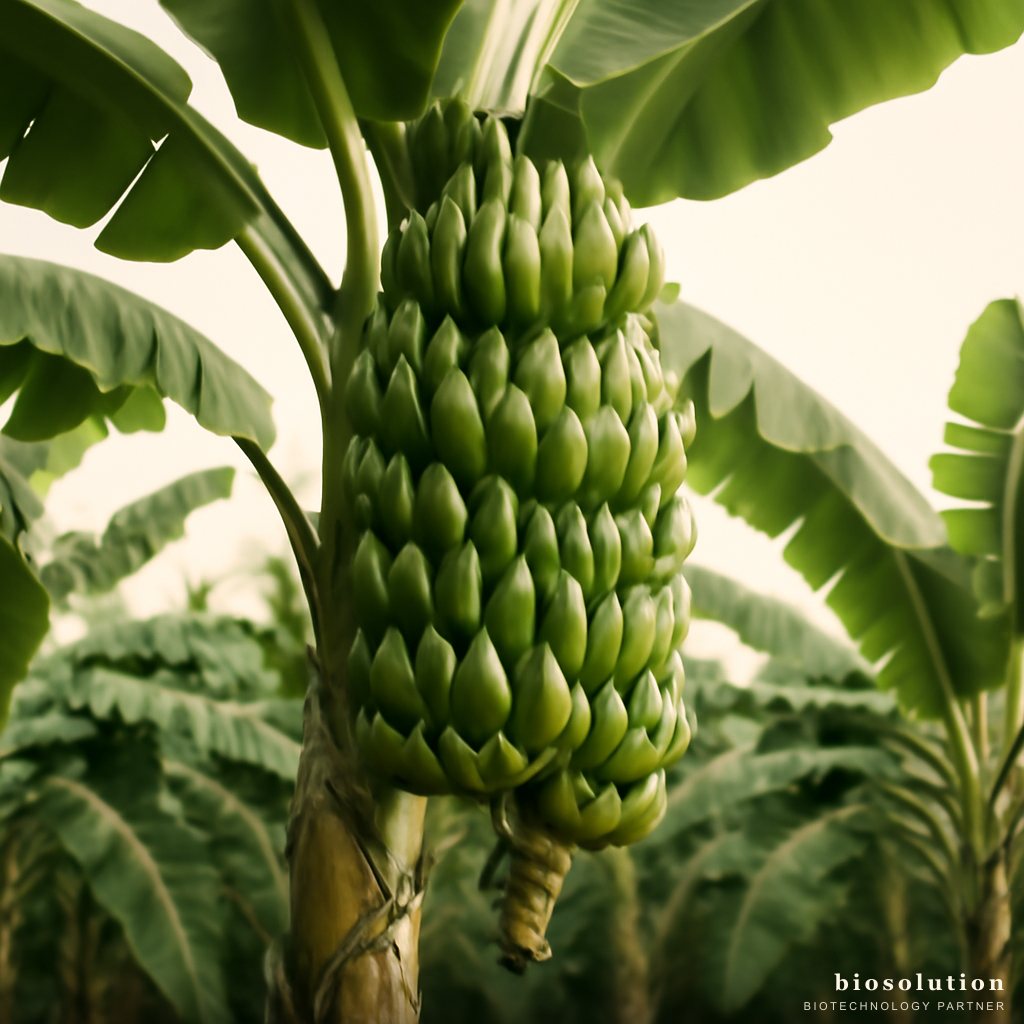
Cavendish bananas are typically grown in monoculture with high inputs. Below is a simulation of fertilization costs per hectare per growing season (12 months) based on field data:
Conventional Fertilization Costs
- NPK 15-15-15 fertilizer: 800 kg @ Rp 2,500/kg = Rp 2,000,000
- KCl fertilizer: 400 kg @ Rp 3,000/kg = Rp 1,200,000
- Urea fertilizer: 300 kg @ Rp 2,000/kg = Rp 600,000
- Additional pesticide application: Rp 500,000
- Total: Rp 4,300,000
Fertilization Costs with Biofertilizer + 50% Chemical Fertilizer
- NPK 15-15-15 fertilizer: 400 kg @ Rp 2,500/kg = Rp 1,000,000
- KCl fertilizer: 200 kg @ Rp 3,000/kg = Rp 600,000
- Urea fertilizer: 150 kg @ Rp 2,000/kg = Rp 300,000
- 5-in-1 Biofertilizer: 5 liters @ Rp 100,000/liter = Rp 500,000 (application 10 ml/plant, 10 times)
- Total: Rp 2,400,000
Savings: Rp 1,900,000 per hectare (44%).
Additionally, biofertilizer increases yield by 20-30% based on Biosolution trials. For Cavendish bananas, a 20% yield increase means an additional production of about 4 tons per hectare (assuming 20 tons/ha). With a selling price of Rp 5,000/kg, additional revenue reaches Rp 20,000,000. Net profit is thus much higher.
Cost Analysis for Local Bananas (Kepok, Raja, etc.)
Local bananas are usually grown with simpler fertilization, but still require optimal nutrients. Below is a comparison for a 0.5 hectare plot:
Conventional
- NPK 15-15-15 fertilizer: 200 kg @ Rp 2,500/kg = Rp 500,000
- KCl fertilizer: 100 kg @ Rp 3,000/kg = Rp 300,000
- Urea fertilizer: 75 kg @ Rp 2,000/kg = Rp 150,000
- Total: Rp 950,000
With Biofertilizer (50% chemical dose)
- NPK fertilizer: 100 kg = Rp 250,000
- KCl fertilizer: 50 kg = Rp 150,000
- Urea fertilizer: 37.5 kg = Rp 75,000
- 5-in-1 Biofertilizer: 2.5 liters @ Rp 100,000 = Rp 250,000
- Total: Rp 725,000
Savings: Rp 225,000 (24%). Although the nominal amount is smaller, the percentage savings are significant for smallholder farmers. Coupled with a 20-30% yield increase, net income rises dramatically.
Mechanism of Biofertilizer in Improving Nutrient Efficiency
Biofertilizer works through several mechanisms that make nutrients more available to banana plants:
Nitrogen Fixation: Rhizobium sp. and Azospirillum sp. fix nitrogen from the air and convert it into ammonia that plants can absorb. In bananas, up to 30% of N requirements can be met through this symbiosis.
Phosphate Solubilization: Bacillus subtilis and Pseudomonas fluorescens produce organic acids that solubilize bound phosphate in the soil, making P available for root and fruit growth. Phosphate is important for flower and fruit formation in bananas.
Phytohormone Production: Microbes produce auxin (IAA), gibberellins, and cytokinins that stimulate root growth, enhancing water and nutrient uptake.
Biocontrol: Trichoderma sp. and Pseudomonas fluorescens suppress pathogens like Fusarium oxysporum causing fusarium wilt in bananas. This reduces the need for chemical fungicides.
Through these mechanisms, biofertilizer not only replaces part of the chemical fertilizers but also improves overall soil health. Soil becomes looser, microbial activity increases, and nutrient cycling becomes more efficient.
Case Study: Cavendish Banana Farmers in Lampung
A trial in Lampung in 2023 compared two groups of Cavendish banana farmers. Group A used full chemical fertilizer (800 kg NPK/ha), while Group B used 50% chemical fertilizer + 5-in-1 biofertilizer at a dose of 10 ml/plant every 2 weeks. Results:
- Group A (conventional): Production 18 tons/ha, fertilizer cost Rp 4.3 million/ha, gross revenue Rp 90 million.
- Group B (biofertilizer): Production 22.5 tons/ha (up 25%), fertilizer cost Rp 2.4 million/ha, gross revenue Rp 112.5 million.
Net profit for Group B was Rp 24.2 million higher per hectare. Additionally, the soil in plot B showed increased microbial populations and better soil structure.
How to Apply Biofertilizer on Bananas
Applying biofertilizer is very easy and requires no special equipment. Here is a guide from Biosolution:
- Dosage: 5–10 ml per liter of water, or 10 ml per plant for drenching.
- Frequency: Every 10–14 days, starting from seedling planting until 3 months before harvest. Total 3–5 applications per season.
- Timing: Morning before 10 AM or afternoon after 4 PM to avoid UV rays that can damage microbes.
- Method: Drench onto the root zone or spray onto the soil around the base of the stem.
Ensure biofertilizer is stored in a cool place and not exposed to direct sunlight. Do not mix with chemical fungicides or bactericides at the same time.
Additional Advantages of Biofertilizer for Sustainability
Besides cost efficiency, biofertilizer provides long-term benefits:
- Improves soil structure: Microbes produce polysaccharides that bind soil particles, increasing porosity and aeration.
- Reduces greenhouse gas emissions: Reduced chemical fertilizer use means lower N₂O emissions.
- Enhances plant resilience: Plants treated with biofertilizer are more resistant to drought and disease attacks.
- Environmentally friendly: Leaves no harmful chemical residues.
The government, through the Ministry of Agriculture, also promotes the use of biofertilizer as part of sustainable agriculture programs (source: Permentan No. 01/2019).
Conclusion
Biofertilizer for bananas, especially the 5-in-1 consortium product from Biosolution, offers a more cost-efficient and environmentally friendly fertilization solution. By reducing chemical fertilizers by up to 50%, farmers can save production costs while increasing yields by 20-30%. For Cavendish bananas, savings reach Rp 1.9 million per hectare, while local bananas also experience significant benefits. Coupled with improved soil health and plant resilience, biofertilizer is a smart choice for sustainable banana farming.
Interested in trying? Consult your land needs with the Biosolution team via WhatsApp at 0811-1234-5678 or see the Complete Plant Nutrient Formula product for more information.