Biofertilizer for Chili: 5-in-1 Complete Plant Nutrient Formula
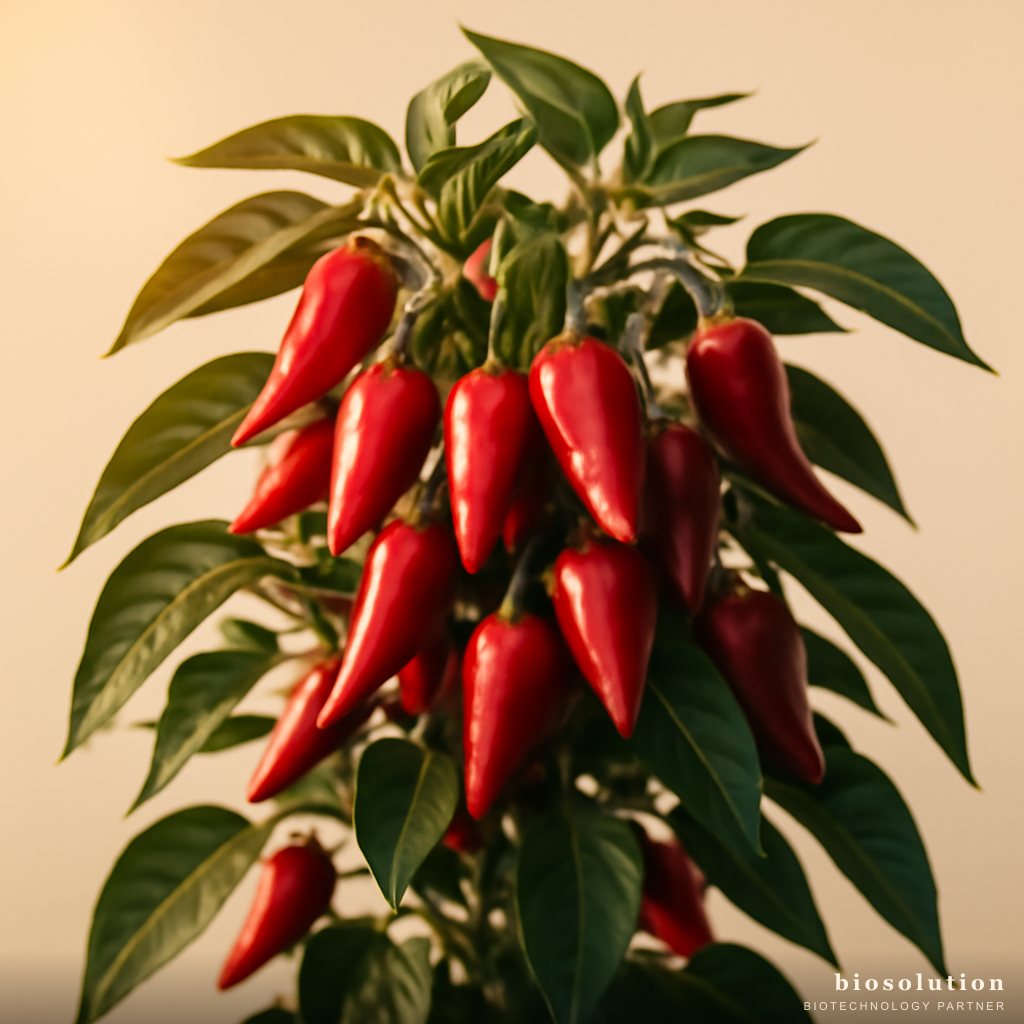
Chili farmers in Indonesia often face declining land productivity due to excessive use of chemical fertilizers and soil-borne diseases. Biofertilizer for chili is an innovative solution that not only increases nutrient availability but also strengthens plant resistance. This article will technically discuss how liquid biofertilizer for red chili to produce abundant and disease-resistant fruit works, criteria for choosing the right biofertilizer, and product recommendations with a complete microbial consortium.
Why is Biofertilizer Important for Chili?
Chili plants (Capsicum annuum L.) require sufficient macro and micronutrients throughout their life cycle. However, nutrient availability in the soil is often limited due to phosphate fixation, nitrogen leaching, or pathogenic microbial activity. Biofertilizer contains living microorganisms that naturally increase nutrient availability and protect roots from pathogens. Unlike chemical fertilizers that directly supply nutrients, biofertilizer works biologically to improve the soil ecosystem.
Research shows that using biofertilizer on chili can reduce chemical fertilizer needs by up to 50% without decreasing yield. Additionally, plants become more resistant to diseases such as Fusarium wilt and damping-off. This is why biofertilizer for chili is increasingly popular among horticultural farmers.
Criteria for the Best Liquid Biofertilizer for Red Chili
Choosing the right biofertilizer cannot be done carelessly. Here are the main criteria to consider:
1. Complete Microbial Consortium
A good biofertilizer contains at least 3 microbial strains with different functions. For example, nitrogen fixers (such as Rhizobium sp. or Azospirillum sp.), phosphate solubilizers (Bacillus subtilis), and biocontrol agents (Trichoderma sp. or Pseudomonas fluorescens). This combination ensures macro and micronutrients are available to plants.
2. High Microbial Concentration
Ensure the product lists the colony forming units (CFU) per ml. The minimum standard is 10⁸ CFU/ml per strain. The higher the concentration, the more effective the root colonization.
3. Certification and Legality
Biofertilizers circulating in Indonesia must be registered with the Ministry of Agriculture with a registration number. Unregistered products have not been tested for quality and safety.
4. Packaging and Shelf Life
Living microbes are sensitive to temperature and humidity. Choose products with airtight packaging and a minimum shelf life of 6 months at room temperature.
Working Mechanism of Microbial Consortium in Liquid Biofertilizer
Biosolution's 5-in-1 liquid biofertilizer contains five superior strains that work synergistically:
- Rhizobium sp. : Symbiotically fixes atmospheric nitrogen on legume roots, but in chili it helps increase available N through non-symbiotic association.
- Bacillus subtilis : Solubilizes bound phosphate in the soil into forms available to plants, and produces IAA phytohormones that stimulate root growth.
- Azospirillum sp. : Associatively fixes nitrogen around the root zone, providing additional N.
- Pseudomonas fluorescens : Produces siderophores that bind iron, thereby inhibiting the growth of soil-borne pathogens such as Fusarium and Pythium.
- Trichoderma sp. : Colonizes roots and produces chitinase enzymes that degrade fungal pathogen cell walls, while also decomposing organic matter into humus.
This mechanism makes biofertilizer for chili not only a nutrient provider but also a plant protector. With regular application every 10–14 days, soil structure improves and beneficial microbial populations increase.
How to Apply Liquid Biofertilizer on Chili Plants
Application of liquid biofertilizer must be timely and at the right dosage. Here is a practical guide:
- Dosage : 5–10 ml per liter of water, drench onto the root zone.
- Time : Morning before 10 AM or afternoon after 4 PM to avoid UV rays that can kill microbes.
- Frequency : Every 10–14 days, starting from the vegetative phase until early fruit formation. Apply 3–5 times per growing season.
- Method : Drench directly into the soil around the base of the stem, or spray onto the soil surface if using mulch.
For optimal results, combine with basic organic fertilizer and gradually reduce chemical fertilizers. Chili farmers in Brebes reported a reduction in NPK fertilizer use by up to 50% after using 5-in-1 biofertilizer for two seasons.
Case Study: Increased Red Chili Yield with Biofertilizer
Field trials on farmers' land in East Java showed that application of liquid biofertilizer on red chili variety TM-99 resulted in a 28% increase in the number of fruits per plant compared to the control (standard chemical fertilizer). Fruit weight was also more uniform and the red color was brighter. Additionally, the intensity of Fusarium wilt attack decreased drastically due to the antagonistic activity of Pseudomonas and Trichoderma.
These data align with product claims that biofertilizer can increase harvest yields by 20–30% and reduce chemical fertilizers by 50%. This proves that biofertilizer for chili is not just a trend, but a sustainable solution.
Comparison of Biofertilizer vs Chemical Fertilizer for Chili
| Aspect | Biofertilizer | Chemical Fertilizer |
|---|---|---|
| Nutrient source | Biological (N fixation, P solubilization) | Synthetic (direct) |
| Soil effect | Improves structure, increases organic matter | Can cause acidification, salinity |
| Plant resistance | Increases (biocontrol, phytohormones) | Not direct |
| Food safety | Environmentally friendly | Chemical residues |
| Long-term cost | Cheaper (reduced chemical use) | Expensive (continuously increasing) |
Although chemical fertilizers provide a quick response, excessive use damages the soil. Biofertilizer offers a healthier long-term solution.
Product Recommendation: 5-in-1 Liquid Biofertilizer Formula
Biosolution presents 5-in-1 Liquid Biofertilizer Formula specially designed for horticultural crops, including chili. This product contains 5 microbial strains with a concentration of 10⁸ CFU/ml per strain. Its advantages:
- Complete consortium: N fixers, P solubilizers, and biocontrol in one bottle.
- Practical 1-liter packaging, enough for 100–200 liters of application solution.
- Registered with the Ministry of Agriculture.
For maximum results, combine with POC Formula for Flower & Fruit Induction during the generative phase. Both complement each other: biofertilizer provides basic nutrients, while POC stimulates flowering and fruiting.
Conclusion
Biofertilizer for chili has been scientifically proven to increase productivity and plant resistance. By choosing a product with a complete microbial consortium, high concentration, and certification, farmers can reduce dependence on chemical fertilizers and produce abundant and healthy red chili. Biosolution's 5-in-1 formula is the right choice for farmers who want to transition to sustainable agriculture. For further consultation, contact our team via WhatsApp.
FAQ
1. What is the dosage of liquid biofertilizer for chili?
The recommended dosage is 5–10 ml per liter of water, drenched onto the root zone every 10–14 days. For mature chili plants, use 200–300 ml of solution per plant.
2. Is biofertilizer safe to mix with chemical fertilizers?
Yes, but it is best not to mix them in the same tank because chemical fertilizers can kill microbes. Apply chemical fertilizers 2–3 days before or after biofertilizer.
3. When is the best time to apply biofertilizer?
Morning before 10 AM or afternoon after 4 PM. Avoid application during intense sunlight as UV rays can damage microbes.
4. How long can biofertilizer be stored?
Store in a cool, dry place away from direct sunlight. In sealed packaging, the product lasts up to 6 months at room temperature.
5. Can biofertilizer completely replace chemical fertilizers?
In the initial stage, biofertilizer can reduce chemical fertilizer needs by up to 50%. For optimal results, combine with organic fertilizer and gradually reduce chemical use.