Biofertilizer for Chili to Boost Fruit Yield and Disease Resistance
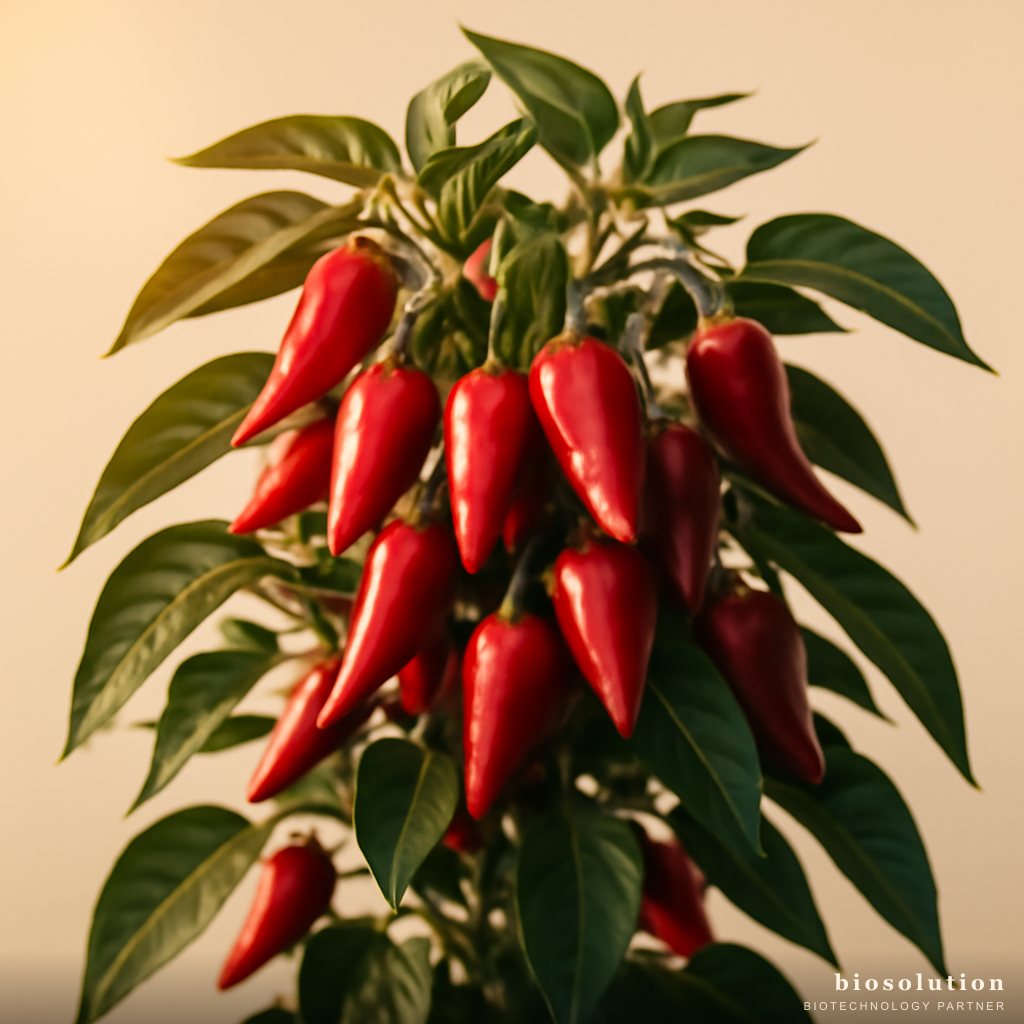
Biofertilizer for chili is a smart solution for farmers who want to increase productivity while reducing dependence on chemical fertilizers. By using liquid biofertilizer for red chili to boost fruit yield and disease resistance, you not only stimulate plant growth but also build natural resistance against pathogen attacks. Biosolution presents the 5-in-1 Liquid Biofertilizer Formula containing five superior microbial strains. This article will thoroughly discuss the application methods, dosage, frequency, and best timing for applying this biofertilizer to your chili plants.
What Is 5-in-1 Liquid Biofertilizer and Why Is It Important for Chili?
Biofertilizer is a biological product containing living microorganisms beneficial to plants. The 5-in-1 Liquid Biofertilizer Formula from Biosolution is a consortium of five microbial strains: Rhizobium sp., Bacillus subtilis, Azospirillum sp., Pseudomonas fluorescens, and Trichoderma sp.. Each strain has a specific role in improving nutrient availability, stimulating root growth, and protecting plants from diseases.
Role of Each Strain for Chili
- Rhizobium sp. and Azospirillum sp.: Both can fix nitrogen from the air, providing a stable nitrogen supply for chili plants without relying on excess urea.
- Bacillus subtilis: Solubilizes phosphate bound in the soil, making phosphorus more available for flower and fruit formation. Additionally, this bacterium produces phytohormones such as IAA that stimulate root elongation.
- Pseudomonas fluorescens: Produces siderophores that bind iron ions, thereby inhibiting the growth of soil-borne pathogens such as Fusarium and Pythium. This is crucial for preventing wilt disease in chili.
- Trichoderma sp.: An antagonistic fungus that colonizes the rhizosphere and parasitizes pathogenic fungi, while also decomposing organic matter into humus that enriches the soil.
The combination of these five microbes works synergistically to create a healthy root ecosystem, allowing chili plants to grow vigorously, flower profusely, and produce abundant fruit.
Dosage and Application Methods of Liquid Biofertilizer for Chili
Proper application of biofertilizer determines its effectiveness. Here is a guide on dosage and application methods for the 5-in-1 Liquid Biofertilizer Formula for chili.
Recommended Dosage
The recommended dosage is 5–10 ml per liter of water. For one chili plant, use 100–200 ml of spray or drench solution. If you have a 100 m² area with about 200 plants, you will need approximately 100–200 ml of product dissolved in 20 liters of water.
Application Methods
There are two main ways to apply liquid biofertilizer:
- Root Drenching: Pour the biofertilizer solution around the base of the stem, directly in the root zone. This method is most effective because the microbes come into direct contact with the roots.
- Soil Spraying: Spray the solution onto the soil surface around the plants, then water with clean water to allow the microbes to penetrate the soil.
Avoid spraying on leaves because the biofertilizer is formulated for soil application. Direct UV exposure can kill the microbes, so ensure application is done in the morning or late afternoon.
Frequency and Timing of Application
- Frequency: Every 10–14 days, with a total of 3–5 applications per growing season.
- Best Time: Morning before 10:00 AM or late afternoon after 4:00 PM. Avoid application during rain or extremely hot weather.
For optimal results, start application when the plants are 7–10 days after transplanting (DAT) or when seedlings are moved to the field. Repeat during the active vegetative phase (30 DAT), before flowering (45 DAT), and during fruit formation (60 DAT).
Benefits of Biofertilizer for Chili: Abundant Fruit and Disease Resistance
Regular use of biofertilizer provides many advantages for chili plants.
Increases Harvest Yield by 20–30%
Data from various field trials show that biofertilizer application can increase chili harvest yields by up to 20–30%. This is due to better nutrient availability, especially nitrogen and phosphorus, as well as the production of natural growth hormones by microbes.
Reduces Chemical Fertilizer Use by Up to 50%
With nitrogen fixation and phosphate solubilization capabilities, you can reduce chemical fertilizer doses by half without decreasing productivity. This means significant cost savings and reduced negative impact of chemical fertilizers on the soil.
Enhances Plant Disease Resistance
Pseudomonas fluorescens and Trichoderma sp. act as biocontrol agents that suppress the development of soil-borne pathogens such as Fusarium oxysporum (causing fusarium wilt) and Pythium (causing damping-off). Healthy roots result in stronger, more stress-tolerant plants.
Improves Soil Structure
Microbes in biofertilizer produce exopolysaccharides and organic acids that bind soil particles, increase porosity, and improve drainage. The soil becomes loose with better aeration, supporting deep root development.
Guide to Biofertilizer Application at Each Growth Stage of Chili
For maximum results, biofertilizer application should be adjusted to the plant's growth stage.
Seedling Stage (0–25 DAT)
At this stage, the main focus is on strong root formation. The first application is done when seedlings are 7–10 days after transplanting. Use a dosage of 5 ml/liter of water, drench 100 ml per plant. Bacillus subtilis and Trichoderma sp. will stimulate lateral root growth and protect against soil fungal attacks.
Vegetative Stage (25–45 DAT)
Plants need plenty of nitrogen for leaf and stem growth. Rhizobium and Azospirillum provide a continuous nitrogen supply. The second application at 30 DAT with a dosage of 7 ml/liter of water. If growth is suboptimal, add a little liquid organic fertilizer.
Flowering and Fruiting Stage (45–75 DAT)
Phosphorus is crucial for flower and fruit formation. Bacillus subtilis solubilizes phosphate stored in the soil. The third application at 45 DAT (when flowering begins) and the fourth at 60 DAT (when fruits start forming). Use a dosage of 10 ml/liter of water to maximize fruit set. At this stage, ensure potassium availability (from chemical or organic fertilizers) to support fruit filling.
Fruit Ripening Stage (75 DAT to Harvest)
The final (fifth) application can be done at 75 DAT to maintain plant health before harvest. Pseudomonas fluorescens and Trichoderma continue to protect roots from pathogens until the end of the season.
Tips for Successful Use of Biofertilizer for Chili
Several things need to be considered for optimal biofertilizer performance.
Use Clean, Non-Chlorinated Water
Chlorine in tap water can kill microbes. If using municipal water, let it sit overnight to allow chlorine to evaporate. Well water or rainwater is better.
Mix with Organic Fertilizer
Biofertilizer works synergistically with organic fertilizers (manure, compost). Organic matter serves as a food source for microbes, so their population persists longer in the soil.
Avoid Mixing with Chemical Pesticides
Do not mix biofertilizer with chemical fungicides or bactericides as they can kill the microbes. Allow a gap of at least 3–5 days between chemical pesticide application and biofertilizer application.
Store Properly
Store biofertilizer in a cool, dry place away from direct sunlight. Ideal storage temperature is 15–25°C. Do not freeze.
Conclusion
Biofertilizer for chili, especially liquid biofertilizer for red chili to boost fruit yield and disease resistance, is an appropriate innovation for increasing productivity sustainably. The 5-in-1 Liquid Biofertilizer Formula from Biosolution offers a consortium of five microbial strains that work synergistically: fixing nitrogen, solubilizing phosphate, producing growth hormones, and protecting plants from diseases. With a dosage of 5–10 ml per liter of water, application every 10–14 days for 3–5 times per growing season in the morning or late afternoon, you can experience a 20–30% increase in harvest yield and up to 50% reduction in chemical fertilizers. For best results, apply from seedling to fruit ripening according to growth stages. Get this product and consult your land needs with the Biosolution team via WhatsApp for more specific recommendations.
Also read: POC Formula for Flower & Fruit Trigger to support the generative phase of chili.
See product: 5-in-1 Liquid Biofertilizer Formula
Agricultural solutions: Farm Solutions
Related article: Biofertilizer for Rice