Biofertilizer for Cocoa: 3 Complete Plant Nutrient Formulas for More and Healthier Pods
Have you ever wondered why cocoa plantations that are routinely fertilized with chemicals still experience declining pod yields? The soil becomes harder, fruits rot easily, and production costs swell. It's time to switch to biofertilizer for cocoa — a biological approach that not only nourishes plants but also restores soil health naturally. Biosolution presents the Liquid 5-in-1 Biofertilizer Formula, a consortium of superior microbes designed to meet the complete nutritional needs of cocoa plants. By using biofertilizer, farmers can increase cocoa pod yields by 20–30% and reduce dependence on chemical fertilizers by up to 50%. How does it work? Let's break it down one by one.
Why Chemical Fertilizers Alone Are Not Enough for Cocoa?
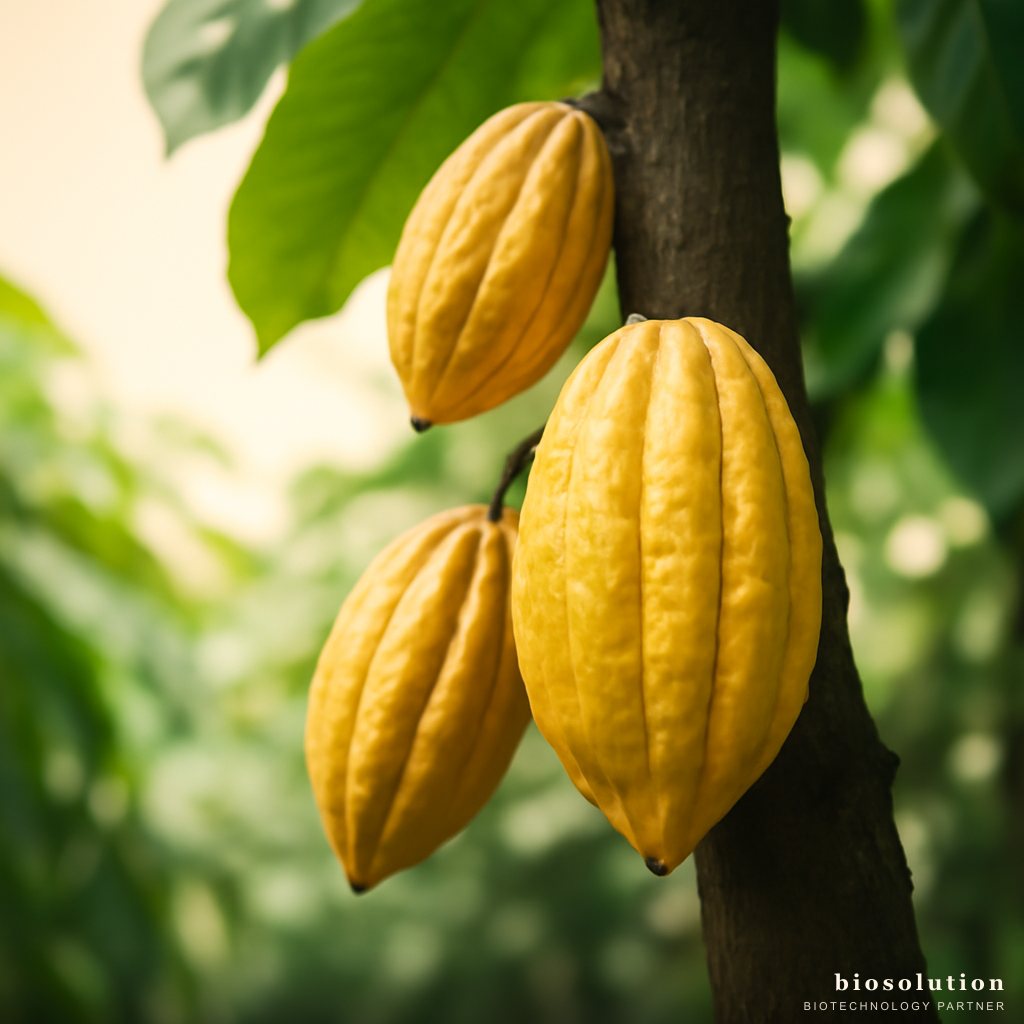
Cocoa (Theobroma cacao) is a plant that requires balanced nutrition, especially nitrogen (N), phosphorus (P), potassium (K), and micronutrients such as zinc and boron. Chemical fertilizers do provide large amounts of nutrients, but their continuous use without organic matter actually damages soil structure. The soil becomes compact, aeration is poor, and natural microbial activity declines. As a result, cocoa roots struggle to absorb nutrients, plants become susceptible to diseases like fruit rot (Phytophthora), and pod production drops drastically.
Moreover, chemical fertilizers only provide macro nutrients instantly but do not improve the soil's ability to supply nutrients sustainably. The phosphorus (P) applied often becomes bound in insoluble forms, making it unavailable to plants. This is the gap filled by biofertilizer for cocoa. The microbes in biofertilizer can solubilize bound phosphate, fix nitrogen from the air, and produce growth hormones that stimulate root development. In other words, biofertilizer acts as a "natural fertilizer factory" in the soil.
3 Complete Plant Nutrient Formulas in One Bottle
Biosolution designed the Liquid 5-in-1 Biofertilizer Formula as an integrated solution. This product contains five microbial strains with specific roles that complement each other. Here are the three main nutrient formulas contained within:
1. Nitrogen Fixers: Rhizobium sp. and Azospirillum sp.
Nitrogen is a key element for the vegetative growth of cocoa, including leaf and branch formation. Rhizobium sp. works symbiotically with legume plants but can also live freely and fix N₂ from the air. Meanwhile, Azospirillum sp. is an associative N₂-fixing bacterium that lives around the roots of grasses and other plants. Both convert atmospheric nitrogen into ammonia that plants can absorb. With these two strains, cocoa's nitrogen needs can be met naturally, reducing urea usage by up to 50%.
2. Phosphate Solubilizer and Growth Promoter: Bacillus subtilis
Phosphorus is crucial for flower and fruit formation in cocoa. However, most phosphorus in soil is bound in insoluble forms. Bacillus subtilis produces phosphatase enzymes and organic acids that solubilize bound phosphate, making it available to roots. Additionally, this bacterium produces phytohormones such as IAA (auxin) that stimulate the growth of lateral roots and root hairs. Denser roots mean more optimal nutrient and water uptake, leading to more and healthier cocoa pods.
3. Biocontrol and Decomposer: Pseudomonas fluorescens and Trichoderma sp.
Cocoa is susceptible to soil-borne pathogens like Fusarium and Phytophthora, which cause fruit rot. Pseudomonas fluorescens produces siderophores that bind iron, depriving pathogens of this nutrient and inhibiting their growth. Meanwhile, Trichoderma sp. is an antagonistic fungus that colonizes the rhizosphere and produces lytic enzymes that destroy pathogen cell walls. Additionally, Trichoderma decomposes organic matter into humus, improving soil structure and increasing water retention.
Proper Application Method of Biofertilizer for Cocoa
To maximize the benefits of biofertilizer, application must be done correctly. Here is a practical guide for cocoa plantations:
- Method: Drench the root zone or spray onto the soil around the base of the stem. Avoid spraying on leaves because the microbes work in the rhizosphere.
- Dosage: Dissolve 5–10 ml of product per liter of water. For one mature cocoa tree, use 2–3 liters of solution.
- Frequency: Apply every 10–14 days, 3–5 times per growing season. At the start of the rainy season, the first application is highly recommended to build up microbial populations.
- Best Time: Morning before 10 AM or afternoon after 4 PM, when soil temperature is not too hot and UV radiation is low. Microbes are sensitive to UV radiation, so avoid application at midday.
Tips: Mix biofertilizer with mature manure or compost to enhance effectiveness. Do not mix with high-dose chemical fertilizers or chemical fungicides as they can kill the microbes.
Advantages of Biosolution Biofertilizer for Cocoa
Biosolution's Liquid 5-in-1 Formula has several advantages that make it superior to other biofertilizers:
- Consortium of 5 strains: Each strain has a unique role, so plant nutrition is fully met. No strains inhibit each other because they are formulated synergistically.
- High density: Each strain has a minimum concentration of 10⁸ CFU/ml, ensuring sufficient microbial population to work effectively in the field.
- Reduction of chemical fertilizers by up to 50%: With the ability to fix N and solubilize P, the need for chemical fertilizers can be reduced without lowering yields. This saves production costs while protecting the environment.
- Yield increase of 20–30%: Data from field trials on rice, corn, and horticultural crops show significant increases. Similar results are expected for cocoa due to the same mechanisms.
- Improves soil structure: Microbes produce polysaccharides that bind soil particles, creating stable aggregates. The soil becomes loose, well-aerated, and easy for roots to penetrate.
Scientific Mechanism Behind Biofertilizer Performance
To ensure effectiveness, it is important to understand the working mechanisms of each microbe:
- Nitrogen Fixation: Rhizobium and Azospirillum convert N₂ into NH₃ via the nitrogenase enzyme. This process requires energy from the plant, but the resulting ammonia is directly used for protein synthesis.
- Phosphate Solubilization: Bacillus subtilis produces organic acids (acetic, lactic, citric) that lower the micro-pH around the roots, thereby solubilizing bound phosphate (Ca₃(PO₄)₂, FePO₄).
- Phytohormone Production: Bacillus and Pseudomonas produce IAA, gibberellins, and cytokinins that stimulate cell division in roots and shoots. Roots become longer and more branched, enhancing nutrient uptake.
- Pathogen Antagonism: Pseudomonas fluorescens produces siderophores (pseudobactin) that bind Fe³⁺, depriving pathogens of iron. Trichoderma produces chitinase and glucanase enzymes that degrade the cell walls of pathogenic fungi.
Through these mechanisms, biofertilizer not only fertilizes but also naturally protects plants.
Testimonials and Supporting Data
Although specific data for cocoa is still being collected, test results on other crops show great potential. On rice, application of Biosolution biofertilizer increased grain yield by 25% compared to control. On chili, fruit production increased by 30% and Fusarium wilt incidence decreased drastically. Cocoa farmers in Lampung who have switched to biofertilizer report fuller pods and heavier bean weight. With consistent application, previously hard soil becomes loose and earthworms reappear — an indicator of soil health.
Conclusion
Biofertilizer for cocoa is not just an alternative but a necessity for sustainable agriculture. By using Biosolution's Liquid 5-in-1 Biofertilizer Formula, cocoa farmers can improve soil fertility, increase pod yields by up to 30%, reduce chemical fertilizer costs, and naturally protect plants from diseases. Three nutrient formulas — nitrogen fixers, phosphate solubilizers, and biocontrol agents — work synergistically in one bottle. It's time to switch to smart microbiology-based agriculture. For further consultation on biofertilizer application in your cocoa plantation, contact the Biosolution team via WhatsApp at [phone number] or see the product details on the product page.