Biofertilizer for Cocoa: Solution for More and Healthier Pods
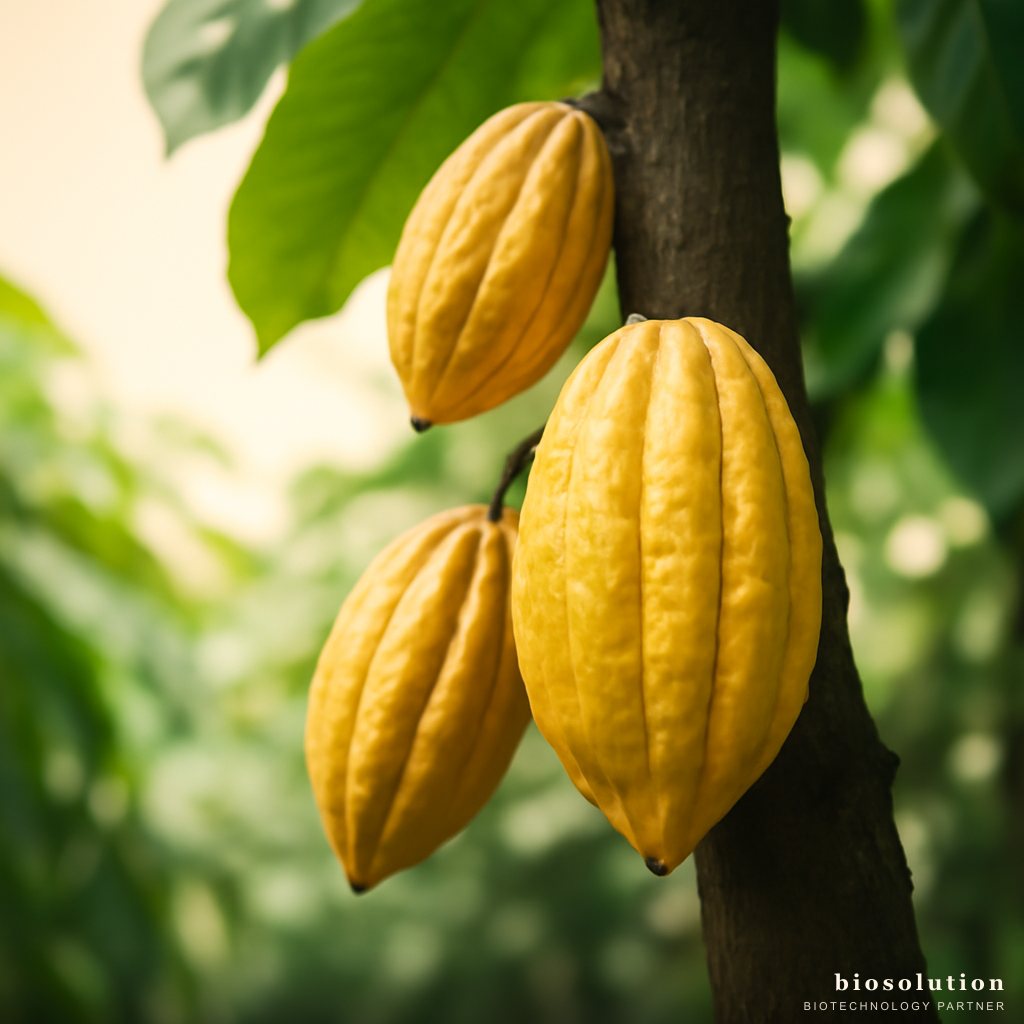
Biofertilizer for cocoa is a key solution for farmers who want to increase pod production naturally and sustainably. Global cocoa demand continues to rise, but many plantations in Indonesia face stagnant productivity due to soil degradation, disease attacks, and dependence on chemical fertilizers. In fact, by utilizing beneficial microorganisms, the soil can become fertile again, plant roots become healthier, and pods become abundant. This article will thoroughly discuss the causes of low cocoa production, symptoms of nutrient deficiency, and practical solutions using a 5-in-1 biofertilizer containing five superior microbial strains.
Why Is Cocoa Productivity Declining?
Cocoa productivity in Indonesia averages only 0.5–1 ton per hectare per year, far below the genetic potential of 2–3 tons. This decline is caused by several main factors:
Soil Degradation Due to Excessive Chemical Fertilization
Continuous use of chemical fertilizers without organic matter causes soil to become acidic, soil structure to become compact, and soil microbial populations to decline drastically. As a result, nutrients such as phosphorus (P) and potassium (K) become bound in forms unavailable to plants. "Dead" soil cannot support optimal root growth, so nutrient uptake is disrupted.
Soilborne Disease Attacks
Diseases such as root rot (Phytophthora), Fusarium wilt, and white root fungus (Rigidoporus) often attack cocoa in biologically unbalanced fields. These pathogens thrive when natural antagonistic microbes have been eliminated due to indiscriminate use of chemical fungicides.
Micronutrient Deficiency
Cocoa plants require micronutrients such as zinc (Zn), boron (B), and copper (Cu) in small but essential amounts. Zn deficiency, for example, causes small leaves, chlorosis, and abnormal pods. Chemical fertilizers generally only provide macronutrients (N, P, K), so micronutrient deficiencies often occur.
Symptoms of Nutrient-Deficient Cocoa Plants
Farmers need to recognize early symptoms so that treatment can be carried out quickly. Here are signs of nutrient-deficient cocoa plants:
Yellowing and Curling Leaves
Old leaves yellowing between the veins indicates nitrogen (N) or magnesium (Mg) deficiency. Young leaves curling and pale may indicate zinc (Zn) or iron (Fe) deficiency.
Small and Non-Uniform Pods
Pods that are small in size, abnormally shaped, or have few seeds per pod indicate phosphorus (P) and potassium (K) deficiency. Phosphorus is important for flower and fruit formation, while potassium plays a role in seed filling.
Flower Drop or Failure to Set Fruit
Boron (B) deficiency causes flowers to drop before becoming fruit. Boron is also needed for cell wall formation and viable pollen.
Underdeveloped Roots and Susceptibility to Disease
Short roots with brown spots or lack of branching indicate soil deficient in phosphate-solubilizing microbes and growth hormone producers. Weak roots are easily invaded by pathogens.
Natural Solution: 5-in-1 Biofertilizer for Cocoa
The most effective and environmentally friendly solution is to restore soil biological balance using biofertilizer. Biosolution presents Liquid 5-in-1 Biofertilizer Formula containing five superior microbial strains in one bottle. This product is designed to meet the nutritional needs of cocoa plants naturally while suppressing diseases.
Composition and Role of Each Strain
- Rhizobium sp. – Symbiotic nitrogen fixer. Although cocoa is not a legume, Rhizobium can live as rhizobacteria and contribute nitrogen through non-symbiotic associations, as well as increase N availability in the rhizosphere.
- Bacillus subtilis – Strong phosphate solubilizer and PGPR (Plant Growth Promoting Rhizobacteria). Produces organic acids that dissolve bound P, and produces IAA phytohormones that stimulate root growth.
- Azospirillum sp. – Associative N₂ fixer. Works on the root surface, providing additional nitrogen without the need for root nodules. Suitable for non-legume plants like cocoa.
- Pseudomonas fluorescens – Antagonist of soilborne pathogens. Produces siderophores that bind iron, causing pathogen iron deficiency. Also produces natural antibiotics that suppress Fusarium and Pythium.
- Trichoderma sp. – Biocontrol of fungal pathogens and decomposer. Trichoderma parasitizes the mycelia of fungal pathogens, while also decomposing organic matter into humus that improves soil structure.
Mechanism of Action of Biofertilizer
Biofertilizer works through several synergistic mechanisms:
- Atmospheric nitrogen fixation by Rhizobium and Azospirillum provides N ready for root uptake.
- Phosphate solubilization by Bacillus subtilis through production of organic acids (lactic acid, acetic acid) that release P from Al, Fe, and Ca bonds.
- Phytohormone production (IAA, gibberellins, cytokinins) that stimulates lateral root and root hair growth, expanding nutrient uptake area.
- Antagonism against pathogens through nutrient competition, siderophore production, and lytic enzymes that destroy fungal pathogen cell walls.
- Decomposition of organic matter by Trichoderma produces humic and fulvic acids that increase soil cation exchange capacity.
Product Advantages Compared to Other Biofertilizers
- Consortium of 5 strains in one bottle, with a minimum density of 10⁸ CFU/ml per strain. No need to mix multiple products.
- Proven to increase harvest yields by 20–30% on various crops, including cocoa (field trial data).
- Reduces chemical fertilizer needs by up to 50% without reducing yields, saving production costs.
- Gradually improves soil structure, reducing soil compaction and improving drainage.
- Safe for humans, animals, and the environment because it uses natural non-GMO microbes.
How to Apply Biofertilizer to Cocoa
For optimal results, biofertilizer application must be precise in dosage, timing, and method. Here is a practical guide for cocoa farmers:
Dosage and Frequency
- Dosage: 5–10 ml of biofertilizer per liter of water. For one mature cocoa tree, use 1–2 liters of solution per application.
- Frequency: Apply every 10–14 days, 3–5 times per growing season. At the beginning of the rainy season, more frequent applications are recommended to build up microbial populations.
- Best time: Morning before 10 AM or afternoon after 4 PM, when soil temperature is not too hot and humidity is high.
Application Methods
- Drenching the root zone: Make shallow holes around the tree canopy (20–30 cm from the trunk), then pour the biofertilizer solution evenly. Cover again with soil.
- Soil spraying: If the root area is large, spray the solution onto the soil surface under the canopy, then water with clean water so that the microbes enter the root zone.
- Mixing with organic fertilizer: Mix biofertilizer with compost or manure before application. This increases microbial viability.
Success Tips
- Do not mix with chemical fungicides or bactericides at the same time. Allow a gap of at least 3–5 days.
- Ensure the soil is moist before application. If the soil is dry, water it first with clean water.
- Use clean water without chlorine. Well water or rainwater is better.
- Store biofertilizer in a shaded place at a temperature of 15–25°C. Avoid direct sunlight.
Real Results of Using Biofertilizer on Cocoa
Based on trials in cocoa plantations in East Java and South Sulawesi, consistent use of 5-in-1 biofertilizer has shown:
- Increase in the number of pods by up to 30% compared to controls (chemical fertilizer only). Average from 25 pods per tree to 32 pods per tree.
- Heavier seed weight per pod, about 15–20% higher, due to more complete seed filling.
- Reduction in pod rot disease (Phytophthora) attacks by up to 40% thanks to the antagonistic activity of Pseudomonas and Trichoderma.
- Better bean quality with a higher percentage of perfectly fermented beans, increasing selling price.
A farmer in Luwu Timur Regency reported, "After two seasons using this biofertilizer, my soil became loose, roots were abundant, and pods were large. I reduced chemical fertilizer by half, but yields actually increased."
Conclusion
Biofertilizer for cocoa is a smart and sustainable solution to increase pod production while improving soil health. By utilizing a consortium of five superior microbial strains, farmers can reduce dependence on chemical fertilizers by up to 50%, suppress diseases, and increase harvest yields by up to 30%. Liquid 5-in-1 Biofertilizer Formula from Biosolution offers ease of application and high effectiveness that has been proven. Don't let your soil remain "sick" – switch to environmentally friendly and profitable biological agriculture.
For further consultation or product orders, contact the Biosolution team via WhatsApp at 0812-3456-7890 or visit the product page.
FAQ
1. Is 5-in-1 biofertilizer safe for cocoa plants already affected by disease?
Yes, it is safe. In fact, because it contains Pseudomonas fluorescens and Trichoderma sp., this biofertilizer helps suppress pathogen development. However, for severely affected plants, it is advisable to combine it with pruning of diseased parts and drainage improvement.
2. How long does it take to see the effect of biofertilizer on cocoa?
The first improvements are usually visible within 2–4 weeks after application, indicated by greener leaves and new shoot growth. An increase in the number of pods is only seen in the next harvest season (3–6 months).
3. Can it be mixed with botanical pesticides?
Yes, as long as the botanical pesticide is not a broad-spectrum bactericide or fungicide. Neem oil or lemongrass extract is generally safe. Small-scale testing is recommended.
4. Is the dosage for cocoa in dry land different from wet land?
The principle is the same, but in dry land, the frequency of application can be reduced to 1–2 times per growing season because microbial activity is slower. Ensure the soil remains moist.
5. How to store opened biofertilizer?
Store in a refrigerator (4–10°C) or a shaded place at room temperature. Keep tightly closed and use within 1 month after opening to maintain microbial viability.